Dog Behavior: The Complete Guide to Understanding Your Dog
Learn to read what your dog is really telling you, decode problem behaviors at their root, and use positive, science-backed methods to build a calmer, more confident companion.
Why Dog Behavior Matters
Every dog communicates constantly — through posture, tail carriage, ear position, eye softness, vocalizations, and even the pace of their breathing. Most behavioral "problems" that land dogs in shelters are not personality flaws; they are communication gaps. Owners misread a signal, respond in a way that unintentionally reinforces the wrong behavior, and a cycle begins.
Understanding behavior is not about becoming an animal psychologist. It is about closing that gap so your dog can tell you what they need — space, reassurance, play, a bathroom break, or something to do — and you can meet that need before it escalates. Dogs that are understood display fewer problem behaviors, adapt faster to change, and are far less likely to be surrendered. If you are also working through early-life foundations, our puppy guide pairs naturally with the principles here.
The Core Principle: Behavior is information, not defiance. Every action your dog takes is serving a purpose — whether that purpose is comfort, attention, relief from anxiety, or access to something rewarding. Find the purpose and you find the solution.
Reading Dog Body Language
Dogs do not lie with their bodies. While a wagging tail is often mistaken for a universal "I'm friendly" signal, the truth is more nuanced. A wag is simply arousal — the meaning comes from the whole picture. Learn to read clusters of signals rather than isolated body parts.
The Confident, Comfortable Dog
Loose, wiggly body posture, soft relaxed ears, gently wagging tail at mid-height, soft eyes with normal pupil size, mouth slightly open with relaxed lips. This dog is approachable and content. Note that a dog can be relaxed in one context and tense in another within minutes — check the environment.
The Anxious or Uncertain Dog
Lip licking when not eating, yawning when not tired, whale eye (whites of the eyes visible), tucked tail, pinned ears, raising one front paw, frequent shaking off, or turning the head away. These are appeasement signals — the dog is politely asking for space. Respect them or they escalate.
The Over-Excited Dog
Stiff body, raised hackles along the spine, high and rapidly vibrating tail, hard staring, closed mouth, weight shifted forward. This dog is over threshold and may lunge, hump, or nip. Interrupt with a calm cue and give space — do not touch or grab.
The Frightened Dog
Cowering, trembling, hiding behind the owner, tucked tail held tight against the belly, flattened ears, dilated pupils, and often a defensive lip curl or growl. A fearful dog is the most likely to bite because they feel they have no escape route. Never corner or punish a fearful dog.
The Tail Tells Only Part of the Story
Owners frequently misjudge a wag. Here is how to read the tail in context:
- High, stiff, fast wag: High arousal and often a warning. Common in dogs who are overstimulated or guarding something. Approach with caution.
- Mid-height, wide sweeping wag: The classic friendly wag. The dog's whole rear end often sways with it — that "wiggle butt" is the real green light.
- Low, slow wag: Uncertainty, appeasement, or submissiveness. Often paired with a lowered head and averted gaze. Give the dog time to choose to approach.
- Tucked between the legs: Fear or extreme stress. Do not force interaction — this dog needs distance and reassurance, not petting.
Read the Whole Dog: A wagging tail with a stiff body, hard stare, and closed mouth is not a friendly dog. A tucked tail with soft eyes and a wiggly body on a shy dog is not an aggressive dog. The cluster, not the single signal, tells the truth.
Stress Signals That Owners Miss
Dogs give a predictable sequence of "please stop" signals long before they growl or snap. Missing these is the single most common cause of bites that "came out of nowhere." Watch for:
- Lip licking or nose licking when there is no food present — the most under-recognized appeasement signal.
- Yawning in a non-tired context, especially mid-play or during handling.
- Whale eye — the dog turns the head slightly away but keeps the eyes on the trigger, showing the whites.
- Shake off — the full-body shake as if wet, which releases tension and often follows a stressful moment.
- Freezing — a sudden stillness in a previously moving dog. This is a serious warning sign that is frequently misread as "calm."
- Turning away or sniffing the ground mid-interaction — a displacement behavior that asks for a break.
How Dogs Communicate
Dogs have a rich communication system that operates on three channels: visual (body language), auditory (vocalizations), and olfactory (scent). Humans tune in almost entirely to the auditory channel, which is the one dogs rely on least for emotional signaling.
Understanding Vocalizations
| Vocalization | Typical Meaning | Context Cues |
|---|---|---|
| Rapid, high-pitched barking | Alert, excitement, or demand | Repeated at the door, at the fence, or while staring at you |
| Low, slow, spaced barking | Warning or uncertainty | Body stiff, staring at an unfamiliar person or animal |
| High-pitched yelp | Sudden pain or startle | Often during play or handling; check for injury |
| Whining | Frustration, anxiety, or anticipation | Before walks, during isolation, or when a resource is blocked |
| Growling | Warning — a valuable communication | Never punish it; address the trigger and the emotion behind it |
| Howling | Social calling or separation distress | When left alone, or in response to sirens and other howls |
Never Punish a Growl: Growling is a dog's warning before a bite. Suppressing it removes the warning without removing the emotion, producing a dog who bites without warning. If your dog growls, thank the signal, remove the trigger, and address the underlying cause. If growling is frequent or escalating, consult a professional — see our guide on when to see a behaviorist.
The Scent Channel
Dogs possess an olfactory system tens of thousands of times more sensitive than ours. Sniffing is not distraction — it is how dogs read the world. A dog who stops to sniff on a walk is gathering social information about who passed by, their health, their mood, and their reproductive status.
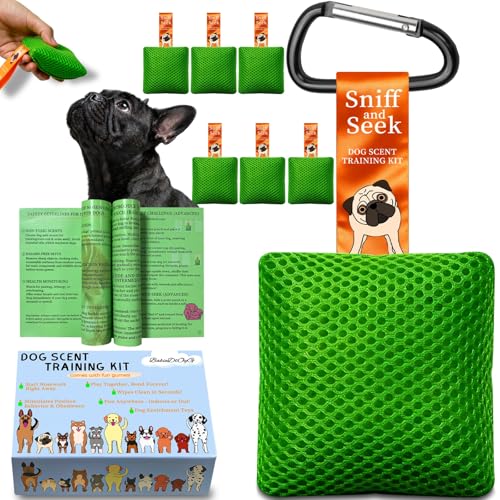
This is why "sniff walks" — slow walks where the dog sets the pace and investigates freely — are one of the most effective forms of mental enrichment available. Fifteen minutes of sniffing can be as tiring as a brisk half-hour walk. If your dog is hyperactive at home, adding sniff time often works better than adding distance.
Common Problem Behaviors
Most problem behaviors fall into a handful of categories, each with a distinct emotional driver. Identifying the driver is essential because the same surface behavior can have completely different causes — and the wrong intervention makes things worse.
Excessive Barking
Drivers: Alerting to triggers, demand for attention, boredom, fear, or separation distress. Approach: Manage the environment first (block sightlines, add white noise), then teach a "quiet" cue and reward the moment of silence. Never yell — dogs hear it as joining the barking.
Jumping Up
Driver: Greeting excitement plus reinforcement history — every person who pets the jumping dog has just paid the behavior. Approach: Turn away and withdraw attention when paws leave the floor, then greet calmly the moment all four paws are down. Consistency across every visitor is what makes it stick.
Destructive Chewing
Drivers: Teething in puppies, boredom, under-exercise, anxiety, or simply a lack of appropriate outlets. Approach: Increase physical and mental exercise, provide legal chew options, confine when unsupervised, and rule out anxiety if destruction is focused on doors or windows.
Leash Reactivity
Drivers: Frustration at not being able to greet, or fear of other dogs or people. Approach: Increase distance below threshold, reward calm observation, and use counter-conditioning so the trigger predicts treats. Never tighten the leash — tension signals danger to your dog.
Resource Guarding
Drivers: Anxiety about losing something valuable — food, a bone, a spot on the couch, or a person. Approach: Do not punish. Teach a positive "trade" game with low-value items first, and never take things away by force. Escalating guarding needs professional guidance.
Separation Anxiety
Drivers: Genuine panic at being alone, distinct from boredom or lack of training. Signs: Destruction at exits, howling, pacing, drooling, and attempts to escape within minutes of your departure. Approach: This is a clinical condition — use a desensitization plan guided by a professional, plus tools like anxiety wraps or pheromone diffusers as supporting aids.
Aggression: A Serious Category
Aggression is not a single behavior — it is an umbrella term covering fear-based aggression, territorial behavior, resource guarding, predatory behavior, and pain-related irritability. Each requires a different plan. The universal rule: never punish aggression. Punishment suppresses the warning signs while leaving the underlying emotion intact, producing a dog who bites without warning.
- Fear-based aggression: The most common form. Triggered by perceived threats, especially when escape is blocked. Treatment focuses on creating distance and building positive associations.
- Territorial aggression: Directed at strangers entering the home or yard. Management through barriers and controlled introductions is the first step.
- Resource guarding: Defending food, toys, or people. Treated with systematic trade games — never by removing items forcefully.
- Redirected aggression: Occurs when a dog is aroused by one target but bites the nearest available one. Common in multi-dog households during fence-fighting incidents.
- Pain-related aggression: A sudden change in temperament — especially in senior dogs — almost always warrants a veterinary exam first. Read more on managing dog aggression.
Red Flag: Any bite that breaks skin, aggression directed at children, or sudden onset of aggression in a previously friendly adult dog requires immediate professional evaluation. Call your veterinarian first — medical causes like pain, thyroid imbalance, and neurological issues can mimic behavioral problems.
Behavior Modification Techniques
Effective behavior change follows a predictable process. Whether you are addressing a mild nuisance behavior or a serious emotional response, the same framework applies.
- Identify the function, not just the form. What is the behavior achieving for the dog? Attention, escape, access to a resource, or sensory relief? The function determines the solution.
- Manage the environment first. Set the dog up to succeed by preventing rehearsal of the unwanted behavior. Blocked sightlines, barriers, leashes, and supervision are not cheating — they are the foundation.
- Change the emotion with counter-conditioning. Pair the trigger with something wonderful — high-value food, a favorite toy — so the dog's emotional response shifts from fear or frustration to anticipation. Timing matters more than repetition count.
- Teach an alternative behavior. A dog cannot sit and jump at the same time. Give a specific, incompatible behavior to perform instead, and reinforce it generously.
- Work below threshold. If your dog is barking, lunging, or shutting down, you are too close to the trigger. Reduce intensity and build success before increasing difficulty.
- Reinforce what you want, not what you don't. Dogs repeat behaviors that earn rewards. If you want calm, you must notice and reward calm — not just correct chaos.
Desensitization and Counter-Conditioning
These two techniques are the gold standard for emotional behavior problems and are almost always used together.
- Desensitization means gradually exposing the dog to the trigger at an intensity low enough that no fear response occurs, then slowly increasing intensity over many sessions. The key word is gradual — rushing undoes the work.
- Counter-conditioning means pairing the trigger with something the dog loves, so the trigger itself comes to predict good things. The classic protocol is "trigger appears, food appears; trigger disappears, food disappears."
When done correctly, a dog who once exploded at the sight of another dog can learn to glance at their owner the moment a dog appears, expecting a reward. This is not bribery — it is changing the emotional association at a neurological level. Learn more about structured plans in our guide to positive behavior modification.
Tools That Support Behavior Change
Tools do not train dogs — they support the training you do. The right tool used correctly can accelerate progress; the wrong tool used as a shortcut can create new problems. Here is a practical reference by tier:
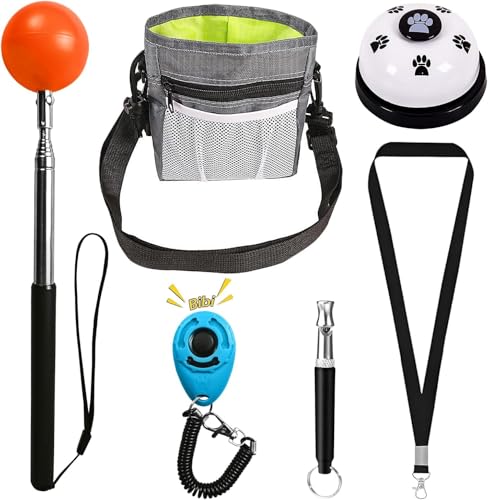
Entry-level management tools include baby gates, exercise pens, crate dividers, and visual barriers such as window film. These prevent rehearsal of unwanted behavior with no training required. Mid-range training aids include front-clip harnesses, long lines, treat pouches, and clickers — these give you better communication and control during sessions. Premium calming and enrichment tools include calming products, anxiety wraps, and puzzle toys that address the emotional and mental side of behavior. Specialist professional-grade equipment — veterinary behaviorist-prescribed tools and protocols — should only be used under professional supervision.
For dogs with anxiety-driven behavior, calming aids support the training process but never replace it. Pheromone diffusers, pressure wraps, and calming chews reduce baseline arousal so the dog can actually learn. Always introduce them alongside a behavior plan, not instead of one.
Behavior Myths Debunked
Outdated ideas about dog behavior still circulate widely and cause real harm. Here are the most damaging myths and what modern behavioral science actually says.
- Myth: Dogs try to be dominant over humans. The dominance model was based on flawed studies of captive wolves and has been largely abandoned for pet dogs. Most "dominant" behaviors — jumping, pulling, guarding, mounting — are better explained by reinforcement history, excitement, or anxiety. Asserting rank does not fix them; teaching alternative behaviors does.
- Myth: A wagging tail always means a friendly dog. Tail wagging indicates arousal. A high, stiff, fast wag can precede a bite. Read the whole body, not just the tail.
- Myth: Dogs feel guilt. What looks like guilt is appeasement behavior triggered by your angry body language and tone, not by a moral understanding of a past misdeed. Dogs live in the present — scolding them for something they did an hour ago teaches nothing except that you are unpredictable.
- Myth: You should alpha roll your dog to show who's boss. Alpha rolling causes fear, erodes trust, and can provoke defensive bites. It is never recommended by veterinary behaviorists.
- Myth: Dogs are naturally good with children. Dogs must be taught how to interact with children and children must be taught how to interact with dogs. Supervision is non-negotiable. Most bites to children occur with a familiar dog in a familiar home.
- Myth: Old dogs can't learn new tricks. Senior dogs learn readily, often with better focus than puppies. They may need shorter sessions and more patience, but cognitive enrichment is one of the best ways to slow age-related decline. See our mental stimulation ideas for dogs of all ages.
- Myth: A tired dog is a good dog. Physical exhaustion alone does not produce calm. Over-exercising a high-drive dog builds stamina and creates an athlete who needs even more. Balance physical exercise with mental work — that is what truly tires a dog.
When to Seek Professional Help
Many behavior issues respond well to consistent owner-led training. But some situations require professional intervention, and waiting only makes them harder to resolve. Seek help when:
- Your dog has bitten a person or another animal, especially if skin was broken.
- Aggression is directed at children or is escalating in frequency or intensity.
- The behavior appeared suddenly in an adult dog with no clear trigger — this warrants a veterinary exam first.
- Your dog shows signs of true separation anxiety: destruction at exits, howling, drooling, and escape attempts within minutes of being alone.
- You feel unsafe, overwhelmed, or resentful — caregiver burnout is real and affects the dog too.
- You have tried consistent positive training for several weeks with no improvement.
Trainer, Behaviorist, or Veterinarian?
| Professional | Best For | Credentials to Look For |
|---|---|---|
| Certified Dog Trainer | Basic manners, puppy socialization, general obedience | CPDT-KA, KPA-CTP, or equivalent positive-reinforcement certification |
| Certified Behavior Consultant | Fear, reactivity, resource guarding, complex problem behaviors | CBCC-KA, CDBC, or IAABC accreditation |
| Veterinary Behaviorist | Aggression with bite history, severe anxiety, medical contributors | DACVB board certification (veterinarian with behavior specialty) |
| Veterinarian | Sudden behavior changes, pain-related irritability, senior cognitive changes | Licensed DVM; ask specifically about behavior experience |
Beware of any professional who guarantees results, relies on shock collars or prong collars as a first resort, or promises to "fix" aggression in one session. Ethical professionals use force-free methods, explain their plan clearly, and refer out when a case exceeds their scope. Our guide on when to see a behaviorist walks through this decision in more detail.
For dogs with anxiety or noise phobias, environmental support tools can make training possible. Products like pheromone diffusers and anxiety wraps lower baseline stress but work best as part of a larger plan that includes desensitization and professional guidance.
Frequently Asked Questions
The Bottom Line
Dog behavior is not a mystery — it is a language. When you learn to read it, you stop seeing problems and start seeing needs. Address the need, reward the behavior you want, and manage the environment so your dog can succeed. That is the whole framework. Most behavior change takes weeks to months of consistent, patient work, not days. If you are ever unsure, involve a qualified professional early. Your dog is not giving you a hard time — they are having a hard time. Understanding that distinction is where every lasting change begins.