Dog Nail Trimming: The Complete Safe Guide
Everything you need to know about trimming your dog's nails safely at home — tools, techniques, black nail tips, stress-free handling, and how to avoid painful mistakes.
Trimming your dog's nails is one of those care tasks that many owners dread — both for themselves and for their dogs. But it doesn't have to be a battle. With the right tools, proper technique, and a patient approach, nail trimming can become a calm, routine part of your dog's grooming schedule.
Overgrown nails are more than just a cosmetic issue. They cause real pain, change how your dog walks, and can lead to long-term joint problems. Regular trimming keeps your dog comfortable and mobile. This guide will walk you through everything you need to know to trim your dog's nails safely and confidently at home.
Why Nail Trimming Matters for Your Dog's Health
Many owners don't realize how much overgrown nails affect their dog's quality of life. Unlike human nails, dog nails are attached to the bone and grow continuously. When they get too long, they push the toe joints into an unnatural position, forcing your dog to walk on the back of their paws instead of the pads.
This abnormal gait causes a chain reaction of problems. The toes twist, the joints bear weight incorrectly, and over time this leads to arthritis, chronic pain, and reduced mobility. Dogs with long nails may become reluctant to walk on hard surfaces, slip more easily, and develop compensatory issues in their shoulders, hips, and spine.
Beyond joint health, long nails can curl and grow into the paw pads, causing infection and severe pain. They're also more likely to catch on carpets, decks, or grates, leading to painful tears or breaks. For senior dogs, maintaining proper nail length is especially critical because they're already more vulnerable to mobility issues and joint problems.
The Click Test: If you can hear your dog's nails clicking on hard floors when they walk, their nails are too long. This simple test tells you it's time to trim.
Choosing the Right Tools for Dog Nail Trimming
The right tools make nail trimming safer, faster, and less stressful for everyone. Using dull or inappropriate tools is one of the main reasons nail trimming goes wrong. Here are the main options and which situations they suit best.
Scissor-Style Clippers
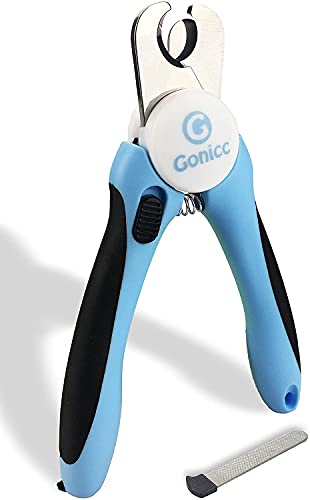
Two curved blades that close like scissors. Best for small to medium dogs with thinner nails. Offer good control and visibility. Look for models with safety guards to prevent cutting too much at once.
Entry-level to mid-rangeGuillotine Clippers
A stationary ring with a sliding blade. Best for larger dogs with thicker nails. Require more hand strength. The blade must be replaced regularly to stay sharp. Can crush nails if dull.
Mid-rangePlier-Style Clippers
Similar to pliers with a spring mechanism. Good all-purpose option for most dog sizes. Ergonomic handles reduce hand fatigue. Many models have safety stops to prevent over-cutting.
Mid-range to premiumNail Grinders
Rotary tools that file nails down gradually. Great for smooth finishing and dogs who tolerate them. Less risk of cutting the quick, but require gradual introduction. Some dogs dislike the noise and vibration.
PremiumClippers with Magnifying Glass & Light
Specialty clippers with built-in illumination and magnification. Helpful for owners of dogs with dark or black nails where the quick is hard to see. A thoughtful investment for anxious owners.
PremiumClippers with Sensor for Black Nails
Advanced clippers equipped with sensors that help detect the quick's location. Designed specifically for black or dark nails. Technology-assisted trimming reduces guesswork and anxiety.
LuxuryWhichever type you choose, always use sharp, dog-specific tools. Never use human nail clippers — they crush and split canine nails instead of cutting cleanly. Dull blades do the same damage. Replace blades or clippers regularly to ensure clean cuts. You can explore a full range of dog nail clippers to compare styles and features.
Other Supplies You'll Need
- Styptic powder or cornstarch: Essential for stopping bleeding if you accidentally cut the quick. Keep it within reach every time.
- High-value treats: Small, soft treats that your dog loves. These are your most powerful tool for building positive associations.
- Good lighting: Natural daylight or a bright lamp. You need to see the nail clearly, especially with dark nails.
- A non-slip surface: A rubber mat or towel helps your dog feel secure and prevents slipping during the process. A dog mat works well for this.
- Someone to help (optional): For wiggly or large dogs, a second person can hold gently and offer treats while you trim.
Understanding Your Dog's Nail Anatomy
To trim nails safely, you need to understand what's inside them. Each dog nail has two main parts: the outer shell and the quick (also called the pulp).
The outer shell is made of keratin, the same material as human fingernails. It's the hard, visible part you're trimming. The quick is the living tissue inside the nail. It contains blood vessels and nerves, which is why cutting into it is painful and causes bleeding.
In dogs with white or light-colored nails, the quick is visible as a pinkish area inside the nail. You can see exactly where it ends, making trimming relatively straightforward. In dogs with black or dark nails, the quick is invisible from the outside, which is why black nail trimming requires extra caution and a different technique.
The quick extends further down the nail than many people realize. As nails grow longer, the quick grows longer too, extending further into the nail. This is why dogs who haven't had their nails trimmed in a long time have quicks that reach almost to the tip. Regular trimming gradually encourages the quick to recede, making future trims easier and safer.
Key Insight: The quick recedes when you trim regularly. Dogs with long quicks from infrequent trimming can gradually train the quick to retract by trimming small amounts every 1-2 weeks until the nails reach a healthy length.
Step-by-Step Dog Nail Trimming Process
Follow these steps for a safe, effective trim. Take your time, especially in the beginning. Rushing is the most common cause of mistakes.
Step 1: Prepare Your Dog and Environment
Choose a quiet time when your dog is relaxed. Set up in a well-lit area with a non-slip surface. Have your tools and treats within easy reach. If your dog is anxious, do some calm petting and treat-giving before you start. You might also consider a calming product or anxiety wrap for very nervous dogs.
Step 2: Position Yourself and Your Dog
For small dogs, hold them in your lap or place them on a table at a comfortable height. For larger dogs, kneel beside them or have them lie down. The goal is a position where you can see the nails clearly and your dog feels secure. Never straddle or pin your dog — this increases fear and resistance.
Step 3: Handle the Paw Gently
Pick up one paw and hold it firmly but gently. Press the pad slightly with your thumb to extend the nail. This gives you a clear view and a stable cutting angle. Talk to your dog in a calm, reassuring voice throughout.
Step 4: Identify the Cutting Point
For light nails, locate the pink quick and plan to cut 2-3 millimeters in front of it. For dark nails, you'll need to use the incremental method described in the black nails section below. Never cut at a steep angle — cut perpendicular to the nail's growth direction.
Step 5: Make the Cut
Position the clippers so the blade is between the quick and the tip. Make one clean, decisive cut. Hesitating or squeezing slowly can crush the nail and cause pain. If you're unsure, cut less rather than more — you can always take off more, but you can't put it back.
Step 6: Reward and Repeat
Immediately give a treat and praise after each nail. This builds a positive association. Work through all the nails on one paw, then take a break if needed. For the first few sessions, you might only do one paw at a time. That's perfectly fine.
Step 7: Smooth Rough Edges (Optional)
Use a nail file or grinder to smooth any rough edges left by the clippers. This prevents snagging on carpets and fabric. A quality grinder makes this step quick and easy.
Step 8: Check the Dewclaws
Don't forget the dewclaws — the nails on the inner side of the leg, higher up. These don't touch the ground and therefore don't wear down naturally. They can grow in a complete circle and embed in the skin if neglected. Trim them the same way as other nails.
Trimming Black Nails Safely
Black nails are the number one source of anxiety for dog owners attempting home trimming. Since you can't see the quick, you need to use a different approach: the incremental slice method.
Instead of cutting a large chunk at once, take off thin slices from the tip. After each slice, look at the cut surface of the nail. At first, it will appear solid black or dark gray. As you get closer to the quick, you'll notice a grayish or pinkish dot appearing in the center. This dot is your warning sign — the quick is very close.
When you see that gray or pink dot, stop trimming that nail. You've reached the safe limit. The remaining bit of nail will wear down naturally, or you can file it smooth. Over time, as you trim regularly, the quick will recede and you'll be able to cut more without hitting it.
Helpful Tools for Black Nails: Consider using clippers with a built-in magnifying glass and light, or clippers with a sensor designed specifically for dark nails. These tools can make the process much less stressful for both you and your dog.
What to Do If You Cut the Quick
Even experienced groomers occasionally cut the quick. It happens. The most important thing is to stay calm and handle it quickly and correctly. Your dog will react to your energy — if you panic, they'll panic too.
- Stay calm and quiet. Don't gasp, shout, or yank your hand away. Speak softly to your dog.
- Apply styptic powder or cornstarch. Press a generous amount onto the bleeding nail. If you don't have styptic powder, cornstarch or flour works in a pinch.
- Apply firm pressure. Use a clean cloth or gauze to press the powder against the nail for several minutes. Don't release too soon to check — give it at least 2-3 minutes of continuous pressure.
- Distract and reward. Offer treats and praise while you hold the pressure. This helps your dog associate the experience with something positive, even though it hurt momentarily.
- Monitor for continued bleeding. If bleeding persists beyond 10-15 minutes, contact your veterinarian. Some dogs have clotting issues or the cut may be deeper than it appeared.
- Give your dog a break. Don't continue trimming after cutting the quick. End the session on a positive note and try again another day. Pushing through will only increase fear and resistance.
Prevention Tip: The best way to avoid cutting the quick is to trim small amounts frequently rather than large amounts infrequently. Regular trimming keeps the quick short and makes each session safer and easier.
Making Nail Trimming Stress-Free for Your Dog
Many dogs learn to fear nail trimming because of a single bad experience — often a cut quick or forceful restraint. Rebuilding trust takes time, but it's absolutely possible. The key is to go at your dog's pace and never force the process.
Desensitization and Counter-Conditioning
This is the gold standard approach for dogs who are fearful of nail trimming. It works by changing your dog's emotional response from fear to calm acceptance.
- Start with paw handling. For a week or more, simply touch and hold your dog's paws during relaxed moments. Give treats and praise. Don't pick up clippers yet.
- Introduce the clippers. Let your dog see and sniff the clippers. Give treats. Touch the clippers to their nails without cutting. Treat. Repeat several times over several days.
- Clip one nail. When your dog is comfortable with the clippers touching their nails, clip just one nail. Immediately give a high-value treat and end the session. That's it — one nail.
- Gradually increase. Over the next sessions, clip two nails, then three, and so on. Always end on a positive note before your dog shows signs of stress.
- Use high-value treats. Save the really good treats — cheese, chicken, freeze-dried liver — for nail trimming sessions only. This makes nail trimming predict something wonderful.
Handling Techniques That Help
- Work on a non-slip surface. Dogs feel more secure when they're not sliding around. A non-slip mat works well.
- Use a calm, confident voice. Your dog picks up on your emotions. Speak in a low, soothing tone.
- Avoid restraining. Restraint increases fear and can trigger defensive aggression. Use gentle guidance and treats instead.
- Try different positions. Some dogs do better standing, others lying down. Some prefer being on a table, others on the floor. Experiment to find what works for your dog.
- Consider a lick mat or frozen treat. Smearing peanut butter or soft food on a lick mat keeps your dog distracted and creates a positive association.
When to Get Professional Help
If your dog becomes extremely stressed, tries to bite, or has a history of trauma around nail trimming, professional help is the right call. A professional groomer or your veterinarian can often trim nails quickly and with less stress than you might at home. In some cases, a veterinarian can provide mild sedation for dogs who are truly terrified, which is far kinder than forcing them through a traumatic experience.
How Often Should You Trim Your Dog's Nails?
The short answer is every 3-4 weeks for most dogs. But there's more nuance than that. The right frequency depends on your dog's activity level, the surfaces they walk on, and how quickly their nails grow.
| Dog's Lifestyle | Recommended Frequency | Why |
|---|---|---|
| Active dogs walking on concrete/pavement daily | Every 4-6 weeks | Hard surfaces naturally file nails down |
| Dogs walking mostly on grass or soft surfaces | Every 2-3 weeks | Nails don't wear down naturally |
| Senior or less active dogs | Every 2-3 weeks | Less activity means less natural wear |
| Dogs with quick-growing nails | Every 2 weeks | Individual variation in growth rate |
| Puppies | Weekly (gentle trims) | Nails grow fast; early handling builds positive association |
Check your dog's nails weekly. If you can hear clicking on hard floors, it's time. If the nails are clearly visible past the paw pad when your dog is standing, it's time. Don't wait for them to get long — keeping up with regular trims is easier and safer than trying to catch up after months of neglect.
Common Dog Nail Trimming Mistakes to Avoid
Learning from these common errors will help you avoid painful experiences for your dog and stressful sessions for you.
- Cutting too much at once. The most common mistake. Always cut less than you think you need. You can always trim more, but you can't undo a cut quick. This is especially important with black nails.
- Using dull or inappropriate tools. Human nail clippers and dull dog clippers crush nails instead of cutting them, causing pain and splintering. Invest in quality dog nail clippers and replace them when they dull.
- Cutting at an angle. Cutting at a steep angle increases the risk of hitting the quick and leaves a jagged edge that can snag. Cut straight across, perpendicular to the nail's growth.
- Forgetting the dewclaws. Dewclaws don't touch the ground and can grow in a full circle, embedding in the skin if neglected. Always check and trim them too.
- Rushing the process. Nail trimming is not a race. Rushing increases the risk of mistakes and increases your dog's stress. Take breaks if needed.
- Punishing your dog for pulling away. If your dog pulls their paw back, they're communicating fear or discomfort. Punishing them makes the problem worse. Go slower and use more treats.
- Only trimming when nails are very long. Long gaps between trims allow the quick to grow long, making safe trimming difficult. Regular, frequent trims keep the quick short.
- Ignoring signs of pain. If your dog yelps, pulls away hard, or refuses to let you touch their paws, stop. Forcing the issue creates lasting fear. Seek professional help if needed.
Remember: Nail trimming is a skill that improves with practice — for both you and your dog. If your first few attempts are imperfect, that's completely normal. Be patient with yourself and your dog. The goal is progress, not perfection.
Frequently Asked Questions About Dog Nail Trimming
The Bottom Line on Dog Nail Trimming
Nail trimming is an essential part of dog care that protects your dog from pain and mobility problems. With the right tools, a patient approach, and plenty of treats, most dogs can learn to tolerate — and even accept — nail trimming as part of their routine. If you're ever unsure or your dog is severely stressed, don't hesitate to seek professional help. Your dog's comfort and well-being are always the priority. Regular trimming, combined with quality dog supplies and consistent preventive health care, keeps your dog happy, mobile, and pain-free.