Dog Weight Management: A Complete Guide to Healthy Weight Loss
Over half of all pet dogs are overweight or obese — a condition that shortens lifespan, causes chronic pain, and leads to serious diseases. This comprehensive guide shows you how to help your dog achieve and maintain a healthy weight safely and effectively.
If your dog looks a little rounder than they should, you are not alone. Veterinary studies consistently show that over 50% of pet dogs in developed countries are overweight or obese. The extra pounds creep on gradually — a few treats here, a little less exercise there — until one day your dog struggles to climb stairs or gets winded on a short walk.
The good news is that weight management is one of the most impactful things you can do for your dog's health. Studies show that dogs kept at a healthy weight live an average of 1.8 years longer than overweight dogs. They also have fewer joint problems, lower risk of diabetes and heart disease, and better quality of life in their senior years. This guide walks you through every aspect of dog weight management, from assessment to long-term maintenance.
Why Healthy Weight Matters
Weight is not just a cosmetic issue — it is a fundamental health indicator. Every extra pound on your dog places additional stress on their joints, heart, and lungs. For a dog who should weigh 20 pounds, carrying 5 extra pounds is equivalent to a 150-pound human carrying 37 extra pounds every moment of every day.
The benefits of maintaining a healthy weight extend far beyond appearance:
- Longer lifespan: Research from Purina's landmark 14-year study showed that dogs maintained at ideal body condition lived significantly longer — an average of 1.8 years more — compared to their overweight littermates.
- Fewer joint problems: Excess weight accelerates arthritis and can trigger orthopedic conditions like cruciate ligament tears. Overweight dogs are also higher-risk surgical patients if joint surgery becomes necessary.
- Better cardiovascular health: Obesity forces the heart to work harder, increasing risk of heart disease and high blood pressure. Healthy-weight dogs have better stamina and recover faster from exertion.
- Reduced diabetes risk: Obesity is the leading cause of insulin resistance and type 2 diabetes in dogs. Maintaining healthy weight is the single most effective prevention strategy.
- Improved breathing: Overweight dogs, especially flat-faced breeds, are at higher risk of respiratory distress. Weight loss can dramatically improve breathing and exercise tolerance.
- Better quality of life: Dogs at healthy weight are more active, more playful, and more comfortable. They can enjoy walks, hikes, and play sessions without struggling.
The Bottom Line: Weight management is not about vanity — it is preventive medicine. Every pound you help your dog lose reduces their risk of preventable disease and adds quality years to their life. If you need guidance on other aspects of preventive care, see our veterinary visit guide.
Assessing Your Dog's Weight
Before starting any weight loss program, you need an accurate assessment of your dog's current body condition. The scale alone is not enough — a 60-pound dog may be ideal weight if they are a large breed, or dangerously overweight if they are a medium breed. Body condition scoring (BCS) is the standard tool veterinarians use.
The Body Condition Score System
Body condition scoring uses a 1-9 scale, with 4-5 being ideal for most dogs. Here is how to assess your dog at home:
Underweight
Ribs, spine, and hip bones are easily visible from a distance. Obvious waist and abdominal tuck. No body fat visible. This indicates a dog needing weight gain, not loss.
Ideal Weight
Ribs easily felt but not visible. Visible waist when viewed from above. Belly tucks up when viewed from the side. This is the target range for most dogs.
Overweight to Obese
Ribs difficult or impossible to feel. No visible waist. Belly may sag or be flat. Fat deposits over spine and tail base. BCS 8-9 indicates clinical obesity requiring intervention.
How to Check at Home
Use these three simple tests to assess your dog's body condition:
- Rib check: Place both hands on your dog's ribcage with thumbs along the spine. Press gently. You should be able to feel each rib easily with light pressure, like feeling the bones on the back of your hand. If you have to press hard to feel ribs, your dog is overweight.
- Waist check: Look at your dog from above. There should be a visible indentation behind the ribcage — an hourglass shape. If the body looks like a sausage with no waist, your dog is overweight.
- Profile check: Look at your dog from the side. The belly should tuck up from the ribcage to the hind legs. If the belly line is flat or hangs down, your dog is overweight.
Tip: Have your veterinarian confirm your assessment at your next visit. They can also calculate your dog's ideal weight based on breed, frame size, and current condition. This gives you a clear target for your weight loss plan.
Health Risks of Dog Obesity
Obesity is not a benign condition. It is a disease that affects virtually every body system and significantly reduces both lifespan and quality of life. Understanding these risks is essential motivation for taking action.
| Health Condition | How Obesity Contributes | Risk Level |
|---|---|---|
| Osteoarthritis | Extra weight stresses joints; fat tissue releases inflammatory compounds that damage cartilage | Very High |
| Diabetes Mellitus | Obesity causes insulin resistance, leading to type 2 diabetes | High |
| Heart Disease | Heart must pump harder to supply blood to excess tissue; increased blood pressure | High |
| Respiratory Problems | Fat restricts lung expansion; increased risk of collapsing trachea and laryngeal paralysis | High |
| Cruciate Ligament Tears | Excess weight places abnormal stress on knee joints, causing ligament rupture | Very High |
| Skin Infections | Skin folds trap moisture and bacteria; poor circulation impairs healing | Moderate |
| Certain Cancers | Obesity is linked to increased risk of several cancer types | Moderate |
| Anesthesia Complications | Overweight dogs face higher risks during surgery and recovery | High |
The good news is that many obesity-related health problems improve or resolve with weight loss. Dogs with arthritis often show dramatic improvement in mobility after losing just 10-15% of their body weight. Diabetic dogs may require less insulin. Breathing and stamina improve. The investment in weight management pays off in health and happiness.
Common Causes of Weight Gain
Weight gain occurs when a dog consumes more calories than they burn. But the reasons behind this imbalance are often more complex than simple overfeeding. Understanding the root cause helps you address it effectively.
Dietary Factors
- Overfeeding at meals: The most common cause. Owners often use measuring cups inaccurately or feed based on the bag's guidelines rather than the individual dog's needs. A dog's caloric needs vary based on age, activity level, and metabolism.
- Too many treats: Treats should make up no more than 10% of daily calories. Many owners don't account for treats when calculating daily intake. A few biscuits or table scraps can add hundreds of calories.
- Table scraps: Human food is often high in fat, sugar, and calories. Even small amounts add up quickly and unbalance your dog's diet.
- Wrong food for life stage: Feeding puppy food to adult dogs, or senior food to young active dogs, provides inappropriate calorie levels for their needs.
- Free-feeding: Leaving food available all day works for some dogs but leads to overeating in others. Most dogs do better with scheduled meals.
Lifestyle Factors
- Insufficient exercise: Modern dogs often get far less activity than they need. A sedentary lifestyle is a major contributor to weight gain.
- Age-related changes: Metabolism slows with age, but many owners continue feeding the same amount. Senior dogs typically need 20-30% fewer calories than they did as adults.
- Spaying/neutering: Alters metabolism and often reduces activity level. Spayed and neutered dogs need about 25% fewer calories than intact dogs.
- Breed predisposition: Some breeds are genetically prone to obesity, including Labradors, Golden Retrievers, Beagles, Cocker Spaniels, and Pugs.
Medical Causes
In some cases, weight gain has an underlying medical cause. These require veterinary diagnosis and treatment:
- Hypothyroidism: An underactive thyroid slows metabolism, causing weight gain, lethargy, and skin problems. Diagnosed with blood tests and managed with medication.
- Cushing's disease: Excess cortisol production leads to weight gain (especially in the abdomen), increased appetite, and other symptoms. Requires veterinary diagnosis and management.
- Insulinoma: Rare pancreatic tumor that can cause weight gain and other metabolic abnormalities.
Important: If your dog gains weight despite eating a controlled diet and getting adequate exercise, see your veterinarian. Medical conditions like hypothyroidism and Cushing's disease require specific treatment — weight loss alone won't resolve them.
Diet Strategies for Weight Loss
Diet is the most critical component of any weight loss program. Exercise helps, but you cannot out-exercise a poor diet. The goal is to reduce caloric intake while providing complete nutrition and keeping your dog feeling satisfied.
Calculating Caloric Needs
Your veterinarian can calculate your dog's exact caloric needs based on their current weight, target weight, and activity level. As a general guideline:
- Weight loss phase: Feed 60-70% of the calories needed to maintain your dog's current weight. For a dog who should weigh 40 pounds but currently weighs 50, feed for a 40-pound target weight.
- Maintenance phase: Once ideal weight is reached, gradually increase to the maintenance level for that weight.
Your veterinarian can provide specific calorie targets. Without this guidance, start by reducing current food by 10-20% and adjust based on results. Always ensure your dog is getting complete nutrition — severe calorie restriction without veterinary supervision can cause nutrient deficiencies.
Choosing a Weight Management Diet
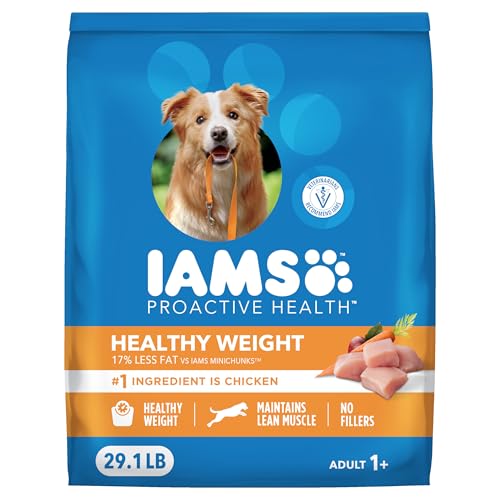
Light or Healthy Weight formulas from quality brands. These have reduced fat and calories while maintaining protein levels. Look for "weight management" or "healthy weight" on the label.
Best for: Dogs needing to lose 10-15% of body weight, with no other health conditions.
Therapeutic weight loss diets from veterinary nutrition companies. These are clinically proven, high-protein, high-fiber formulas that promote satiety and preserve muscle mass.
Best for: Dogs needing significant weight loss (20%+), dogs with concurrent health conditions, or when OTC diets haven't worked.
Veterinary nutritionist-formulated homemade diets. These can be effective but require precise formulation to avoid nutritional deficiencies.
Best for: Dogs with multiple food sensitivities or when commercial diets aren't tolerated. Must be designed by a board-certified veterinary nutritionist.
Key Features of Effective Weight Loss Diets
- High protein: Preserves lean muscle mass during weight loss. Look for 25-30% protein on a dry matter basis (higher for prescription diets).
- Moderate to high fiber: Promotes satiety (feeling full) and helps manage blood sugar. Fiber also adds bulk to the food without adding many calories.
- Lower fat: Fat is calorie-dense, so reducing fat is the most efficient way to cut calories. However, some fat is essential for health — don't go below minimum requirements.
- L-carnitine: An amino acid that helps the body burn fat for energy. Many weight loss diets include supplemental L-carnitine.
- Complete nutrition: Regardless of calorie reduction, the diet must meet AAFCO nutrient profiles for your dog's life stage.
Feeding Tips for Weight Loss:
• Measure food with a kitchen scale rather than a measuring cup for accuracy — volume measurements can vary by 20% or more.
• Split daily calories into 3-4 small meals to reduce begging and improve satiety.
• Add low-calorie vegetables (green beans, carrots, zucchini) to meals to increase volume without adding many calories.
• Use a slow-feeder bowl to make meals last longer.
• Account for ALL calories — treats, table scraps, dental chews, and pill pockets count.
Exercise Plans That Work
Exercise burns calories, builds muscle, improves cardiovascular health, and provides mental stimulation. For overweight dogs, exercise must be introduced gradually to avoid injury and burnout.
Starting an Exercise Plan
Overweight dogs often have reduced stamina and may have joint pain. Start slowly and build gradually:
- Week 1-2: Two 10-15 minute walks daily at a comfortable pace. Let your dog set the pace — they should be able to walk and breathe comfortably.
- Week 3-4: Increase to 15-20 minutes, twice daily. Add gentle incline walking if comfortable.
- Week 5-6: Increase to 20-30 minutes, twice daily. Add variety with different routes and terrain.
- Ongoing: Work up to 30-60 minutes of daily activity, adjusted for your dog's breed and health status.
If your dog seems sore or reluctant after exercise, reduce duration or intensity and consult your vet. Never push through pain — it indicates a problem.
Types of Exercise
- Walking: The foundation of any weight loss program. Low-impact and adjustable to any fitness level.
- Swimming: Excellent for overweight dogs with joint issues. Water supports body weight while providing resistance for muscle building.
- Fetch and retrieve: High-intensity bursts that burn calories quickly. Use a long leash in open areas until recall is reliable.
- Hiking: Great for building stamina and muscle. Start with flat trails and gradually add hills.
- Play with other dogs: Social play provides both physical and mental exercise. Supervise to ensure play stays appropriate and doesn't become too intense.
- Mental exercise: Puzzle toys, training sessions, and scent games burn calories and tire dogs out mentally. 15 minutes of mental work can be as tiring as 30 minutes of physical exercise.
Important: Avoid high-impact activities like running, jumping, or agility until your dog has lost some weight and built fitness. These activities stress joints and can cause injury in overweight dogs. Also avoid exercise in extreme heat — overweight dogs overheat more quickly. See our winter care guide and summer safety tips for seasonal exercise considerations.
Monitoring Progress
What gets measured gets managed. Regular monitoring allows you to track progress, make adjustments, and celebrate wins. It also helps you catch problems early if your dog is losing weight too quickly or not at all.
How to Track Progress
- Weekly weigh-ins: Use the same scale at the same time of day (before breakfast is ideal). Record the weight in a journal or app. A baby scale works well for small dogs; for large dogs, weigh yourself holding your dog, then subtract your weight.
- Monthly body condition scoring: Re-assess BCS monthly. You should see gradual changes in the rib, waist, and profile checks as your dog loses weight.
- Take photos: Monthly photos from the same angle provide visual evidence of progress. Sometimes changes are too gradual to notice day by day but obvious in side-by-side comparisons.
- Measure with a tape measure: Record chest girth (just behind the front legs) and waist circumference (narrowest part behind the ribs) monthly. This provides another data point beyond the scale.
- Track energy and mobility: Note improvements in activity level, willingness to play, ease of movement, and overall attitude. These quality-of-life indicators matter as much as the number on the scale.
Safe Weight Loss Rate: Dogs should lose 1-2% of their body weight per week. For a 50-pound dog, that means 0.5-1 pound per week. Faster weight loss can be dangerous and cause muscle loss, nutrient deficiencies, and metabolic problems. If your dog is losing weight faster than this, increase food slightly and consult your vet. If not losing at all, decrease food slightly or increase exercise. See your vet if no progress after 4 weeks of consistent effort.
Maintaining Healthy Weight
Reaching ideal weight is only half the battle. The real challenge is maintaining it long-term. Most dogs who lose weight regain it within a year without ongoing management.
Transitioning to Maintenance
Once your dog reaches their target weight, gradually increase food over 2-4 weeks until weight stabilizes. Monitor closely during this transition — you may need to adjust up or down to find the right maintenance level. Continue regular weigh-ins and body condition checks.
Long-Term Success Strategies
- Stick to measured meals: Continue weighing or measuring food. Eyeballing portions leads to gradual weight regain.
- Keep treats under control: Maintain the 10% rule. Use low-calorie treats or pieces of their regular kibble as rewards.
- Maintain exercise routine: Daily activity is essential for weight maintenance. Adjust for weather, age, and health status but keep moving.
- Regular monitoring: Weigh monthly and do body condition checks regularly. Catch small regains before they become big problems.
- Involve the whole household: Everyone who interacts with your dog must follow the same feeding and treat rules. One person sneaking table scraps can undo everyone else's efforts.
- Adjust for life changes: Metabolism changes with age. Spaying/neutering reduces caloric needs. Reduced activity due to injury or illness requires food adjustment. Stay flexible and adjust as needed.
Success Story Mindset: Think of weight management as a lifelong commitment, not a temporary diet. The habits you build during weight loss — measured meals, controlled treats, daily exercise — are the same habits that maintain health for life. Your dog doesn't know they're on a diet; they just know they feel better, move easier, and enjoy life more. That's the real reward.
Special Cases & Medical Conditions
Some dogs require modified weight management approaches due to age, breed, or concurrent health conditions. Always work with your veterinarian to tailor the plan to your dog's specific needs.
Senior Dogs
Older dogs have different nutritional needs and may have medical conditions that affect weight management. They typically need fewer calories but higher-quality protein to maintain muscle mass. Joint supplements like glucosamine and omega-3 fatty acids can help manage arthritis pain during weight loss. Senior dogs also benefit from more frequent veterinary monitoring. If your senior dog has arthritis, see our arthritis management guide for additional strategies.
Dogs with Joint Problems
Weight loss is actually one of the most effective treatments for arthritis. Every pound lost reduces stress on joints. However, exercise must be modified to avoid pain. Swimming and short, frequent walks on soft surfaces are ideal. Your vet may recommend joint supplements or pain medication to keep your dog comfortable during the weight loss process.
Dogs with Diabetes
Weight loss can improve insulin sensitivity and may reduce insulin requirements. However, this must be done under veterinary supervision with careful monitoring of blood glucose. The diet should be consistent and coordinated with insulin injections. Never change diet or insulin without veterinary guidance.
Dogs with Hypothyroidism
Hypothyroidism slows metabolism, making weight loss more difficult. Once diagnosed and treated with thyroid medication, metabolism normalizes and weight loss becomes possible. However, thyroid levels must be monitored regularly and medication adjusted as needed. Weight loss should still be gradual and supervised.
Never Starve Your Dog: Severe calorie restriction can cause serious health problems including hepatic lipidosis (fatty liver), nutrient deficiencies, and muscle wasting. Always follow veterinary guidance for safe weight loss. If you're not seeing results with moderate calorie reduction, consult your vet rather than drastically cutting food.
Frequently Asked Questions
You Have the Power to Change Your Dog's Life
Weight management is one of the most loving things you can do for your dog. It requires commitment, consistency, and patience — but the rewards are immense. A dog at healthy weight is a dog who moves without pain, breathes easily, plays joyfully, and lives longer. Start with a veterinary assessment, set realistic goals, measure your portions, get moving, and celebrate every small victory. Your dog doesn't need to be perfect — they just need you to care enough to help them feel their best. And the fact that you're reading this guide means you already do.