Dog Intelligence: How Smart Is Your Dog Really?
Explore the science of canine cognition — how dogs learn, solve problems, understand emotions, and rank among the smartest animals on Earth.
Dog intelligence is one of the most fascinating and misunderstood topics in animal science. Every dog owner believes their dog is smart — and in many ways, they are right. Dogs have evolved alongside humans for over 15,000 years, developing cognitive abilities that allow them to read our emotions, understand our words, and solve problems in ways that surprise even researchers.
But what does "intelligence" actually mean when we talk about dogs? Is it the ability to learn commands quickly? To solve puzzles? To manipulate us into giving extra treats? The answer is more complex than a simple IQ score. Canine intelligence comes in many forms, and understanding them helps you appreciate your dog's unique mental strengths.
This guide explores the science behind dog intelligence, from the smartest breeds to the cognitive tests researchers use, and practical ways to boost your dog's mental abilities at any age.
What Is Dog Intelligence?
Dog intelligence refers to a dog's capacity to learn, reason, solve problems, and adapt to new situations. Unlike human intelligence, which is often measured by standardized tests, canine intelligence is evaluated through behavioral observations and controlled experiments.
Research suggests that the average dog has the cognitive abilities roughly equivalent to a human toddler between 2 and 2.5 years old. Dogs can learn over 150 words, understand basic arithmetic, recognize human emotions, and even deceive other dogs and humans to get what they want.
Key Insight: Intelligence in dogs is not a single trait. A dog who excels at obedience training may struggle with independent problem-solving, while a dog who seems stubborn might actually be highly creative. Understanding these differences helps you work with your dog's natural strengths.
It's also important to recognize that intelligence is influenced by both genetics and environment. A dog bred for generations to herd sheep will have different cognitive strengths than a dog bred for companionship. Similarly, a dog raised in an enriched environment with plenty of mental stimulation will develop sharper cognitive skills than one kept in isolation. Providing mental stimulation is just as important as physical exercise for your dog's overall well-being.
Types of Canine Intelligence
Psychologist Howard Gardner proposed that human intelligence is not a single entity but a collection of distinct abilities. The same concept applies to dogs. Researchers have identified several types of canine intelligence, each manifesting differently in individual dogs.
Instinctive Intelligence
The innate abilities a dog was bred for. Herding dogs instinctively gather livestock, retrievers naturally fetch, and terriers dig and chase. This type of intelligence is hardwired and doesn't require training to emerge.
Breed-InheritedAdaptive Intelligence
A dog's ability to learn from experience and solve problems independently. Dogs with high adaptive intelligence figure out how to open doors, find hidden treats, and adjust their behavior to new situations without explicit training.
Problem-SolvingWorking & Obedience Intelligence
The ability to learn and follow commands. This is what most people think of when they hear "dog intelligence." Breeds like Border Collies and Poodles excel here, learning new commands in just a few repetitions.
TrainabilityEmotional Intelligence
The ability to read and respond to emotions — both human and canine. Dogs with high emotional intelligence sense when you're sad, happy, or stressed, and adjust their behavior accordingly. This is the foundation of the human-dog bond.
Social AwarenessSpatial Intelligence
The ability to navigate environments, remember locations, and understand spatial relationships. Dogs with strong spatial intelligence excel at finding their way home, locating hidden objects, and navigating complex obstacle courses.
NavigationCreative Intelligence
The ability to find novel solutions to problems. Some dogs invent games, develop unique communication methods, or figure out how to get what they want through creative means. This type of intelligence often surprises owners.
InnovationSmartest Dog Breeds Ranked
While every dog is an individual, certain breeds consistently demonstrate exceptional cognitive abilities. The most widely cited rankings come from psychologist Stanley Coren's research, which evaluated breeds based on their obedience intelligence — how quickly they learn and reliably perform commands.
| Rank | Breed | Learning Speed | Obedience Rate | Best Known For |
|---|---|---|---|---|
| 1 | Border Collie | Under 5 repetitions | 95%+ | Herding, agility, obedience |
| 2 | Poodle | Under 5 repetitions | 95%+ | Problem-solving, tricks, therapy |
| 3 | German Shepherd | Under 5 repetitions | 95%+ | Police work, protection, service |
| 4 | Golden Retriever | 5-15 repetitions | 85%+ | Assistance, search & rescue, family |
| 5 | Doberman Pinscher | 5-15 repetitions | 85%+ | Guard work, military, protection |
| 6 | Shetland Sheepdog | 5-15 repetitions | 85%+ | Herding, agility, obedience |
| 7 | Labrador Retriever | 5-15 repetitions | 85%+ | Assistance, retrieval, family |
| 8 | Papillon | 5-15 repetitions | 85%+ | Tricks, agility, companionship |
| 9 | Rottweiler | 5-15 repetitions | 85%+ | Guard work, protection, service |
| 10 | Australian Cattle Dog | 5-15 repetitions | 85%+ | Herding, endurance, problem-solving |
However, it's important to remember that these rankings focus primarily on obedience intelligence — the ability to learn and follow commands. A breed not on this list might excel at independent problem-solving, emotional intelligence, or other cognitive domains. For example, the Japanese Shiba Inu is known for its independent thinking and creative problem-solving, even though it may not rank as high in traditional obedience.
If you're considering a specific breed, look beyond intelligence rankings. Consider what type of intelligence matters most for your lifestyle. A highly trainable dog requires more mental engagement, while an independent thinker may be better suited to owners who appreciate a dog with a mind of its own. Regardless of breed, all dogs benefit from proper training classes and consistent mental enrichment.
Breed Intelligence Tip: Intelligence isn't everything. A highly intelligent dog who is bored and under-stimulated can become destructive and difficult to manage. Mental stimulation through puzzle toys and training games is essential for smart breeds. Conversely, a less "academically" intelligent dog may be perfectly content with a simpler routine and make an equally wonderful companion.
How Dogs Learn
Understanding how dogs learn is fundamental to understanding their intelligence. Dogs learn through several distinct mechanisms, each engaging different cognitive processes.
Classical Conditioning
First described by Ivan Pavlov, classical conditioning occurs when a dog learns to associate a neutral stimulus with a meaningful one. Pavlov's famous experiments showed that dogs could learn to salivate at the sound of a bell if that bell was repeatedly paired with food. In everyday life, this is why your dog gets excited when they hear the sound of a leash or the rustling of a treat bag — they've learned to associate these sounds with going for a walk or getting a reward.
Operant Conditioning
Operant conditioning, pioneered by B.F. Skinner, is learning through consequences. A dog learns that certain behaviors lead to rewards (positive reinforcement) while others lead to undesirable outcomes (punishment). This is the foundation of most modern dog training. When you reward your dog for sitting, you're using operant conditioning to increase the likelihood that they'll sit again. This is why training treats are such effective tools.
Observational Learning
Dogs can learn by watching other dogs — and sometimes humans. This is called observational learning or social learning. Puppies often learn behaviors from their mothers and littermates. Some dogs learn to open doors or use bells to signal they need to go outside simply by watching another dog do it. This ability to learn through observation demonstrates sophisticated cognitive processing.
Insight Learning
Insight learning is the ability to solve a problem by understanding the relationships between different elements, rather than through trial and error. This is the highest form of learning and is relatively rare in the animal kingdom. Dogs demonstrate insight learning when they figure out a complex puzzle they've never seen before, such as pulling a rope to release a treat or moving an obstacle to reach a toy.
How This Helps You: Understanding how your dog learns allows you to train more effectively. Use classical conditioning to build positive associations, operant conditioning to teach desired behaviors, and observational learning by demonstrating actions. Provide opportunities for insight learning through interactive dog toys and challenging puzzles.
The Role of Repetition and Consistency
Regardless of the learning mechanism, dogs learn best through repetition and consistency. Short, frequent training sessions (5-10 minutes, several times a day) are far more effective than long, infrequent ones. Consistency in commands, rewards, and expectations helps dogs understand what's being asked of them. This is why professional trainers emphasize patience and repetition over punishment or coercion.
Dog Memory & Problem Solving
Dogs have impressive memories, particularly when it comes to associations that matter for their survival or well-being. Research has shown that dogs can remember specific events for extended periods and can solve complex problems when motivated.
Short-Term Memory
Dogs have a short-term memory that lasts approximately 10-20 seconds, similar to the duration of a human's short-term memory. This is why it's crucial to reward desired behavior immediately — if you wait even a few seconds, your dog may not connect the reward to the action. This rapid fading of short-term memory also explains why dogs can "forget" a command if it's not practiced regularly.
Long-Term Memory
Dogs have excellent long-term memory, especially for experiences with strong emotional content. A dog who has been abused may carry fear and anxiety for years. Conversely, a dog who has had a particularly positive experience — such as finding a favorite treat in a specific location — may remember it for years. This is why building positive associations through high-value treats is so effective in training and behavior modification.
Episodic Memory
Episodic memory is the ability to recall specific events from the past, including where and when they occurred. For a long time, scientists believed only humans had episodic memory. However, research now suggests dogs do possess a form of episodic memory. They can remember specific people, places, and experiences, and can recall these memories when given appropriate cues. This is why your dog remembers the vet's office even before you walk through the door.
Problem-Solving Abilities
Dogs are natural problem-solvers, though their approach varies by breed and individual temperament. Some dogs use trial-and-error, trying multiple solutions until one works. Others use observational learning, watching other dogs or humans solve a problem and then imitating the solution. The most intelligent dogs use insight — they seem to "think" through a problem before acting.
Problem-solving tests typically involve tasks like:
- Pulling a rope to open a door or access a treat
- Navigating a barrier to reach a desired object
- Manipulating a puzzle toy with multiple steps
- Using tools (some dogs learn to use objects as tools)
- Coordinating actions with humans to achieve a goal
If you want to challenge your dog's problem-solving skills, consider puzzle toys designed specifically for dogs. These toys require your dog to manipulate different mechanisms to access treats, engaging their cognitive abilities in a fun and rewarding way.
Emotional Intelligence in Dogs
Emotional intelligence — the ability to perceive, understand, and respond to emotions — may be the most remarkable aspect of canine cognition. Dogs have evolved to read human emotions with astonishing accuracy, and this ability is a key component of their overall intelligence.
Recognizing Human Emotions
Research has demonstrated that dogs can recognize human facial expressions associated with happiness, sadness, anger, fear, and surprise. They also respond to vocal tones that convey different emotional states. When you're happy, your dog may reflect that happiness with a wagging tail and playful behavior. When you're sad, many dogs will approach you with concern, offering comfort in their own way.
One study found that dogs can distinguish between happy and angry faces even when shown only half the face, suggesting they process emotional expressions similarly to humans. This ability likely developed because dogs who could accurately read human emotions had a survival advantage — they could better predict human behavior and respond appropriately.
Empathy and Comforting Behavior
Many dog owners report that their dogs seem to sense when they're upset and offer comfort. Science supports these observations. Studies show that dogs will approach a person who is crying or showing distress more frequently than someone who is speaking neutrally. They may nudge, lick, or simply stay close — behaviors that suggest a basic form of empathy.
This doesn't mean dogs fully understand complex human emotions, but they do recognize distress and have an instinct to offer comfort. This emotional intelligence strengthens the human-animal bond and explains why dogs are so effective as therapy animals. If you're interested in developing this ability in your dog, consider therapy dog training.
Jealousy and Fairness
Dogs also demonstrate emotions that suggest a sense of fairness. In experiments, dogs have been shown to refuse to perform a trick if they see another dog receiving a better reward for the same behavior. This suggests dogs have some understanding of fairness and equity — a cognitive ability once thought to be uniquely human.
Emotional Intelligence and Training
Emotional intelligence plays a critical role in how dogs learn and respond to training. A dog who is anxious or fearful cannot learn effectively. That's why positive reinforcement training, which builds trust and confidence, is more effective than punishment-based methods. Understanding your dog's emotional state allows you to adjust your training approach for better results. If your dog struggles with anxiety, consider calming products or consult with a veterinarian.
Emotional Intelligence Tip: Your dog is always reading your emotions. If you're frustrated or stressed during training, your dog will sense it and may become stressed too. Always approach training with patience and a calm, positive attitude. A happy trainer makes a happy learner.
How Intelligence Is Tested
Researchers use a variety of methods to assess canine intelligence, each measuring different cognitive abilities. Understanding these tests helps you appreciate what scientists have learned about dog cognition.
Obedience Intelligence Tests
The most well-known intelligence rankings come from Stanley Coren's research, which evaluated breeds based on how many repetitions it takes to learn a new command and how reliably they obey on the first command. Breeds that learned commands in fewer than 5 repetitions and obeyed with 95% accuracy or better were ranked as the smartest. This measure focuses on working intelligence — the ability to learn and follow instructions.
Problem-Solving Tests
These tests assess a dog's ability to solve novel problems independently. Common tests include:
- The detour test: A dog must navigate around a barrier to reach a desired object or person
- The rope-and-treat test: A dog must pull a rope to access a treat hidden under a platform
- The impossible task: A dog must persist in trying to solve an unsolvable problem to measure frustration tolerance and persistence
Social Learning Tests
These tests measure a dog's ability to learn by observing others. In one common test, a dog watches a human or another dog perform a task (like opening a box), and then must perform the same task. Dogs who can imitate the observed behavior demonstrate social learning ability.
Memory Tests
Memory tests assess both short-term and long-term memory. In a typical test, a dog watches a human hide a treat in one of several locations. After a delay (ranging from seconds to minutes), the dog is released and must find the treat. This tests working memory and spatial memory.
Emotional Recognition Tests
These tests measure a dog's ability to recognize and respond to human emotions. Researchers show dogs pictures of happy and angry faces while measuring their responses (such as eye movement or heart rate). Dogs who respond differently to different expressions demonstrate emotional intelligence.
The Canine IQ Test
Some organizations offer standardized "canine IQ tests" that assess multiple cognitive domains. These tests typically include a variety of tasks, such as finding hidden treats, following pointing gestures, and solving simple puzzles. While these tests are not scientifically rigorous in the way academic research is, they can provide a fun and interesting way to learn about your dog's cognitive strengths.
It's worth noting that most intelligence tests were developed with specific breeds in mind. A test designed for a Border Collie may not accurately assess the intelligence of a Basset Hound or a Shiba Inu. This is why breed-specific cognitive assessments and training approaches matter. If you're interested in understanding your dog's unique intelligence, consult with a professional dog trainer or behaviorist who can assess your dog's strengths and challenges.
Boosting Your Dog's Cognitive Skills
Regardless of your dog's natural intelligence, you can help them reach their full cognitive potential. Mental enrichment is not just about making your dog smarter — it also prevents behavior problems, reduces anxiety, and keeps your dog mentally sharp throughout their life.
1. Mental Stimulation Through Puzzle Toys
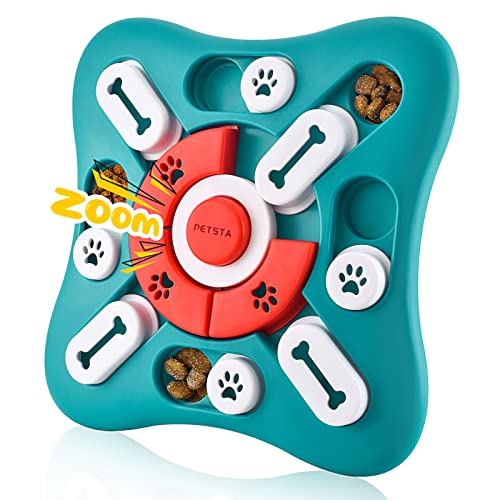
Puzzle toys are one of the most effective tools for cognitive development. These toys require your dog to solve a problem — such as sliding a panel, lifting a lid, or rolling a ball — to access a treat. Start with easy puzzles and gradually increase difficulty as your dog's skills improve. The best puzzle toys for dogs engage multiple senses and offer varying levels of challenge.
2. Training Games
Training games combine learning with fun. Hide-and-seek (where you hide and call your dog), "find it" games (where your dog searches for hidden treats or toys), and shaping games (where you reward successive approximations of a behavior) all build cognitive skills. These games also strengthen your bond and provide mental stimulation. Using training treats makes the games even more motivating.
3. Novel Experiences
Exposure to new environments, people, and situations promotes neural plasticity — the brain's ability to form new connections. Take your dog to new places, introduce them to new friendly people and animals, and let them explore new textures and sounds. Safe, positive novel experiences are like cross-training for the brain.
4. Social Interaction
Dogs are social animals, and social interaction is crucial for cognitive health. Regular play with other dogs, interaction with humans, and participation in group activities like training classes or dog sports all challenge your dog's social intelligence. If your dog is anxious around other dogs, work with a behaviorist to build confidence gradually.
5. Physical Exercise
Physical exercise isn't just good for the body — it's essential for the brain. Exercise increases blood flow to the brain, promotes the release of neurotrophic factors that support neuron health, and reduces stress. A tired dog is not just a good dog — they're also a more cognitively sharp dog. Make sure your dog gets appropriate mental and physical exercise daily.
6. Nutrition for Brain Health
A balanced diet rich in omega-3 fatty acids, antioxidants, and other brain-supporting nutrients promotes cognitive function. Some senior dog foods are formulated with additional cognitive support nutrients like DHA, vitamin E, and L-carnitine. If you're concerned about your dog's cognitive health, especially as they age, consult your veterinarian about whether supplements like dog supplements might help.
7. Lifelong Learning
Just like humans, dogs benefit from continued learning throughout their lives. Teach new tricks regularly, even to senior dogs. Their brains can still form new connections and learn new things. Learning new skills keeps the brain active and engaged, and it's a wonderful way to enrich your dog's life.
Cognitive Decline in Senior Dogs: Senior dogs may experience some cognitive decline, similar to aging humans. Signs include confusion, disorientation, reduced interaction, and changes in sleep patterns. If you notice these signs in your aging dog, consult your veterinarian. There are treatments and management strategies that can help. Learn more about maintaining mobility and cognitive health in senior dogs.
Frequently Asked Questions
Understanding Your Dog's Unique Intelligence
Every dog is intelligent in their own way. Whether you share your life with a Border Collie who learns commands in seconds or a Shiba Inu who thinks independently and creatively, your dog's mind is a remarkable thing. The key to a fulfilling relationship is understanding how your dog thinks, what motivates them, and what kind of mental stimulation they need. Provide plenty of mental stimulation, invest in quality puzzle toys, and never stop learning together. Your dog's intelligence will continue to surprise and delight you for years to come.