Dog Training Treats: The Complete Guide
Learn how to choose the best treats for training, use them effectively, and avoid common mistakes that slow down your dog's progress.
Training treats are more than just snacks — they are communication tools. When used correctly, they tell your dog exactly which behavior earned a reward, making learning faster and more enjoyable for both of you. But not all treats are created equal, and how you use them matters just as much as what you use.
Whether you are teaching basic commands like sit and stay, or working through challenging behavior modification techniques, the right training treats can make the difference between a dog who is engaged and eager to learn, and one who loses interest after five minutes. This guide breaks down everything you need to know about selecting and using training treats effectively.
Why Training Treats Matter
Dogs learn through consequences. When a behavior is followed by something rewarding, that behavior is more likely to happen again. This is the foundation of positive reinforcement training, the most effective and humane way to teach dogs new behaviors.
Training treats serve several critical functions in this process:
- They mark the exact behavior you want: A treat delivered within 1-2 seconds of a desired behavior tells your dog precisely what they did right. Without this immediate feedback, dogs cannot connect the reward to the action.
- They build positive associations: Treats help your dog associate training sessions, new environments, and even scary situations with positive outcomes. This is why treats are essential for crate training and socialization.
- They increase motivation: A dog who knows tasty rewards are available will work harder and stay focused longer. This is especially important for high-energy breeds or dogs who are easily distracted.
- They strengthen your bond: Training with treats creates a positive, cooperative relationship built on trust rather than fear. Your dog learns that working with you is rewarding.
The Science Behind Treats: Positive reinforcement training is backed by decades of behavioral science. When a dog performs a behavior and receives a reward, the brain releases dopamine — a neurotransmitter associated with pleasure and motivation. This dopamine release strengthens the neural pathway for that behavior, making it more likely to be repeated. This is why reward-based training is not just kinder, but also more effective long-term than punishment-based methods.
Qualities of a Great Training Treat
Not every treat works well for training. The best training treats share specific characteristics that make them practical and effective during training sessions.
Essential Qualities
- Small size: Treats should be pea-sized or smaller. You will be giving many treats during a training session, and large treats slow down the pace and add too many calories.
- Soft texture: Soft treats can be eaten quickly without breaking your dog's focus. Hard biscuits require chewing time, which interrupts the training flow.
- Strong smell: Dogs rely heavily on their sense of smell. Strong-smelling treats are more enticing and easier for your dog to detect as a reward.
- Easy to break apart: Treats that can be torn into smaller pieces give you more flexibility and help control calorie intake.
- High protein content: Meat-based treats are generally more motivating than carbohydrate-heavy treats. Look for treats with real meat as the first ingredient.
Practical Considerations
- Low calorie: Since you will be using many treats, choose low-calorie options or cut back on meals on training days.
- Not crumbly: Crumbly treats leave residue in your training pouch and on the floor, attracting ants and making a mess.
- Affordable in bulk: Training requires a lot of treats. Choose options that are budget-friendly when purchased in larger quantities.
- Long shelf life: Freeze-dried and dry treats last longer than fresh meat or cheese.
- Easy to carry: Treat pouches are designed to hold small treats, so avoid treats that are too greasy or too large to fit comfortably.
Types of Training Treats
Training treats come in many forms, each with advantages and disadvantages. Understanding the different types helps you choose the best option for your dog and training situation.
Freeze-Dried Meat Treats
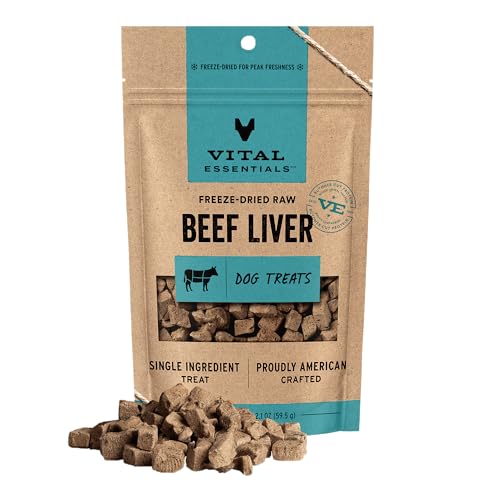
Single-ingredient treats made from freeze-dried liver, chicken, beef, or salmon. Extremely high value for most dogs due to intense aroma and flavor. Lightweight and easy to carry. Can be broken into tiny pieces.
PremiumSoft Training Treats
Commercial soft treats designed specifically for training. Usually semi-moist and easy to break apart. Available in many flavors. Convenient and widely available. Check ingredient quality — some contain fillers and artificial colors.
Mid-rangeDehydrated Meat Strips
Dried meat pieces like chicken jerky or beef lung. High protein and very palatable. Require more chewing than soft treats, so better for breaks between exercises than for rapid-fire rewards. Look for products without added sugar or preservatives.
Mid-range to premiumCheese and Hot Dog Slices
Human foods that make excellent high-value training treats. Cut into tiny pieces. Cheese is convenient but high in fat — use sparingly. Hot dogs are inexpensive and highly motivating but processed. Best reserved for difficult tasks or outdoor training.
Budget-friendlyRegular Kibble
Your dog's daily food used as training rewards. Zero extra calories if you subtract from meals. Works well for easy behaviors and low-distraction environments. Not exciting enough for difficult tasks or highly food-driven dogs in distracting settings.
Budget-friendlyHomemade Treats
Treats you make at home using simple recipes. You control the ingredients and can customize size and texture. Great for dogs with allergies or sensitivities. Requires time and effort. Ensure recipes are nutritionally appropriate. See our guide on easy homemade dog treats for recipes.
Mid-rangeTreat Value Levels: Matching Rewards to Difficulty
Not all training situations are equal. A treat that works perfectly in your living room may be completely ignored at a busy park. Understanding treat value levels helps you use the right reward for the right situation.
| Value Level | Examples | Best Used For | Frequency |
|---|---|---|---|
| Low Value | Regular kibble, plain biscuits, carrot pieces | Easy behaviors in familiar environments, reinforcing known commands | Frequent — can be used liberally |
| Medium Value | Soft commercial training treats, small cheese cubes | New behaviors, moderate distractions, practicing in different locations | Moderate — use during focused training |
| High Value | Freeze-dried liver, hot dog slices, salmon pieces | Difficult tasks, high-distraction environments, overcoming fear or anxiety | Sparingly — reserve for challenging situations |
Pro Tip: Create a "treat hierarchy" for your dog. Determine which treats are low, medium, and high value by observing how excited your dog gets when you show them. Some dogs are obsessed with cheese but indifferent to liver. Know your individual dog's preferences and use them strategically.
How to Use Training Treats Effectively
Having the right treats is only half the equation. How you deliver them matters just as much as what you deliver. These techniques will make your training sessions more efficient and effective.
- Use a marker word or clicker: Say "yes!" or click a clicker at the exact moment your dog performs the desired behavior, then deliver the treat. This bridges the gap between behavior and reward, making it clear what earned the treat. The marker becomes a secondary reinforcer that predicts the treat.
- Reward frequently at first: When teaching a new behavior, reward every correct response. This is called continuous reinforcement. Once the behavior is reliable, switch to intermittent reinforcement — rewarding only some correct responses — to strengthen the behavior long-term.
- Keep treats small: Pea-sized pieces are sufficient. Large treats slow down training, add unnecessary calories, and reduce the number of repetitions you can fit into a session. You can always give multiple small treats for a particularly excellent response.
- Deliver treats quickly: The reward should arrive within 1-2 seconds of the behavior. If you fumble with a treat pouch or dig in your pocket, your dog may lose the connection between behavior and reward. Prepare treats before starting the session.
- Vary the reward: Sometimes give one treat, sometimes give three in a row, sometimes give a treat plus praise. Variable rewards are more exciting and keep your dog engaged. This is the same principle that makes gambling addictive — unpredictability increases motivation.
- Use treats strategically: Reserve high-value treats for difficult tasks or distracting environments. In quiet, familiar settings, use lower-value treats or kibble. This creates contrast and makes high-value treats more effective when you need them.
- Fade treats gradually: Once your dog reliably performs a behavior, start replacing treats with praise, play, or other rewards. The goal is for your dog to respond to your command because it has become a habit, not because they are waiting for a treat.
The 10% Rule: Training treats should make up no more than 10% of your dog's daily caloric intake. If you are doing multiple training sessions per day, reduce your dog's regular meals slightly to compensate. Alternatively, use part of your dog's daily kibble ration as training rewards. This prevents weight gain and keeps treats effective — a hungry dog is more motivated by food.
Common Treat Mistakes to Avoid
Even well-intentioned training can be undermined by these common mistakes. Avoid them to get the most out of every treat and every training session.
- Using treats as bribes: A bribe is shown before the behavior — you wave a treat in front of your dog's nose to get them to sit. This creates a dog who only performs when they see food. Instead, reward after the behavior. The treat should be a consequence, not a cue.
- Giving treats for free: If you give treats randomly throughout the day, they lose value. Your dog should have to earn treats through training or desirable behavior. Free treats dilute the power of rewards during training.
- Using the same treat for everything: If your dog gets the same boring treat whether they are learning a complex new skill or doing a simple known command, motivation will drop. Use treat value levels strategically.
- Overfeeding treats: Treats should not make up more than 10% of daily calories. Many owners unintentionally overfeed by using large treats or not adjusting meal portions on training days. Monitor your dog's weight and adjust accordingly.
- Using hard or large treats: Hard biscuits and large treats take too long to chew and disrupt the training flow. Soft, pea-sized treats keep sessions fast-paced and effective.
- Rewarding at the wrong time: If your dog stands up from a sit before you deliver the treat, you are rewarding the standing up, not the sit. Deliver the treat while the behavior is still happening, or use a marker word to pinpoint the moment.
- Becoming a treat dispenser: If your dog only pays attention to you when you have treats in your hand, you have become a human vending machine. Fade treats to a variable schedule and replace them with other rewards like praise, play, and access to things your dog wants.
- Ignoring treat quality: Not all treats are nutritionally sound. Many commercial training treats are full of fillers, artificial colors, and by-products. Choose treats with quality ingredients. Your dog's health matters more than convenience.
Healthy Treat Alternatives
You don't have to rely on commercial treats. Many healthy, low-calorie options work well for training and are gentler on your dog's waistline and overall health.
Low-Calorie Options
- Green beans: Fresh or frozen green beans are crunchy, low-calorie, and many dogs enjoy them. Great for dogs who need to lose weight.
- Carrot pieces: Sliced carrots are crunchy and sweet. Cut into small pieces for training. Best for dogs who enjoy crunching.
- Cucumber slices: Very low in calories and hydrating. Some dogs love them, others ignore them. Test with your dog first.
- Blueberries: Antioxidant-rich and a fun treat for many dogs. Use in moderation — too many can cause digestive upset.
- Watermelon (seedless): Refreshing and low-calorie. Remove rind and seeds. Great for summer training sessions.
Protein-Based Options
- Cooked chicken breast: Plain, boiled chicken is high-value and low-fat. Cut into tiny pieces. Most dogs find chicken extremely motivating.
- Freeze-dried liver: Nutrient-dense and highly palatable. Break into small pieces — a little goes a long way.
- Dehydrated fish: Salmon or whitefish treats are rich in omega-3 fatty acids. Strong-smelling and very enticing.
- Egg pieces: Scrambled or hard-boiled eggs cut into small pieces. High protein and affordable. Some dogs have egg sensitivities — watch for reactions.
- Cottage cheese: Low-fat cottage cheese can be used as a soft training treat. High in protein and easy to break into tiny pieces. Use sparingly for dogs who tolerate dairy.
Check Before Feeding: Some human foods are toxic to dogs. Never feed grapes, raisins, onions, garlic, chocolate, xylitol, or macadamia nuts. Always introduce new foods in small amounts to check for allergic reactions or digestive upset. When in doubt, stick to dog-specific treats.
Frequently Asked Questions
Ready to Start Training?
Now that you understand how to choose and use training treats, you are ready to make every training session more effective. Remember the key principles: small, soft, smelly treats; reward after the behavior, not before; use treat value levels strategically; and always adjust meal portions on training days. Browse our recommended dog training treats below to find the perfect reward for your dog.