Dog Dental Care: The Complete Guide to Healthy Teeth & Gums
Protect your dog from the most common health problem they face — dental disease. Learn how to brush, choose the right products, and recognize warning signs before it's too late.
By the age of three, more than 80% of dogs show signs of dental disease. It is the single most common health problem veterinarians diagnose — and one of the most overlooked by owners. Unlike a limp or a cough, dental disease develops silently. Your dog can't tell you their mouth hurts. They adapt, eat slower, chew on one side, or simply live with chronic pain.
The consequences go far beyond bad breath. Bacteria from infected gums enters the bloodstream and can damage the heart, liver, and kidneys. Studies have linked periodontal disease to shorter lifespans and increased risk of heart disease. The good news: dental disease is almost entirely preventable with a consistent home care routine and regular veterinary checkups.
This guide walks you through everything you need to know — from how to brush your dog's teeth without a battle, to choosing the right toothbrush and toothpaste, to understanding when professional cleaning is necessary. Whether you have a tiny Chihuahua or a giant Mastiff, the principles are the same.
Why Dog Dental Care Matters More Than You Think
Dental disease isn't just about your dog's mouth. It's a systemic health issue that affects their entire body. When plaque and tartar build up along the gumline, they create an environment where bacteria thrive. The gums become inflamed (gingivitis), and eventually the infection spreads to the structures that support the teeth (periodontitis).
Once periodontitis sets in, it's irreversible. The bone and tissue that hold teeth in place are destroyed. Teeth become loose, painful, and eventually fall out. But the damage doesn't stop there — the bacteria continuously seed into the bloodstream, putting stress on vital organs.
The Hidden Toll of Dental Disease:
• Chronic pain: Dogs are masters at hiding pain. A dog with severe dental disease may still eat, but they are suffering. Signs include chewing on one side, dropping food, or avoiding hard kibble.
• Organ damage: Bacteria from infected gums can colonize heart valves (endocarditis), liver, and kidneys. This is why vets often recommend bloodwork before dental cleanings.
• Reduced lifespan: Studies show dogs with severe periodontal disease have shorter lifespans compared to dogs with healthy mouths. The chronic inflammation takes years off their life.
• Behavior changes: Pain can make dogs irritable, withdrawn, or aggressive when touched near the face. Many owners mistake this for "getting old" or "behavior problems."
The good news? Prevention is simple, affordable, and highly effective. A few minutes of brushing each day, combined with the right dental chews and regular vet exams, can add years of comfortable, healthy life to your dog.
Warning Signs of Dental Disease in Dogs
Dogs instinctively hide weakness and pain — a survival instinct inherited from their wild ancestors. This means dental disease often goes unnoticed until it's advanced. By learning the subtle signs, you can catch problems early when they're easiest and least expensive to treat.
Signs You Can See at Home
- Bad breath: The most common early sign. If your dog's breath makes you recoil, something is wrong. Healthy dog breath shouldn't be offensive.
- Yellow or brown teeth: Tartar (calcified plaque) appears as a hard, yellow-brown deposit along the gumline. Once tartar forms, brushing alone won't remove it.
- Red or swollen gums: Healthy gums are pink and firm. Red, puffy, or bleeding gums indicate gingivitis — the first stage of periodontal disease.
- Bleeding: Blood on toys, chews, or in the water bowl. Bleeding gums are never normal.
- Pawing at the mouth: Your dog may paw at their face or rub their muzzle on furniture if their mouth is uncomfortable.
- Drooling: Excessive drooling, especially if it's new or one-sided, can indicate oral pain or infection.
- Dropping food: If your dog drops kibble while eating or chews on one side only, they may have a painful tooth.
- Reluctance to eat hard food: A dog who suddenly refuses kibble but will eat soft food may be avoiding pain, not being picky.
Signs Only Your Vet Can See
- Pockets between teeth and gums: Measured with a dental probe. Pockets deeper than 3mm indicate disease.
- Tartar below the gumline: The most dangerous tartar is hidden under the gums. Only a vet can detect and remove it.
- Loose teeth: By the time a tooth is visibly loose, significant bone loss has already occurred.
- Fractured teeth: Dogs can crack teeth on hard chews, bones, or toys. Fractured teeth are painful and prone to infection.
- Oral tumors: Regular vet exams can catch oral masses early when they're most treatable.
When to See Your Vet Immediately: If your dog has severe bad breath, is drooling excessively, has visibly loose or missing teeth, refuses to eat, or has swelling around the face or jaw, schedule a veterinary dental exam as soon as possible. These are signs of advanced disease that requires professional treatment. For more details on what to expect, see our guide to professional dog dental cleaning.
How to Brush Your Dog's Teeth (Without a Fight)
Brushing is the gold standard of home dental care. It physically removes plaque before it hardens into tartar. But many owners give up because their dog resists. The secret is gradual desensitization — training your dog to accept brushing the same way you'd train any other behavior.
Step-by-Step Brushing Guide
- Start with your finger: Before introducing a toothbrush, let your dog lick pet-safe toothpaste off your finger. Do this for a few days until they look forward to it. Never use human toothpaste — it contains xylitol, which is toxic to dogs.
- Touch the gums: Once your dog is comfortable with your finger, gently rub their gums and teeth with your finger and a little toothpaste. Focus on the outside surfaces of the teeth where tartar builds up most.
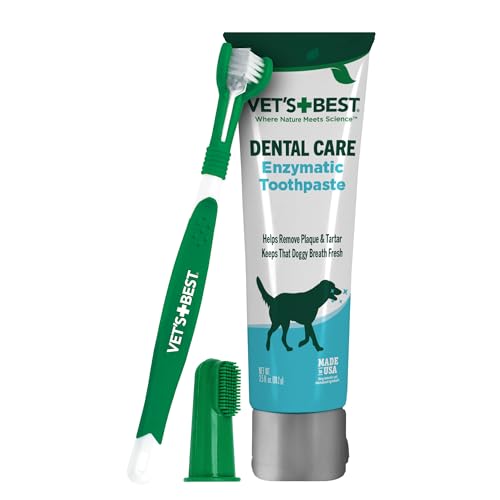
- Introduce a finger brush: A finger brush is a soft rubber cap that fits over your fingertip. It's gentler than a traditional brush and easier to control. Use it with enzymatic dog toothpaste.
- Graduate to a real toothbrush: Choose a brush with soft bristles and a head size appropriate for your dog's mouth. A long-handled brush helps you reach back teeth. Angle the bristles 45 degrees toward the gumline and use small circular motions.
- Focus on the outside: The outside surfaces of the teeth (facing the lips) are where tartar accumulates most. The inside surfaces get some cleaning from the tongue. Don't stress about reaching every tooth — do what you can.
- Keep sessions short: Aim for 30 seconds to 1 minute per session. If your dog tolerates only a few seconds at first, that's fine. End on a positive note with praise and a treat.
- Build to daily: Daily brushing is ideal. If you can only manage 3-4 times per week, that's still far better than nothing. Consistency matters more than duration.
Choosing the Right Toothbrush & Toothpaste
Finger Brush
Soft rubber cap that fits over your fingertip. Best for beginners, small dogs, and dogs who are nervous about traditional brushes. Allows you to feel exactly what you're doing. Less effective at removing plaque than bristled brushes.
Entry-LevelDual-Headed Brush
Features a small brush head for front teeth and a larger head for back teeth. Ergonomic handle improves control. Good all-around choice for most dog sizes. Often comes with multiple replacement heads.
Mid-RangeElectric Toothbrush
Offers more cleaning power with less effort. Many dogs tolerate the vibration well, especially if introduced gradually. Requires desensitization to the sound and sensation. Best for owners committed to daily brushing.
PremiumEnzymatic Toothpaste
Formulated specifically for dogs. Safe to swallow. Comes in flavors dogs love like poultry, peanut butter, and malt. Enzymes help break down plaque even without brushing. Never use human toothpaste.
EssentialChoosing Dental Products for Your Dog
The pet dental care market is flooded with products claiming to clean teeth, freshen breath, and prevent disease. Some are highly effective. Others are little more than flavored treats. Here's how to tell the difference.
What to Look For
- VOHC Seal: The Veterinary Oral Health Council (VOHC) awards a seal to products that meet rigorous standards for reducing plaque and tartar. This is the gold standard for evidence-based dental products.
- Enzymatic ingredients: Look for products containing enzymes like glucose oxidase and lactoperoxidase, which help break down plaque naturally.
- Safe abrasives: Toothpaste and gels with mild abrasives help scrub away plaque without damaging enamel.
- Dog-specific formulas: Never use human dental products. Human toothpaste contains xylitol (toxic), fluoride (can cause stomach upset), and detergents that shouldn't be swallowed.
Types of Dental Products Compared
| Product Type | Effectiveness | Ease of Use | Best For |
|---|---|---|---|
| Toothbrush + Enzymatic Paste | Highest | Moderate (requires training) | All dogs, daily prevention |
| Dental Wipes | Moderate | Easy | Dogs who resist brushing |
| Dental Gel | Moderate | Easy | Supplement to brushing |
| Dental Chews | Moderate | Very Easy | Daily maintenance between brushings |
| Water Additives | Low to Moderate | Very Easy | Dogs who won't tolerate any handling |
| Dental Toys | Low to Moderate | Very Easy | Chewers who need an outlet |
For owners looking for the best combination of effectiveness and convenience, a professional dental cleaning followed by daily brushing and VOHC-approved chews represents the gold standard. For dogs who absolutely won't tolerate brushing, dental wipes and water additives provide a fallback, though they are less effective.
Dental Chews & Treats: What Works and What Doesn't
Dental chews are the most popular home dental product — and the most misunderstood. Some genuinely clean teeth. Others are just expensive treats that do nothing for oral health. Understanding the difference saves you money and protects your dog's health.
What Makes a Dental Chew Effective
- Texture matters: The chew must be firm enough to scrub plaque off teeth but soft enough not to fracture teeth. Hard chews like antlers, bones, and hooves can crack teeth — the opposite of dental care.
- Shape matters: Chews with ridges, bumps, and nubs are designed to reach between teeth and along the gumline. Smooth chews provide less cleaning action.
- Size matters: The chew should be large enough that your dog has to work at it, but not so large that they can't manipulate it. If your dog swallows a chew whole, it's a choking hazard and provides no dental benefit.
- VOHC Seal matters: Only chews with the VOHC seal have been proven to reduce plaque and tartar in controlled studies. Without the seal, you're guessing.
- Calories matter: Many dental chews are high in calories. If you're watching your dog's weight, account for chew calories in their daily intake. For weight management guidance, see dog food guide.
Chews to Avoid
- Antlers and hooves: These are harder than teeth and commonly cause tooth fractures. A fractured tooth requires extraction or a root canal.
- Bones: Cooked bones splinter and can cause intestinal perforation. Raw bones can also fracture teeth and carry bacteria.
- Hard plastic chews: If you can't dent it with your fingernail, it's too hard for your dog's teeth.
- Ice cubes: Surprisingly hard and a common cause of tooth fractures, especially in dogs who crunch them enthusiastically.
Safe Chew Alternatives: Look for VOHC-approved dental chews, rubber toys with treat compartments, and soft, flexible chew toys. Always supervise your dog with any chew, and replace chews when they get small enough to swallow. For more options, see our guide to dog chews and chew toys.
Professional Dental Cleaning: What to Expect
Even with excellent home care, most dogs need professional dental cleanings periodically. Anesthesia-free cleanings — often marketed as "gentle" alternatives — only remove visible tartar above the gumline. The dangerous tartar below the gumline remains untouched.
Why Anesthesia-Free Cleanings Are Not Enough
Anesthesia-free dental cleanings are cosmetic procedures. They make teeth look whiter but do nothing to address the actual disease process, which occurs below the gumline. The American Veterinary Dental College explicitly warns against them as a substitute for proper veterinary dental care. They also risk injury if the dog moves unexpectedly during scaling.
What Happens During a Professional Cleaning
- Pre-anesthetic exam and bloodwork: Your vet assesses your dog's overall health to ensure they can safely undergo anesthesia. Bloodwork checks liver and kidney function.
- Anesthesia: The cleaning is performed under general anesthesia. This allows the vet to examine every tooth, probe below the gumline, and take dental X-rays without causing pain or stress.
- Dental X-rays: X-rays reveal problems hidden below the gumline — bone loss, root abscesses, and fractured roots that aren't visible to the naked eye.
- Scaling: Both ultrasonic scalers and hand instruments remove plaque and tartar from above and below the gumline.
- Polishing: After scaling, teeth are polished to smooth the enamel surface, making it harder for plaque to attach.
- Fluoride treatment: Some vets apply fluoride or a protective sealant to strengthen enamel.
- Extractions if needed: Severely diseased teeth are removed. Most dogs feel significantly better after extraction, even though they lose a tooth.
- Recovery: Your dog wakes up with a cleaner, healthier mouth — and often with noticeably fresher breath. Most dogs go home the same day.
How Often Is Professional Cleaning Needed?
Most dogs benefit from a professional cleaning every 6-12 months. Small breeds and brachycephalic breeds often need more frequent cleanings. Dogs with excellent home care may need cleanings less often. Your vet will recommend a schedule based on your dog's individual condition.
While the cost of professional cleaning can be a concern, it's important to remember that treating advanced dental disease is far more expensive — and far more dangerous for your dog — than preventing it. Many pet insurance plans cover dental cleanings and extractions. See our guide to dog dental cleaning for more details.
Your Daily Dog Dental Care Routine
Consistency beats intensity. A simple routine you actually follow is far better than an elaborate one you abandon after a week. Here's a realistic daily and weekly routine that keeps dental disease at bay.
Daily (2-3 Minutes)
- Brush teeth: Use enzymatic toothpaste and a soft-bristled brush or finger brush. Focus on the outside surfaces where tartar accumulates.
- Check gums: While brushing, look for redness, swelling, bleeding, or unusual odor. Early detection saves teeth.
- Provide a dental chew: If brushing isn't possible, give a VOHC-approved chew after their last meal.
- Fresh water: Always provide clean water. Some dogs benefit from water additives that help reduce bacteria.
Weekly & Monthly
- Inspect the mouth: Lift your dog's lips and look at all teeth and gums. Check for tartar buildup, discoloration, or broken teeth.
- Check breath: Persistent bad breath despite brushing may signal a problem below the gumline.
- Assess chewing habits: Is your dog chewing on one side? Dropping food? Avoiding hard kibble? These are red flags.
- Schedule vet exams: Even with perfect home care, annual veterinary exams are essential. Your vet can detect problems you can't see or feel.
The Four Pillars of Dog Dental Health:
1. Daily brushing: The single most effective thing you can do. Even partial brushing is better than none.
2. VOHC-approved chews and products: Choose products with the Veterinary Oral Health Council seal. They've been proven to work.
3. Professional cleanings: Regular veterinary dental cleanings remove tartar below the gumline that home care can't reach.
4. Regular veterinary exams: Early detection of dental disease prevents pain, tooth loss, and systemic health problems.
Breed-Specific Dental Risks
All dogs can develop dental disease, but some breeds are at significantly higher risk due to their anatomy or genetics. If you have one of these breeds, you need to be extra vigilant.
High-Risk Breeds for Dental Disease
- Small breeds (Toy Poodles, Chihuahuas, Yorkies, Dachshunds): Small mouths mean teeth are crowded together, creating tight spaces where food and bacteria get trapped. Periodontal disease is extremely common in small breeds. Daily brushing is essential.
- Brachycephalic breeds (Bulldogs, Pugs, Boston Terriers, French Bulldogs): Their shortened snouts mean teeth are often misaligned or crowded. Many have underbites or overbites that prevent normal chewing. They also have more difficulty with brushing due to their mouth shape. For breed-specific care, see French Bulldog food guide.
- Breeds prone to malocclusion (Boxers, Shih Tzus, Lhasa Apsos): Misaligned bites cause abnormal tooth wear and increase the risk of fractures and periodontal pockets.
- Breeds with enamel defects (Pomeranians, German Shepherds): These breeds may have hereditary enamel defects that make teeth more vulnerable to decay and wear.
- Senior dogs: Regardless of breed, dental disease risk increases with age. Older dogs often have accumulated tartar, receding gums, and weakened enamel. See our food guide for older small dogs with few teeth for feeding advice.
If your dog is in a high-risk category, talk to your vet about a more aggressive prevention plan. This might include more frequent professional cleanings, prescription dental diets, or specialized products. Some breeds may also benefit from early intervention, such as orthodontic evaluation for puppies with severe malocclusions.
Frequently Asked Questions About Dog Dental Care
Start Today — Your Dog's Health Depends On It
Dental disease is progressive and irreversible, but it's also almost entirely preventable. Every day you delay starting a dental care routine is another day plaque hardens into tartar and gums become more inflamed. Start small: pick up a dog toothbrush and enzymatic toothpaste today. Aim for a few seconds of brushing. Add a VOHC-approved chew to your dog's daily routine. Schedule a vet exam to assess their current dental health. Your dog can't brush their own teeth — they depend on you. The few minutes you invest each day will pay back in years of comfortable, healthy life. For more on general dog care, see our complete dog care guide.