Dog Nail Clippers: The Complete Buyer's Guide
Everything you need to know about choosing the right nail clippers for your dog — from types and safety features to trimming techniques that keep paws healthy and stress-free.
Trimming your dog's nails is one of the most important yet often overlooked aspects of pet care. Overgrown nails don't just look bad — they cause real pain, change your dog's gait, and can lead to long-term joint problems. The right dog nail clippers make this task safer, faster, and less stressful for both you and your furry friend.
Whether you're a first-time dog owner or looking to upgrade your grooming toolkit, this guide will walk you through everything you need to know. From understanding the different types of clippers to mastering the trimming technique, we've got you covered. For a broader look at grooming essentials, see our complete dog nail trimming guide.
Why Nail Care Matters for Your Dog's Health
Many owners don't realize that long nails are not just a cosmetic issue. When a dog's nails grow too long, they push against the ground with every step, forcing the toes to bend backward. This constant pressure causes discomfort and eventually leads to serious health problems.
Health Consequences of Overgrown Nails
- Pain and discomfort: Long nails press into the paw pads, causing pain with every step. Dogs may shift their weight to compensate, leading to further issues.
- Altered gait: Dogs with long nails walk differently to avoid discomfort. This unnatural gait can cause strain on joints, muscles, and tendons.
- Joint problems: Over time, the altered posture from long nails can contribute to arthritis and other joint conditions, especially in senior dogs.
- Nail injuries: Long nails are more likely to snag on carpets, furniture, or cracks in the pavement. This can cause painful tears or breaks.
- Infections: Broken nails can become infected, requiring veterinary treatment and causing significant pain.
- Slipping on smooth surfaces: Long nails reduce traction, making it harder for dogs to walk on tile or hardwood floors.
How to Check if Your Dog's Nails Are Too Long:
1. Stand your dog on a hard surface. If you hear a clicking sound, the nails are touching the ground.
2. Look at your dog from the side. The nails should not extend past the bottom of the paw pad.
3. Examine the nails. If they curve downward or sideways, they need trimming.
4. Check the paw pads. If the nails are pressing into the pads, they are definitely too long.
Types of Dog Nail Clippers
Not all nail clippers are the same. The right type for your dog depends on their size, nail thickness, and temperament. Here are the main types available:
Scissor Clippers
Two curved blades that work like scissors. Best for small dogs, puppies, and cats. Provide excellent control and visibility. Require more hand strength to use. Not suitable for thick nails. Dog nail clippers of this type are ideal for delicate, precision trimming.
Entry-LevelGuillotine Clippers
A circular blade that slides down when you squeeze the handles. Good for small to medium dogs with thin nails. Can be tricky to position correctly. The blade must be replaced when dull. Not recommended for thick or brittle nails.
Budget-FriendlyPlier-Style Clippers
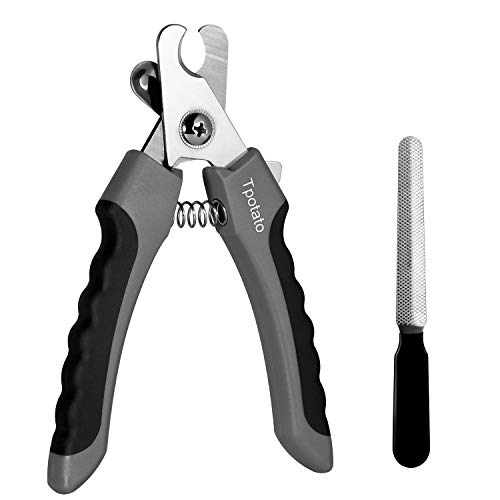
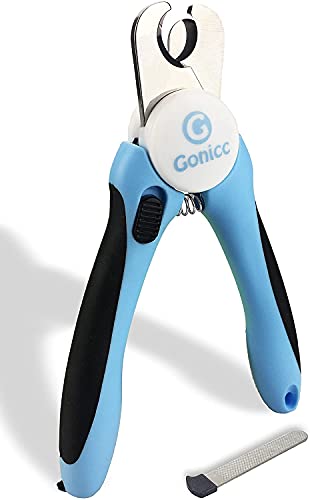
The most popular choice for medium to large dogs. Feature two curved blades that meet in a scissor-like motion. Provide good leverage for thick nails. Durable and long-lasting. Available in various sizes. For heavy-duty use, see dog nail clippers with sensor for black nails.
Mid-RangeElectric Grinders
Use a rotating drum to file nails down gradually. Eliminate the risk of cutting the quick. Leave smooth edges. Require training to use effectively. Some dogs are frightened by the noise. Best for dogs with thick nails or owners who prefer a gentler approach.
PremiumPro Tip: Many professional groomers recommend having both a plier-style clipper and an electric grinder. Use the clipper to take off the bulk of the nail, then the grinder to smooth the edges and get closer to the quick. This combination gives the best results with minimal stress on the dog.
Key Features to Look For in Dog Nail Clippers
When shopping for dog nail clippers, don't just grab the first pair you see. Quality matters, and the right features can make trimming easier and safer for both you and your dog.
Blade Quality and Material
- Stainless steel blades: The standard for quality clippers. Resistant to rust, hold their edge longer, and are easy to clean.
- Sharpness: Dull blades crush the nail instead of cutting it cleanly, causing pain and increasing the risk of splitting. Replace or sharpen blades regularly.
- Blade angle: Curved blades follow the natural shape of the nail better than straight blades, making cleaner cuts and reducing the risk of injury.
- Replaceable blades: Some premium clippers have replaceable blades, extending the life of the tool and saving money long-term.
Handle Design and Ergonomics
- Non-slip grip: Essential for safety. Look for rubberized or textured handles that prevent slipping, especially if your dog moves during trimming.
- Ergonomic shape: Handles that fit comfortably in your hand reduce fatigue and give you better control. Test the clippers in person if possible.
- Spring-loaded mechanism: Makes the cutting action smoother and requires less hand strength, which is helpful for owners with arthritis or weak grip.
- Safety guard: Some clippers include a guard that prevents you from cutting too much nail at once. This is especially helpful for beginners.
Size and Weight
- Match the size to your dog: Small clippers for small dogs, large clippers for large dogs. Using the wrong size can crush nails or be difficult to control.
- Weight: Heavier clippers provide more leverage but can tire your hand. Lighter clippers are easier to maneuver but may not cut through thick nails as easily.
- Portability: If you travel with your dog, consider a compact set of clippers for your dog travel essentials.
Safety Features Explained
Safety should be your top priority when choosing nail clippers. The right features can prevent accidents and make the experience less stressful for everyone involved.
Quick Guard / Safety Stop
A small piece of metal or plastic that limits how much of the nail can be cut in one go. This is especially useful for dogs with dark nails where the quick is not visible. It prevents you from accidentally cutting too close to the blood supply. If you are trimming black nails, a quick guard is essential.
Magnifying Glass and Light
Some clippers come with built-in magnifying glasses and LED lights. These help you see the quick more clearly, especially on dark nails. They are particularly useful for older owners or those with vision problems. See our guide to dog nail clippers with magnifying glass and light for options.
Safety Lock
A locking mechanism that keeps the clippers closed when not in use. This prevents accidental cuts and keeps the blades protected. Always engage the lock after use and store clippers out of reach of children and pets.
Non-Slip Handles
As mentioned earlier, non-slip handles are crucial for safety. A dog can jerk suddenly, and if your grip slips, you could accidentally cut the quick or drop the clippers. Look for rubberized handles or those with textured grips.
Emergency Preparedness: Even with the best clippers and technique, accidents happen. Always have styptic powder or a styptic pencil on hand to stop bleeding if you accidentally cut the quick. Keep your dog first aid kit stocked and accessible. If bleeding doesn't stop within a few minutes, contact your veterinarian.
How to Trim Dog Nails Safely
Trimming your dog's nails can be intimidating, especially if you've never done it before. But with the right tools and technique, it becomes a routine part of grooming that both you and your dog can tolerate — even enjoy.
Step-by-Step Trimming Guide
- Gather your supplies: You'll need quality dog nail clippers, styptic powder, treats, and a comfortable, well-lit space. Having everything within reach prevents you from having to stop mid-trim.
- Get your dog comfortable: Have your dog sit or lie down in a comfortable position. Some owners find it easier to have a helper hold the dog while they trim. For anxious dogs, consider using calming products or anxiety wraps.
- Examine the nails: Look at the nails carefully. On light-colored nails, the quick appears as a pink area. On dark nails, you'll need to look at the underside of the nail, where the quick may be visible as a darker spot.
- Start with small cuts: Begin by trimming small amounts at a time. It's better to make multiple small cuts than one large cut that accidentally hits the quick. Look at the cut surface — if you see a gray or pink oval, you're getting close to the quick.
- Trim at the correct angle: Hold the clippers perpendicular to the nail and cut straight across. Avoid angling the cut, which can cause the nail to split.
- Don't forget the dewclaws: Many dogs have dewclaws on the inner side of their front legs (and sometimes rear legs). These nails don't wear down naturally and need regular trimming.
- Reward your dog: After each nail or paw, give your dog a treat and praise. Use high-value treats like dog treats to create a positive association with nail trimming.
- Finish with a grinder (optional): If your dog tolerates it, use an electric grinder to smooth the edges and get closer to the quick. This reduces the frequency of trimming and prevents snags.
Handling the Quick: If you accidentally cut the quick, don't panic. Apply styptic powder or a styptic pencil to the nail and apply gentle pressure. The bleeding should stop within a few minutes. Comfort your dog and give them a break before continuing. If the bleeding doesn't stop, contact your vet. For more detailed guidance, see our dog nail trimming guide.
How Often Should You Trim?
Most dogs need their nails trimmed every 3-4 weeks. However, this varies depending on:
- Activity level: Active dogs who walk on rough surfaces like concrete or gravel may wear their nails down naturally and need less frequent trimming.
- Breed: Some breeds have faster-growing nails than others. Dogs with thick, fast-growing nails (like Labradors) may need more frequent trims.
- Age: Senior dogs often need more frequent trimming because they are less active and their nails may grow faster or become brittle.
- Diet: A balanced diet supports healthy nail growth. Poor nutrition can lead to brittle or slow-growing nails. See our dog nutrition guide for feeding tips.
Troubleshooting Common Nail Trimming Issues
Even with the best tools and intentions, nail trimming doesn't always go smoothly. Here are solutions to the most common problems:
My Dog Is Afraid of the Clippers
Fear of nail clippers is common, especially in rescue dogs or dogs who have had a bad experience. Desensitization is key. Start by leaving the clippers out where your dog can see them. Reward calm behavior. Touch the clippers to their paws without clipping. Then clip one nail and reward heavily. Use high-value treats and be patient. If your dog is extremely fearful, consider hiring a professional groomer or consult a behaviorist.
I Can't See the Quick on Black Nails
Black nails are notoriously difficult to trim because the quick is not visible. The key is to trim small amounts at a time and look at the cut surface. When you get close to the quick, you'll see a gray or pink oval shape in the center of the nail. Stop there. You can also use clippers with a built-in light or magnifying glass to improve visibility. If you're unsure, it's better to leave the nail slightly longer than to risk cutting the quick.
My Dog's Nails Are Splitting
Splitting nails can be caused by dry nails, poor nutrition, or trauma. Make sure your dog is on a balanced diet with adequate protein and fatty acids. You can also try adding a supplement designed for skin and coat health. Avoid using dull clippers, which can crush and split nails. If the splitting is severe or persistent, consult your vet.
My Dog Won't Hold Still
If your dog struggles during nail trimming, try these strategies: Have a helper hold your dog gently but firmly. Trim one nail at a time and take breaks. Use a non-slip surface to prevent slipping. Try a different position — some dogs do better standing, others lying down. If your dog is extremely resistant, consider using a dog muzzle as a safety precaution. For dogs with anxiety, calming products can help take the edge off.
Common Mistakes to Avoid
Even experienced dog owners make mistakes when trimming nails. Here are the most common ones and how to avoid them:
- Using dull clippers. Dull blades crush the nail instead of cutting it cleanly, causing pain and increasing the risk of splitting. Replace or sharpen blades regularly, or invest in clippers with replaceable blades.
- Cutting too much at once. Always trim small amounts at a time, especially if you can't see the quick. It's better to trim more frequently than to risk cutting the quick.
- Forgetting the dewclaws. Dewclaws don't wear down naturally and can grow in a circle, eventually piercing the paw pad. Always check and trim dewclaws.
- Not rewarding your dog. Nail trimming should be a positive experience. Reward your dog with treats and praise throughout the process, not just at the end.
- Trimming after a stressful event. If your dog is already stressed or anxious, don't try to trim their nails. Wait until they are calm and relaxed.
- Using human nail clippers. Human nail clippers are not designed for the thickness and shape of dog nails. They can crush or split the nail. Always use clippers specifically designed for dogs.
- Neglecting paw care. Nail trimming is just one part of paw care. Check your dog's paw pads for cracks, cuts, or foreign objects. In extreme weather, consider paw protection products like balms or booties.
- Ignoring signs of pain. If your dog yelps or pulls away, stop immediately. They may be in pain, or the clipper may be dull. Check the nail and try again later.
Frequently Asked Questions
Final Thoughts on Choosing the Best Dog Nail Clippers
The right dog nail clippers are an investment in your dog's health and comfort. Don't settle for cheap, dull clippers that crush nails and make the experience stressful for everyone. Look for quality stainless steel blades, ergonomic non-slip handles, and safety features like a quick guard or locking mechanism.
If you're unsure where to start, consider your dog's size and nail thickness. Small dogs do well with scissor or guillotine clippers. Medium to large dogs need plier-style clippers. And if you want the safest, smoothest finish, an electric grinder is worth the investment. Remember, regular trimming every 3-4 weeks keeps your dog's paws healthy and prevents painful joint problems down the road. For more grooming tips, explore our dog nail trimming guide and dog supplies recommendations.