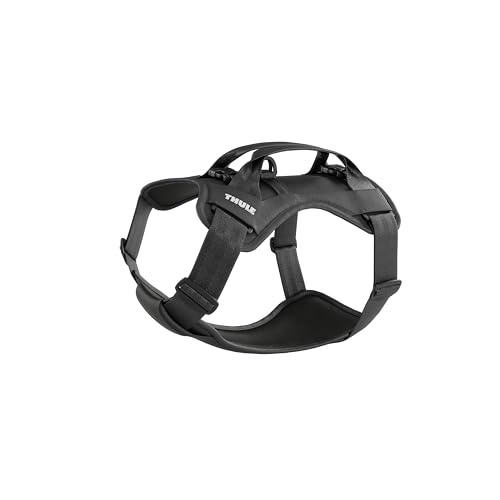
Dog Car Harness: The Complete Safety Guide
Why every ride demands a crash-tested harness — protect your best friend from dangerous impacts, distractions, and injuries. Learn how to choose, fit, and use the right restraint.
What you’ll learn in this guide
Every year, thousands of dogs are injured or killed in car accidents because they were unrestrained or used an unsuitable harness. A dog car harness specifically engineered for vehicle travel restrains your pet securely, prevents driver distraction, and significantly reduces crash forces. Unlike standard walking harnesses or simple seat belt tethers, crash-tested models undergo rigorous simulation to protect dogs up to 75+ lbs. Choosing the right restraint is one of the most responsible investments you can make for your furry companion’s safety.
Why You Need a Dedicated Dog Car Harness
In a 30 mph collision, an unrestrained 60 lb dog generates roughly 2,700 lbs of force—equivalent to a baby elephant. That projectile can injure human passengers and crush the dog itself. Standard walking harnesses lack reinforced stitching, load-distributing plates, and seatbelt attachment points. Many “car harnesses” sold online are not crash-tested. Only models certified by organizations like the Center for Pet Safety (CPS) or meeting equivalent standards offer genuine protection. Moreover, many states (e.g., New Jersey, Oregon) have laws requiring pet restraints; violating them can lead to fines and liability.
Types of Dog Car Harnesses
1. Vest-Style Crash Harness
Padded, full-body design with multiple adjustment points and a rear loop that attaches to the seatbelt. Provides excellent impact absorption. Best for: daily travelers and medium-to-large dogs. Price range: $45–$120.
2. Seat Belt Tether + Harness Combo
Includes a reinforced tether that buckles into the seatbelt receiver, but the harness must be crash-rated. Some brands sell integrated systems. Price: $30–$70.
3. Booster Seat with Built-in Harness
Ideal for small dogs (under 20 lbs). Elevates the dog for visibility and uses an internal tether. Look for CPS-certified booster seats. Price: $40–$90.
4. Universal Fit Car Harness
Budget-friendly design with simple straps and seatbelt loop. Important: Verify whether it has been crash-tested before purchase. Often less protective. Price: $15–$35.
Crash Test Standards: What Really Matters
No federal mandate exists for pet restraints in the US, but the Center for Pet Safety (CPS) conducts independent, rigorous testing following automotive safety protocols. Harnesses that earn “CPS Recommended” status have passed 30–40 mph frontal impact, sled tests, and material integrity checks. Similarly, some manufacturers voluntarily test to FMVSS 213 (child restraint standards). When shopping, look for explicit crash-test certification on packaging. Beware of vague marketing phrases like “heavy duty” or “safety tested” — demand independent verification. High-quality brands like Sleepypod, Kurgo (Enhanced Strength line), and Ruffwear Load Up have published test results.
Proper Fitting: Measure for Safety
A poorly fitted harness can be as dangerous as no harness. Follow these steps:
- Measure chest girth: Wrap a soft tape around the widest part of the ribcage, just behind front legs. Note the measurement in inches.
- Neck circumference: Measure around the base of neck where a collar would sit.
- Check weight guidelines: Brands combine weight and girth. Choose based on chest size – never size up thinking “my dog will grow into it.”
- The two-finger rule: After securing, you should comfortably slide two fingers between harness and dog’s body. Too tight restricts breathing; too loose allows escape.
- Test seatbelt connection: Attach to rear seatbelt (preferred) or front passenger seat with airbag deactivated. Ensure tether doesn’t allow the dog to reach front footwells.
For more insights on general harness types beyond car travel, explore our comprehensive dog harnesses guide. If you travel often with a nervous dog, combining a car harness with desensitization techniques for travel anxiety yields better results.
Top Safety Features to Look For
- Crash-test certification seal (CPS, FMVSS 213) – non-negotiable.
- Energy-absorbing materials – e.g., foam padding or load-diffusing panels.
- Metal-to-metal connecting clips – avoid plastic hooks that snap under stress.
- Reflective strips – helpful for post-crash visibility or nighttime roadside emergencies.
- Redundant tether attachment – two attachment points (belly band + chest) for better force distribution.
- Compatibility with LATCH / seatbelt – universal fit with most vehicles.
Getting Your Dog Used to the Car Harness
Even the safest harness is useless if your dog refuses to wear it. Use positive reinforcement: let your dog sniff the harness, offer treats, then put it on without fastening in the car. Practice short, fun trips around the block. Pair the harness with positive reinforcement training and high-value rewards. For puppies, early introduction prevents future resistance. If your dog shows signs of car sickness, consult behavioral guidance and condition gradually. Never force a panicked dog into a harness – it may create long-lasting fear.
Comparison: Popular Car Harness Styles
| Harness Type | Crash-Tested (Typical) | Best For | Average Price |
|---|---|---|---|
| Vest-style CPS-rated | Yes (e.g., Sleepypod) | Daily riders, medium-large dogs | $80–$130 |
| Budget tether + standard harness | No (harness fails) | Not recommended for safety | $15–$30 |
| Booster seat + integrated harness | Some models (CPS) | Toy & small breeds (<18 lbs) | $45–$90 |
| Heavy-duty reinforced universal | Selected brands (Kurgo) | Active dogs, hiking + travel | $50–$100 |
If you also need extra safety accessories, a dog seat belt may supplement a harness, but never substitute. For extended trips, combine a car harness with a well-ventilated crash-tested carrier for smaller breeds. Also consider a GPS tracker to locate your dog if they escape after an accident.
Frequently Asked Questions
Still not sure which model suits your breed? Refer to our detailed dog products resource for additional buyer guides, or compare with belt systems and travel carriers. After you’ve selected the perfect restraint, scroll down to see our curated product recommendations based on real crash tests and owner feedback.