Dog Carrier Guide: Choosing the Right Carrier for Your Dog
Everything you need to know before buying a dog carrier — sizing, carrier types, airline rules, safety, and how to help your dog love it.
A dog carrier is one of the most practical purchases you will make for your dog — and one of the most commonly botched. Buy the wrong size, and your dog will be cramped, stressed, and unsafe. Buy the wrong type, and you will find yourself turned away at the airline gate or wrestling a flimsy carrier in the car. This guide walks you through every decision point so you can buy once and buy right.
Whether you need a carrier for vet visits, road trips, or flying, the principles are the same: the carrier must fit your dog's body measurements, match your travel mode, and be introduced properly so your dog feels safe inside it. If you are still assembling your dog's travel kit, you may also want to look at a dog car seat for everyday rides and a dog stroller for senior or injured dogs who cannot walk long distances.
Why a Good Dog Carrier Matters
A carrier is not just a bag with a handle. It is a safety device, a mobile safe space, and often a legal requirement. Airlines, trains, and many public transport systems require pets to be contained. Veterinary clinics expect dogs to arrive secured. And in a car, an unrestrained dog becomes a projectile in even a minor collision.
Beyond safety, a well-chosen carrier reduces stress. Dogs are den animals by nature; a properly sized, well-ventilated carrier gives them a predictable, enclosed space that feels secure in unfamiliar environments. A poorly sized carrier does the opposite — it creates panic, overheating, and sometimes injury. If your dog already struggles with confinement, pair carrier training with the strategies in our guide on crate training, since the two skills reinforce each other.
The Four Non-Negotiables of Any Dog Carrier:
• Your dog can stand, turn around, and lie down without touching the sides
• Ventilation on at least two sides (three is better)
• Secure closures your dog cannot nose or paw open
• A sturdy base that does not sag under your dog's weight
How to Measure Your Dog Correctly
Sizing is where most buyers go wrong. Weight charts on carrier packaging are a rough guide at best — a muscular 15-pound terrier and a slender 15-pound spaniel need very different interior dimensions. Measure your dog, then match the measurements to the carrier's interior space.
The Three Measurements You Need
- Length: Measure from the tip of the nose to the base of the tail while your dog stands naturally. Add 2–4 inches so they can turn around comfortably.
- Height: Measure from the floor to the top of the head (or the highest point of the ears) while standing. Add 2–3 inches so they can stand without crouching.
- Width: Measure the widest point of the body, usually across the shoulders or ribcage. Add 1–2 inches for comfortable lying down.
For growing puppies, size up to the adult dimensions you expect, but use a divider or extra padding to reduce the space in the meantime so the puppy does not rattle around.
Quick Fit Test (Do This Before Buying):
• Your dog should be able to stand fully upright inside
• They should be able to turn around in a full circle
• They should be able to lie down with legs extended
• Their head should not press against the top when standing
If any of these fail, the carrier is too small — regardless of what the weight label says.
Carrier Size Guide by Dog Size
| Dog Size | Typical Weight Range | Approx. Interior Length Needed | Best For |
|---|---|---|---|
| Toy / Teacup | Under 10 lbs | 14–16 inches | Under-seat airline travel, short errands |
| Small | 10–20 lbs | 16–19 inches | Airline cabin travel, vet visits, daily carry |
| Medium | 20–40 lbs | 19–24 inches | Car travel, trains, larger cabin carriers |
| Large | 40–70 lbs | 24–30 inches | Car travel, cargo-level air travel |
| Giant | 70+ lbs | 30+ inches | Vehicle transport, cargo crates |
Note that many airlines cap cabin carriers at roughly 18 × 11 × 11 inches regardless of your dog's size, which means most dogs over 20 pounds cannot fly in the cabin. For larger dogs, a dog crate or a crash-tested car harness is the more realistic travel solution.
Types of Dog Carriers Compared
Carriers come in several formats, each optimized for a different use case. Buying the wrong format for your primary travel mode is the second most common mistake after sizing.
Soft-Sided Carrier
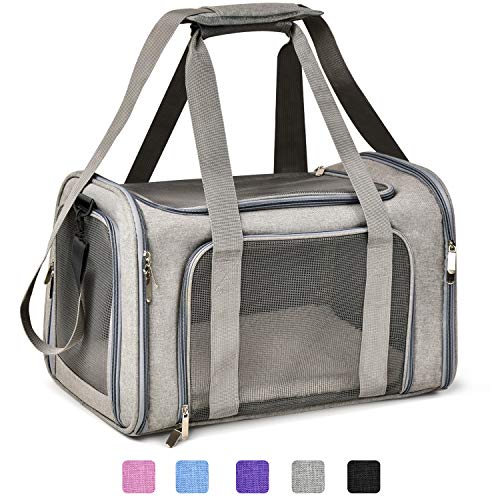
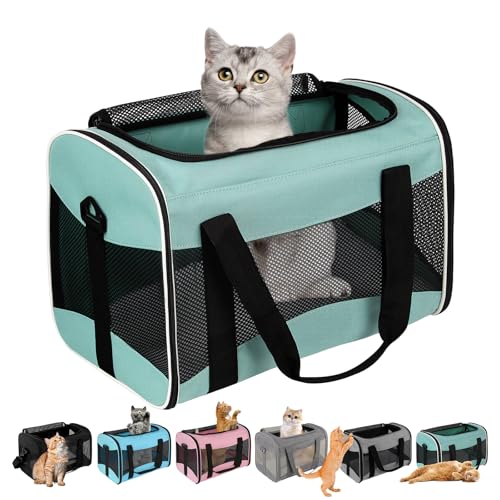
The most popular format. Lightweight, collapsible, and typically the only type accepted in airline cabins. Mesh panels provide ventilation and visibility. Best for air travel, vet visits, and everyday carry. Offers limited crash protection, so it should not replace a car seat or harness for regular driving.
mid-range to premiumHard-Sided Carrier
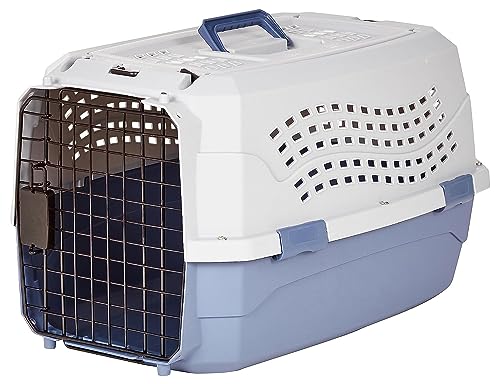
Rigid plastic or fiberglass shell with a metal or plastic door. Easier to clean, more secure, and better at protecting your dog in a vehicle. Often required for cargo-level air travel. Heavier and bulkier to store. The best choice for nervous dogs who feel safer in an enclosed space.
mid-rangeBackpack Carrier
Worn on your back with your dog inside, usually with a mesh window and ventilation ports. Useful for hiking and public transport where a handheld carrier is awkward. Strictly limited by weight — most are designed for dogs under 15–20 pounds. Not suitable for long durations.
mid-tierSling Carrier
A fabric pouch worn across the chest, designed for very small dogs and puppies. Keeps your dog close and hands-free. Offers minimal structure and no protection, so it is best for short trips and bonding rather than real travel. Not airline approved.
entry-level to mid-rangeRolling Carrier
A soft or semi-rigid carrier with wheels and a telescoping handle, like a small suitcase. Ideal for airports and train stations where you will walk long distances. Adds weight and bulk, and the wheels can be noisy on rough surfaces. Check that the wheelbase is stable for your dog's weight.
premiumCar Seat Carrier
A hybrid that anchors to the vehicle seat and doubles as a carry bag. Provides better restraint than a loose carrier and keeps your dog elevated. Look for models with a crash-tested harness attachment or seatbelt routing. See our dog car seat guide for vehicle-specific advice.
high-endSoft-Sided vs Hard-Sided: Which Should You Buy?
This is the decision most buyers agonize over. The honest answer is that it depends on your primary use case — and many dog owners eventually own one of each.
| Factor | Soft-Sided | Hard-Sided |
|---|---|---|
| Airline cabin acceptance | Usually required | Rarely accepted in cabin |
| Crash protection in a car | Limited | Better, especially with tie-downs |
| Weight | Light | Heavy |
| Storage | Folds flat | Bulky, needs shelf space |
| Cleaning | Machine-washable liners on better models | Wipe-down interior, easy |
| Ventilation | Excellent (mesh panels) | Good (slotted sides) |
| Escape resistance | Weaker zippers can be defeated | Stronger, metal door latches |
| Best for | Flying, short trips, daily carry | Car travel, anxious dogs, cargo flights |
If you fly more than once a year, buy a soft-sided carrier first. If your dog mostly travels by car, a hard-sided carrier or a crash-tested car seat is the safer investment. If your dog is a determined escape artist, prioritize a hard-sided model with metal hardware, or pair a soft carrier with a dog harness attached to a seatbelt for car rides.
Airline-Approved Carrier Requirements
"Airline approved" is not a universal certification — each airline sets its own rules, and they change. What matters is that your carrier meets the general pattern most carriers follow, and that you verify the specifics with your airline before booking.
Typical Cabin Carrier Requirements
- Dimensions: Must fit under the seat in front of you, commonly around 18 × 11 × 11 inches or smaller. Measure the interior, not the exterior.
- Soft-sided construction: Most airlines require a soft-sided carrier that can compress slightly to fit under the seat.
- Ventilation: Mesh or openings on at least two sides, ideally three, for airflow.
- Leak-proof base: A waterproof bottom liner is usually required in case of accidents.
- Secure closure: Zippers or locks that prevent escape, often with a clip or lockable zipper pulls.
- Weight limit: Most airlines cap the combined weight of pet plus carrier at 20–25 pounds for cabin travel.
Before You Book: Call the airline and confirm three things in writing — the exact carrier dimensions allowed on your route, the pet weight limit including the carrier, and whether your specific aircraft type accepts pets in cabin. Regional jets and some international routes do not. Budget airlines often have stricter rules and higher fees. Check the airline's pet policy page and screenshot it before your flight.
Cargo Travel Carriers
If your dog is too large for the cabin, they will travel in the cargo hold in a hard-sided crate. Cargo crates must meet IATA-style requirements: metal door with secure latch, ventilation on at least three sides, food and water bowls attachable from outside, and a live-animal label. This is a stressful experience for many dogs — if cargo travel is unavoidable, acclimate your dog to the crate weeks in advance and consult your vet about sedation, which is generally not recommended for flights.
Car & Travel Safety Tips
A carrier alone is not a crash protection system. In a vehicle, an unrestrained carrier will slide, tip, or become a projectile. Use these practices to keep your dog genuinely safe on the road.
- Secure the carrier: Route a seatbelt through the carrier's built-in loops or use a carrier that anchors to the seat. Never leave it loose on the seat or floor.
- Keep it level: Place the carrier on a flat surface. A carrier wedged at an angle causes your dog to brace constantly and increases stress.
- Never leave a dog in a parked car: Interior temperatures rise dangerously fast even on mild days. This applies to carriers left in the car as well.
- Ventilation and airflow: Keep mesh panels unobstructed. Do not pile luggage against the carrier.
- Identification: Attach a dog tag with your current phone number to the carrier's handle, and make sure your dog's microchip registration is up to date.
- Water access: For trips over an hour, plan breaks. A collapsible bowl and a dog water bottle make stops much easier.
- Escape prevention: Double-check zippers and use a clip on the pulls. A panicked dog can defeat a partially closed zipper quickly.
For Air Travel: Confirm the carrier meets your airline's soft-sided compression rule, and practice with the carrier at home for at least a week before the flight. Bring a familiar blanket that carries your dog's scent. If your dog is prone to anxiety, discuss options with your vet — but be aware that most airlines and vets advise against sedating dogs for flights because it impairs their ability to regulate body temperature.
Helping Your Dog Adjust to a Carrier
A carrier your dog refuses to enter is useless. The good news is that the training is simple and most dogs adapt within a week or two. The key is letting your dog choose to go in rather than forcing them.
- Leave it open in the living room. Take the door or top off if possible and leave the carrier on the floor in a busy area. Let your dog investigate on their own schedule.
- Make it smell like home. Put a familiar blanket or worn T-shirt inside. Dogs feel safer when the space carries a familiar scent.
- Feed meals near and inside it. Start with the bowl just outside the carrier, then just inside the entrance, then progressively deeper. This builds a positive association without any pressure.
- Reward voluntary entry. The moment your dog steps inside on their own, mark it with a calm "yes" and give a treat. Do not close the door yet.
- Practice short, low-stakes trips. Close the door for a few seconds, treat, open. Build up to carrying the closed carrier around the house, then to the car with the engine off, then a short drive.
- Never use it as punishment. Time-outs in the carrier teach your dog that it is a bad place and undo all your training. If your dog needs a time-out space, use a crate or a separate room instead.
For dogs with genuine confinement anxiety — whining, drooling, destructive scratching, or panic in enclosed spaces — the same gradual approach applies, but at a much slower pace. Our guides on dog calming products and anxiety wraps offer additional support that many owners find helpful during the adjustment period.
Cleaning & Maintaining Your Carrier
A carrier gets dirty fast — hair, drool, dirt from paws, and the occasional accident. Regular cleaning keeps odors down, protects your dog's skin and coat, and extends the life of the product.
- Shake out and vacuum: After each use, remove the base pad, shake out loose hair, and vacuum the interior. A rubber curry brush pulls hair out of fabric much faster than vacuuming alone.
- Wash the liner: If the bottom pad has a removable, machine-washable cover, wash it monthly. Use a gentle, unscented detergent — dogs have sensitive noses and skin.
- Wipe the frame: Wipe hard-sided shells and soft carrier frames with a pet-safe disinfectant, then rinse and dry completely. See our guide to dog shampoo for product categories to avoid.
- Dry fully: Never store a damp carrier closed. Mold and mildew in the padding are a real risk and can cause respiratory irritation.
- Check hardware monthly: Inspect zippers, stitching, handles, and clips for wear. A failing zipper or strap under a squirming dog is a safety risk, not just an inconvenience.
Keep the carrier visible at home. Dogs that see their carrier as just another piece of furniture — rather than a thing that only appears when something scary is about to happen — are calmer on travel day. Leave it out between trips with the door open.
Common Carrier Buying Mistakes
- Buying by weight label alone. Weight limits are a rough guide. Body measurements determine fit. Always measure your dog first.
- Buying too small. Owners routinely underestimate how much space their dog needs to turn around and stand. Size up if you are between sizes.
- Buying too large for air travel. The opposite error: a carrier that is comfortable but does not fit under the airline seat will be rejected at the gate. Measure the specific airline's allowance.
- Assuming "airline approved" is universal. It is not. Each airline publishes its own carrier rules. A carrier approved by one airline may be rejected by another.
- Skipping the adjustment period. A brand-new carrier on travel day is a recipe for a panicked dog. Introduce it at home first.
- Using a soft carrier as a car restraint. Soft-sided carriers provide no crash protection. For regular car travel, use a hard-sided crate, a crash-tested carrier, or a harness secured to the seatbelt.
- Ignoring ventilation in hot weather. A dark, poorly ventilated carrier can overheat a dog quickly. Look for mesh on at least three sides and avoid leaving the carrier in direct sun.
- Treating the carrier as a crate. Carriers are for transport and short containment. For longer confinement at home, use an appropriately sized dog crate or exercise pen.
Frequently Asked Questions
The Short Version
Measure your dog, not their weight. Match the carrier type to your primary travel mode — soft-sided for flying, hard-sided or crash-tested for driving. Confirm your airline's exact rules before booking. Introduce the carrier at home with treats and patience, never as punishment. And remember that a carrier is a transport tool, not a substitute for a properly sized crate at home. Get those basics right and you will buy once, travel calmly, and keep your dog safe for years.