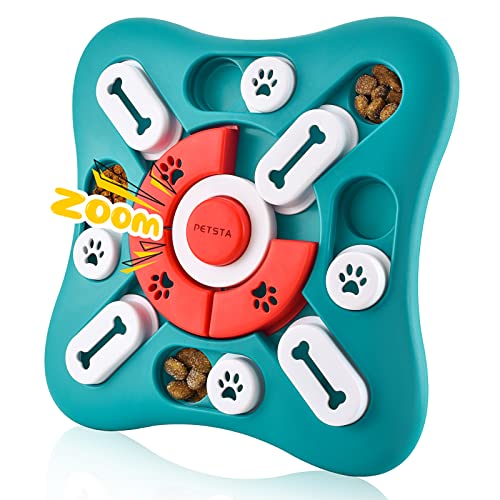
Dog Puzzle Toys: The Ultimate Guide to Canine Brain Games
Transform mealtime into a mentally stimulating adventure. Discover how interactive puzzle toys can reduce boredom, prevent destructive behavior, and keep your dog's mind sharp at every life stage.
Every dog owner knows the guilt of leaving for work while their dog watches with those big, hopeful eyes. Dogs are intelligent, social animals who were bred for jobs—herding, hunting, retrieving, guarding. When we bring them into our homes and expect them to nap for eight hours while we're away, we're asking them to suppress millions of years of evolutionary instinct. The result? Chewed furniture, excessive barking, digging, and a dog who seems "naughty" when they're actually just bored out of their minds.
Dog puzzle toys are one of the most effective, affordable, and enjoyable solutions to this problem. They transform a dog's natural food drive into a mentally engaging challenge that tires them out far more effectively than a simple walk around the block. In fact, fifteen minutes of focused problem-solving can be as exhausting as thirty minutes of physical exercise. This guide will walk you through everything you need to know about choosing, using, and maximizing the benefits of puzzle toys for your dog.
Why Puzzle Toys Matter for Your Dog's Well-Being
Before diving into the different types of toys, it's important to understand the science behind why they work. Dogs are scavengers by nature—their ancestors spent a significant portion of their day searching, sniffing, and working for food. Modern dogs, however, get their meals served in a shiny bowl in under thirty seconds. That's a massive gap between what their brains are wired for and what their daily lives actually look like.
This gap manifests in what behaviorists call "boredom-related behaviors." These include destructive chewing, excessive barking, digging, pacing, and even depression-like symptoms in severe cases. A dog who has nothing to do will find something to do—and it's rarely something you'll approve of.
Mental Stimulation
Puzzle toys engage your dog's problem-solving skills, keeping their brain active and healthy—just like cognitive exercises for humans.
Healthy Fatigue
Mental exercise tires dogs out more effectively than physical exercise alone, promoting deeper, more restful sleep.
Reduced Destruction
A mentally satisfied dog is less likely to chew furniture, dig holes, or bark excessively out of boredom.
Confidence Building
Solving puzzles gives dogs a sense of accomplishment, which builds confidence—especially helpful for shy or anxious dogs.
Slower Eating
Puzzle feeders slow down fast eaters, reducing the risk of bloat, vomiting, and digestive discomfort.
Stronger Bond
Sharing puzzle time with your dog creates positive associations and strengthens your relationship.
If your dog struggles with separation anxiety or general anxiety, puzzle toys can be a valuable part of a broader behavior modification plan. They provide a healthy outlet for nervous energy and create positive associations with alone time. For dogs with specific behavioral challenges, combining puzzle toys with techniques from our behavior modification guide can produce remarkable results.
Types of Dog Puzzle Toys: Finding the Right Fit
Not all puzzle toys are created equal. They range from simple treat-dispensing balls to complex multi-step puzzles that would challenge a toddler. Understanding the different categories helps you choose the right starting point for your dog's age, breed, and experience level.
🧩 Sliding Puzzle Boards
These flat boards feature sliding compartments, flip lids, and hidden drawers that dogs must manipulate with their nose or paws to reveal treats. They're excellent for dogs who naturally use their paws and noses to investigate. Many models offer adjustable difficulty levels, making them suitable for beginners and experienced puzzle-solvers alike.
Entry-Level to Advanced🎾 Treat-Dispensing Balls
These durable rubber or plastic balls have interior chambers that release kibble or treats as your dog rolls, nudges, or chews them. They're perfect for independent play and can often be used as a replacement for a food bowl. Look for models with adjustable opening sizes to control the difficulty and prevent frustration.
Entry-Level to Mid-Range👃 Snuffle Mats
These fabric mats feature layers of fleece strips where you hide kibble or treats. Dogs use their powerful sense of smell to root through the fabric and find hidden rewards. Snuffle mats are excellent for calming anxious dogs, slowing down fast eaters, and providing a low-impact enrichment activity for seniors.
Entry-Level🌀 Lick Mats and Slow Feeders
While technically not "puzzles" in the traditional sense, lick mats and textured slow feeders engage your dog's brain by requiring them to work for every lick of peanut butter, yogurt, or wet food. The repetitive licking motion is naturally calming and releases endorphins. Freeze them for a longer-lasting challenge.
Entry-Level🧠 Multi-Step Interactive Puzzles
These advanced puzzles require dogs to complete a sequence of actions—slide a panel, lift a lid, then remove a treat. They're designed for dogs who have mastered simpler puzzles and need a bigger challenge. Multi-step puzzles are excellent for high-energy breeds like Border Collies and German Shepherds who need a "job" to do.
Advanced to Premium🔊 Electronic and Interactive Toys
These battery-operated toys move, make sounds, or dispense treats in unpredictable patterns. They're excellent for dogs who need variety and unpredictability to stay engaged. Some models even have app connectivity, allowing you to interact with your dog remotely while you're away from home.
Mid-Range to PremiumPro Tip: Many dogs do best with a variety of puzzle types. A snuffle mat for calm evening enrichment, a treat-dispensing ball for active play, and a sliding puzzle for challenging weekend sessions. Rotate them to prevent your dog from getting bored with any single toy.
If you're looking to build a complete enrichment toolkit, consider pairing puzzle toys with other interactive dog toys and chew toys to address different aspects of your dog's play and relaxation needs. For dogs who need more physical activity, combining puzzle toys with fetch toys and tug toys creates a well-rounded daily routine.
Choosing the Right Difficulty Level for Your Dog
One of the most common mistakes owners make is starting with a puzzle that's too difficult. When a dog can't figure out how to get the treat, they don't think "I need to try harder"—they get frustrated, give up, and may develop a negative association with the toy. The goal is to set your dog up for success, not to create a genius-level challenge right out of the gate.
The Three-Tier Difficulty System
- Entry-Level Puzzles: These require a single, simple action to access the reward. Think of a ball that releases kibble when rolled, or a snuffle mat where treats are hidden in fabric. These are perfect for puppies, senior dogs, and dogs who have never used a puzzle toy before. The reward should be accessible within 10-30 seconds of interaction.
- Mid-Range Puzzles: These require two or three steps, or a specific action that isn't immediately obvious. A sliding puzzle where the dog must use their nose to push a compartment, or a treat-dispensing toy with a tighter opening that requires more effort. These are ideal for dogs who have mastered entry-level toys and need a step up.
- Advanced Puzzles: These require multiple steps, problem-solving, and sometimes a combination of different actions. A board with sliding panels, flip lids, and hidden drawers that must be manipulated in a specific order. These are designed for experienced puzzle-solvers and high-drive breeds who need a serious mental challenge.
How to Know If the Difficulty Is Right:
• Too Easy: Your dog solves it in under 30 seconds and immediately looks for more. Time to level up.
• Just Right: Your dog works at it for several minutes, tries a few different approaches, and eventually succeeds. They seem engaged and focused, not frustrated.
• Too Hard: Your dog gives up within a minute, walks away, or starts barking at the toy in frustration. Make it easier by loosening compartments or using higher-value treats.
Remember: the goal is engagement, not perfection. A dog who tries and fails but keeps trying is building resilience and problem-solving skills.
For puppies just starting their enrichment journey, our puppy training guide offers additional tips on introducing new experiences in a positive way. And if you're dealing with a dog who gets easily frustrated, consider using calming treats alongside puzzle sessions to keep the experience positive.
The Science-Backed Benefits of Mental Enrichment
The benefits of puzzle toys extend far beyond keeping your dog occupied for a few minutes. Research in canine cognition and behavior has shown that mental stimulation has profound effects on a dog's overall health and well-being.
Cognitive Health and Aging
Just like humans, dogs experience cognitive decline as they age. Studies have shown that dogs who receive regular mental stimulation throughout their lives maintain better cognitive function in their senior years. Puzzle toys are a form of "brain training" that can help delay the onset of canine cognitive dysfunction—the dog equivalent of dementia.
For senior dogs, gentle puzzle toys like snuffle mats and lick mats are excellent low-impact enrichment activities. They provide mental engagement without stressing aging joints. If your senior dog has mobility issues, you might also consider mobility aids and joint supplements to keep them comfortable during floor-based puzzle sessions.
Behavioral Improvement
Many common behavioral problems in dogs are directly linked to boredom. A dog who chews the sofa, barks at every passerby, or digs up the garden is often a dog with nothing better to do. Puzzle toys address the root cause—lack of mental engagement—rather than just suppressing the symptom.
- Reduces destructive behavior: A tired, satisfied dog is less likely to chew, dig, or destroy household items.
- Decreases excessive barking: Boredom barking is one of the most common complaints from neighbors. Puzzle toys keep dogs engaged and quiet.
- Helps with separation anxiety: A high-value puzzle toy can make your departure less stressful and give your dog something positive to focus on.
- Improves impulse control: Waiting for a puzzle to release a treat requires patience—a skill that translates to better behavior in all areas of life.
For dogs with more serious behavioral challenges, puzzle toys should be part of a comprehensive approach. If you're dealing with aggression or severe anxiety, consulting a professional trainer for aggressive dogs or a veterinary behaviorist is essential.
Physical Health Benefits
Puzzle toys don't just exercise the brain—they also provide physical benefits:
- Slower eating: Puzzle feeders prevent gulping, which reduces the risk of bloat and vomiting. This is especially important for deep-chested breeds like Great Danes and Standard Poodles.
- Weight management: By making mealtime last longer, puzzle feeders help dogs feel more satisfied with less food. This is a valuable tool for healthy dog weight management.
- Improved coordination: Manipulating puzzle pieces requires fine motor skills and body awareness, especially for dogs using their paws.
- Low-impact exercise: For dogs with mobility issues, puzzle toys provide mental exercise without physical strain. Combine with mobility support for best results.
Safety and Supervision: What Every Owner Must Know
While puzzle toys are generally safe, they are not without risks. The most common dangers are ingestion of small parts, choking, and gastrointestinal blockages. Understanding these risks and taking appropriate precautions ensures that puzzle time remains a positive experience.
Safety Guidelines
- Always supervise initial sessions: Watch your dog closely the first few times they use a new puzzle. This lets you identify potential hazards and ensures they understand how the toy works.
- Inspect toys regularly: Check for cracks, loose pieces, or worn areas after each use. A damaged puzzle toy can become a choking hazard.
- Choose the right size: A toy that's too small can be swallowed. A toy that's too large may be difficult for your dog to manipulate. Match the toy size to your dog's breed and jaw size.
- Avoid toys with small detachable parts: Unless your dog is a gentle, careful player, avoid puzzles with pieces that can be chewed off and swallowed.
- Use appropriate treats: Avoid sticky, greasy, or crumbly treats that can create choking hazards or leave residue that attracts pests. Small, soft training treats work best.
- Clean regularly: Puzzle toys can harbor bacteria if not cleaned properly. Most are dishwasher-safe on the top rack, but check the manufacturer's instructions.
Danger Signs to Watch For
- Chewing on the toy itself: If your dog is trying to eat the puzzle rather than solve it, the toy is either too difficult or not appropriate for their play style.
- Frustration and aggression: Some dogs become possessive or aggressive over puzzle toys. If this happens, remove the toy and consult a trainer.
- Swallowing pieces: If you suspect your dog has swallowed a piece of a puzzle toy, contact your veterinarian immediately. Symptoms of blockage include vomiting, lethargy, and loss of appetite.
- Gum injury: Sharp edges or hard plastic can cut gums. Inspect your dog's mouth after puzzle sessions.
Emergency Preparedness: Keep your veterinarian's number and the number of an emergency animal clinic handy. If your dog ingests a piece of a puzzle toy, call immediately—don't wait for symptoms to develop. Our dog first aid kit guide can help you prepare for emergencies.
If your dog is a particularly aggressive chewer, consider whether puzzle toys are the right choice, or if you should stick with more durable chew toys. Some dogs simply have a play style that's incompatible with plastic puzzle toys—and that's okay. There are plenty of enrichment options available.
How to Select the Best Puzzle Toy for Your Dog
With hundreds of options on the market, choosing the right puzzle toy can feel overwhelming. Here's a practical framework to guide your decision.
Consider Your Dog's Individual Profile
- Age: Puppies need soft, easy-to-manipulate toys with simple mechanisms. Adult dogs can handle more complex puzzles. Seniors benefit from low-impact options like snuffle mats and lick mats that don't require standing or jumping.
- Size and Breed: Small breeds need smaller, lighter puzzles they can easily manipulate. Large breeds need durable, heavy-duty toys that won't crack under pressure. High-drive breeds like Border Collies and Australian Shepherds often need advanced multi-step puzzles to stay engaged.
- Experience Level: If your dog has never used a puzzle toy, start with an entry-level option. If they're a seasoned puzzle-solver, jump straight to mid-range or advanced.
- Play Style: Some dogs are nose-workers—they'll naturally push things with their snout. Others are paw-workers—they'll try to dig and bat at objects. Choose puzzles that align with your dog's natural approach.
- Food Motivation: Puzzle toys work best for food-motivated dogs. If your dog isn't particularly interested in treats, you may need to use high-value rewards like small pieces of chicken or cheese to build initial interest.
Key Features to Look For
| Feature | Why It Matters | Best For |
|---|---|---|
| Adjustable Difficulty | Allows the puzzle to grow with your dog, preventing boredom and frustration. | Puppies and dogs new to puzzles |
| Dishwasher-Safe | Makes cleaning easy and hygienic, preventing bacterial growth. | All dogs, especially those with sensitive stomachs |
| Non-Slip Base | Prevents the puzzle from sliding around during use, reducing frustration. | Dogs who use their paws aggressively |
| BPA-Free Materials | Ensures the toy is safe for extended chewing and licking. | All dogs, especially puppies and seniors |
| Replaceable Parts | Extends the life of the toy and allows you to replace chewed pieces. | Aggressive chewers and large breeds |
| Multiple Compartments | Increases the challenge and extends the duration of engagement. | Advanced puzzle-solvers and high-energy breeds |
Cost-Conscious Tip: You don't need to buy the most expensive puzzle toy to provide great enrichment. Many entry-level and mid-range options are highly effective. In fact, a simple snuffle mat or a durable treat-dispensing ball can provide just as much mental stimulation as a complex electronic puzzle—at a fraction of the cost. The best puzzle toy is the one your dog actually uses and enjoys.
When building your puzzle toy collection, consider starting with one or two versatile options before investing in a large assortment. As you learn what your dog enjoys, you can expand strategically. Many of the principles for choosing dog toys also apply to puzzle toys—durability, safety, and suitability for your dog's size and play style are key.
Rotation and Variety: Keeping Puzzle Time Fresh
Even the best puzzle toy loses its appeal if your dog sees it every single day. Dogs are naturally curious and thrive on novelty—but they're also creatures of habit who can get bored with the same routine. The solution is a rotation system that keeps puzzle time exciting without requiring you to buy new toys constantly.
The 3-3-3 Rotation Method
A simple and effective approach is to organize your puzzle toys into three groups of three toys each:
- Group A: Three toys your dog loves and has mastered.
- Group B: Three toys that are slightly more challenging.
- Group C: Three toys that are brand new or rarely used.
Rotate through the groups each week: Week 1 use Group A, Week 2 use Group B, Week 3 use Group C, then start over. By the time your dog sees a toy again, it feels fresh and exciting. This method also prevents overuse and extends the lifespan of your toys.
Other Ways to Add Variety
- Change the treats: Using different treats in the same puzzle toy can renew your dog's interest. Rotate between kibble, training treats, freeze-dried liver, and small pieces of cheese or chicken.
- Change the location: Hide puzzle toys in different rooms or in the yard. The novelty of a new location stimulates your dog's brain and makes the activity feel new.
- Change the time of day: If you always give puzzle toys at mealtime, try a mid-afternoon puzzle session. If your dog usually gets puzzles in the morning, try evening. Breaking the routine keeps things interesting.
- Freeze puzzle toys: For lick mats and some treat-dispensing toys, freezing them with wet food or peanut butter inside creates a longer-lasting challenge. This is especially great for hot summer days.
- Make it a social activity: For dogs who are social eaters, a puzzle session with you sitting nearby and offering praise creates a bonding experience rather than just a solo activity.
Signs Your Dog Is Bored with a Puzzle Toy:
• They ignore the toy completely, even when it's filled with treats.
• They solve it in seconds and walk away without enthusiasm.
• They try to chew the toy rather than work the puzzle.
• They show no excitement when you bring the toy out.
If you see these signs, it's time to rotate to a new toy or increase the difficulty of the current one.
For dogs with mental stimulation needs, a thoughtful rotation system combined with other enrichment activities—like training sessions, sniff walks, and social play—creates a holistic approach to daily fulfillment. If your dog has specific behavioral challenges, pairing puzzle toys with calming products or anxiety wraps can enhance the calming effects of focused puzzle work.
Frequently Asked Questions About Dog Puzzle Toys
Ready to Get Started?
Puzzle toys are one of the simplest, most effective ways to improve your dog's quality of life. Start with one or two high-quality options, supervise the first few sessions, and watch as your dog's confidence and problem-solving skills grow. Whether you have a curious puppy, an energetic adult, or a senior dog who needs gentle mental engagement, there's a puzzle toy that's perfect for your best friend. Remember: a tired dog is a happy dog—and a mentally stimulated dog is even happier. For more ways to enrich your dog's daily routine, explore our full range of dog products and interactive dog toys.