Dog Training for Puppies: The Complete Guide
Everything you need to raise a well-behaved, confident, and happy puppy — from potty training and basic commands to socialization, crate training, and solving common behavior problems.
Bringing home a new puppy is one of life's great joys — and one of its biggest responsibilities. Those first few months shape the dog your puppy will become for the next 10 to 15 years. A puppy who learns basic manners, feels safe in the world, and trusts their human will grow into a well-adjusted adult dog. A puppy who misses out on training and socialization often develops behavior problems that are far harder to fix later.
The good news is that puppy training is not complicated. It requires consistency, patience, and a willingness to understand how dogs actually learn. This guide walks you through every stage of dog training for puppies — from the first night home to mastering advanced commands. Whether you are a first-time puppy owner or looking to refresh your approach, these principles will set you and your puppy up for success.
Why Early Puppy Training Matters
Puppies are not blank slates, but they are incredibly adaptable. The experiences they have between 3 and 16 weeks of age literally shape their brain development. This is the period when they form lifelong associations about what is safe, what is dangerous, what is rewarding, and what is normal.
A puppy who meets dozens of friendly people, hears household sounds, walks on different surfaces, and interacts with other healthy dogs during this window is far less likely to develop fear-based behavior problems later. Conversely, a puppy who is isolated during this period may grow into an adult dog who is anxious around strangers, terrified of traffic, or reactive to other dogs.
The Critical Socialization Window: Between 3 and 14 weeks of age, puppies are most receptive to new experiences. After 16 weeks, the window closes, and new experiences are more likely to produce fear rather than curiosity. This is why starting training and socialization the day your puppy comes home is so important.
Training also establishes your role as a benevolent leader. Puppies who learn that good behavior earns rewards — treats, praise, play, and freedom — are more likely to repeat those behaviors. Puppies who learn that bad behavior earns consequences (withdrawal of attention, time-outs) learn to avoid those behaviors. This is not about dominance; it is about clear communication.
Finally, early training prevents the development of problem behaviors that are much harder to fix later. A puppy who learns to sit for greetings will not jump on guests as an adult. A puppy who learns to chew appropriate toys will not destroy furniture. Prevention is always easier than cure — a principle that applies to everything from mental stimulation to training equipment choices.
Puppy Training Timeline by Age
Understanding what your puppy is capable of at each age helps you set realistic expectations and avoid frustration. Here is a general guide to what to focus on at each stage.
8 to 10 Weeks: Foundation
Your puppy is adjusting to a new home and learning to trust you. Focus on name recognition, potty training basics, and gentle handling. Introduce the crate as a positive, safe space. Start short, positive training sessions with treats. Avoid overwhelming your puppy with too many new experiences at once.
Foundation Stage10 to 12 Weeks: Socialization & Basic Cues
This is the peak of the socialization window. Introduce your puppy to new people, sounds, surfaces, and gentle handling. Begin teaching sit, come, and leave it using positive reinforcement. Keep sessions to 5 minutes, 2 to 3 times daily. Start training treats and reward-based learning.
Socialization Stage12 to 16 Weeks: Expanding Skills
Your puppy's attention span is growing. Add stay, down, and loose-leash walking. Practice in different rooms and outdoor areas with low distractions. Continue socialization with vaccinated dogs and new experiences. Enroll in a reputable puppy class if possible. Address any emerging behavior issues like puppy biting immediately.
Skill Building Stage4 to 6 Months: Proofing & Distractions
Your puppy is becoming more independent and may test boundaries. Practice commands in increasingly distracting environments. Add duration and distance to stay and come. Continue crate training and house rules. This is also when mental stimulation becomes essential to prevent boredom-related destruction.
Proofing StageImportant Note on Vaccinations: Until your puppy's vaccination series is complete (usually around 16 to 20 weeks), avoid areas where unknown dogs may have been. This includes dog parks, pet store floors, and rest stops. However, this does not mean keeping your puppy isolated at home. Use a stroller, carry your puppy, or host playdates with known healthy, vaccinated dogs. The risk of behavior problems from lack of socialization is statistically greater than the risk of disease from controlled exposure.
Essential Commands to Teach First
You do not need to teach your puppy dozens of commands. A handful of well-practiced cues will keep your puppy safe, make daily life manageable, and provide a foundation for everything else. These are the commands every puppy should learn first.
Name Recognition
Say your puppy's name, then immediately reward when they look at you. This teaches them that their name means "pay attention to me." Do this 10 to 15 times per session, several times a day. Never use their name for scolding — it should always predict good things.
Sit
Hold a treat close to your puppy's nose, then slowly move it up and back over their head. Their bottom will naturally lower. The moment their bottom hits the ground, say "yes" and reward. Add the verbal cue "sit" once the behavior is reliable. This is the foundation of impulse control.
Come (Recall)
The most important safety command. Start in a low-distraction environment. Say your puppy's name and "come" in a happy, inviting voice, then reward generously when they reach you. Never call your puppy to punish them — this destroys recall. Use high-value training treats for this command.
Leave It
Place a treat in your closed fist and let your puppy sniff. When they stop trying to get it and back away, say "yes" and reward with a different treat. Progress to treats on the floor, then to items on walks. This command can save your puppy's life if they try to eat something dangerous like toxic foods.
Stay
Ask your puppy to sit, then say "stay" and take one step back. If they stay, return and reward. Gradually increase distance and duration. Practice in different locations. Stay builds impulse control and is essential for vet visits, grooming, and safety in public.
Drop It
When your puppy has a toy, offer a high-value treat in exchange. Say "drop it" as they release the toy, then reward. Never chase or pry items from your puppy's mouth — this creates guarding. Trade up. This command prevents your puppy from swallowing dangerous objects.
Training Tip: Keep sessions short — 5 to 10 minutes for puppies under 6 months. Always end on a successful note. If your puppy is struggling, make the task easier, reward, and stop for the day. Short, frequent sessions are far more effective than long, frustrating ones. For more structured guidance, consider dog training classes or a professional trainer near you.
Potty Training Success
Potty training is often the most frustrating part of puppy ownership, but it does not have to be. The key is understanding that puppies do not naturally know where to eliminate — they need to be taught, and they need their bodies to mature. A puppy under 12 weeks has limited bladder control. Accidents are not defiance; they are biology.
The Potty Training Schedule
Take your puppy outside at these times, every single day:
- First thing in the morning — before anything else, even before you have coffee.
- After every meal — within 5 to 15 minutes of eating.
- After every nap — puppies often wake up needing to go immediately.
- After every play session — excitement stimulates the bladder and bowels.
- Before bed — last thing at night.
- Every 1 to 2 hours during the day — for puppies under 12 weeks.
- Whenever you see signs — circling, sniffing, whining, or heading toward the door.
How to Potty Train Effectively
- Choose a designated potty spot. Take your puppy there on leash every time. The scent will signal that this is the place to go.
- Wait patiently. Give your puppy 5 to 10 minutes to sniff and circle. Do not play or distract them. If they do not go, take them back inside and supervise closely, then try again in 10 minutes.
- Reward immediately. The moment your puppy finishes eliminating, say "yes!" and give a high-value treat. Reward must happen within 1 to 2 seconds for your puppy to make the connection.
- Supervise indoors. Use a crate, baby gates, or tethering to prevent accidents. If you cannot watch your puppy, crate them. This is not punishment — it is management that prevents mistakes.
- Clean accidents thoroughly. Use an enzymatic cleaner like a dog stain remover to eliminate odors. Regular cleaners leave scent markers that attract your puppy back to the same spot.
- Never punish accidents. Punishment teaches puppies to hide their elimination, which makes training harder. If you catch them in the act, calmly interrupt and take them outside to finish, then reward.
How long does potty training take? Most puppies can be considered reliably potty trained by 4 to 6 months of age, but some take longer. Small breeds have smaller bladders and may take longer. Consistency is the single biggest factor in success. If you are struggling, consider using dog pads or puppy pads as a temporary management tool, but transition to outdoor elimination as soon as possible.
Crate Training Fundamentals
Crate training is one of the most valuable gifts you can give your puppy. A crate is not a cage — it is a safe, den-like space that provides security when you cannot supervise, prevents destructive behavior, accelerates potty training, and gives your puppy a place to retreat when they need quiet time.
Introducing the Crate
- Choose the right size. The crate should be large enough for your puppy to stand, turn around, and lie down comfortably, but not so large that they can eliminate in one corner and sleep in another. Use a divider for a growing puppy.
- Make it inviting. Add soft bedding, a favorite toy, and feed meals inside the crate with the door open. Toss treats in throughout the day so your puppy associates the crate with good things.
- Start with short sessions. Begin with 10 to 15 seconds with the door closed while you sit nearby. Gradually increase duration. Open the door before your puppy whines — you want to reward calm behavior, not crying.
- Never use the crate for punishment. Time-outs should be neutral, not scary. The crate should always be associated with safety, treats, and rest.
- Expect some whining. The first few nights may involve crying. This is normal. If your puppy cries, take them out for a potty break, then return them to the crate calmly. Do not let them out to play or comfort them excessively — this teaches them that crying gets them freedom.
Crate Training Tip: Feed your puppy every meal inside the crate with the door open. This creates a powerful positive association. If your puppy is struggling, try a different crate style or a comfort mat inside. For severe crate anxiety, consult a professional trainer specializing in separation anxiety. You can also read our detailed guide on how to stop your puppy from crying in the crate.
Critical Socialization Period
Socialization is not just about exposing your puppy to other dogs. It is about teaching them that the world is a safe, predictable, and rewarding place. A well-socialized puppy grows into a confident adult dog who can handle new situations without fear or aggression.
What to Socialize Your Puppy To
- People: Men, women, children, elderly people, people in uniform, people with hats, sunglasses, umbrellas, or beards. People of different races and abilities. People carrying packages or using wheelchairs.
- Animals: Friendly, vaccinated adult dogs who are patient with puppies. Cats, if you have them, should be introduced carefully and positively.
- Environments: Different rooms in your home, different types of flooring (hardwood, tile, carpet, grass, gravel), stairs, elevators, cars, vet offices, pet stores (carry your puppy), and outdoor cafes.
- Sounds: Vacuum cleaners, doorbells, thunder, fireworks (played at low volume), traffic, children playing, babies crying, and household appliances.
- Handling: Touching ears, paws, tail, mouth, and collar. Looking in ears and mouth. Gently restraining for vet exams. Brushing, nail clipping, and bathing.
- Surfaces and objects: Plastic bags, boxes, crinkly paper, wobble boards, tunnels, and different textures underfoot.
How to Socialize Safely Before Vaccinations Are Complete
- Carry your puppy. You can take your puppy almost anywhere if you carry them. Let them observe the world from your arms without touching potentially contaminated ground.
- Host puppy playdates. Invite healthy, vaccinated puppies of similar age to your home or yard. Supervise closely and separate if play becomes too rough.
- Invite friendly adult dogs. Calm, vaccinated adult dogs who enjoy puppies can teach valuable social skills. Monitor the interactions closely.
- Enroll in a reputable puppy class. Look for classes that require vaccination records for all participants and sanitize the training area. These classes provide safe socialization and structured training.
- Use a stroller or wagon. These allow your puppy to experience the world from a safe distance. A dog stroller can be a great tool for this purpose.
What to Avoid: Do not take your unvaccinated puppy to dog parks, pet store floors, rest areas, or any area where unknown dogs frequent. Do not let your puppy interact with dogs whose vaccination status you do not know. Do not let your puppy drink from communal water bowls. The risk of parvovirus and other serious diseases is real, but it must be balanced against the risk of behavior problems from lack of socialization.
Bite Inhibition & Chewing
Puppy biting is one of the most common complaints from new owners — and one of the most misunderstood. Biting and mouthing are normal puppy behaviors. Puppies explore the world with their mouths, and they need to learn how much pressure is acceptable. This learning process is called bite inhibition, and it is one of the most important lessons your puppy will ever learn.
Teaching Bite Inhibition
- Let your puppy mouth gently at first. Puppies need to learn the difference between gentle mouthing and hard biting. If you stop all mouthing immediately, they may not learn pressure control.
- Yelp or say "ouch" when they bite too hard. This mimics what a littermate would do. Stop play immediately and withdraw attention for 10 to 20 seconds. Then resume play. If your puppy bites hard again, repeat the process.
- Redirect to appropriate chew toys. When your puppy bites your hand, say "no bite" calmly and offer a chew toy instead. Praise them for chewing the toy. Consistency is essential — everyone in the household must respond the same way.
- Provide plenty of exercise and mental stimulation. A tired puppy is a less bitey puppy. Boredom and excess energy are major contributors to biting. Use puzzle toys and chew toys to keep your puppy engaged.
- Avoid physical punishment. Hitting, slapping, or alpha rolling a puppy increases fear, anxiety, and aggression. It damages trust and can make biting worse. Positive redirection is always more effective.
When Does Biting Stop? Puppy biting typically peaks between 3 and 5 months when teething is most intense, and gradually decreases as your puppy matures. Most puppies have good bite inhibition by 6 to 8 months if trained consistently. If your puppy continues to bite hard past 6 months, or if biting is accompanied by growling, snarling, or stiff body language, consult a professional trainer for aggressive dogs or a behaviorist.
Training Tools & Equipment
The right tools make training easier and more effective. The wrong tools can damage your relationship with your puppy and create behavior problems. Here is what you need — and what to avoid.
Essential Training Equipment
Flat Collar or Harness
A well-fitted flat collar with ID tags is essential. A harness is better for puppies who pull or have delicate necks. Front-clip harnesses discourage pulling without causing pain. Avoid choke chains, prong collars, and shock collars — they cause fear and damage trust.
6-Foot Training Leash
A lightweight, 6-foot leash is the standard for training. It allows your puppy to explore while keeping them safe. Retractable leashes are not recommended for training — they teach pulling and are dangerous near roads. A quality leash is a worthy investment.
High-Value Training Treats
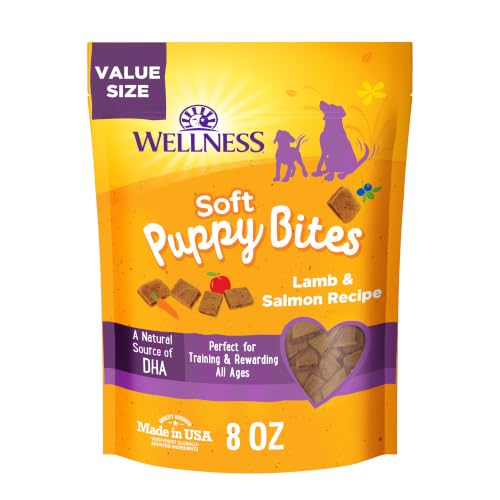
Small, soft treats that your puppy loves and can eat quickly. Training treats should be pea-sized to avoid overfeeding. Use the best treats for new behaviors, and regular kibble for known behaviors. For more options, see our guide to dog treats for training puppies.
Crate
An appropriately sized crate is essential for management, potty training, and providing a safe space. Choose a crate that will fit your puppy when fully grown, and use a divider to adjust the size as they grow.
Puzzle Toys
Puzzle toys and interactive toys provide mental stimulation that tires your puppy out more effectively than physical exercise alone. Use them to prevent boredom and reduce destructive chewing.
Clicker (Optional)
A clicker can be a precise marker for training. The click sound marks the exact moment your puppy performs the desired behavior, followed immediately by a treat. Clicker training is highly effective but requires practice. A marker word like "yes" works just as well.
Tools to Avoid: Shock collars, prong collars, choke chains, and spray bottles. These tools rely on fear, pain, or startle to suppress behavior. They do not teach your puppy what to do instead, and they damage the trust-based relationship you are building. Modern behavioral science overwhelmingly supports positive reinforcement training as more effective and humane. If you need help with a difficult behavior, invest in a qualified positive reinforcement trainer rather than aversive tools.
Common Puppy Training Mistakes
Most puppy training struggles come from a handful of avoidable mistakes. Here are the ones we see most often — and how to fix them.
- Starting too late. Many owners wait until their puppy is 6 months old to begin training. By then, the socialization window has closed and bad habits are ingrained. Start on day one.
- Inconsistent rules. If jumping on the couch is allowed on Monday but punished on Tuesday, your puppy cannot learn. Everyone in the household must enforce the same rules, every time.
- Training sessions that are too long. Puppies have short attention spans. Five to ten minutes is plenty. Multiple short sessions are far more effective than one long one.
- Punishing instead of redirecting. Punishment teaches a puppy what not to do but leaves them confused about what to do instead. Redirect to an acceptable behavior and reward it.
- Free-feeding. Leaving food out all day makes training treats less valuable and makes potty training harder. Scheduled meals create hunger drive that makes training more effective and predict elimination times.
- Skipping socialization due to fear of disease. The risk of behavior problems from lack of socialization is statistically greater than the risk of disease from controlled, safe exposure. Carry your puppy, host playdates, and enroll in a safe puppy class.
- Expecting too much too soon. Puppies are babies. They will have accidents, forget commands, and get distracted. Patience and consistency are your most important tools.
- Using the crate for punishment. If the crate becomes a scary place, your puppy will resist going in and crate training will fail. The crate should always be associated with treats, meals, and calm rest.
- Neglecting mental stimulation. A bored puppy is a destructive puppy. Physical exercise alone is not enough. Provide mental stimulation through puzzle toys, training games, and nose work. A puzzle toy or interactive toy can make a huge difference.
- Giving up too soon. Training takes time. A puppy who is struggling this week may be thriving next month. Stay consistent, stay positive, and celebrate small victories.
When to Get Professional Help: If your puppy shows signs of aggression (growling, snarling, snapping, biting with intent to harm), extreme fear (cowering, hiding, trembling in normal situations), or severe separation anxiety (destructive behavior, constant howling when alone), consult a veterinary behaviorist or a certified professional trainer. Early intervention is critical for these issues. Look for trainers who use positive reinforcement methods and have certifications from organizations like the CCPDT or KPA.
Frequently Asked Questions
Your Puppy's Future Starts Today
The effort you put into training and socializing your puppy now will pay off for years to come. A well-trained puppy becomes a well-behaved adult dog — one who is welcome everywhere, trusted with guests, and able to enjoy a rich and varied life. Start with the basics: name recognition, potty training, crate training, and socialization. Add commands gradually. Be patient, be consistent, and always reward the behavior you want to see more of. If you need additional support, consider enrolling in a local puppy training class or hiring a qualified trainer near you. Your puppy is counting on you — and the bond you build now will last a lifetime.