Clicker Training for Dogs: The Complete Positive Guide
Discover how a tiny plastic clicker can transform your dog's behavior, accelerate learning, and deepen your bond — without force, fear, or frustration.
If you've ever watched a dog respond instantly to a handler's subtle signal and wondered how they achieved such precision, the answer is often clicker training. This method, rooted in behavioral science, uses a simple handheld clicker to mark the exact moment a dog does something right — and then rewards it. The result is faster learning, clearer communication, and a dog who is eager to participate.
Unlike traditional training methods that rely on correction or punishment, clicker training is entirely force-free. It builds confidence in shy dogs, sharpens the skills of competitive athletes, and provides a humane, effective way to address everything from basic obedience to complex behavioral issues. Whether you're a first-time dog owner or a seasoned trainer looking to refine your technique, this guide will walk you through every step of the clicker training journey.
What Is Clicker Training?
Clicker training is a positive reinforcement system that uses a conditioned reinforcer — the click — to tell your dog precisely which behavior earned a reward. The click is not a command; it's a marker. It bridges the gap between the moment your dog performs the desired action and the moment they receive their treat.
Imagine trying to teach a dog to sit. You say "sit," the dog eventually lowers their rear, but by the time you reach for a treat, the dog has already stood up. The click solves this problem. You click the instant the dog's rear touches the floor, then deliver the treat. The dog quickly learns that the click means "that exact action is what I want."
Key Principle: The click always means a reward is coming. Never click without following through with a treat, especially during the learning phase. The click is a promise.
This method is widely used by professional trainers, veterinary behaviorists, and service dog organizations because it is precise, humane, and highly effective. It is also a cornerstone of modern dog training equipment and techniques.
The Science Behind the Click
Clicker training is based on operant conditioning, a learning theory pioneered by B.F. Skinner. The core idea is that behaviors followed by a positive consequence are more likely to be repeated. The clicker serves as a secondary reinforcer — initially neutral, but after repeated pairing with food, it becomes rewarding in itself.
Why does this matter? Because timing is everything in dog training. Dogs associate rewards with whatever they were doing at the exact moment the reward was delivered. A click is instantaneous, while reaching for a treat takes a second or two. The click captures the behavior with surgical precision.
Classical vs. Operant Conditioning
Classical conditioning creates associations between stimuli (like Pavlov's dogs salivating at a bell). Operant conditioning, which clicker training uses, is about learning from consequences. The click is a bridge that connects the behavior to the consequence.
Understanding this distinction helps you avoid common mistakes, such as clicking too late or using the clicker to get your dog's attention rather than to mark a behavior.
The Power of Instant Feedback
Dogs live in the moment. A reward that comes even three seconds after a behavior can be associated with the wrong action. The click eliminates this ambiguity, making it one of the most efficient ways to communicate with your dog.
This is why clicker training is particularly effective for measuring and enhancing dog intelligence and for teaching complex sequences.
Why Clicker Training Works So Well
Clicker training offers a long list of advantages over traditional methods. Here are the most significant:
- Accelerated learning: The precise timing of the click helps dogs understand new behaviors in fewer repetitions. Many trainers report that dogs learn two to three times faster with a clicker than with voice alone.
- Force-free and humane: There is no punishment, no pain, and no fear. This makes clicker training ideal for puppies, rescue dogs, and sensitive breeds. It also strengthens the human-animal bond rather than damaging it.
- Builds confidence: Shy or anxious dogs thrive with clicker training because they are rewarded for offering behaviors, which encourages experimentation and reduces stress. This is especially helpful for dogs with separation anxiety or fear-based issues.
- Precise communication: The click tells your dog exactly what they did right, eliminating confusion. This is invaluable when shaping complex behaviors or fine-tuning performance.
- Works for all ages and breeds: From 8-week-old puppies to senior dogs, and from Chihuahuas to Great Danes, clicker training adapts to any dog. It is also effective for puppy training from the very first day.
- Enhances mental stimulation: Training sessions provide mental exercise, which is just as important as physical activity. A mentally tired dog is a well-behaved dog. Learn more in our guide to dog mental stimulation.
Getting Started: Charging the Clicker
Before you can use the clicker to teach behaviors, you must first teach your dog what the click means. This process is called "charging" or "loading" the clicker. It's simple but essential.
- Choose a quiet space: Start in a room with no distractions. You want your dog's full attention.
- Gather high-value treats: Use tiny, soft treats that your dog loves. These should be reserved for training only. See our recommendations for dog training treats.
- Click, then treat: Click the clicker once, then immediately give your dog a treat. Do not ask for any behavior. The goal is simply to create an association between the click and the reward.
- Repeat 10-20 times: Do this in short sessions of 1-2 minutes. Take a break, then repeat. You'll know the clicker is charged when your dog perks up, looks at you, or even runs to you when they hear the click.
- Test the charge: Wait until your dog is relaxed, then click. If they immediately look at you expecting a treat, the clicker is charged. If not, repeat the pairing process a few more times.
Pro Tip: Never use the clicker to get your dog's attention or to call them. The click should only mark a behavior you want to reinforce. If you click accidentally, still give a treat — the click is always a promise.
Teaching Basic Commands with a Clicker
Once your clicker is charged, you can begin teaching foundational commands. The process is the same for each: lure or capture the behavior, click the moment it happens, then reward.
Sit
Hold a treat close to your dog's nose, then slowly move it up and back over their head. As their nose follows the treat, their rear will lower to the ground. The instant their bottom touches the floor, click and treat. Repeat, then add the verbal cue "sit" just before the behavior.
Down
From a sitting position, hold a treat at your dog's nose, then slowly move it straight down to the floor. Once their elbows touch the ground, click and treat. If your dog stands up, break it down into smaller steps — reward for lowering the head, then for one elbow down, and so on.
Stay
Ask your dog to sit. Wait one second, click, and treat. Gradually increase the duration — two seconds, five seconds, ten seconds. If your dog breaks the stay, simply reset and try again with a shorter duration. Never punish a failed stay; just make it easier.
Come (Recall)
Start in a low-distraction environment. Say your dog's name and "come" in an enthusiastic tone. When they move toward you, click and reward generously. Never call your dog for something they dislike (like bath time or nail trimming), or recall will become unreliable.
For a deeper dive into each command, including troubleshooting and proofing in different environments, explore our full dog training classes and local training resources.
Advanced Techniques & Tricks
Clicker training truly shines when you move beyond basic obedience. The clicker allows you to shape complex behaviors by rewarding successive approximations — tiny steps toward a final goal.
- Shaping: Instead of luring, you wait for your dog to offer a small piece of the behavior, click and reward, then gradually raise your criteria. This is how you teach dogs to close doors, turn on lights, or perform intricate tricks.
- Chaining: Link multiple behaviors together into a sequence. For example, "sit," "down," and "roll over" can be chained into a single routine. Click at the end of the chain, then reward.
- Capturing: Sometimes your dog does something adorable or useful on their own, like tilting their head or stretching. Capture it by clicking and rewarding at the moment it happens, then add a cue.
- Back-chaining: Teach the last step of a sequence first, then work backwards. This is highly effective for complex tasks like retrieving specific objects or agility obstacles. Explore dog sports for more advanced applications.
Remember: Advanced training requires patience and short sessions. Five to ten minutes of focused shaping is far more productive than a half-hour of repetitive drilling.
Fixing Problem Behaviors with Clicker Training
Clicker training is not just for teaching new skills — it's also a powerful tool for modifying unwanted behaviors. The key is to reinforce an incompatible behavior or to change your dog's emotional response to a trigger.
Jumping Up
Instead of punishing your dog for jumping, click and reward the moment they have all four paws on the floor. If they jump, turn away and wait. When they settle, click and treat. Consistency is crucial — everyone in the household must follow the same rules.
Foundation SkillLeash Pulling
Click and reward when the leash is loose. If your dog pulls, stop moving. Wait for them to look back or step toward you, then click and continue. Over time, your dog learns that pulling stops the walk, while a loose leash keeps it going.
Core MannersExcessive Barking
Identify the trigger and teach an alternative behavior, like "go to your mat" or "quiet." Click and reward the moment your dog stops barking, even for a split second. Gradually increase the duration of quiet. For serious cases, consider consulting a behaviorist.
Behavior ModificationFear & Anxiety
Use clicker training to create positive associations with feared stimuli. For example, if your dog is afraid of the vacuum, click and treat when they look at it calmly from a distance. Gradually decrease the distance as they become more comfortable. This technique is known as desensitization and counter-conditioning.
Advanced RehabilitationFor more severe behavioral issues, such as aggression or severe anxiety, it's always best to work with a professional. Our guide on dog trainers for aggressive dogs can help you find qualified help.
Common Clicker Training Mistakes to Avoid
Even experienced trainers make mistakes. Avoiding these common pitfalls will accelerate your progress and prevent frustration.
- Clicking too late: The click must mark the exact moment of the desired behavior. If you click after your dog has finished the behavior, you may be marking the wrong action.
- Clicking without treating: The click is a promise. Always follow it with a reward, especially during the learning phase. If you run out of treats, stop clicking.
- Using the clicker to get attention: The click is not a recall cue or a way to say "look at me." It should only mark a behavior you want to reinforce.
- Training too long: Short, frequent sessions are far more effective than long, tiring ones. Five minutes, three times a day, is ideal for most dogs.
- Using low-value treats: If your dog isn't motivated, they won't learn. Use high-value treats that your dog only gets during training. See our list of dog treats for ideas.
- Lack of consistency: Everyone interacting with your dog must use the same cues and rules. Inconsistency confuses your dog and slows progress.
- Ignoring the environment: A dog who can perform perfectly in the living room may struggle at the park. Gradually increase distractions and practice in different locations.
Choosing the Right Clicker & Treats
You don't need much equipment to get started, but the right tools make a difference.
| Tool | Key Features | Best For | Quality Tier |
|---|---|---|---|
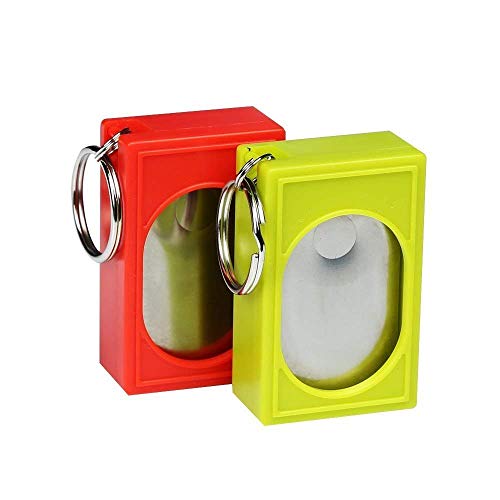
| Box Clicker | Classic design with a metal tongue that produces a sharp, loud click. Ergonomic and easy to press. | Most dogs, especially in noisy environments. | Entry-Level |
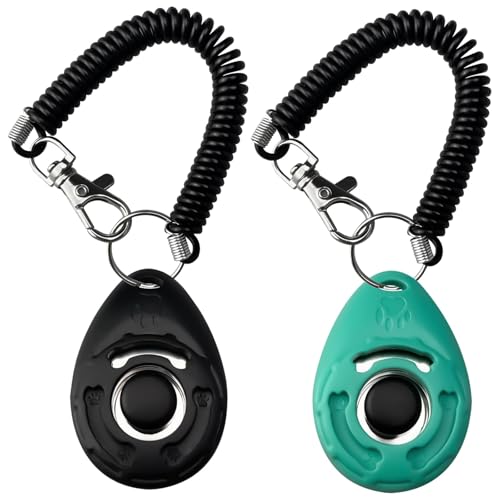
| Button Clicker | Softer click sound, easier on the thumb. Often has a wrist strap. | Shy dogs, sound-sensitive dogs, or indoor training. | Mid-Range |
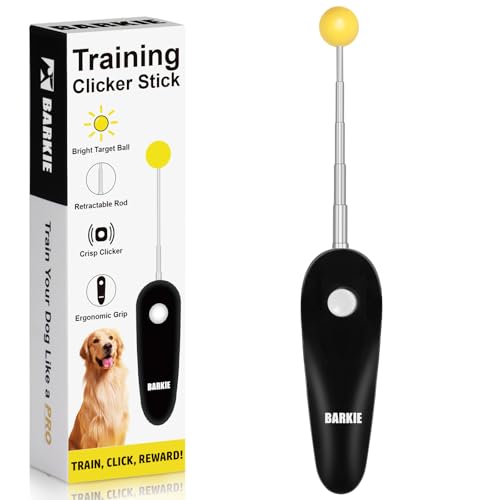
| Clicker with Target Stick | Combines a clicker with a telescoping target stick for teaching touch and direction. | Advanced training, tricks, and precision work. | Premium |
| Training Treats | Small, soft, smelly, and easy to chew. Examples: chicken, cheese, hot dog, commercial training treats. | All training sessions; variety keeps motivation high. | Essential |
| Treat Pouch | Clip-on bag with magnetic closure for quick access to treats. | Convenience during walks and training sessions. | Accessory |
When selecting treats, consider your dog's dietary needs. If your dog has a sensitive stomach or allergies, choose treats that are gentle and appropriate. The best clickers are the ones that feel comfortable in your hand and produce a sound that your dog can hear clearly without being startling.
Frequently Asked Questions
Ready to Start Clicking?
Clicker training is one of the most rewarding skills you can learn as a dog owner. It opens a line of communication that goes both ways — you learn to read your dog's subtle signals, and your dog learns to trust and respond to yours. Start with charging the clicker, keep sessions short and positive, and celebrate every small success. Before you know it, you'll have a dog who loves to learn and a bond that's stronger than ever. For more training resources, explore our guides on dog training classes, training equipment, and training treats.