Dog Trainers Specializing in Separation Anxiety
Find professional help for your dog's separation anxiety. Learn what specialized trainers do, how to evaluate them, and what a successful training plan looks like.
Separation anxiety is one of the most heartbreaking and challenging behavioral issues a dog owner can face. Coming home to destroyed furniture, complaints from neighbors about constant howling, or a dog who injures themselves trying to escape — these are not signs of a "bad dog." They are symptoms of genuine psychological distress that requires specialized help.
While general obedience training is valuable, separation anxiety requires a different approach. Separation anxiety in dogs is a panic disorder, not a training gap. It needs systematic desensitization, counter-conditioning, and often a coordinated effort between a behavior consultant and your veterinarian. This guide will help you find and evaluate trainers who truly specialize in this condition — not just trainers who claim to handle it.
Understanding Separation Anxiety
Before hiring a trainer, you need to understand what you are dealing with. Separation anxiety is not the same as boredom, lack of obedience, or a dog being "spoiled." It is a panic response triggered by the absence of a specific person or sometimes another animal.
Key Symptoms of Separation Anxiety
- Destructive behavior only when alone: Chewing doors, window frames, blinds, or furniture — specifically at exit points. This differs from general destructive chewing, which happens whether you are home or not.
- Excessive vocalization: Barking, howling, or whining that begins shortly after you leave and continues for an extended period. Neighbors often report this before owners realize the severity.
- House soiling: Urinating or defecating indoors despite being fully house-trained — often near doors or on items that smell like you.
- Escape attempts: Digging at doors, breaking through windows, or injuring paws and mouth trying to get out. This is the most dangerous symptom and can lead to serious injury.
- Pacing and drooling: Restless movement in a fixed pattern, heavy drooling, or trembling that starts as you prepare to leave.
- Extreme greeting: Frantic, prolonged greeting when you return — far beyond normal excitement. The dog may take 10-15 minutes to calm down.
- Shadowing: Following you from room to room, unable to relax unless you are within sight. This is often the first sign owners notice.
Important: These symptoms must occur primarily when the dog is alone. If your dog destroys things while you are home, that is a different behavior issue. A proper diagnosis from a veterinarian or certified behavior consultant is essential before starting any training program. Read more about separation anxiety in dogs to understand the full picture.
What Causes Separation Anxiety?
Understanding the root cause helps trainers tailor their approach. Common triggers include:
- Change in routine or environment: Moving to a new home, a change in work schedule, or a family member leaving for college can trigger anxiety.
- Loss of a companion: The death or departure of another pet or person the dog was attached to.
- Traumatic separation: Being surrendered, rehomed, or spending time in a shelter — especially if the dog was previously abandoned.
- Genetics and breed predisposition: Some breeds are more prone to anxiety, including many herding and companion breeds. Learn about dog intelligence and how certain breeds process attachment differently.
- Over-attachment: Dogs who are never left alone and become overly dependent on their owner's presence.
- Medical conditions: Pain, thyroid issues, or cognitive dysfunction in senior dogs can manifest as anxiety. Always rule out medical causes first with a veterinary checkup.
What Specialized Trainers Actually Do
A trainer who truly specializes in separation anxiety does far more than teach commands. They act as a behavior consultant, coach, and accountability partner throughout a structured desensitization program.
Assessment and Diagnosis
The first step is a thorough assessment. A qualified trainer will:
- Review video recordings of your dog's behavior when alone
- Ask detailed questions about your routine, the dog's history, and the home environment
- Rule out other conditions that mimic separation anxiety — boredom, confinement anxiety, noise phobias, or incomplete house-training
- Recommend veterinary consultation if medication may be needed
Customized Training Protocol
Based on the assessment, the trainer designs a gradual plan. This typically includes:
- Desensitization: Controlled, low-intensity exposure to departure cues (picking up keys, putting on shoes) without actually leaving
- Counter-conditioning: Pairing alone-time with something the dog loves, like a frozen stuffed toy, to change the emotional response
- Duration building: Gradually increasing the time the dog is left alone, starting from seconds and working up to hours
- Departure routine modification: Making comings and goings boring and unremarkable
Ongoing Coaching and Adjustment
Separation anxiety training is not a one-time consultation. A good trainer will:
- Provide daily or weekly homework assignments
- Review video submissions to track progress
- Adjust the protocol when the dog plateaus or regresses
- Coordinate with your veterinarian if medication is part of the plan
- Help you troubleshoot setbacks without punishing the dog
Owner Education
Since the owner is the one executing the plan daily, trainers teach:
- How to read subtle anxiety signals before they escalate
- How to create a safe, comfortable space for alone-time
- How to use tools like pheromone diffusers and anxiety wraps correctly
- How to avoid common mistakes that undo progress
Types of Trainers and Their Approaches
Not all trainers are equal. When seeking help for separation anxiety, you will encounter several types of professionals. Understanding the differences helps you make an informed choice.
Certified Behavior Consultant (CBCC-KA or equivalent)
The highest level of expertise for behavior issues. These professionals have completed rigorous coursework, supervised experience, and passed an exam. They are equipped to handle severe separation anxiety, often work alongside veterinarians, and use only force-free methods. This is the gold standard for complex cases.
Top-tierCertified Professional Dog Trainer (CPDT-KA or equivalent)
Certified trainers with demonstrated knowledge of learning theory and behavior modification. They may have additional specialization in separation anxiety. Good for mild to moderate cases. Ask specifically about their experience with separation anxiety, as not all certified trainers have handled it extensively.
Mid-tierVeterinary Behaviorist
A veterinarian with board certification in behavior. They can diagnose medical contributors, prescribe medication, and design a comprehensive treatment plan. Essential for severe cases or when medication is needed. They often work in tandem with a trainer who handles the day-to-day training.
PremiumGeneral Obedience Trainer
May claim to handle separation anxiety but often lacks specialized knowledge. General obedience training does not resolve panic-based behavior. Use caution — some may recommend punishment-based methods that worsen anxiety. Not recommended for separation anxiety unless they have specific advanced certification and experience.
Entry-level (for this issue)Approaches: What Works and What Doesn't
| Approach | How It Works | Effectiveness for Separation Anxiety |
|---|---|---|
| Systematic Desensitization | Gradual exposure to alone-time triggers at low intensity | Gold standard — addresses the root emotional response |
| Counter-Conditioning | Pairing alone-time with high-value rewards | Highly effective when combined with desensitization |
| Punishment-Based Training | Correcting or scolding anxious behavior | Harmful — increases fear and worsens anxiety |
| Crating Alone | Confining the dog in a crate while away | Depends on the dog — can help some, cause panic in others |
| Medication + Training | Anti-anxiety medication alongside behavior modification | Most effective for moderate to severe cases |
Credentials and Certifications to Look For
The pet training industry is largely unregulated. Anyone can call themselves a "dog trainer" or "behavior specialist" without any formal education. When dealing with separation anxiety — a serious psychological condition — credentials matter enormously.
Legitimate Certifications
- CBCC-KA (Certified Behavior Consultant Canine — Knowledge Assessed): Offered by the Certification Council for Professional Dog Trainers. Requires extensive coursework, case studies, and a rigorous exam. The highest standard for behavior consultants.
- CDBC (Certified Dog Behavior Consultant): Offered by the International Association of Animal Behavior Consultants. Requires education, supervised experience, and continuing education.
- CPDT-KA (Certified Professional Dog Trainer — Knowledge Assessed): Also from CCPDT. A solid baseline certification that demonstrates knowledge of learning theory and ethics.
- KPA CTP (Karen Pryor Academy Certified Training Partner): Focuses on positive reinforcement and clicker training. Strong foundation for force-free methods.
- Veterinary Behaviorist (DACVB): A veterinarian who has completed a residency in behavior and passed board exams. The highest level of expertise for severe cases.
Beware of: "Certifications" from unaccredited online programs that can be completed in a few hours. Terms like "certified behavior specialist" or "expert dog trainer" without a recognized credentialing body behind them are often meaningless. Always verify the certifying organization's reputation and requirements.
What to Ask About Credentials
- What specific certification do you hold, and what organization issued it?
- How many hours of education and supervised experience were required?
- How many separation anxiety cases have you personally handled in the past year?
- Do you have references from clients with similar cases?
- Are you comfortable coordinating with my veterinarian?
- What is your approach when a dog does not respond to initial training?
How to Evaluate a Separation Anxiety Trainer
Credentials are important, but they are not the whole picture. The right trainer for your dog is someone you can communicate with, who respects your concerns, and who has a clear plan.
Questions to Ask During Consultation
- What is your step-by-step plan for my dog's specific case?
- How long do you estimate the training will take, and how will we measure progress?
- What do you expect me to do between sessions?
- What happens if my dog regresses or plateaus?
- Do you recommend medication, and if so, how do you coordinate with veterinarians?
- What tools do you use, and why?
- Are you available for questions between sessions?
- What is your policy on aversive tools like shock collars or prong collars?
What a Good Trainer Will NOT Do
- Promise a quick fix or guaranteed cure
- Blame the dog or call them "dominant" or "stubborn"
- Recommend punishment for anxious behavior
- Use shock, prong, or choke collars as a primary tool
- Give a diagnosis over the phone without seeing the dog
- Discourage veterinary involvement if medication is appropriate
Observing a Training Session
If possible, observe the trainer working with another dog or ask to see video of their sessions. Look for:
- The dog appears relaxed and engaged — not fearful or shut down
- The trainer uses food, toys, and praise generously
- The trainer explains what they are doing and why
- The pace is appropriate for the dog — not rushed
- The trainer adjusts when the dog is struggling rather than pushing forward
Compatibility Matters
You will be working closely with this person for weeks or months. Choose someone whose communication style matches yours. If you feel dismissed, rushed, or uncomfortable asking questions, find another trainer. The best trainer for your dog is one who partners with you, not one who dictates from a pedestal.
What a Good Training Plan Looks Like
A quality separation anxiety training plan is structured, gradual, and data-driven. If a trainer cannot articulate these elements, they are likely not specialized enough for this condition.
Phase 1: Foundation (Weeks 1-2)
- Eliminate all absences that trigger anxiety — use daycare, sitters, or take your dog with you
- Establish a calm departure and arrival routine (no emotional goodbyes or greetings)
- Create a safe, comfortable space with familiar items
- Begin relaxation training — teaching the dog to settle on cue
- Introduce calming tools such as pheromone diffusers or calming products
Phase 2: Desensitization to Departure Cues (Weeks 2-4)
- Practice picking up keys, putting on shoes, and walking to the door without leaving
- Repeat these actions until the dog shows no anxiety response
- Pair departure cues with high-value rewards like a frozen stuffed chew toy
- Begin actual departures lasting 1-5 seconds, then 10 seconds, then 30 seconds
Phase 3: Duration Building (Weeks 4-12+)
- Gradually increase alone-time from seconds to minutes to hours
- Vary the duration — don't always increase, sometimes go shorter to keep the dog successful
- Use video monitoring to confirm the dog remains calm
- If the dog shows anxiety at any point, the duration was too long — go back to the last successful step
Progress is not linear. Expect setbacks. A good trainer prepares you for them and adjusts the plan. If your dog regresses after a successful period, it doesn't mean the training failed — it means the last step was too big or something in the environment changed. The solution is always to go back to a level where the dog succeeds and build up more slowly.
Phase 4: Generalization and Maintenance
- Practice in different contexts — different times of day, different durations, different departure methods
- Fade the use of food rewards gradually but keep occasional rewards for maintenance
- Continue to monitor for regression, especially after schedule changes or stressful events
- Maintain a calm, predictable routine for at least several months after training ends
Tools and Products That Support Training
While training is the core solution, the right tools can make the process easier and help your dog feel safer. These are not substitutes for a training plan — they are supports.
Pheromone Diffusers and Sprays
Synthetic versions of dog-appeasing pheromones. Plug-in diffusers release calming pheromones into the room, helping dogs feel more secure. Useful for the first weeks of training and during times of change. No side effects and safe to use alongside training.
Mid-tierAnxiety Wraps and Thundershirts
Provide gentle, constant pressure that has a calming effect on many dogs, similar to swaddling an infant. Best for mild anxiety or as an additional support during the early stages of training. Not a standalone solution for severe cases.
Entry-levelInteractive and Puzzle Toys
Keep the dog mentally stimulated during alone-time. Frozen stuffed toys, treat-dispensing balls, and puzzle toys redirect the dog's attention away from your absence and create a positive association with being alone. Essential for any training plan.
Mid-tierCalming Treats and Supplements
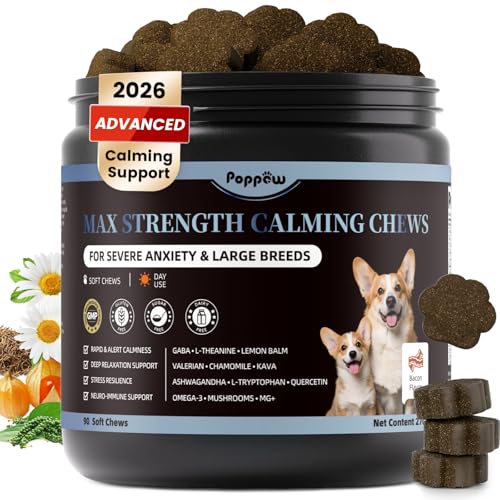
Treats containing ingredients like L-theanine, chamomile, or valerian root may take the edge off mild anxiety. Always consult your veterinarian before starting any supplement. These are supportive tools, not cures, and work best alongside a training program.
PremiumTool Selection: A trainer should be able to recommend specific tools based on your dog's individual needs. Avoid buying expensive equipment before consulting with a professional — what works for one dog may be counterproductive for another. For severe cases, toys for separation anxiety specifically designed for long-lasting distraction can be particularly helpful.
Red Flags to Avoid
Some trainers and self-proclaimed "experts" can actually make separation anxiety worse. Avoid anyone who:
- Recommends punishment for anxious behavior: Scolding a dog for destroying furniture or having accidents when alone is not only ineffective — it deepens the fear and can lead to learned helplessness or aggression. Anxious behavior is not disobedience.
- Claims separation anxiety can be fixed in days: This condition requires weeks or months of consistent work. Anyone promising a quick fix is either inexperienced or dishonest.
- Uses shock, prong, or choke collars as a primary tool: Aversive tools increase anxiety and can cause physical injury when a panicked dog pulls against them. They are particularly dangerous for dogs with separation anxiety.
- Discourages veterinary involvement: For moderate to severe cases, medication can be a crucial part of treatment. A trainer who dismisses veterinary input is not putting the dog's welfare first.
- Cannot explain the science behind their methods: If a trainer cannot describe desensitization and counter-conditioning in simple terms, they likely do not understand the behavior they are claiming to treat.
- Guarantees a cure: No ethical professional guarantees specific outcomes. They can guarantee effort, transparency, and adherence to proven methods, but not a cure.
- Pushes a single tool or method for all dogs: Separation anxiety varies in severity and triggers. A one-size-fits-all approach is a sign of inexperience.
Frequently Asked Questions
The Bottom Line
Separation anxiety is a treatable condition, but it requires the right kind of help. A general obedience trainer who claims to handle it may do more harm than good. Look for certified behavior consultants or veterinary behaviorists who specialize in anxiety disorders and use force-free, science-based methods. The investment of time and resources pays off — not just in a calmer dog, but in a stronger, more trusting relationship between you and your canine companion. If you are also struggling with other behavior issues, explore our resources on trainers for aggressive dogs and service dog trainers for specialized help.