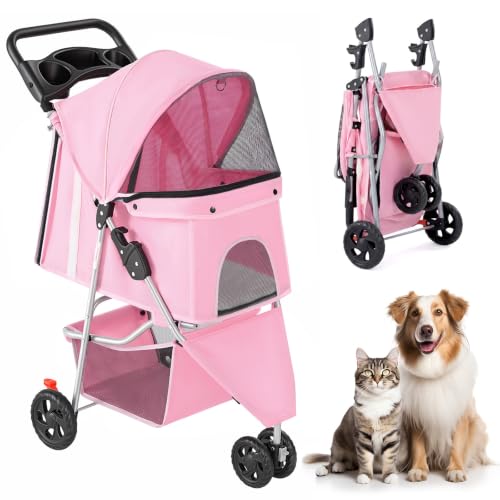
The Complete Dog Stroller Guide
Everything you need to know before buying a dog stroller — sizing, safety, features, terrain types, and how to help your dog love the ride.
A dog stroller is more than a luxury accessory — for many owners, it is a practical solution that keeps their dog included in daily life. Senior dogs with arthritis, small breeds who tire quickly, injured dogs recovering from surgery, and dogs with mobility issues can all benefit from a stroller that lets them enjoy fresh air and companionship without physical strain.
If you have been searching for a way to bring your dog along on errands, walks, or travel without exhausting them, a stroller may be the answer. This guide walks you through every decision — from sizing and safety to features and terrain — so you can choose confidently.
What Is a Dog Stroller?
A dog stroller is a wheeled carrier designed specifically for pets. Unlike a dog carrier that you carry by hand or strap to your back, a stroller lets you push your dog in a comfortable, enclosed cabin. Most models feature a lightweight frame, breathable mesh panels, a safety tether, and a canopy for sun or rain protection.
Dog strollers come in many forms — from compact models for toy breeds to heavy-duty wagons for large seniors. Some convert into car seats, and others fold flat for storage. The right one depends on your dog's size, your lifestyle, and where you plan to use it.
Quick Note: A dog stroller is not a substitute for exercise. It is a mobility aid and convenience tool. Dogs who can walk should still walk — the stroller simply extends their range and protects them when needed.
Who Benefits from a Dog Stroller
Dog strollers are not just for tiny dogs in handbags. They serve a wide range of owners and situations:
- Senior dogs: Arthritis, joint pain, and reduced stamina make long walks difficult. A stroller lets them join the family without overexertion. Pair with joint supplements for comprehensive care.
- Small and toy breeds: Breeds like Chihuahuas, Pomeranians, and Yorkies tire quickly and can be vulnerable in crowded spaces. A stroller keeps them safe and close.
- Injured or post-surgery dogs: Recovery often requires limited movement. A stroller allows mental stimulation and outdoor time without physical strain.
- Dogs with mobility conditions: Conditions affecting the spine, hips, or legs may limit walking. A stroller preserves quality of life and social inclusion.
- Urban owners: Crowded streets, public transit, and long errands are easier when your dog has a safe, contained space.
- Travelers: Airports, train stations, and road trips are more manageable with a stroller that doubles as a carrier. See our dog travel essentials for more tips.
- Puppies: Before full vaccination, puppies should avoid high-traffic areas. A stroller lets them explore safely.
Types of Dog Strollers
Strollers fall into several categories based on design, terrain, and use case. Understanding the differences helps you match the stroller to your dog and lifestyle.
Standard Pet Stroller
The most common type. Lightweight frame, four wheels, mesh cabin, and foldable design. Best for small to medium dogs on smooth surfaces like sidewalks, malls, and vet clinics. Easy to store and transport.
Entry-level to mid-rangeJogging Stroller
Features three large pneumatic wheels and a fixed or lockable front wheel. Built for running and rough paths. Requires a dog comfortable with motion and a secure harness. Best for active owners with medium to large dogs.
Mid-range to premiumDouble Dog Stroller
Wider cabin designed for two small dogs or one medium dog. Often has separate compartments or a divider. Heavier and bulkier but ideal for multi-dog households. Check weight limits carefully.
Mid-range to premiumLarge Dog Stroller
Reinforced frame, wider cabin, and heavy-duty wheels for dogs up to 100+ pounds. Designed for seniors, giant breeds, and mobility-impaired dogs. Bulkier and harder to fold but essential for large dogs.
Premium to luxuryStroller Wagon
Combines stroller and wagon features. Low entry point, open top, and pull-or-push design. Great for dogs who prefer to hop in and out. Popular for beach trips and outdoor events.
Mid-range to high-endConvertible Carrier Stroller
Functions as both a stroller and a car seat or carrier. Detachable cabin lets you move your dog without waking them. Ideal for travel and errands. Check crash-test ratings if used in vehicles.
Premium to luxuryChoosing the Right Size
Size is the most important decision. A stroller that is too small is uncomfortable and unsafe; one that is too large is hard to maneuver and may let your dog shift around too much.
How to Measure Your Dog
- Weight: Weigh your dog accurately. Add a few pounds for growth if they are still a puppy. Always stay well below the stroller's maximum weight limit — not right at it.
- Length: Measure from the tip of the nose to the base of the tail while your dog is standing. Add 2–4 inches for comfortable lying down.
- Height: Measure from the floor to the top of the head (or ears) while standing. Add 2–3 inches of clearance so your dog can sit up without hitting the canopy.
- Width: Measure the widest part of your dog (usually the chest or hips). The cabin should be at least a few inches wider.
Sizing Tip: If your dog is between sizes, size up. A slightly larger cabin is safer than a cramped one. But avoid going too large — your dog may slide around during movement, which can cause anxiety or injury.
Weight Limits and Real-World Capacity
Every stroller lists a maximum weight capacity. This number assumes the dog is evenly distributed and the stroller is used on smooth surfaces. On rough terrain, the effective capacity drops. For safety, choose a stroller rated at least 10–15 pounds above your dog's weight.
| Dog Size | Typical Weight | Recommended Stroller Type |
|---|---|---|
| Toy / Teacup | Under 10 lbs | Standard lightweight stroller |
| Small | 10–25 lbs | Standard or convertible stroller |
| Medium | 25–50 lbs | Double or jogging stroller |
| Large | 50–90 lbs | Large dog stroller or wagon |
| Giant | 90+ lbs | Heavy-duty large dog stroller |
Key Features to Look For
Not all strollers are built the same. These features make the biggest difference in safety, comfort, and long-term usability.
Safety Features (Non-Negotiable)
- Internal safety tether: A clip that attaches to your dog's harness or collar. Prevents jumping or falling out. Never use a stroller without one.
- Reliable brakes: Look for brakes on at least two wheels. Test them before buying. They should lock firmly and release easily.
- Secure zippers and closures: Dogs can push through weak zippers. Look for lockable or double zippers on all openings.
- Sturdy frame: Metal frames (aluminum or steel) are more durable than plastic. Check for wobble at joints.
- Reflective accents: Important for evening walks. Improves visibility to cars and pedestrians.
Comfort Features
- Breathable mesh: Good airflow prevents overheating. Look for mesh on multiple sides, not just the front.
- Padded interior: A removable, washable pad adds comfort and makes cleanup easy.
- Adjustable canopy: Protects from sun, wind, and rain. Some models offer full coverage or extendable visors.
- Suspension: Shock-absorbing suspension smooths out bumps, especially important for senior dogs with joint pain.
Convenience Features
- One-hand fold: Essential if you often use the stroller alone or in busy areas.
- Storage basket: Holds treats, poop bags, water bottles, and personal items.
- Cup holder: Small but useful for longer walks.
- Adjustable handlebar: Accommodates different heights for comfortable pushing.
- Removable cabin: Lets you convert the stroller into a carrier or car seat.
Quality Tier Guide: Entry-level strollers typically offer basic safety features and simple folding. Mid-range models add better suspension, larger wheels, and more storage. Premium and luxury strollers feature reinforced frames, all-terrain wheels, and convertible designs. Choose based on how often you will use it and where.
Safety Tips & Training
A stroller is only safe if used correctly. These practices protect your dog and give you peace of mind.
Safety Rules
- Always use the safety tether. Clip it to a well-fitted harness, not a collar. A collar can choke if your dog jumps.
- Never leave your dog unattended. Even for a moment. Dogs can tip strollers, overheat, or escape.
- Engage brakes when stationary. Even on flat ground. A slight slope can send an unbraked stroller rolling.
- Avoid overheating. Mesh helps, but direct sun and closed canopies can trap heat. Check your dog frequently and offer water. See our dog water bottle guide for portable options.
- Do not exceed weight limits. Overloading stresses the frame, wheels, and brakes — and risks collapse.
- Use on appropriate terrain. A standard stroller on a hiking trail is a recipe for tipping. Match the stroller to the surface.
- Secure your dog during transport. If the stroller doubles as a car seat, confirm it is crash-tested. Otherwise, use a proper car harness or seat belt.
How to Train Your Dog to Use a Stroller
Most dogs adapt quickly, but a gradual introduction prevents fear and resistance.
- Start at home. Place the stroller in a familiar room with the cabin open. Put treats and a favorite toy inside.
- Let your dog explore. Do not force entry. Let them sniff, step in, and step out at will. Reward curiosity.
- Practice short rides indoors. Once your dog enters willingly, close the cabin and push gently for a few seconds. Reward calm behavior.
- Move outdoors gradually. Start with a short walk on smooth pavement. Increase duration and distance slowly.
- Use high-value treats. Pair the stroller with something your dog loves. See our dog treats guide for options.
- Never force or rush. If your dog panics, stop and go back a step. Patience prevents long-term fear.
Training Tip: If your dog is anxious in the stroller, try calming products or a anxiety wrap during early training sessions. Pair with treats and praise to build positive associations.
Terrain & Wheel Guide
The wheels determine where you can safely push the stroller. Choosing the wrong wheel type for your terrain leads to tipping, stuck wheels, and a stressed dog.
| Wheel Type | Best Terrain | Pros | Cons |
|---|---|---|---|
| Small plastic wheels | Indoors, smooth pavement, malls | Lightweight, compact, easy to store | Poor on rough surfaces, can get stuck |
| Medium rubber wheels | Sidewalks, parks, gentle trails | Good balance of comfort and portability | Not ideal for gravel or mud |
| Pneumatic (air-filled) wheels | Rough trails, grass, gravel, sand | Excellent shock absorption, smooth ride | Heavier, can puncture, need inflation |
| Swivel front wheel | Urban areas, tight spaces | Easy turning, maneuverable | Can wobble on high speeds or rough ground |
| Fixed front wheel | Jogging, straight paths | Stable at speed, tracks straight | Harder to turn in tight spaces |
Terrain Tip: If you mainly walk in your neighborhood, a standard stroller with medium rubber wheels is enough. If you hike or visit parks with uneven ground, invest in a jogging stroller or all-terrain model with pneumatic wheels.
Care & Maintenance
A well-maintained stroller lasts longer, rolls smoother, and keeps your dog safer. These simple habits make a difference.
- Clean the cabin regularly. Wipe down surfaces and wash removable pads. Use pet-safe cleaners. See our dog stain remover guide for tough messes.
- Check the brakes. Test them before every walk. Replace worn brake pads or cables promptly.
- Inspect wheels and tires. Remove debris, check for wear, and inflate pneumatic tires to the recommended pressure.
- Lubricate moving parts. Use a silicone-based lubricant on hinges and wheel axles. Avoid oil-based products that attract dirt.
- Tighten screws and bolts. Vibration loosens hardware over time. Check monthly and tighten as needed.
- Store properly. Keep the stroller dry and folded in a sheltered area. Prolonged sun exposure can fade fabric and crack plastic.
- Replace worn parts. Do not wait for a failure. Replace frayed tethers, torn mesh, and worn tires before they become safety hazards.
Maintenance Tip: Keep a small repair kit with zip ties, a multi-tool, and spare tire patches in the storage basket. Quick fixes on the go prevent ruined walks.
Frequently Asked Questions
Ready to Choose?
Start by measuring your dog and identifying your primary terrain. Then decide between a standard, jogging, large dog, or convertible stroller. Prioritize safety features over cosmetic ones. A well-chosen stroller can add years of happy outdoor time for your dog — especially as they age or recover from injury. If you are also preparing for travel, check our dog travel essentials and dog supplies checklist to make sure you have everything you need.