Dog Door Guide: Types, Installation & Best Picks
Everything you need to know about choosing, installing, and maintaining a dog door — so your pet can enjoy freedom while you maintain security, comfort, and energy efficiency at home.
A dog door gives your pet the freedom to go outside for bathroom breaks, exercise, and fresh air without requiring you to be home or available to open the door. For busy owners, seniors, and anyone who works long hours, a dog door can dramatically improve both your dog's quality of life and your own daily routine.
But choosing the right dog door is not as simple as picking one off the shelf. You need to consider your home's construction, your dog's size and behavior, your climate, and your security concerns. The wrong choice can lead to drafts, water damage, unwanted animal visitors, or a door your dog refuses to use.
This guide walks you through every consideration — from measuring your dog correctly to selecting the right installation type for your wall, door, or sliding glass panel. Whether you are a first-time buyer or replacing an old door, you will find the information you need to make a confident decision.
Benefits of a Dog Door
Before investing in a dog door, it helps to understand exactly what you and your dog gain from having one. The benefits go beyond simple convenience.
- Freedom and independence for your dog: Dogs can go outside to relieve themselves, exercise, or simply enjoy the outdoors whenever they need to. This is especially valuable for dogs who are home alone for extended periods.
- Fewer accidents indoors: If your dog is house-trained but sometimes cannot hold it until you get home, a dog door eliminates the problem. This is particularly helpful for puppies in training, senior dogs, and dogs with medical conditions.
- Reduced owner stress: You no longer need to rush home or arrange for someone to let your dog out. This flexibility improves your quality of life and reduces guilt about leaving your pet alone.
- More exercise and mental stimulation: Dogs with free access to a secure yard tend to move more, explore more, and stay mentally engaged. This reduces boredom-related behaviors like destructive chewing and excessive barking.
- Better temperature regulation: In moderate climates, dogs can choose to be inside or outside based on their comfort. They can sunbathe when they want warmth and retreat indoors when they need shade or air conditioning.
- Convenience for multi-pet households: If you have multiple dogs, one dog door serves them all. You can also use dog gates to control access to different areas of the house while still giving outdoor access.
Important Consideration: A dog door is only as good as the yard it leads to. Before installing one, ensure your yard is fully fenced with a secure dog fence or fences for outside that your dog cannot jump, dig under, or escape through. A dog door without a secure yard defeats the purpose and creates safety risks.
Types of Dog Doors
Dog doors come in several designs, each suited to different home configurations and owner priorities. Understanding the differences helps you narrow down your options quickly.
Sliding Glass Door Dog Door
Inserts into the track of an existing sliding glass door without permanent modification. Ideal for renters or anyone who does not want to cut into walls or doors. The panel sits in the frame and the door slides against it. Easy to install and remove. Best for apartments, condos, and temporary living situations.
Mid-range to premiumWall-Mount Dog Door
Installed through an exterior wall, offering the most secure and insulated option. Requires cutting through drywall, insulation, and siding, then framing and sealing the opening. Provides a dedicated tunnel that minimizes drafts and energy loss. Best for homeowners who want a permanent, high-performance solution.
Premium to luxuryDoor-Mount Dog Door
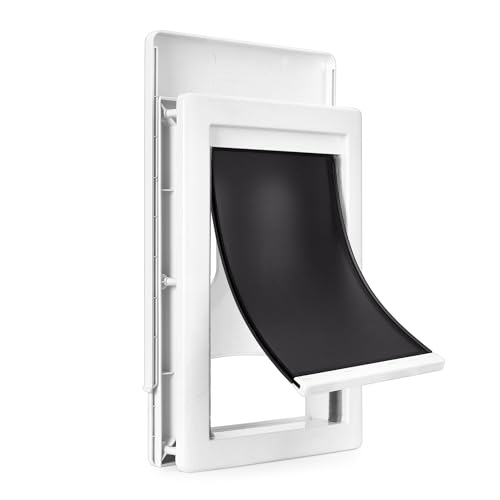
Cuts directly into an existing human door — typically a back door or side door. More affordable and easier to install than a wall-mount. However, it weakens the door's structure slightly and may not be suitable for hollow-core or metal doors. Best for solid wood doors and budget-conscious homeowners.
Entry-level to mid-rangeElectronic / Smart Dog Door
Uses a microchip or collar tag to unlock only for your pet. Prevents raccoons, stray cats, and other animals from entering. Some models log entry and exit times or connect to smartphone apps. Requires batteries or wiring. Best for areas with wildlife or multiple free-roaming animals.
Premium to luxuryComparison at a Glance
| Type | Installation | Security | Insulation | Best For |
|---|---|---|---|---|
| Sliding Glass Door | No tools required | Moderate | Moderate | Renters, temporary setups |
| Wall-Mount | Professional recommended | High | High | Permanent home installation |
| Door-Mount | DIY possible | Moderate | Moderate | Solid wood doors, budget buyers |
| Electronic / Smart | Varies by model | Very High | Moderate to High | Wildlife areas, multi-pet homes |
Sizing & Measuring Your Dog
The most common mistake buyers make is choosing a dog door that is too small. A door that is too narrow causes chafing and reluctance to use it. A door that is too short forces your dog to duck, which can lead to neck and spine issues over time.
How to Measure Correctly
- Measure height: Have your dog stand on level ground. Measure from the floor to the top of their shoulders (the withers). Add 2-3 inches for clearance. This is the minimum opening height you need.
- Measure width: Measure your dog at their widest point — usually the chest or hips. Add 2-4 inches. This ensures they can pass through without squeezing.
- Consider growth: If you are buying for a puppy, measure the expected adult size, not the current size. A door that fits a 10-pound puppy will not fit a 70-pound adult. Check breed size charts or ask your vet for a growth estimate.
- Test the fit: Before installing, create a mock opening with cardboard or tape at the measured dimensions. Have your dog walk through it several times. Adjust if they seem hesitant or have to duck.
Pro Tip: When in doubt, size up. A slightly larger door is far better than one that is too small. Dogs can easily use a door larger than their minimum requirement, but they will avoid a door that feels tight or uncomfortable. For large breeds, look for doors with openings at least 10-12 inches wide and 15-20 inches tall. Giant breeds may need 12-15 inch widths and 20-24 inch heights.
Installation Options
Installation complexity varies dramatically by door type. Here is what each option involves.
Sliding Glass Door Installation
This is the easiest option. The dog door panel comes pre-assembled with the pet door already installed. You simply:
- Slide your existing glass door open
- Insert the panel into the track
- Slide the glass door closed against the panel
- Secure with the provided locking mechanism or a dowel in the track
No cutting, no tools beyond a screwdriver, and fully reversible if you move. The main drawback is that you lose some width from your door opening and the panel itself can be a security weak point if not properly secured.
Wall-Mount Installation
This is the most complex and permanent option. It involves:
- Locating a suitable wall section free of electrical wiring, plumbing, and structural framing
- Cutting through interior drywall, insulation, and exterior siding
- Framing the opening with lumber to maintain structural integrity
- Installing the tunnel and door unit
- Sealing both interior and exterior with caulk and trim
- Insulating the tunnel to prevent drafts
Professional installation is strongly recommended. A poorly installed wall door can lead to water infiltration, drafts, pest entry, and expensive structural repairs.
Door-Mount Installation
This requires cutting a hole in an existing human door. Steps include:
- Removing the door from its hinges
- Marking and cutting the opening with a jigsaw
- Inserting the dog door frame
- Securing with screws and sealing with caulk
- Rehanging the door
Works best on solid wood doors. Hollow-core doors will not support the weight and will crumble. Metal doors require special cutting tools and may not be suitable at all. If you are not confident with power tools, hire a handyman.
Energy Efficiency & Insulation
A dog door is essentially a hole in your home's thermal envelope. Without proper insulation, it becomes a major source of energy loss — raising your heating and cooling bills and making the area around the door uncomfortable.
Features That Improve Efficiency
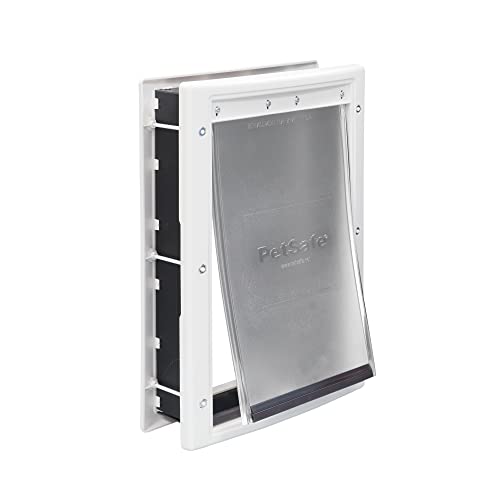
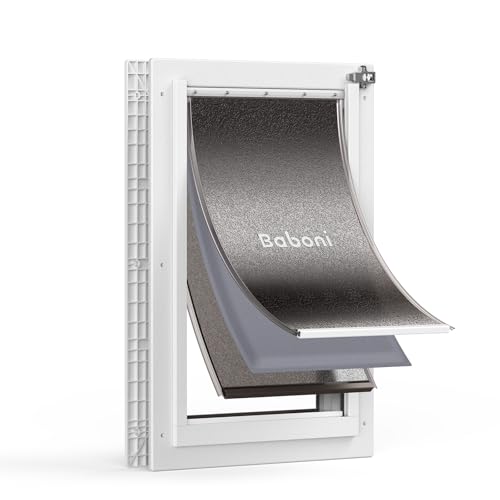
- Double or triple flaps: Multiple flaps create air pockets between them that act as insulation. A single flap offers minimal protection. Two flaps are standard on quality doors; three flaps provide the best performance.
- Magnetic seals: Magnets along the edges of the flaps keep them closed when not in use, preventing gaps that let air escape.
- Insulated flaps: Some flaps contain foam or other insulating material. These are especially important in cold climates.
- Insulated tunnel: Wall-mount doors with insulated tunnels prevent the tunnel itself from becoming a cold bridge.
- Weather stripping: Quality doors include weather stripping around the frame to seal gaps between the door and the wall or panel.
Climate Considerations: In mild climates, a basic double-flap door is sufficient. In cold climates, choose a door with insulated flaps, an insulated tunnel, and triple-flap design if available. In hot climates, the same features help keep cool air inside. If you live in an area with extreme temperatures, consider an electronic door that stays locked when your pet is not nearby, reducing the time the opening is exposed.
Security Features
A dog door is a potential entry point for unwanted animals — and, in rare cases, intruders. Security should be a top consideration, especially if you live in an area with wildlife or high crime.
Security Options
- Manual locking covers: A sliding panel that covers the dog door when not in use. Prevents access but requires you to remember to close it. Best for nighttime security.
- Electronic access control: The door remains locked until it detects your pet's microchip or collar tag. Unauthorized animals cannot enter. Some models also log entry and exit times.
- Reinforced frames: Metal or heavy-duty plastic frames are more resistant to forced entry than thin plastic.
- Tamper-resistant designs: Some doors have locking mechanisms that cannot be manipulated from the outside.
Security Tip: Even with a locking dog door, never rely on it as your only home security measure. Use it in combination with a secure dog fence, motion-sensor lights, and a home alarm system. If you are concerned about intruders, an electronic door that only opens for your pet's microchip is the safest option. You can also use a dog camera to monitor activity around the door.
Training Your Dog to Use It
Most dogs take to a dog door quickly, especially if they already understand basic commands and are comfortable with the outdoors. But some dogs — particularly those who are anxious, older, or have never used a door before — need a structured introduction.
Step-by-Step Training
- Prop the flap open: Start with the flap held open or removed entirely so your dog can see and walk through without resistance. Use treats and praise to encourage them to step through.
- Practice with you on both sides: Have a helper on one side and you on the other. Call your dog back and forth through the open doorway. Reward every successful pass.
- Introduce the flap: Lower the flap but hold it open slightly. Let your dog push through while you hold it. Gradually reduce your assistance until they push through on their own.
- Use high-value rewards: Use dog treats your dog loves for each successful pass. This builds a positive association with the door.
- Practice at different times: Train in the morning, afternoon, and evening so your dog learns the door works at any time.
- Be patient: Some dogs learn in minutes; others take days. Never force or push your dog through the door — this creates fear and can set training back significantly.
Special Considerations: Senior dogs may have hip dysplasia or arthritis that makes stepping over a raised threshold painful. Choose a door with a low threshold or add a small ramp or dog steps on both sides. Small dogs may need a ramp if the door is installed higher than floor level. Puppies should be supervised until they are reliably trained and comfortable using the door.
Maintenance & Troubleshooting
A dog door is a mechanical device that sees daily use. Regular maintenance keeps it functioning smoothly and extends its lifespan.
Routine Maintenance Checklist
- Clean the flaps monthly: Dirt, mud, and saliva build up on the flaps. Wipe them down with a damp cloth and mild soap. This keeps them flexible and prevents cracking.
- Check seals and weather stripping: Inspect for gaps, cracks, or deterioration. Replace worn seals to maintain energy efficiency.
- Lubricate hinges and moving parts: If your door has metal hinges or moving parts, apply a silicone-based lubricant every few months.
- Test the locking mechanism: For electronic doors, test that the lock engages and disengages properly. Replace batteries as needed.
- Inspect the frame: Check for cracks, warping, or damage. Small cracks can be repaired with epoxy; larger damage may require replacement.
- Check for drafts: On a windy day, feel around the edges of the door for drafts. If you feel air, adjust or replace the seals.
Common Problems and Solutions
- Flap sticks or does not close fully: Clean the flap and the frame. Check for debris in the hinges. If the flap is warped, replace it.
- Dog refuses to use the door: Go back to training basics. Prop the flap open and reward heavily. Check that the door is not too heavy for your dog to push.
- Unwanted animals entering: Install an electronic door or a locking cover. Ensure your yard is secure and remove food sources that attract wildlife.
- Drafts and energy loss: Add insulation, upgrade to a multi-flap door, or install a storm door over the dog door for extreme climates.
- Water leaking around the frame: Reapply caulk or weather stripping. Ensure the door is installed with a slight outward slope to shed water.
What to Look For When Buying
With so many options on the market, it helps to have a clear checklist of features that matter. Use these criteria to evaluate any dog door before purchasing.
Essential Features
- Correct size: Measured your dog correctly — height plus 2-3 inches, width plus 2-4 inches.
- Durable flaps: Look for flexible, UV-resistant materials that will not crack or become brittle over time.
- Magnetic or gravity seals: These keep the flap closed when not in use, preventing drafts and pests.
- Weatherproofing: Rubber or silicone seals around the frame to prevent water and air infiltration.
- Security lock: At minimum, a sliding cover that can lock the door closed. Electronic options offer the best security.
- Easy installation: Choose a type that matches your DIY skill level. Sliding glass doors are the most beginner-friendly.
- Warranty: A good warranty (at least 1 year, preferably longer) indicates manufacturer confidence in the product.
Nice-to-Have Features
- Insulated flaps: Essential in extreme climates, beneficial everywhere.
- Triple-flap design: Best energy efficiency.
- Electronic access: Microchip or collar-tag activation for maximum security.
- Smartphone connectivity: Alerts and activity logs for tech-savvy owners.
- Adjustable tunnel depth: For wall-mount doors, ensures a perfect fit for your wall thickness.
- Removable flaps: Makes cleaning easier.
Final Buying Tip: Read reviews from owners with similar dogs and home types. A door that works perfectly for a small dog in a mild climate may fail completely for a large dog in a cold climate. Pay attention to comments about durability, ease of installation, and customer service. Also consider buying from a retailer with a generous return policy in case the door does not work out for your specific situation.
Frequently Asked Questions
Ready to Choose Your Dog Door?
Start by measuring your dog correctly, then determine which installation type suits your home. Prioritize energy efficiency and security features that match your climate and neighborhood. A quality dog door is an investment that pays off daily in convenience, freedom for your dog, and peace of mind for you. Once installed, take the time to train your dog properly — the effort you put in upfront ensures years of smooth, stress-free use. And remember: a dog door is only as good as the yard it leads to, so make sure your fencing is secure before giving your dog unsupervised outdoor access.