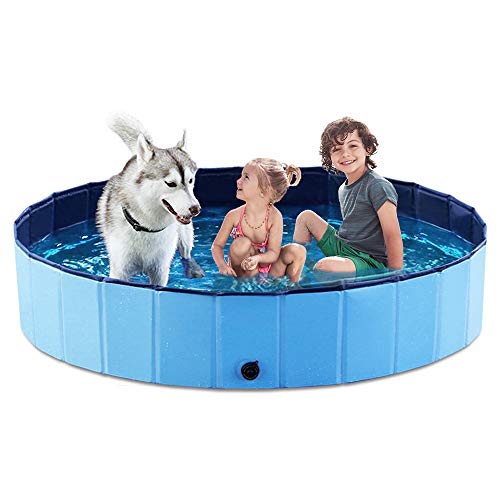
Dog Pool Guide: The Best Way to Keep Your Dog Cool, Fit, and Happy
Everything you need to know about choosing a dog pool, introducing your dog to water safely, keeping the water clean, and turning backyard pool time into a healthy habit for your dog.
A dog pool is one of the most versatile pieces of equipment you can add to your backyard. It gives your dog a safe way to cool down in hot weather, a low-impact form of exercise, and a source of mental stimulation that beats another boring walk around the same block. But not every dog takes to water instantly, and not every pool on the market is actually safe for dogs.
This guide walks you through every decision you need to make — from choosing a pool that matches your dog's size and swimming ability, to keeping the water clean, to training a nervous dog to enjoy the water. Whether you have a water-obsessed Labrador or a cautious senior dog, the principles in this guide will help you get pool time right from day one.
Why a Dog Pool Is Worth It
Many owners assume a dog pool is a luxury item, but for a lot of dogs it solves real problems. For dogs that overheat easily, live in hot climates, or have limited mobility, a pool is not a toy — it is a practical tool that supports their health and comfort.
- Cooling in hot weather: Dogs cannot sweat like humans. They rely on panting and a small amount of heat loss through their paws to regulate temperature. Water immersion is one of the fastest ways to bring a dog's core temperature down safely during summer.
- Low-impact exercise: Swimming works nearly every muscle group while removing stress from the joints. This makes it ideal for older dogs or dogs with joint problems, where high-impact running can cause pain and further damage.
- Bonding and enrichment: Supervised pool time is interactive. It gives you a shared activity with your dog, and it provides sensory and mental enrichment that reduces boredom, anxiety, and destructive behavior at home. Related: mental stimulation ideas for dogs.
- Weight management: Swimming burns calories without stressing the body. For dogs that need to lose weight but cannot run long distances, a pool is a practical, sustainable option.
- Recovery from injury or surgery: Many veterinary rehabilitation programs use underwater exercise to rebuild muscle and mobility after injury, surgery, or injury-related immobility. A home dog pool can support that recovery when cleared by a vet.
There is also a practical safety angle. A dog that grows up comfortable in water is far less likely to panic near lakes, rivers, or backyard swimming pools. Familiarity with a controlled dog pool builds the confidence and swimming skill that can protect your dog in an accidental water emergency. That is why the topic belongs alongside other dog safety considerations for any active household.
Types of Dog Pools Explained
Dog pools come in several formats, each with trade-offs in durability, ease of use, and how well they suit different dogs. Understanding the categories helps you avoid buying the wrong pool the first time.
Hard Plastic Dog Pools
The most common type. Rigid molded plastic that holds its shape, resists scratching from claws, and is easy to empty and scrub. Best for dogs that will use the pool daily and for households that want low maintenance. They are sturdy enough for most medium and large dogs but generally do not come with built-in ramps.
mid-range to premiumFoldable & Soft-Sided Pools
Made from durable PVC or reinforced fabric with a rigid or inflatable rim. They collapse for storage, which is a big advantage for small yards or seasonal use. Less resistant to chewing and claw punctures than hard plastic. Best for gentle dogs, occasional use, and owners who need portability.
entry-level to mid-rangeInflatable Dog Pools
Lightweight, inexpensive, and quick to set up. Good for travel and for dogs that only need shallow water. The main weakness is durability — sharp nails, excited digging, and rough play can puncture the material. Best treated as a short-term or backup option rather than a permanent backyard fixture.
budget-friendly to mid-tierAbove-Ground & Built-In Pools
A permanent option for owners who want deeper water for swimming rather than splashing. These require proper fencing, secure covers, and, ideally, a dedicated entry system such as wide steps or a ramp. Built-in pools are the highest tier of investment and should always be paired with child- and dog-proof barriers.
premium to luxuryFor most backyards, a hard plastic pool in the 18–24 inch depth range covers the needs of the average dog. If you are unsure what your dog's body length requires, our guide to the right dog pool dimensions and use cases can help you match pool size to breed size. For very large dogs, check our notes on kennel sizing for large dogs as a parallel reference for how much space a big dog actually needs.
How to Choose the Right Dog Pool
Pool selection is not about brand or color — it is about matching four variables to your dog: size, swimming ability, temperament, and your maintenance tolerance. Get these right and the pool will get years of use. Get them wrong and it will sit in the garage.
Match the Pool to Your Dog's Size
The most common mistake is buying a pool that is too deep. Your dog must be able to stand on the bottom with their head fully above water, at least at the shallow end. As a rule of thumb, water depth should not exceed the distance from your dog's paw to their shoulder, unless you intend the pool purely for supervised swimming.
- Small and toy breeds: 12–18 inches of depth and a diameter of at least 30 inches. These dogs tire quickly and can chill fast in cool water, so shallow and warm is the priority.
- Medium breeds: 18–24 inches of depth, 40–48 inches in diameter. This allows standing, turning, and a few swimming strokes.
- Large and giant breeds: 24 inches or more of depth with the widest diameter you can accommodate. A large dog needs space to turn without their feet slipping off the bottom.
Consider Access and Exit Design
A dog must always be able to get out of the pool without help. Slippery walls and deep sides are a serious hazard, especially for dogs with reduced mobility. If your dog is older, has joint issues, or has limited mobility, look for a pool with built-in steps or add a dog ramp or dog steps. A non-slip surface inside the pool is also worth prioritizing — smooth plastic becomes dangerous when wet.
Key Insight: Most dog pool accidents happen not because a dog cannot swim, but because a dog cannot find or use the exit. Make the way out obvious, stable, and always in the same place.
Think About Durability and Material
Dogs claw, chew, and dig. A pool made for children is often not built to withstand a determined dog. Look for thick, rigid material, reinforced seams if the pool is soft-sided, and a surface that resists punctures. If your dog is a chewer, keep in mind that some dogs will attempt to bite the rim of an inflatable pool — in that case, a hard plastic pool is the safer choice. And never leave a dog alone with a deflated or damaged pool that could trap their head.
Portability and Storage
If your yard is small, if you rent, or if you only use a pool a few months per year, a foldable or soft-sided pool that collapses flat is a major advantage. Permanent hard pools store poorly. If you need to move the pool between the yard and a vehicle for trips, pair it with the right travel essentials so water play is practical away from home.
Dog Pool Safety Essentials
A dog pool is safe only if it is used correctly. These rules are not optional — they are the difference between a fun afternoon and a preventable tragedy.
- Never leave a dog unsupervised in or near water. Not even for a minute, and not even a strong swimmer. Dogs can tire, slip, or panic without warning. If you must step away, take the dog with you.
- Always provide a visible, stable exit. Steps, a ramp, or a gently sloping side must be present and reachable from every point in the pool. Mark it clearly and keep it free of obstructions.
- Control the depth. Fill only to the level appropriate for your dog's size and ability. A dog pool does not need to be deep to deliver the cooling and exercise benefits.
- Watch for overheating and overexertion. Even in water, dogs can overheat. Take breaks, offer shade, and provide fresh drinking water. Stop immediately if your dog is panting heavily, slowing down, or trying to climb out repeatedly.
- Be careful with brachycephalic breeds. Flat-faced dogs such as Bulldogs, Pugs, Boston Terriers, and French Bulldogs have compromised airways. They overheat faster and can struggle in water. Use very shallow water, keep sessions brief, and supervise closely.
- Protect against slips and injuries. Place a non-slip dog mat around the pool entry. Wet plastic plus excited dog equals injury risk. A stable footing area reduces falls as your dog jumps in and out.
- Secure the area when not in use. If you have a permanent pool, use fencing and a cover. Even a small dog pool should be emptied or covered if unsupervised children or dogs share the yard.
- Use a life jacket for weak or learning swimmers. A well-fitted dog life jacket adds buoyancy, keeps the head above water, and gives you a handle to guide or lift your dog. It is essential for dogs new to water, senior dogs, and any dog with mobility limits.
Emergency Tip: Learn the signs of a distressed swimmer — frantic splashing, vertical body posture, eyes wide, and repeated attempts to climb the wall. These are different from happy paddling. If you see them, get your dog out immediately. Know where your nearest emergency vet is, and keep a dog first aid kit accessible near the pool area.
Introducing Your Dog to the Pool
Some dogs run straight into water; most need a gradual introduction. Rushing the process creates fear that can last for years, so patience here pays off permanently.
A Step-by-Step Introduction Plan
- Start with an empty or nearly empty pool. Let your dog walk in and out freely on dry ground. Toss treats inside. This builds a positive association with the object before water is added.
- Add one to two inches of water. Let your dog choose whether to step in. Reward any curiosity with praise and treats. Never push or pull them in.
- Increase depth slowly. Add a few inches per session only when your dog is relaxed. Keep sessions under five minutes at first.
- Support the body the first time they swim. Place one hand under the belly and one under the chest, letting your dog paddle while you keep them level. This prevents panic and teaches correct body position.
- Guide them to the exit repeatedly. Show your dog the ramp or steps from inside the pool so they learn the route out while calm. Do this several times before you stop supporting them.
- Practice short, frequent sessions. Two or three brief sessions per week builds skill faster than one long session. Always end on a positive note while your dog is still enjoying it.
Dogs That May Need Extra Help
- Puppies: Young dogs have poor body awareness and tire fast. Use shallow water only, keep sessions very short, and pair water time with positive puppy training so the pool becomes part of a structured routine.
- Senior dogs: Older dogs benefit enormously from water exercise, but they may have vision, balance, or joint limitations. Use a ramp, shallow depth, and a life jacket. See our guidance on supporting dog mobility as your dog ages.
- Anxious dogs: A dog that fears water may need weeks of desensitization. Never force it. If your dog shows severe anxiety around water, a behavior professional can help. Our articles on behavior modification techniques and calming products for dogs cover the general approach.
- Dogs with medical conditions: Heart, respiratory, skin, and orthopedic conditions can all affect whether water activity is appropriate. Get veterinary clearance before starting, especially if your dog has been treated for something like respiratory distress in the past.
Cleaning & Maintenance
Dog pool water gets dirty fast. Saliva, dirt, urine, pollen, and bacteria all accumulate in standing water, and a dirty pool can cause skin irritation, ear infections, and gastrointestinal problems if your dog drinks from it. Maintenance is simple but must be consistent.
- Empty after every use if possible. At minimum, drain and refill every one to two days during regular use. Standing water is a breeding ground for bacteria and mosquito larvae.
- Scrub the walls and floor. Use a soft brush and a pet-safe cleaner, or a diluted white vinegar solution. Rinse thoroughly — residue can irritate skin and paws.
- Never use human pool chemicals. Chlorine tablets, algaecides, and pH adjusters formulated for human pools are not safe for dogs that may swallow the water. There are pet-safe water treatments available, but plain fresh water changed frequently is the safest baseline.
- Dry the pool completely before storage. Mold and mildew thrive in folded, damp pools. Wipe dry and let it air out fully.
- Rinse your dog after swimming. Rinse or bathe your dog to remove pool residue and dirt from the coat. A gentle dog shampoo used occasionally is enough; daily rinsing with plain water is usually sufficient. Dogs with sensitive skin may benefit from a sensitive skin routine after pool sessions.
- Dry the ears. Water trapped in the ear canal is a leading cause of ear infections. Dry your dog's ears thoroughly after every swim, especially floppy-eared breeds.
- Check paws. Repeated wetness softens paw pads and can lead to irritation. Dry the paws and check for cracks. Our paw protection guide covers balms and after-swim care.
Clean Water Matters: If your dog has allergies, skin issues, or a sensitive stomach, be extra strict about water freshness. A dog that swallows dirty pool water can develop vomiting or diarrhea, which is a common but avoidable problem.
Health Benefits of Dog Pool Exercise
Water exercise is one of the most effective forms of activity for dogs across almost every life stage. The buoyancy of water reduces body weight load by a large margin, which means dogs can move and build strength without the joint stress of running or jumping.
- Joint-friendly conditioning. Swimming strengthens the muscles that support the joints — hips, knees, shoulders, and spine — without impact. This is especially valuable for dogs with arthritis, hip dysplasia, or a history of limping after a jump or fall.
- Weight management. Regular swimming burns calories and builds lean muscle, supporting healthy weight loss. Keeping your dog at a healthy weight is one of the strongest factors in long-term joint health and overall longevity.
- Cardiovascular fitness. Controlled swimming improves heart and lung function, endurance, and recovery capacity. It is a safe way to build stamina in dogs that cannot tolerate long runs.
- Post-surgery and injury recovery. Veterinary rehab often uses water as a primary tool. If your dog is recovering from surgery, ask your vet whether a home dog pool is appropriate and how to introduce it safely.
- Mental and emotional benefits. Water play is enriching. It reduces boredom, relieves stress, and gives high-energy dogs an appropriate outlet. For dogs prone to separation anxiety, a predictable pool routine can become a positive part of the daily structure.
- Heat management. For dogs in hot climates, safe water access reduces the risk of heat exhaustion, which is a genuine medical emergency and a reason pool safety belongs with broader dog safety practices.
One caution: water exercise is not a substitute for veterinary care. If your dog has a diagnosed condition, a rehab plan should be designed by a professional. A pool supports recovery, but only within a medically appropriate program.
Common Dog Pool Mistakes to Avoid
These errors show up again and again, and each one is avoidable with a little planning.
- Buying a pool that is too deep. A dog that cannot stand safely will panic and may develop a lasting fear of water. Depth should match your dog's size and ability.
- Assuming all dogs can swim. Swimming is a skill, not an instinct. Some breeds, especially flat-faced dogs, are physically poor swimmers. Always introduce water gradually.
- Leaving the pool unsupervised. The most serious mistake of all. A dog can drown in inches of water if they cannot right themselves or find the exit.
- Ignoring the exit route. Slippery, steep sides with no ramp or steps trap dogs in the water. Always provide and teach a reliable exit.
- Letting water sit for days. Dirty water causes skin, ear, and digestive problems. Fresh water is not optional.
- Using human pool chemicals. These are formulated for humans, not for dogs that drink the water. Stick to pet-safe cleaning methods.
- Skipping the rinse and ear dry. Small habits prevent the most common post-swim problems: skin irritation and ear infections.
- Using a pool as the only exercise. Pool time is excellent, but dogs still need walks, sniffing, and mental work. Combine pool sessions with other forms of activity, including puzzle toys and mental stimulation, for a balanced routine.
- Ignoring your dog's signals. If your dog is trying to get out, shivering, or avoiding the pool, stop. Forcing water time damages trust and safety.
Frequently Asked Questions
Start with the Basics
A dog pool does not need to be complicated or expensive to be useful. Choose a size that lets your dog stand safely, provide a reliable exit, keep the water fresh, and introduce your dog at their own pace. Add a life jacket for weak swimmers and a ramp for older dogs. With those foundations in place, pool time becomes a safe, healthy, and genuinely enjoyable part of your dog's routine. If you are new to dog ownership overall, our dog supplies checklist and dog supplies essentials guides will help you build a complete setup.