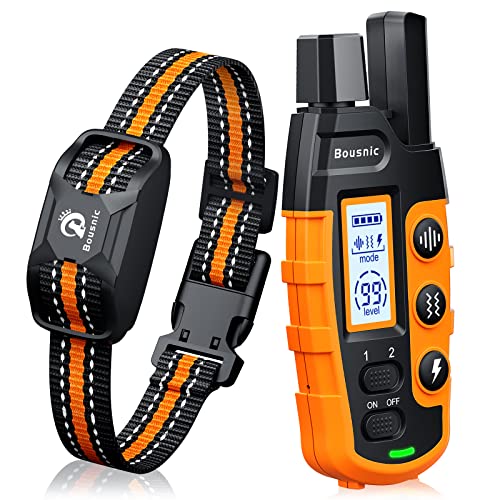
Dog with Electric Collar: A Complete Guide to Training, Safety, and Ethics
Unlock the full potential of remote training. This comprehensive guide explores how a dog with an electric collar can be trained effectively and humanely, covering everything from choosing the right device to mastering low-level stimulation techniques.
The topic of using an electric collar on a dog is one of the most debated subjects in the world of pet training. For some, it's a modern, effective tool for off-leash reliability; for others, it's an aversive device that can harm the human-animal bond. The truth, as is often the case, lies in the details of *how* the tool is used. When a dog with an electric collar is trained by a knowledgeable, compassionate handler, the results can be remarkable. However, in the wrong hands, it can create fear, anxiety, and aggression.
This guide is designed to provide you with a balanced, in-depth look at e-collar training. We will explore the technology, the methodology, and the ethical considerations so you can make an informed decision for your canine companion. Whether you are dealing with a stubborn recall, a dog that chases wildlife, or simply want to enhance your communication, understanding the correct application of this tool is paramount. For those seeking professional help, it is often wise to consult experienced dog trainers who specialize in this equipment.
What Is an Electric Collar?
An electric collar, often called an e-collar or remote training collar, is a device worn around a dog's neck that can deliver a remote signal. This signal is typically a low-level electrical stimulation, a vibration, or a tone. The purpose is to provide a correction or a command from a distance, reinforcing known behaviors. It is crucial to understand that modern e-collars are vastly different from the crude "shock collars" of the past. They are precision tools designed to deliver a stimulus that is noticeable but not painful, acting more like a tap on the shoulder than a shock.
Key Distinction: The term "shock collar" is largely outdated and misleading. Today's reputable manufacturers produce e-collars with a wide range of stimulation levels, often starting at a level so low that a human can barely feel it. The goal is to gain the dog's attention, not to cause pain.
Brief History and Evolution
Early versions of remote collars were indeed harsh, delivering a painful shock. This led to a well-deserved negative reputation. Over the decades, technology has advanced significantly. Modern e-collars feature:
- Adjustable Stimulation Levels: With hundreds of levels, you can find the perfect "working level" for your dog—the lowest level they can perceive but that doesn't cause a stress response.
- Vibration and Tone Modes: Many collars offer these as a non-aversive first step. You can teach your dog that a tone or vibration predicts a command, much like a clicker.
- Safety Features: Automatic shut-off timers, stimulation limiters, and ergonomic designs for a comfortable fit.
- Long-Range Remotes: Reliable communication at distances from a few hundred yards to over a mile, making them ideal for hunting, hiking, and off-leash work.
This evolution has transformed the e-collar from a blunt instrument of punishment into a sophisticated communication device. To further understand the range of these tools, it can be helpful to compare them with other containment options like an electric dog collar for yard containment, which uses a different application of the same core technology.
How Modern E-Collars Work
Understanding the mechanics and the training theory behind an e-collar is essential for ethical use. The device consists of two parts: a collar receiver and a handheld remote transmitter. The receiver has two contact points that must touch the dog's skin. When you press a button on the remote, a signal is sent to the receiver, which then delivers the chosen stimulation.
The "Tap on the Shoulder" Analogy
Think of the stimulation from a modern e-collar as a tap on the shoulder. It's a physical sensation that gets your attention without causing pain. If a friend was across a field and you needed to get their attention, you might shout. The e-collar is the equivalent of a gentle tap. It's a way to say, "Hey, I'm talking to you," and then you follow up with a known command like "Come" or "Sit." The stimulation is not a punishment; it's a cue.
The Three Modes of Communication
Most quality e-collars offer three distinct ways to communicate, allowing for a layered training approach:
- Tone: A beeping sound. This is often used as a warning or a positive marker. You can teach the dog that the tone predicts a reward (e.g., tone = treat), making it a highly positive cue. Or, it can be a pre-correction warning, giving the dog a chance to comply before any stimulation is used.
- Vibration: A buzzing sensation, similar to a phone on vibrate. This is a stronger, non-aversive attention-getter than the tone. It's an excellent stepping stone for dogs that are hard of hearing or easily distracted. For a sensitive dog, the vibration alone may be all the "correction" they ever need.
- Stimulation (or "Nick"): A brief, low-level electrical pulse. This is the core of e-collar training. The key is to use "momentary" stimulation (a quick tap) rather than "continuous" stimulation. Continuous stimulation should only be used in very specific, brief situations and at the lowest possible level, often just to get the dog to "turn off" the pressure by complying.
The Pros and Cons of E-Collar Training
Before deciding if an e-collar is right for you and your dog, it's important to weigh the potential benefits against the risks and ethical concerns.
Potential Advantages
- Reliable Off-Leash Control: It is arguably the most effective tool for achieving a rock-solid recall, even around high-value distractions like other dogs or wildlife. This can be life-saving.
- Remote Communication: It allows you to communicate with your dog instantly from a distance, which is invaluable for hunting, hiking, or any activity where your dog is off-leash.
- Clarity and Consistency: The stimulation is perfectly timed and consistent, which can be clearer to a dog than a human's voice, which can vary in tone and volume.
- Enhances Freedom: For a properly trained dog, an e-collar is a key to freedom. They can enjoy off-leash adventures that would otherwise be too dangerous.
- Can Address Serious Behavioral Issues: In extreme cases, such as a dog with a dangerous prey drive or a history of chasing livestock, a professional trainer might use an e-collar as a last resort to save the dog's life.
Significant Disadvantages & Risks
- High Risk of Misuse: The greatest danger is an untrained owner using the collar incorrectly. This can cause fear, anxiety, and a breakdown of trust.
- Fallout Behaviors: If used improperly, a dog may associate the stimulation with something in their environment (like another dog or a child) rather than their own behavior. This can lead to aggression or extreme fear.
- Suppression of Behavior: An e-collar can suppress behavior, but it doesn't teach the dog what *to do*. If not paired with positive reinforcement, it can create a shut-down, stressed dog.
- Ethical Concerns: Many animal welfare organizations and positive-reinforcement trainers consider e-collars to be aversive and unnecessary, arguing that force-free methods are just as effective without the potential for harm.
- Physical Risks: Poorly fitted collars can cause skin irritation or pressure sores. Using a level that is too high is painful and inhumane.
Choosing the Right Collar for Your Dog
If you've decided to explore this training method, selecting the right device is critical. A cheap, poorly made collar can be dangerous, while a high-quality one offers the precision and safety needed for humane training. When selecting a collar, you'll find different tiers of quality:
- Entry-Level Models: These are budget-friendly but may have fewer levels of stimulation, a shorter range, and less reliable build quality. They might be suitable for very basic, close-range training but are not ideal for serious work.
- Mid-Range Models: This is the sweet spot for most owners. They offer a good number of stimulation levels (e.g., 1-100), a reliable range (up to 1/2 mile), and are often waterproof. They provide the precision needed for proper low-level training.
- Premium/Professional Models: These are designed for professional trainers and serious enthusiasts. They feature long ranges (1 mile+), ergonomic and rugged designs, advanced features like "jump" or "boost" buttons for emergencies, and often the ability to control multiple collars. They are built to last and offer the highest level of reliability.
When choosing, consider your dog's size, coat type, and temperament. A dog with a very short coat or thin skin may need a collar with shorter contact points. A thick-coated breed like a Husky may require longer contact points to ensure the signal is reliably delivered. Always prioritize a model with a wide range of very low stimulation levels; this is the single most important feature for humane training.
Step-by-Step Training Protocol
This is not a tool you simply put on your dog and start pressing buttons. E-collar training is a systematic process that requires patience, consistency, and a foundation of positive reinforcement. Before even introducing the collar, your dog must reliably know basic commands like "Sit," "Stay," and "Come" on a leash.
Crucial First Step: The "Conditioning" Phase. You must first teach your dog that the stimulation is a meaningful cue, not a random event. This is done by pairing the lowest possible level of stimulation with a known command.
The Training Ladder
- Find Your Dog's "Working Level": With the collar on but the remote in your hand, start at the lowest level. Press the "nick" (momentary) button. Slowly increase the level until you see a subtle reaction—a twitch of the ear, a slight turn of the head. This is your dog's working level. It should be barely noticeable. If your dog yelps, jumps, or shows fear, the level is too high and you must go lower. A dog with an electric collar trained humanely never receives a level that causes pain.
- Condition to a Known Command: With your dog on a leash in a quiet environment, say your command (e.g., "Sit"). Immediately follow with a "nick" at the working level. Guide your dog into the sit if needed, then praise and reward. Repeat this process. The goal is for your dog to associate the slight sensation with the command. Soon, they will anticipate the command when they feel the tap.
- Add Distractions: Once your dog understands the cue in a quiet setting, slowly add distractions. Practice in your yard, then on a walk, then around other people or dogs. Use the "nick" to reinforce the command if they get distracted. Always follow with praise and reward for compliance.
- Transition to Off-Leash: Start in a securely fenced area. Use the "nick" to reinforce commands from a distance. Your dog is learning that even when off-leash, you can still communicate with them. Always have a long-line attached as a safety net during this transition.
- Proofing and Reliability: This is an ongoing process. Practice in new environments, with new distractions, and at greater distances. The e-collar becomes a tool to "proof" behaviors your dog already knows, ensuring they are reliable in any situation. This is where the true value of a dog with an electric collar shines—the freedom and safety it provides when used correctly.
Safety, Ethics, and Common Mistakes
The use of an e-collar is a serious responsibility. It is a powerful tool that can be either a great communication device or a source of immense stress for your dog. The difference is entirely in the application.
Golden Rules of Ethical E-Collar Use
- Never Use It as Punishment: The collar is for communication, not for punishment. Never use it in anger or to "get back" at your dog.
- Always Start at the Lowest Level: Find the lowest level your dog can perceive. If you can't feel it on your own hand at the lowest levels, it's likely not a good device.
- Use Momentary, Not Continuous, Stimulation: A quick "nick" is a cue. Continuous stimulation is a pressure that should only be used to teach a dog to "turn off" the pressure by complying with a command.
- Pair with Positive Reinforcement: For every correction, there should be many more rewards. The e-collar should be used to reinforce known commands, not to teach new ones. This is a key principle that differentiates humane training from abusive training. You can learn more about this in our guide to positive behavior modification.
- Never Use on a Fearful or Aggressive Dog: Aversive tools can escalate fear and aggression. If your dog has these issues, consult a veterinary behaviorist or a certified force-free trainer. For dogs with anxiety, there are many calming products that can help without the risks of aversive training.
- Consult a Professional: The learning curve is steep. A single mistake can create lasting problems. It is highly recommended to work with a certified professional trainer who is experienced in modern, low-level e-collar training.
When to Stop: If your dog shows signs of stress (tucking tail, flattening ears, lip licking, yawning when not tired, avoiding you) during a session, stop immediately. Training should never be a negative experience. If you feel frustrated or angry, put the remote down and walk away. Your dog's emotional well-being is more important than any training goal.
Humane Alternatives to Consider
Before committing to an e-collar, it is your responsibility to explore all other options. Many dogs can be trained to a high level of reliability using force-free methods. These alternatives are not just "nicer"—they are highly effective and build a stronger, more trusting bond.
- Positive Reinforcement Training (R+): This is the gold standard of modern dog training. By rewarding desired behaviors with treats, toys, or praise, you can teach your dog anything, including a reliable recall. It requires patience and consistency but builds a dog that is eager to work with you.
- Long Lines and Check Cords: A 20-30 foot long line is an excellent tool for teaching off-leash reliability in a safe way. It gives your dog the feeling of freedom while allowing you to gently guide them back to you if they don't respond.
- Vibrate-Only or Tone-Only Collars: If you want the benefits of remote communication without the electrical stimulation, these are excellent options. Many dogs respond perfectly well to a vibration or tone as an attention cue.
- Front-Clip Harnesses: For dogs that pull on the leash, a front-clip harness is a humane and effective tool. It redirects the dog's momentum, making it difficult for them to pull, without causing pain or pressure on the throat.
- Professional Force-Free Trainers: A certified force-free trainer can help you address behavioral issues like leash reactivity, poor recall, and jumping using positive methods. They can provide a customized training plan that avoids aversive tools.
For dog owners who are concerned about the ethics of e-collars but need help with containment, there are also alternatives to traditional in-ground electric fences, such as a physical dog fence or a GPS tracker combined with training.
Frequently Asked Questions
Making the Final Decision
The decision to use an electric collar on your dog should not be taken lightly. It is a powerful tool that requires a deep understanding of canine behavior, impeccable timing, and a commitment to humane, low-level training. If you are unsure, or if you feel you cannot dedicate the time to learn the proper technique, the most responsible choice is to seek the help of a certified professional trainer who uses these tools ethically, or to explore the many effective force-free alternatives available. Your dog's trust and well-being should always be the top priority.