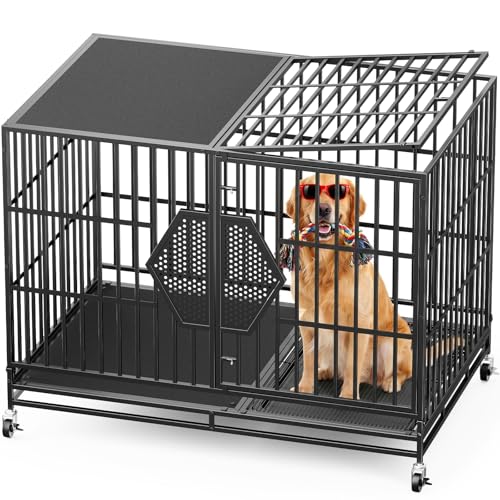
Extra Sturdy Dog Crate: The Ultimate Buyer's Guide
If your dog has bent bars, broken latches, or escaped from every crate you've tried, you need a crate built like a fortress. This guide covers everything you need to know about extra sturdy dog crates — from steel construction and escape-proof latches to proper sizing and crate training.
A standard wire or plastic crate works fine for many dogs — but not for all. Some dogs are powerful enough to bend bars, determined enough to defeat simple latches, or anxious enough to injure themselves trying to escape. For these dogs, an extra sturdy dog crate is not a luxury; it is a safety necessity.
This guide is written for dog owners who are researching heavy-duty crates before buying. You already know you need something stronger. Now you need to understand what separates a genuinely sturdy crate from one that simply markets itself as "heavy-duty" — and how to choose the right one for your dog's size, strength, and temperament.
Whether you are managing a dog with anxiety, a large breed with destructive tendencies, or simply want a crate that will last a lifetime, the information below will help you make an informed decision.
Why Extra Sturdy Crates Matter
A crate is supposed to be a safe space — a place where your dog can rest without getting into trouble. But for strong or determined dogs, a flimsy crate becomes a hazard. Dogs have been known to bend wire bars, break plastic doors, and cut themselves on sharp edges during escape attempts.
The risks of an inadequate crate include:
- Self-injury: Dogs trying to escape can break teeth, tear claws, and suffer cuts from bent metal or cracked plastic.
- Swallowed debris: Broken pieces of crate can be ingested, leading to intestinal blockages requiring surgery.
- Escalating anxiety: A dog who escapes once will try harder the next time, often injuring themselves in the process.
- Property damage: An escaped dog can damage your home, or worse, escape outside and be exposed to traffic and other dangers.
An extra sturdy crate eliminates these risks. It is constructed from heavy-gauge steel or reinforced aluminum, with welded joints and escape-proof latches. It is designed to hold up to the strength of a determined dog — and to keep that dog safe in the process.
Important: A sturdy crate is a management tool, not a substitute for training. If your dog has severe anxiety or destructive behavior, pair crate use with behavior modification techniques and consult your veterinarian. In some cases, a professional behaviorist can help address the root cause.
Types of Heavy-Duty Crates
Not all sturdy crates are the same. The best choice depends on your dog's size, strength, and the specific reason you need a heavy-duty crate. Here are the main categories:
Steel Bar Crates
The strongest option available. Constructed from heavy-gauge steel tubing with welded joints. These crates are virtually indestructible and are the go-to choice for escape artists, large powerful breeds, and dogs with severe separation anxiety. They are heavy and expensive, but they offer unmatched durability. Some models fold for transport, while others are fixed-frame.
Reinforced Wire Crates
A step up from standard wire crates, these use thicker gauge wire, reinforced corners, and stronger latches. They are lighter and more affordable than full steel crates, making them a good middle ground. However, a determined dog may still be able to bend the wire over time. Best for dogs who are strong but not extreme escape artists.
Aluminum Crates
Lighter than steel and rust-resistant, aluminum crates are popular for travel and outdoor use. They are strong, but not quite as indestructible as steel. High-quality aluminum crates with reinforced bars and welded frames can handle most dogs, but extreme chewers may eventually damage them. Best for active owners who need portability.
Heavy-Duty Plastic Kennels
These are the strongest plastic crates available, often used for air travel. They feature reinforced doors, metal bolts, and thicker walls. However, plastic crates are still vulnerable to determined chewers and are generally not recommended for dogs with severe escape behavior. Best for calm dogs who need a secure travel crate.
For most owners seeking an extra sturdy dog crate, a steel bar crate is the best investment. It is the closest thing to a truly indestructible option, and for a dog who has already escaped from other crates, it is often the only choice that works.
Key Features to Look For
When shopping for a heavy-duty crate, the marketing language can be confusing. "Heavy-duty" and "escape-proof" are often used loosely. Here are the specific features that actually indicate quality and strength:
- Heavy-gauge steel construction: Look for crates made from at least 16-gauge steel (lower gauge numbers mean thicker steel). Some premium models use 14-gauge or even 12-gauge for maximum strength. Thicker steel resists bending and chewing.
- Welded joints: Welded frames are significantly stronger than bolted or riveted ones. Bolts can loosen over time, and rivets can fail under stress. Welds create a single, solid structure.
- Escape-proof latches: Standard slide latches are easy for smart dogs to open. Look for dual-locking latches, tamper-proof screws, or latch systems that require two actions to open. Some crates use padlock-compatible hasps for maximum security.
- Rounded edges: Sharp edges on bars or doors can injure your dog during a panic episode. Quality crates have rounded or polished edges to prevent cuts and abrasions.
- Removable floor tray: A sturdy crate should have a metal or heavy-duty plastic tray that slides out for cleaning. This is essential for accidents and for keeping the crate hygienic.
- Non-skid rubber feet: Heavy crates can slide on hard floors. Rubber feet protect your floors and keep the crate stable, especially if your dog tries to move it from inside.
- Top door access: Some heavy-duty crates include a top door in addition to the front door. This makes it easier to reach your dog without opening the main door, and it provides an additional point of entry for training and cleaning.
If you are also looking for crates for travel or outdoor use, consider a heavy-duty outdoor dog kennel designed for weather resistance.
How to Size a Sturdy Crate
Sizing a heavy-duty crate is even more important than sizing a standard crate. Because the construction is rigid and offers no flex, an incorrectly sized sturdy crate can be uncomfortable or even dangerous for your dog.
Follow these measurements to choose the right size:
- Height: Measure from the floor to the top of your dog's head when standing. Add 2-4 inches of clearance. Your dog must be able to stand upright without crouching.
- Length: Measure from the tip of the nose to the base of the tail. Add 2-4 inches. Your dog must be able to lie down with limbs fully extended and turn around comfortably.
- Width: Your dog should have enough room to turn around without hitting the sides. For most dogs, the length measurement is the most important — choose a crate that is at least as long as your dog's body length plus a few inches.
If your dog is still growing, remember that a heavy-duty crate is a long-term investment. It is often better to buy a crate sized for your dog's adult dimensions rather than sizing up repeatedly. For puppies, you can use a divider panel to adjust the space as they grow. Learn more about crate training for puppies to set the right foundation.
Tip: If you are unsure about sizing, measure twice and check the manufacturer's size chart. Some brands offer adjustable or modular sturdy crates that can accommodate a growing puppy until they reach adult size.
Crate Type Comparison
The table below compares the main types of dog crates across the features that matter most for strength and safety. Use this to narrow down your options based on your dog's specific needs.
| Feature | Standard Wire Crate | Reinforced Wire Crate | Steel Bar Crate | Aluminum Crate |
|---|---|---|---|---|
| Strength | Low | Medium | Very High | High |
| Escape Resistance | Low | Medium | Very High | High |
| Weight | Light | Moderate | Heavy | Moderate |
| Portability | High | Moderate | Low | High |
| Rust Resistance | Low | Low | Moderate (coated) | High |
| Best For | Calm dogs, budget | Moderate chewers | Escape artists, strong breeds | Travel, outdoor use |
For most owners who need an extra sturdy dog crate, the steel bar crate is the best investment. It offers the highest level of security and durability, and it is the only type that can reliably contain a dog who has defeated other crates. If portability is important, an aluminum crate is a strong alternative, though it may not withstand extreme chewers.
Pros and Cons of Heavy-Duty Crates
Like any product, heavy-duty crates have trade-offs. Understanding them helps you decide whether a sturdy crate is the right choice for your situation.
Pros
- Virtually indestructible for most dogs
- Prevents self-injury from escape attempts
- Long lifespan — often lasts a dog's entire life
- Provides secure containment for anxious dogs
- Escape-proof latches keep determined dogs safe
- Can be a safe space for dogs who destroy other bedding
Cons
- Heavy and difficult to move
- More expensive than standard crates
- Rigid construction offers no flexibility
- May be overkill for calm, non-destructive dogs
- Some models are difficult to disassemble for cleaning
- Can be noisy if the dog paws at the metal bars
For most owners, the pros far outweigh the cons. A heavy-duty crate is a one-time investment that can prevent thousands in veterinary bills and property damage. If your dog is calm and non-destructive, a standard crate may be sufficient — but if you have any doubt, err on the side of strength.
Crates for Anxious and Escape-Artist Dogs
Dogs with severe anxiety or a history of escaping require special consideration. These dogs are not being stubborn — they are in a state of panic, and a standard crate can become a dangerous trap. Here is how to choose and use a sturdy crate for an anxious dog:
- Choose the strongest crate you can afford. For a dog who has bent wire or broken plastic, only a steel bar crate is likely to hold. Do not compromise on strength.
- Remove collars and tags inside the crate. A collar can get caught on bars during a panic episode, leading to strangulation. Use a breakaway collar or remove it before crating.
- Cover the crate partially. A blanket over three sides can create a den-like environment that reduces anxiety. Leave the front open for ventilation and visibility. This is especially helpful for dogs with anxiety.
- Provide safe enrichment. A frozen stuffed toy or a puzzle toy can redirect anxious energy and make the crate a positive place. Avoid toys that can be shredded and ingested.
- Never use the crate for punishment. The crate must always be associated with positive experiences. If you use it only when you leave or when your dog is in trouble, they will resist it.
- Consult a professional. If your dog's anxiety is severe, a behaviorist or veterinary behaviorist can help develop a comprehensive plan that may include medication, training, and environmental management.
Safety Note: If your dog has injured themselves in a crate before, or if they are a danger to themselves during panic episodes, consult your veterinarian before crating. In some cases, a safe containment area (like a puppy-proofed room) may be a better alternative to a crate.
Crate Training with a Sturdy Crate
A heavy-duty crate is still a crate — and crate training principles apply. The goal is to make the crate a positive, safe space that your dog chooses to enter, not a prison they dread. Here is a brief overview of the crate training process:
- Introduce the crate slowly. Leave the door open and toss treats inside. Let your dog explore at their own pace. Do not force them in.
- Feed meals in the crate. Put your dog's bowl just inside the door, then gradually move it further in as they become comfortable. This creates a positive association.
- Close the door for short periods. Start with seconds, then minutes. Stay nearby so your dog can see you. Reward calm behavior.
- Gradually increase duration. Build up to longer periods with the door closed, then practice leaving the room for short intervals. Return before your dog becomes anxious.
- Never punish or force. If your dog whines or panics, you have moved too fast. Go back to the previous step and progress more slowly. For puppies, see our guide on stopping puppy crying in the crate.
For a comprehensive look at crate training, see our dog crate guide, which covers everything from choosing a crate to troubleshooting common problems.
Frequently Asked Questions
Ready to Choose?
If you have a dog who has escaped from standard crates, bent bars, or injured themselves trying to get out, an extra sturdy dog crate is the safest choice. Prioritize heavy-gauge steel construction, welded joints, and escape-proof latches. Measure your dog carefully, introduce the crate positively, and pair it with training and enrichment. For more information on choosing the right crate for your dog's needs, explore our complete dog crate guide and our guide to heavy-duty outdoor kennels.