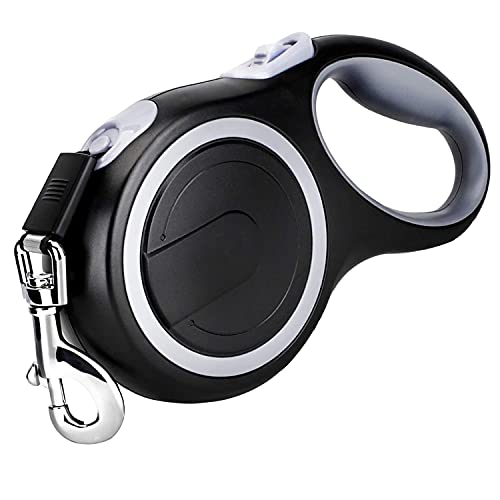
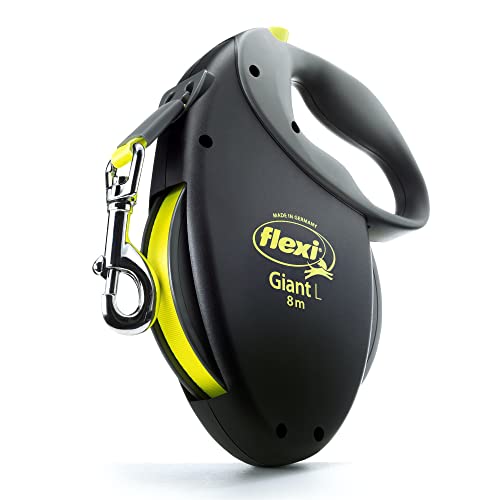
Heavy Duty Retractable Dog Leash for Large Dogs
Everything you need to know before buying a retractable leash for your large breed — durability ratings, braking systems, tape vs cord, safety tips, and how to choose the right model for your dog's strength and walking style.
A retractable leash gives your large dog freedom to explore while keeping them connected to you. But not all retractable leashes are built for the strength of a large breed. A lightweight leash designed for a small dog can snap, jam, or fail under the sudden pull of a 70-pound Labrador — and that failure can put your dog, yourself, and others at risk.
This guide focuses specifically on heavy duty retractable dog leashes for large dogs. You will learn what separates a genuinely durable leash from a marketing claim, which features matter most for strong pullers, and how to match a leash to your dog's weight, temperament, and walking environment. If you are also upgrading your walking gear, our dog leashes guide and dog harnesses guide cover complementary equipment that pairs well with a retractable leash.
Why Large Dogs Need Heavy Duty Leashes
Large dogs generate significantly more force than small dogs. A playful lunge from a 90-pound German Shepherd can produce hundreds of pounds of instantaneous pull. A retractable leash must absorb that force through its internal spring, tape or cord, and braking mechanism — all at once.
Standard retractable leashes are often rated for dogs up to 30 or 40 pounds. Using one on a large dog creates several risks:
- Spring failure: The internal recoil spring can break under repeated stress, leaving the leash unable to retract or lock.
- Tape or cord breakage: Thin cords and narrow tapes can snap during a sudden pull, especially if they have worn from previous use.
- Braking mechanism failure: The lock button may not hold against a strong dog, allowing the leash to extend unexpectedly.
- Handle detachment: Cheap plastic handles can crack or separate from the housing when a large dog pulls hard.
- Loss of control: A failed leash means your dog is loose near traffic, other dogs, or wildlife — a serious safety hazard.
Key principle: A heavy duty retractable leash for large dogs should be rated for more than your dog's weight — ideally 10-20 pounds above. This margin accounts for sudden pulls, momentum, and wear over time. If your dog weighs 80 pounds, look for a leash rated for at least 90-100 pounds.
Large breeds also tend to be strong pullers, especially adolescents and working breeds. If your dog pulls consistently, a retractable leash may not be the best primary walking tool — a front-clip harness combined with training is often safer. However, for well-mannered large dogs on casual walks, a heavy duty retractable leash can be a convenient choice when used responsibly.
Key Features to Look For
When shopping for a heavy duty retractable leash, focus on construction quality and safety mechanisms rather than cosmetic features. Here is what matters most.
1. Weight Rating and Build Material
The weight rating is the first filter. Look for leashes explicitly rated for large dogs — typically 50 to 150 pounds. The housing should be made from impact-resistant ABS plastic or reinforced nylon, not thin brittle plastic. A rubberized grip improves control when your dog pulls. Metal components (carabiner, internal gears) should be stainless steel or heavy-duty alloy, not painted pot metal.
2. Braking and Locking System
The braking system is the most important safety feature. A good heavy duty leash has:
- One-touch lock: A thumb button that locks the leash at any length with a single press.
- Progressive braking: The ability to slow the leash gradually rather than slamming to a stop, which reduces strain on the mechanism and your dog's neck.
- Quick-release: A button or switch that instantly releases the lock when you need to give your dog more slack.
- Ergonomic placement: The lock and release controls should be reachable with your thumb without repositioning your hand.
3. Tape Width and Visibility
For large dogs, a tape leash is generally safer than a cord. Tape should be at least 1 inch wide for large breeds. Reflective tape improves visibility during evening walks — an important safety feature if you walk near roads. Some premium models use nylon tape with reinforced edges to resist fraying.
4. Leash Length
Most heavy duty retractable leashes range from 16 to 26 feet. A 16-20 foot leash is the sweet spot for everyday walks — enough freedom for sniffing but short enough to maintain control. Longer leashes are better for open fields but require more vigilance. Avoid very long leashes in urban areas or near traffic.
5. Handle Comfort and Wrist Strap
Large dogs pull harder, so the handle must be comfortable and secure. Look for a contoured grip with a non-slip rubber surface. A padded wrist strap prevents the leash from being pulled from your hand if your dog lunges. Some models include a secondary safety handle near the base for close control in crowded areas — a valuable feature for large breeds.
Pro Tip: Check the carabiner or clip that attaches to your dog's collar or harness. A heavy duty leash is only as strong as its weakest point. Look for a metal carabiner with a locking gate, not a simple spring clip that can bend or open under load.
Tape vs Cord: Which Is Safer for Large Dogs?
Retractable leashes use either a flat tape or a round cord. The choice matters more for large dogs than for small ones because of the forces involved.
Tape Leashes
Tape leashes are flat and wider, typically 1 inch or more for large-dog models. They are more visible, less likely to tangle, and far less likely to cause rope burn or deep cuts if they wrap around a limb. The wider surface distributes force better, reducing the chance of breakage. For large dogs, tape is the recommended choice.
- Better visibility for you and others
- Lower risk of cuts or burns
- More durable under heavy load
- Slightly bulkier and heavier
Cord Leashes
Cord leashes are round and thin. They are lighter and more compact, which appeals to some owners. However, thin cords can slice through skin if they wrap around a hand or leg during a sudden pull — a real risk with a strong dog. Cord leashes also wear faster and can develop frayed spots that are hard to see. For large dogs, cord is generally not recommended unless the cord is unusually thick and the dog is calm on leash.
- Lighter and more compact
- Higher risk of cuts and burns
- Wears faster under heavy load
- Harder to see at night
Recommendation: For a large dog, choose a tape leash at least 1 inch wide with reflective stitching. Reserve cord leashes for small, calm dogs or as a backup leash.
Quality Tiers Explained
Heavy duty retractable leashes fall into three broad quality tiers. Understanding these tiers helps you set expectations and choose a leash that matches your walking habits.
Basic Heavy Duty
Affordable models that meet the minimum weight rating for large dogs. Suitable for calm dogs and light use.
- Plastic housing with basic grip
- Simple lock button
- Standard nylon tape
- Shorter warranty
- Best for calm, well-trained dogs
Upgraded Durability
Better materials and smoother braking. A solid choice for most large-dog owners who walk daily.
- Reinforced ABS or nylon housing
- Progressive braking system
- Reflective tape
- Padded wrist strap
- Good balance of durability and comfort
Professional-Grade
Built for strong pullers and frequent use. The most reliable braking and the most durable components.
- Metal internal gears and carabiner
- Smooth one-touch lock and release
- Wide reflective tape with reinforced edges
- Ergonomic rubberized handle
- Secondary safety handle
- Longer warranty and better customer support
Entry-level models can work for a calm large dog on short walks, but if your dog is a strong puller or you walk daily in varied conditions, a mid-range or premium leash is worth the investment. The braking system and tape quality are the two areas where premium models clearly outperform cheaper ones.
Feature Comparison Table
Use this table to compare what each tier typically offers. Actual features vary by brand, so always check the product specifications before buying.
| Feature | Entry-Level | Mid-Range | Premium |
|---|---|---|---|
| Weight rating for large dogs | Basic (meets minimum) | Good (with margin) | Excellent (high margin) |
| Housing material | Standard plastic | Reinforced ABS/nylon | Impact-resistant composite |
| Braking system | Simple lock | Progressive braking | Smooth one-touch lock/release |
| Tape type | Standard nylon | Reflective nylon | Wide reflective, reinforced edges |
| Handle grip | Basic plastic | Rubberized | Ergonomic contoured rubber |
| Wrist strap | Basic loop | Padded | Padded with safety lock |
| Secondary safety handle | Rare | Sometimes | Common |
| Carabiner | Spring clip | Metal clip | Locking metal carabiner |
| Best for | Calm dogs, light use | Daily walks, most large dogs | Strong pullers, frequent use |
Safety Rules for Retractable Leashes
Retractable leashes are convenient but require more attention than fixed-length leashes. Follow these rules to keep your large dog safe.
- Keep the leash short in crowded areas. Lock the leash at 3-6 feet when walking near roads, in stores, or around other dogs and people. A long leash gives you less reaction time if your dog lunges.
- Never wrap the leash around your hand or fingers. If your dog pulls suddenly, a wrapped leash can cause severe cuts or fractures. Hold the handle firmly and use the wrist strap.
- Avoid using a retractable leash with a choke or prong collar. The constant tension and sudden locks can injure your dog's neck. Use a flat collar or, better, a harness.
- Do not let children walk a large dog on a retractable leash. Even a well-behaved large dog can pull unexpectedly, and a child may not have the strength or reaction time to control the leash.
- Check the leash before every walk. Look for frayed tape, cracks in the housing, or a sticky lock button. Replace the leash at the first sign of wear.
- Use the lock, not your hand, to stop the leash. Grabbing the tape or cord to stop a dog is dangerous. Press the lock button or use the secondary handle.
- Keep your dog away from the leash tape. Some dogs chew leashes. A chewed tape can snap under load. If your dog is a chewer, consider a fixed-length leash or supervise closely.
Important: A retractable leash is a tool for controlled environments, not a substitute for training. If your large dog pulls, lunges, or has poor recall, invest in training and consider a front-clip harness before relying on a retractable leash. For dogs with anxiety or reactivity, a fixed-length leash gives you more control. Our behavior modification techniques guide can help with pulling and reactivity.
Maintenance & Lifespan
A heavy duty retractable leash can last for years if properly maintained. Most failures come from neglect — dirt in the mechanism, worn tape, or a spring that has been overstressed.
- Clean after wet or muddy walks: Wipe the tape and housing with a damp cloth. Let the leash dry fully before retracting it to prevent mold and corrosion.
- Keep sand and grit out of the housing: Sand is the most common cause of jamming. If the leash starts to stick, open the housing only if the manufacturer allows it, and clean the internal mechanism carefully.
- Inspect the tape regularly: Look for fraying, cuts, or discoloration. A damaged tape should be replaced — not repaired.
- Test the lock before each walk: Press the lock button and pull gently to confirm it holds. A sticky or unreliable lock is a safety risk.
- Store properly: Retract the leash fully and store it indoors, away from direct sunlight and extreme heat. Do not hang heavy objects from the tape.
- Know when to replace: Replace the leash if the tape is frayed, the lock fails, the housing is cracked, or the spring no longer retracts smoothly. Most manufacturers recommend replacement every 1-2 years with heavy use.
Common Buying Mistakes
Avoid these mistakes when choosing a retractable leash for your large dog.
- Buying by brand name without checking the weight rating. Even reputable brands make lightweight leashes. Always verify the rating matches your dog's size.
- Choosing a cord leash because it looks compact. Cord leashes are riskier for large dogs. Tape is safer.
- Ignoring the braking system. A cheap lock button can fail under a strong pull. Test the braking mechanism in person if possible, or read reviews from large-dog owners.
- Using a retractable leash as a primary training tool. Retractable leashes teach dogs to pull against tension. They are not ideal for leash training. Use a fixed-length leash for training, and reserve the retractable leash for casual walks.
- Overlooking the carabiner. A weak clip can bend or open. Look for a locking metal carabiner.
- Skipping the warranty. A good heavy duty leash should come with a warranty. Check what it covers and how long it lasts.
Frequently Asked Questions
Bottom Line: A heavy duty retractable dog leash can be a practical tool for walking a well-mannered large dog — but only if the leash is genuinely built for the job. Prioritize a weight rating above your dog's weight, a reliable braking system, and a wide reflective tape. Skip the cheapest models and choose a mid-range or premium leash that will hold up to daily use. And if your dog is a strong puller, pair your retractable leash with a harness and invest in training for safer, more enjoyable walks.