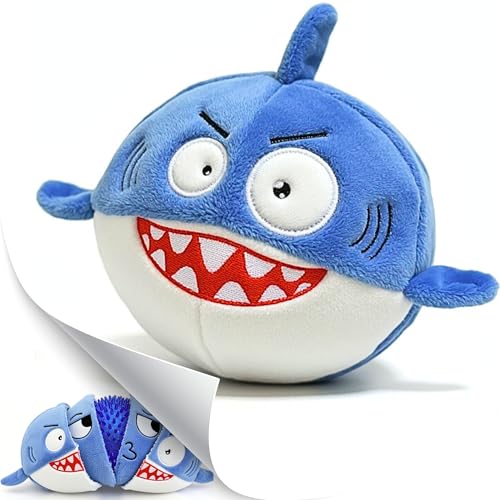
Indestructible Plush Dog Toys for Aggressive Chewers
If your dog destroys “tough” toys in minutes, you are not alone. Learn what actually makes a plush toy survive a power chewer, which materials to look for, and how to stop wasting money on toys that end up in the trash.
Every aggressive chewer owner knows the pattern: you buy a toy labeled “tough,” hand it over with hope, and within twenty minutes you are picking stuffing off the floor. The pet toy industry is full of exaggerated claims, and plush toys are the worst offenders. But there are genuine differences between a standard plush toy and one engineered for power chewers.
This guide cuts through the marketing noise. We will look at the specific construction methods that make certain plush toys last weeks or months instead of minutes, the materials that provide real resistance, and the honest limitations of even the best options. By the end, you will know exactly what to look for so you can buy with confidence rather than hope.
Why Most Plush Toys Fail Aggressive Chewers
Standard plush toys are designed for gentle play — carrying, cuddling, and light tugging. They use thin fabric, single-stitch seams, and loose stuffing. For a dog with a strong bite and a determination to disembowel, these toys present almost no resistance.
The failure usually starts at a seam. Once a single stitch pops, the fabric separates, stuffing becomes accessible, and the toy is finished. Squeakers are another weak point: dogs target them specifically, and once punctured, the toy loses its appeal and often gets shredded further in frustration. Some dogs are not trying to destroy the toy at all — they are trying to get to the squeaker inside, and the plush exterior is simply an obstacle to eliminate.
The core problem: Most plush toys are not built to withstand sustained puncturing and tearing force. They are built to look appealing on a store shelf.
Materials and Construction That Actually Hold Up
Durable plush toys separate themselves through three key differences: the fabric layers, the stitching, and the internal reinforcement.
Fabric Layers and Reinforcement
The best tough plush toys use multiple layers rather than a single sheet of fabric. A typical construction might include an outer plush layer for softness, a middle layer of high-tensile mesh or woven nylon for tear resistance, and an inner lining that holds stuffing in place even if the outer layer is punctured. Some premium options incorporate Kevlar yarn — the same material used in ballistic armor — quilted into the fabric for exceptional cut and tear resistance [citation:3][citation:6].
Chew Guard technology, used by brands like goDog, is another approach: a high-tensile mesh lining sits just beneath the soft outer plush, preventing teeth from easily reaching the stuffing [citation:4]. These toys still feel soft and cuddly, which matters for dogs who prefer plush textures over hard rubber.
Stitching Density and Seam Design
Seams are where toys fail first. Higher-quality toys use reinforced stitching with a high stitch count per inch — some brands specify 11 stitches per inch for maximum durability [citation:6]. Minimal seam design is equally important: fewer seams mean fewer weak points for a determined chewer to exploit. Toys shaped as single continuous forms (like a fish or a simple oval) tend to outlast toys with many limbs and appendages, which are easier to grab and tear off.
- Double-stitched or reinforced seams: Look for descriptions that mention “reinforced seams” or “double stitching.”
- Minimal appendages: Toys with fewer legs, ears, and tails have fewer places to fail.
- Protective squeaker pockets: Squeakers sewn into reinforced chambers are much harder to extract.
Types of Tough Plush Toys for Aggressive Chewers
Not all tough plush toys are built the same way. Understanding the main categories helps you match the toy to your dog’s chewing style.
Kevlar-Reinforced Plush
These toys use Kevlar yarn in the fabric or stitching, providing exceptional resistance to punctures and tears. They are typically the most expensive category but offer the best durability for severe power chewers. Best for dogs who have destroyed every other “tough” toy on the market.
Premium tierChew Guard Mesh-Lined Plush
A high-tensile mesh lining sits beneath a soft plush exterior. The toy feels like a normal stuffed animal but resists puncturing far better than standard plush. A good balance of softness and durability for moderate to heavy chewers. Widely available and more affordable than Kevlar options.
Mid-range tierMulti-Layer Woven Plush
Multiple layers of heavy-duty woven fabric with reinforced seams. Often features minimal seam construction to reduce failure points. Durable and widely available from established pet toy brands. Suitable for strong chewers who still enjoy plush textures.
Mid-to-high tierRubber-Neck Hybrid Plush
Combines a plush body with a tough rubberized section, often around the neck. The rubber discourages chewing at the weakest point while the plush provides comfort and carrying appeal. A creative design for dogs who target the neck and limbs first. Less durable overall than fully reinforced plush.
Entry-to-mid tierFor dogs that prefer interactive play over solo chewing, consider combining plush toys with durable interactive dog toys or tug toys to diversify their play options and reduce the wear on any single toy.
Durability Comparison: What to Expect
Realistic expectations matter. Here is how the main categories compare in terms of typical lifespan for an aggressive chewer.
| Toy Type | Typical Lifespan | Best For | Key Weakness |
|---|---|---|---|
| Standard plush (no reinforcement) | Minutes to hours | Gentle chewers only | Thin fabric, weak seams |
| Mesh-lined plush (Chew Guard style) | Days to weeks | Moderate to strong chewers | Outer plush can still be punctured over time |
| Multi-layer woven plush | Weeks to a few months | Strong chewers | Appendages and seams may fail first |
| Kevlar-reinforced plush | Weeks to several months | Severe power chewers | Highest cost; still not truly indestructible |
These ranges are not guarantees. A toy that lasts three months for one dog may last three days for another of the same breed. Chewing intensity varies enormously between individual dogs. What matters is whether the toy outperforms your previous purchases — if it does, it is working.
How to Choose the Right Toy for Your Chewer
- Size up, always. A larger toy gives your dog more material to work through and is harder to grip and tear. For aggressive chewers, choose the largest size available that is appropriate for your dog’s breed. Small toys are destroyed faster and pose a higher choking risk [citation:4].
- Prioritize construction over cuteness. A toy with minimal seams and reinforced stitching will outlast a more elaborate design with many appendages. If your dog loves grabbing legs and ears, those are the first parts to go.
- Consider your dog’s chewing style. Some dogs are systematic destroyers who target seams and squeakers. Others chew randomly. If your dog is squeaker-focused, consider toys with protected squeakers or no squeakers at all.
- Start with one premium toy. Instead of buying several mid-range toys, invest in one high-quality Kevlar or mesh-lined toy. If it survives significantly longer than your usual purchases, you have found your category.
- Rotate toys. Keeping toys in rotation reduces constant wear on any single item and keeps novelty high. A toy that is put away for a few days will feel new again when it returns.
A note on “indestructible” claims: No plush toy is truly indestructible. Any brand claiming otherwise is overselling. The honest question is not “will it survive forever?” but “will it survive longer than what I have tried before?” Look for toys described as “tough” or “durable” rather than “indestructible,” and treat marketing claims with appropriate skepticism.
If your dog also enjoys harder textures, a rotation that includes chew toys made from rubber or nylon can satisfy the urge to gnaw without destroying plush toys as quickly. For dogs who need more mental engagement, puzzle toys can redirect destructive energy into problem-solving.
Safety Rules for Aggressive Chewers
Even the toughest plush toy carries risks if not used responsibly. Follow these guidelines to keep your dog safe.
- Supervise play. No plush toy should be left with an aggressive chewer unattended. Even reinforced toys can be damaged, and ingested stuffing or squeaker pieces can cause intestinal blockages.
- Inspect regularly. Check seams, fabric integrity, and squeaker access before and after each play session. Remove the toy at the first sign of significant damage — a small hole can become a shredded mess quickly.
- Know when to retire a toy. If the outer layer is breached and stuffing is accessible, the toy is done. Do not try to repair it with tape or glue; these are not safe for dogs.
- Avoid toys with small parts. Plastic eyes, bells, and loosely attached decorations are choking hazards. Choose toys with embroidered or printed features instead.
- Match toy size to dog size. A toy that is too small can be swallowed or become a choking hazard. Size up for power chewers.
For dogs that experience anxiety or destructive behavior when left alone, addressing the underlying issue with calming products or behavior modification techniques may reduce the intensity of toy destruction. A bored or anxious dog chews harder and more persistently than a settled one.
Common Buying Mistakes to Avoid
- Trusting the “tough” label without reading the construction details. Many toys labeled for aggressive chewers are barely different from standard plush. Look for specific mentions of reinforced seams, mesh lining, or Kevlar.
- Buying the same toy type repeatedly and expecting different results. If your dog destroys mesh-lined toys in a day, mesh is not enough. Move up to Kevlar or a different construction style.
- Choosing small toys to save money. Small toys for large chewers are destroyed faster and pose safety risks. The upfront cost of a larger, better-made toy is usually lower than repeatedly replacing cheap ones.
- Ignoring your dog’s actual preferences. Some dogs love squeakers and will destroy any toy to get to them. Others prefer tugging or carrying. Match the toy to how your dog actually plays, not how you wish they would play.
- Leaving plush toys in the crate. Crate time should be rest time. A plush toy in a crate with a bored chewer is a recipe for destruction and potential ingestion. Use durable rubber or nylon toys for unsupervised chewing, if any.
Frequently Asked Questions
Bottom line: Stop expecting a plush toy to be indestructible. Start expecting it to be well-constructed. Look for Kevlar reinforcement, mesh lining, high stitch counts, and minimal seams. Size up, supervise play, and rotate toys to extend their life. The right toy will not last forever — but it will last long enough to be worth the purchase.