Long Lasting Dog Bones for Aggressive Chewers
Your power chewer destroys everything in minutes. This guide cuts through the marketing claims and shows you which durable chews and tough toys actually survive — and which ones put your dog at risk.
A dog who destroys "indestructible" toys in under an hour is not being naughty — they are doing exactly what their jaw muscles and instincts tell them to do. The problem is that most products marketed as "long lasting" are designed for average chewers, not the pit bull mix, German Shepherd, or Labrador that treats a rubber toy like a chewable snack.
Finding a bone that survives is only half the challenge. The other half is finding one that does not break teeth, splinter into shards, or cause an intestinal blockage. This guide separates durable from dangerous, so you can keep your aggressive chewer engaged without a trip to the emergency vet.
Why Aggressive Chewers Need Different Bones
Chewing intensity varies enormously between dogs. A gentle chewer might gnaw politely on a bully stick for twenty minutes. An aggressive chewer applies jaw pressure that can crack a nylon toy in half and swallow the pieces before you notice. For these dogs, the standard advice — "give them a bone and let them relax" — simply does not apply.
Power chewers need products with two qualities: resistance to rapid breakdown and predictable wear patterns. A good long-lasting chew for an aggressive chewer wears down slowly and evenly, without producing sharp fragments or large chunks that can be swallowed. A bad one either disappears too fast to be useful or breaks apart in ways that endanger the dog.
This is also where many owners discover that their dog's chewing style matters more than the label on the package. If your dog is a "gulper" who swallows pieces whole, edible chews require close supervision regardless of how durable they claim to be. The American Kennel Club notes that any bone should only be given under supervision so you can monitor whether it is breaking into dangerously small pieces [citation:3].
Quick reality check: No chew is truly indestructible. Even the toughest products on the market wear down over weeks or months. If a product claims to be 100% indestructible, treat that as a marketing signal rather than a safety guarantee.
The Safety Rule Most Owners Miss
Before comparing specific products, there is one principle that matters more than any brand recommendation: the hardness of the chew must match the strength of the dog's teeth, not the strength of the dog's jaw.
Veterinary dental specialists use a simple test called the "knee test": if you would not want the chew hit against your kneecap, it is too hard for your dog's teeth [citation:20]. This immediately rules out several popular options for aggressive chewers, including antlers, cow hooves, and hard nylon products that fail the test. Slab fractures of the upper carnassial teeth are one of the most common dental emergencies vets treat, and hard chews are a frequent cause [citation:20].
There is a frustrating paradox here. The very hardness that makes a chew "long lasting" for an aggressive chewer is also what makes it dangerous for their teeth. The solution is not to find the hardest possible object — it is to find chews that are durable enough to last while still having enough give to protect enamel.
Size matters just as much as hardness. A chew that is too small can be swallowed whole, causing a choking hazard or intestinal obstruction. As a general guideline, veterinary sources recommend that a chew should be larger than your dog can swallow: at least 4 inches for small dogs, 6 inches for medium dogs, and 8 inches or more for large dogs, with heavy chewers sizing up further [citation:20].
Best Edible Chews for Power Chewers
Edible chews have a major advantage: your dog consumes them, so there is no leftover plastic or nylon to worry about. The challenge is that aggressive chewers often finish edible chews faster than owners expect. These options offer the best balance of durability and digestibility.
1. Yak Cheese Chews (Mid-Range to Premium)
Yak cheese chews are made from a limited set of ingredients — typically yak milk, cow milk, salt, and lime juice — and are hardened into dense blocks. They last significantly longer than bully sticks for most power chewers, and they soften gradually as the dog chews, reducing the risk of sharp fragments. One reviewer noted that their super chewer finished bully sticks in minutes but got multiple chew sessions out of a single yak chew [citation:16].
The downside is that yak chews can be inconsistent in shape, and some pieces arrive with sharp edges that deter dogs initially. You can soften the edges with a file or chisel before giving the chew to a sensitive dog. When the chew gets small enough to be a choking risk, it can be microwaved to puff up into a crunchy treat — a useful end-of-life step that prevents waste.
2. Collagen and Beef Gelatin Chews (Mid-Tier)
Collagen-based chews are designed as a more digestible alternative to rawhide. They break down predictably in the digestive tract and typically contain a short ingredient list. Products like collagen flip chips combine beef gelatin with bully coating, offering a texture that keeps dogs engaged without the chemical processing concerns associated with some rawhide products [citation:12].
For aggressive chewers, collagen chews are best treated as medium-duration chews rather than long-term projects. A determined power chewer may finish one in a single session, so they work best as a structured treat rather than an all-day distraction.
3. Dense Natural Bones (Use With Caution)
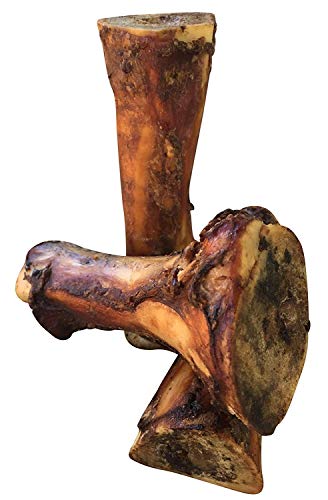
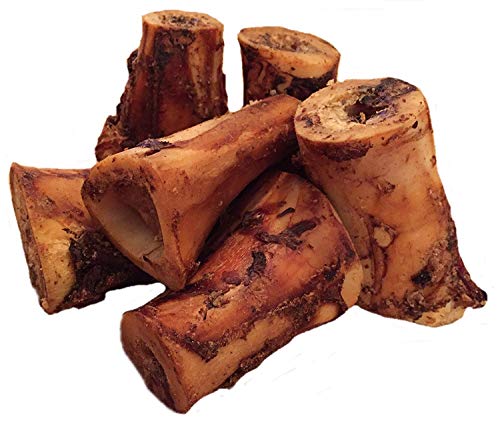
Some owners report success with thick, meaty rib bones or femur bones from grass-fed cattle, particularly products that are slow-roasted rather than cooked at high heat [citation:6]. These bones offer extended chew time and can satisfy a dog's natural urge to gnaw.
However, this category carries the highest risk. The AKC explicitly warns that cooked bones splinter and can cause fractured teeth and perforation of the intestine or throat [citation:3]. Even raw bones carry bacterial contamination risks and can break teeth in aggressive chewers [citation:15]. If you choose a natural bone, inspect it constantly, remove it when it gets small enough to swallow, and never give cooked bones of any kind.
Editorial note: If your dog has a history of dental work, sensitive teeth, or gastrointestinal issues, skip natural bones entirely. The risks outweigh the benefits for these dogs, and there are safer alternatives that provide similar engagement.
Best Non-Edible Tough Chews
Non-edible chews last significantly longer than food-based options [citation:8], but they come with trade-offs. Synthetic chews can produce small plastic fragments as they wear down, and very hard materials can damage teeth. These are the categories that offer the best balance for aggressive chewers.
1. Nylon Chews with Flavor Infusion (Mid-Range)
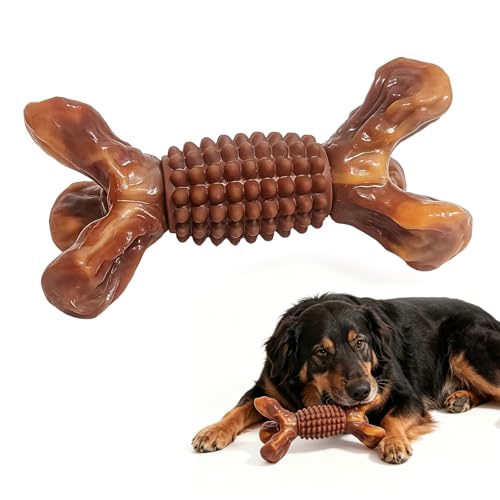
Nylon chews are the workhorses of the aggressive chewer market. Quality products in this category are designed to wear down slowly rather than break apart, and they are infused with flavors that keep dogs interested. One long-term reviewer with multiple Dobermans reported that their nylon chews lasted five to six months before needing replacement, and they felt confident the material would not break off in dangerous chunks [citation:5].
The caveat is that not all nylon chews are equal. Some cheaper products produce tiny plastic shavings that get stuck in blankets and may be ingested over time. Reviews of bargain nylon bones frequently mention this issue [citation:1]. Look for products from established brands with clear replacement guidelines, and retire the chew when it becomes small enough to pose a choking risk.
2. Wood-Flour Composite Chews (Premium)
An emerging category uses food-grade wood flour and renewable plant-based materials to create chews that are nylon-free and splinter-resistant. These products are designed to flake off gradually as the dog chews, protecting tooth integrity while still providing a durable surface [citation:10].
These chews sit at the premium end of the market, but they offer a compelling alternative for owners who want to avoid synthetic plastics without resorting to natural bones. The flaking wear pattern is safer than the chunking that can occur with cheaper nylon products, and the materials are sourced from food-industry byproducts rather than petroleum.
3. Durable Rubber Puzzle Toys (Budget-Friendly to Mid-Tier)
Strictly speaking, these are toys rather than bones, but they belong in this conversation because they solve the same problem: keeping an aggressive chewer occupied without risking dental damage or ingestion of dangerous fragments. Heavy-duty rubber toys designed for power chewers can be stuffed with food or treats to extend engagement time and provide mental stimulation.
These are not a solution for every dog. Some aggressive chewers destroy even the toughest rubber within hours. But for dogs who enjoy the puzzle aspect of chewing, a durable rubber toy paired with a frozen filling can deliver hours of engagement without the safety concerns of ingestible chews. If your dog enjoys this type of enrichment, explore puzzle toys for dogs and interactive dog toys that can be rotated to prevent boredom.
Edible vs Non-Edible: Comparison
There is no single "best" category. The right choice depends on your dog's chewing style, your supervision capacity, and your tolerance for mess. This table summarizes the trade-offs.
| Factor | Edible Chews (Yak, Collagen, Natural) | Non-Edible Chews (Nylon, Composite) |
|---|---|---|
| Durability for power chewers | Moderate — typically minutes to hours | High — weeks to months |
| Safety profile | Digestible, but choking risk at the end | No digestion risk if pieces are large, but plastic fragments possible |
| Dental impact | Generally gentler on teeth | Harder products can risk tooth fractures |
| Mess and residue | Crumbles, crumbs, odor possible | Plastic shavings may stick to fabrics |
| Best for | Structured chew sessions, food-motivated dogs | Long-term distraction, dogs who ignore soft chews |
Many owners find that a hybrid approach works best: a durable non-edible chew for daily alone-time, paired with an edible chew for supervised sessions. This gives the dog variety and ensures that chewing never becomes a one-dimensional habit. If your dog also has a sensitive stomach, review our guide to long lasting chews for dogs with sensitive stomachs before introducing new edible products.
Chews to Avoid Completely
Some products are marketed as long-lasting but carry risks that make them unsuitable for aggressive chewers. These are the categories to skip.
- Cooked bones of any kind. Cooking makes bones brittle, and brittle bones splinter. Splinters can puncture the mouth, throat, stomach, or intestines. This includes leftover steak bones, ham bones, chicken bones, and smoked bones sold in pet store bins [citation:20].
- Rawhide. Rawhide can break into slivers, is often processed with chemicals, and provides minimal nutritional value. For an aggressive chewer, the choking and obstruction risks outweigh any benefit [citation:2].
- Antlers and cow hooves. These fail the knee test. They are harder than many dogs' teeth and are a common cause of slab fractures [citation:20].
- Cheap nylon with visible wear issues. If reviews mention plastic shavings, sharp edges, or rapid breakdown, avoid that product. The savings are not worth the risk of ingestion or dental damage.
- Undersized chews. A chew that is too small for your dog's mouth is a choking hazard regardless of material. Size up, always.
Supervision and Replacement Rules
The most durable chew in the world becomes dangerous if it is left with an unsupervised dog. These rules apply to every product in this guide.
- Supervise every chew session. This is non-negotiable for aggressive chewers. You need to see when a chew is breaking down, when pieces are coming off, and when it is time to take it away.
- Remove the chew when it gets small. Most obstruction emergencies happen at the end of a chew's life, not the beginning [citation:20]. If the remaining piece is small enough to swallow whole, it is too small to keep.
- Check for sharp edges. Run your thumb along the chew after each session. If it feels sharp, file it down or retire the chew. Sharp edges can cut gums and cheeks.
- Rotate chews. Dogs get bored with the same texture. Rotating between two or three different types of chews keeps engagement high and reduces the chance that your dog becomes fixated on one object.
- Know your dog's chewing style. A dog who gnaws methodically is different from a dog who bites down hard and swallows. Adjust your choices accordingly. If your dog tends to swallow pieces, stick to chews that break down into soft crumbs rather than chunks.
If your dog destroys every chew you buy: consider whether the problem is actually under-stimulation rather than insufficient chew durability. Dogs who are bored or anxious often chew more intensely. Increasing daily exercise and adding behavior modification techniques for anxiety can reduce destructive chewing more effectively than upgrading to an even harder chew.
For dogs who need more structured help with chewing behavior, our guides on dog anxiety wraps and dog calming products may be useful. And if you are still exploring general chew options, the broader guide to long lasting dog chews for aggressive chewers covers additional categories and product types.
Frequently Asked Questions
The bottom line: There is no magic bone that survives every aggressive chewer forever. The best approach is to choose a chew that is durable enough to be useful, soft enough to protect teeth, and large enough to prevent swallowing — then supervise every session and replace it before it becomes a hazard. If your dog destroys everything in minutes, the problem may be under-stimulation as much as product durability. Combine the right chew with adequate exercise, mental enrichment, and training for the best results.