Pet Training Collars for Dogs: The Complete Buyer's Guide
Everything you need to know before buying a training collar — how e-collars, vibration, and tone models work, which features actually matter, and how to use one humanely to build reliable obedience.
A training collar is one of the most misunderstood pieces of dog equipment on the market. Some owners swear by them, others are wary, and the internet is full of conflicting advice. The truth is that a training collar is simply a communication tool — and like any tool, its value depends entirely on how it is used.
If you are researching pet training collars for dogs, you are likely at the stage where you already know you want a structured training solution but still need clarity on which type fits your dog and your goals. This guide breaks down every collar category, the features that separate a good unit from a frustrating one, and the training principles that make the difference between a well-adjusted dog and a confused one.
We will not tell you a collar will magically fix behavior. What we will do is explain exactly what these devices can and cannot do, so you can make an informed decision before you buy.
What Are Training Collars?
A training collar is a wearable device that lets you deliver a remote cue — a tone, a vibration, or a low-level static stimulation — to your dog from a distance. Unlike a flat collar or harness that only provides physical control, a training collar allows you to communicate with your dog when they are off-leash or far away.
These devices are most commonly used for recall training, boundary training, and interrupting unwanted behaviors such as chasing wildlife or livestock. They are also used in working dog contexts — hunting, search and rescue, and field trials — where the dog operates at a significant distance from the handler.
It is important to understand what a training collar is not. It is not a substitute for basic obedience, it is not a punishment tool, and it will not fix a dog whose underlying needs — exercise, mental stimulation, clear structure — are unmet. If your dog has behavioral issues rooted in anxiety or fear, the right path may involve the strategies in our behavior modification techniques guide or a consultation with a professional through when to see a behaviorist.
Types of Training Collars
Training collars fall into a few broad categories, each with a different mechanism and a different set of appropriate uses. Understanding these categories is the first step toward choosing the right device.
Remote E-Collars (Static)
The most capable category. A handheld remote lets you deliver tone, vibration, and adjustable static stimulation from a distance. Best suited for off-leash recall and field work. Look for fine-grained stimulation levels and a reliable range that matches your training environment.
Mid-range to premiumVibration Training Collars
Deliver a buzzing sensation rather than static stimulation. Many owners prefer vibration as a gentler attention cue, especially for sensitive or anxious dogs. Often used as a warning signal before other cues in multi-mode systems.
Entry-level to mid-rangeTone & Beep Collars
Emit an audible tone from the collar. Useful for marking desired behavior or as a warning cue. On their own they provide limited control, but they are valuable as part of a layered cue system. Simple and battery-efficient.
Entry-levelNo-Shock / Humane Collars
Use tone, vibration, and sometimes a spray or sound cue without any static stimulation. Popular with owners who want remote communication without static correction. Effectiveness depends heavily on the dog's sensitivity to non-physical cues.
Entry-level to mid-rangeBark Collars
Activate automatically in response to barking, using vibration, tone, or static stimulation. A different use case from remote trainers — focused on a single behavior. Many owners use them alongside a remote trainer in a broader dog training plan.
Entry-level to premiumGPS & Tracking Collars
Combine location tracking with training cues. Excellent for outdoor dogs, large properties, and escape-prone dogs. Higher cost but the added safety layer is significant for owners who train off-leash. See also our dog GPS tracker guide.
High-end to luxuryHow Training Collars Actually Work
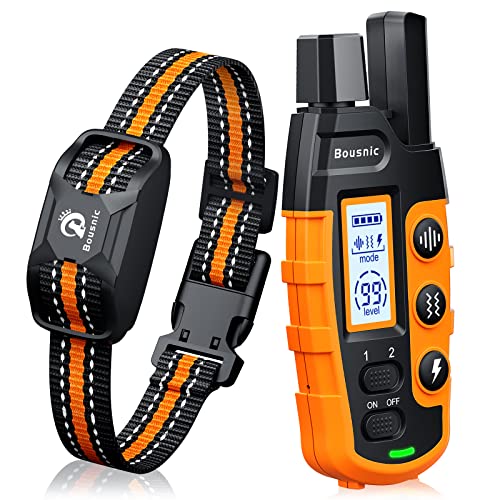
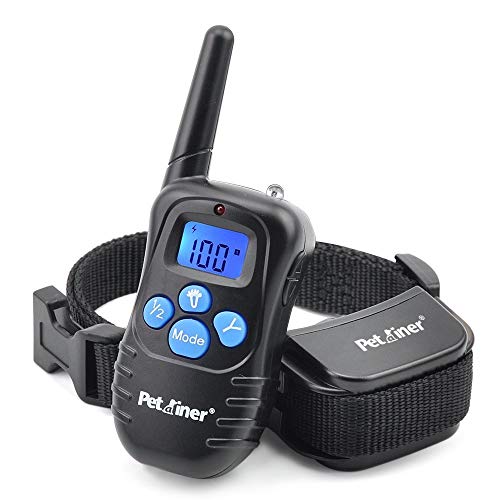
Understanding the mechanics helps you use the device correctly and avoid common pitfalls. Every remote training collar has three components: a transmitter (the handheld remote), a receiver (the collar unit), and contact points (the metal prongs that touch the dog's skin on static models).
The Three Modes Explained
- Tone: An audible beep from the collar. Most trainers use this as a "pay attention" or warning cue before any other stimulation. It is the least intrusive mode and the first one you should teach your dog to recognize.
- Vibration: A buzzing sensation on the neck. More noticeable than tone but still non-painful. Vibration is often used as a warning signal before static stimulation, or as the primary cue for sensitive dogs in a calming products context.
- Static stimulation: A very low-level electrical pulse, similar in sensation to a static shock from a doorknob. The key word is adjustable. Quality units offer dozens of levels so you can find the lowest level your dog notices without being distressed.
The "lowest effective level" principle: Professional trainers always start at the lowest level and work up until the dog shows a subtle reaction — an ear flick, a head turn, a pause. That is the working level. If your dog yelps, bolts, or shuts down, the level is too high. There is no benefit to a stronger correction.
Range, Battery, and Water Resistance
Range is usually quoted in meters or yards. For backyard recall work, a short range is sufficient. For field training, hiking, or large properties, you need a unit rated for a longer distance — but keep in mind that real-world range is often less than the quoted maximum, especially with obstacles like trees and buildings between you and your dog.
Battery life matters more than most buyers expect. A unit that dies mid-session is frustrating and can set training back. Look for rechargeable units with clear battery indicators on both the remote and the collar. Water resistance is essential if your dog swims, works in wet conditions, or lives in a rainy climate.
Key Features to Compare Before Buying
Two collars at the same tier can differ dramatically in usability. Here are the features that actually matter when you are training a real dog in real conditions.
| Feature | Why It Matters | What to Look For |
|---|---|---|
| Stimulation levels | Determines how finely you can tune the cue to your dog | At least 10-20 levels; more on premium units |
| Range | Must match your training environment | Shorter for yards, longer for field work |
| Battery life | Avoids mid-session interruptions | Rechargeable with battery indicators |
| Water resistance | Needed for swimming, rain, and wet conditions | Rated waterproof or highly water-resistant |
| Collar fit | Prevents discomfort and ensures reliable contact | Adjustable strap, proper contact point length |
| Multi-dog support | Essential for households with more than one dog | Expandable systems or multi-receiver remotes |
| Safety lock / stimulation lock | Prevents accidental high-level delivery | Lockout feature on the remote |
If you also plan to kit out your dog for regular walks, pair the training collar with a properly fitted dog collar or dog leash for everyday use. The training collar itself is not meant to replace your regular walking gear.
Safety and Ethical Use
Training collars are safe when used correctly and potentially harmful when used carelessly. The difference comes down to a few principles that every responsible owner should follow.
- Never use a collar as punishment. The purpose of the cue is to interrupt and redirect, not to punish. If you are delivering stimulation after the fact — when the dog is already back in the house — the dog cannot connect the cue to the behavior. You are simply creating anxiety.
- Always teach the cue first. Your dog should know what "come" and "leave it" mean before you add a collar cue. The collar reinforces a known command; it does not teach a new one.
- Use the lowest effective level. Start low, work up gradually, and reassess every session. A dog's sensitivity can change with arousal level, so a level that is right during calm work may need adjustment during high-distraction training.
- Keep sessions short. Five to fifteen minutes of focused collar training is plenty. End on a success and finish with play or praise.
- Pair with positive reinforcement. The strongest results come from a balanced approach — the collar interrupts the unwanted behavior, and rewards reinforce the correct one. If you are working on emotional issues like fear or anxiety, review our anxiety wrap and pheromone diffuser guides as complementary tools.
- Consult a professional. If you have never used a training collar, a session or two with a qualified trainer will prevent weeks of mistakes.
Check contact point fit regularly. Contact points that are too short won't make reliable contact through a thick coat, causing you to crank up the level unnecessarily. Points that are too long can press into the skin and cause irritation. Check the neck area daily during the first week of use and adjust the strap so the collar sits snugly but does not choke.
Some dogs should not wear a static collar at all — puppies under six months, dogs with skin conditions on the neck, dogs with heart conditions or a history of seizures, and dogs with severe anxiety. If any of these apply, speak with your veterinarian first and consider a vibration or tone-only alternative.
How to Train With a Collar (Step by Step)
Collar training follows a logical progression. Skipping steps is the most common reason owners report that "the collar didn't work."
- Build the foundation without the collar. Your dog should reliably respond to "come," "sit," and "leave it" on a long line in a low-distraction environment before you introduce the collar.
- Condition the tone. Put the collar on with the unit off, then use the tone only, pairing it with a treat. Do this until your dog visibly looks toward you when they hear the tone — that is the "conditioned" response.
- Introduce vibration as a warning. Once the tone is conditioned, add vibration immediately before a known command, then reward the correct response. The dog learns: tone → vibration → command → reward.
- Find the working level. With the dog calm and in a familiar space, deliver a single low-level stimulation and watch for a subtle reaction. If there is no reaction, go up one level and repeat after a short break. Stop at the first level that produces a mild response.
- Practice known commands with the collar on. Use the collar to reinforce commands the dog already knows in progressively more distracting environments. Reward every correct response with treats, praise, or play.
- Generalize to real-world settings. Move from the backyard to the park, then to areas with wildlife or other dogs. Each new environment resets the difficulty, so expect to use a slightly higher level or more frequent rewards at first.
If your dog's training struggles are rooted in distraction rather than disobedience, our guides on interactive dog toys and puzzle toys can help build focus and engagement away from the collar.
Choosing the Right Collar for Your Dog
Match the Collar to the Dog
- Small dogs: Lighter receiver units and shorter contact points. A heavy unit on a small neck is uncomfortable and can shift during movement.
- Thick-coated breeds: Longer contact points are often necessary to reach through the coat. Many brands sell extended contact points separately.
- High-drive working dogs: Prioritize range, battery life, and durability over cosmetic features.
- Sensitive or anxious dogs: Start with vibration and tone only, and consider whether a training collar is appropriate at all. For dogs with noise or storm anxiety, see our calming products guide for alternatives.
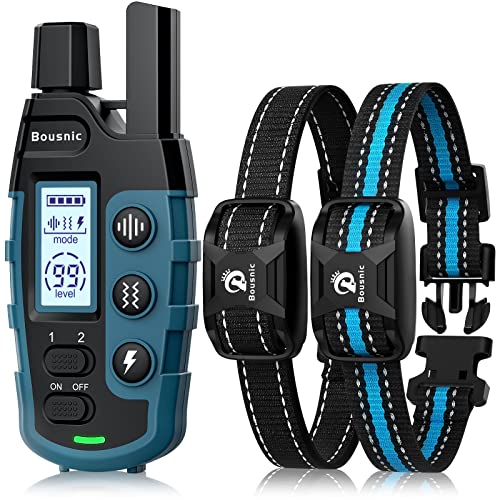
- Multi-dog households: Choose a system that supports multiple receivers from one remote, or buy a second receiver for your existing unit.
Match the Collar to the Job
- Basic backyard recall: An entry-level remote trainer with a solid tone and vibration mode is generally enough.
- Field and trail work: Mid-range units with longer range and waterproof construction are the sweet spot.
- Professional or serious working use: Premium systems with the finest level control, GPS integration, and the most durable hardware justify their cost.
- Barking specifically: A dedicated bark collar may be more practical than a remote trainer if barking is the only behavior you need to address.
Common Training Collar Mistakes to Avoid
- Using the collar before the command is learned. The collar reinforces known behavior — it does not teach new behavior. Build the foundation first.
- Starting at too high a level. This is the most common cause of a dog shutting down or becoming fearful. Always start low and work up.
- Using the collar inconsistently. If the collar is on some days and off on others, and commands are enforced inconsistently, the dog cannot learn a stable rule. Consistency across the household matters as much as the device itself.
- Leaving the collar on for hours. Training collars should be worn during training sessions only, not as all-day equipment. Prolonged wear can cause contact-point irritation and creates a risk of accidental stimulation.
- Ignoring the dog's emotional state. If your dog is frightened, stressed, or over-aroused, training will not be effective. Work on emotional regulation first — our anxiety wraps and behavior modification resources are good starting points.
- Neglecting the rest of the dog's needs. A tired, mentally satisfied dog is far easier to train than an under-exercised one. Make sure your dog's exercise needs and mental stimulation are met before you expect focus in training.
Frequently Asked Questions
Bottom Line: A training collar is a tool for clear communication at a distance, not a shortcut around training. Choose a model with fine level control, a range that fits your environment, and a comfortable fit for your dog. Condition the tone and vibration first, start at the lowest effective level, keep sessions short, and always pair the collar with rewards for correct behavior. Used this way, a training collar can dramatically speed up reliable recall and off-leash control — and help you build a stronger, more trusting relationship with your dog.