Puppy Mental Stimulation Toys: A Complete Guide
Keep your puppy's brain busy, reduce boredom and destructive behavior, and build a smarter, calmer companion with the right enrichment toys.
A puppy's brain is a sponge. During the first year of life, your puppy is learning how the world works, forming habits, and developing the cognitive foundation that will shape their behavior for years to come. Physical exercise alone is not enough — puppies also need mental stimulation to grow into well-adjusted, confident adult dogs.
This guide explains why mental stimulation toys are essential for puppy development, which types work best, how to choose safe and appropriate options, and how to build a daily enrichment routine. Whether you are raising a high-energy working breed or a laid-back companion, the right toys can transform your puppy's behavior and deepen your bond.
Why Mental Stimulation Matters for Puppies
Mental stimulation — sometimes called enrichment — is any activity that challenges your puppy's brain. It includes problem-solving, scent work, novel experiences, and social interaction. For puppies, mental stimulation is not a luxury; it is a developmental necessity.
A puppy who is mentally under-stimulated often becomes a bored puppy. Boredom in puppies manifests as destructive chewing, excessive barking, digging, nipping, and hyperactivity. Many owners mistake these behaviors for disobedience, but they are often simply signs that the puppy's brain is starving for engagement. Providing appropriate interactive dog toys gives your puppy a healthy outlet for their natural curiosity and energy.
The Benefits of Mental Stimulation Toys
- Reduces destructive behavior: Chewing, digging, and barking are often boredom behaviors. A puppy with a satisfying puzzle to solve is far less likely to redecorate your furniture.
- Supports brain development: Problem-solving toys build neural connections and improve cognitive flexibility during the critical puppy development period.
- Builds confidence: A puppy who successfully solves a puzzle gains confidence. Over time, this confidence carries over into new environments and social situations.
- Prevents anxiety: Enrichment toys give puppies a sense of control and predictability, reducing stress and separation anxiety.
- Burns energy without intense exercise: Mental work is tiring. Fifteen minutes of puzzle solving can be as exhausting as a long walk, which is especially useful for puppies with limited exercise tolerance.
- Strengthens your bond: Playing and problem-solving together builds trust and communication between you and your puppy.
Why Puppies Need Enrichment More Than Adult Dogs:
Puppies are in a critical developmental window between 3 and 16 weeks of age. During this period, their brains are wiring themselves based on experience. Mental stimulation during this window has a lifelong impact on cognitive ability and emotional resilience.
Types of Puppy Mental Stimulation Toys
Not all enrichment toys are created equal, and different toys challenge different parts of your puppy's brain. A well-rounded enrichment plan includes variety across several categories. Below are the main types of mental stimulation toys for puppies, along with their benefits and ideal use cases.
Puzzle Feeders
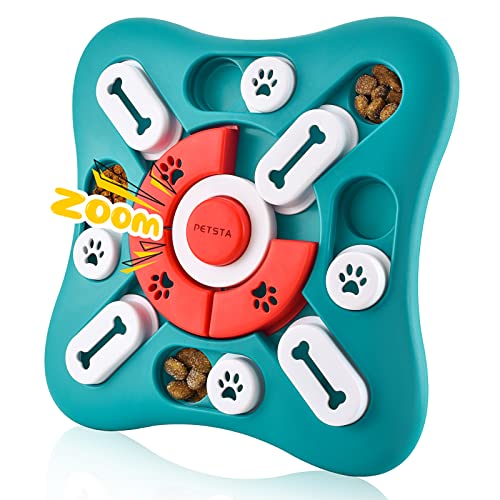
Puzzle feeders require your puppy to work for their food by manipulating compartments, sliding panels, or lifting flaps. They slow down eating, improve digestion, and provide a satisfying problem-solving challenge. Start with easy puzzles for young puppies and increase difficulty as your puppy masters each level.
entry-level to premiumTreat-Dispensing Balls
These rolling toys release kibble or treats as your puppy bats them around. They combine physical exercise with mental engagement and are ideal for active puppies who need to burn energy. Adjustable difficulty settings let you control how easily treats fall out, keeping the challenge appropriate as your puppy learns.
budget-friendly to mid-rangeSnuffle Mats
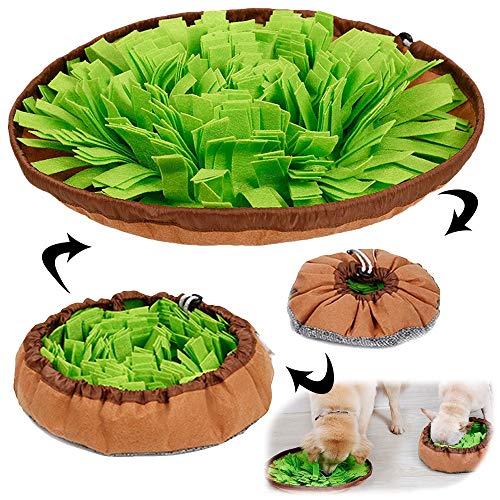
Snuffle mats are fabric mats with hidden pockets where you scatter treats or kibble. They mimic foraging behavior and engage your puppy's powerful sense of smell — the most underused enrichment channel for most dogs. Snuffle mats are calming, quiet, and ideal for indoor enrichment or pre-bedtime wind-down.
budget-friendly to mid-tierFreezable Chew Toys
Stuffable, freezable toys like rubber Kongs are among the most versatile enrichment tools. Fill them with peanut butter, yogurt, or wet food, freeze them, and give them to your puppy during teething or alone time. Freezing soothes sore gums while the licking and chewing provide long-lasting mental engagement.
affordable to mid-pricedInteractive Hide-and-Seek Toys
These toys hide treats inside plush or plush-and-rubber compartments that your puppy must uncover. They mimic hunting behavior and satisfy the natural instinct to search and discover. Look for machine-washable versions for easy cleanup, and always supervise to prevent ingestion of fabric pieces.
mid-range to premiumChew Toys with Textures
Chewing is a natural puppy behavior, especially during teething. Textured chew toys — rubber, nylon, or natural materials — provide oral stimulation that calms and satisfies. Offer a variety of textures and shapes, and rotate them to maintain novelty. Avoid hard plastic that can crack teeth.
budget-friendly to premiumFor a broader selection of enrichment options, explore our guides on puzzle toys for dogs and puppy chew toys, which cover more advanced options as your puppy grows.
How to Choose the Right Toy for Your Puppy
Choosing the right mental stimulation toy depends on your puppy's age, size, breed, and experience level. A toy that is too difficult will frustrate your puppy; a toy that is too easy will bore them. The goal is to find the "just right" challenge zone where your puppy is engaged but not overwhelmed.
Key Factors to Consider
- Age and experience: Young puppies (8-12 weeks) need very easy puzzles with large openings. Gradually increase difficulty as they master each level. A puppy who has never used a puzzle feeder should start with the easiest setting.
- Size and breed: Small breeds need smaller toys that are easy to manipulate. Large breeds need durable toys that can withstand strong jaws. Consider your puppy's expected adult size when investing in toys.
- Chew strength: Some puppies are gentle chewers; others destroy everything in minutes. Match toy durability to chew strength. Rubber toys are more durable than plush; nylon is more durable than rubber.
- Teething stage: Puppies between 3 and 6 months are teething and need soft, freezable toys to soothe sore gums. Hard puzzle pieces are not appropriate during this phase.
- Food motivation: Food-motivated puppies do well with treat-dispensing toys. Less food-motivated puppies may prefer toys with squeakers, movement, or hidden surprises.
- Supervision needs: Some toys require close supervision (fabric toys, small puzzle pieces). Others can be left with your puppy safely (durable rubber toys, large puzzle feeders).
Pro Tip: The best way to gauge whether a toy is appropriately challenging is to watch your puppy. If they solve it in under 30 seconds, it is too easy. If they give up after 2 minutes of frustration, it is too hard. Aim for a toy that takes 3-5 minutes to solve initially and becomes easier with practice.
Quick Comparison of Toy Types
| Toy Type | Best For | Supervision | Durability |
|---|---|---|---|
| Puzzle Feeders | Mealtime enrichment, slowing eating | Recommended | Medium to High |
| Treat-Dispensing Balls | Active puppies, energy burning | Moderate | High |
| Snuffle Mats | Calming, scent work, indoor use | Moderate | Medium |
| Freezable Chew Toys | Teething, alone time, long-lasting | Low (mostly safe) | High |
| Hide-and-Seek Toys | Scent work, problem solving | Required | Low to Medium |
| Textured Chews | Teething, oral satisfaction | Low (mostly safe) | High |
Safety Guidelines for Puppy Enrichment Toys
Puppies explore the world with their mouths, which means any toy can become a choking hazard if it is not appropriate for their size and chew strength. Safety should always come first when choosing and using mental stimulation toys.
Essential Safety Rules
- Supervise new toys: Always supervise your puppy when introducing a new toy. Watch for signs of excessive chewing, tearing, or swallowing pieces. Once you are confident the toy is safe, you may allow short unsupervised sessions.
- Size matters: Choose toys that are large enough that your puppy cannot swallow them whole. A general rule is that the toy should be larger than your puppy's mouth when fully open.
- Inspect regularly: Check toys for cracks, tears, and loose pieces before each use. Discard damaged toys immediately. A torn toy can become a choking hazard or cause intestinal blockage.
- Avoid small parts: Puppies can easily swallow squeakers, small bells, and plastic pieces. Remove or avoid toys with small removable parts until your puppy is older.
- Avoid toxic materials: Choose toys made from food-grade, non-toxic materials. Avoid toys with strong chemical odors or cheap plastic that can splinter.
- Monitor treat content: Use small, low-calorie treats in puzzle toys to avoid overfeeding. Adjust your puppy's regular meals accordingly if you use food-based toys frequently.
Choking Hazard Warning: If your puppy is a strong chewer, avoid plush toys, rope toys, and toys with squeakers. These are the most common causes of choking and intestinal obstruction in puppies. Stick with durable rubber or nylon toys until your puppy's chewing habits are well understood.
DIY Mental Stimulation Ideas
You do not need to buy expensive toys to provide mental stimulation. Many effective enrichment activities can be created from items you already have at home. DIY enrichment is budget-friendly, customizable, and a great way to bond with your puppy.
Simple DIY Enrichment Activities
- Muffin tin game: Place treats in the cups of a muffin tin and cover each with a tennis ball. Your puppy must remove the balls to get the treats. This simple puzzle is surprisingly challenging and requires no special equipment.
- Cardboard box dig: Fill a cardboard box with crumpled paper and scatter treats inside. Let your puppy dig and search. This satisfies natural foraging instincts and provides mental and physical engagement.
- Frozen treat pops: Freeze low-sodium broth or plain yogurt in an ice cube tray with small treats inside. Give frozen cubes to your puppy during hot weather or teething.
- Snuffle box: Fill a shallow box with fabric scraps or shredded paper and hide treats throughout. Your puppy must use their nose to find each treat — an excellent scent-work activity.
- Paper cup puzzle: Place treats under paper cups and let your puppy knock them over to find the rewards. Simple, cheap, and endlessly entertaining.
- Obstacle course: Set up a simple indoor obstacle course with pillows, boxes, and chairs. Guide your puppy through it with treats and praise. This builds confidence and problem-solving skills.
DIY enrichment is especially useful when you are puppy-proofing your home and need safe, supervised activities. Always supervise DIY toys — cardboard and paper can be ingested.
Building a Daily Mental Stimulation Routine
Consistency is key to effective enrichment. Rather than offering toys randomly, build mental stimulation into your puppy's daily routine. A predictable schedule of enrichment activities reduces boredom and gives your puppy something to look forward to.
Sample Daily Enrichment Schedule
- Morning: Puzzle feeder for breakfast. Your puppy works for their food while you prepare for the day.
- Mid-morning: Short training session (5-10 minutes) using positive reinforcement. Training is mental stimulation.
- Afternoon: Snuffle mat or scent game. A calming activity during rest periods.
- Late afternoon: Physical exercise and play. Combine walks with interactive play.
- Evening: Frozen chew toy or long-lasting chew. Helps your puppy wind down before bed.
The Power of Rotation
Puppies get bored with the same toys day after day. Rotate toys every 3-4 days, keeping only 3-4 toys available at any time. Store the rest out of reach. When you bring out a "new" toy that has been hidden for a week, your puppy will be as excited as if it were brand new.
This strategy saves money and prevents toy fatigue. It also keeps your puppy engaged without needing to constantly buy new toys.
Quality Over Quantity: Three or four well-chosen enrichment toys used consistently are more valuable than a dozen toys your puppy ignores. Focus on variety across categories — one puzzle feeder, one treat-dispensing ball, one snuffle mat, and one freezable chew toy make an excellent starter collection.
Common Mistakes to Avoid
Even well-intentioned owners make mistakes when introducing enrichment toys. Avoiding these common pitfalls will keep your puppy safe and make enrichment more effective.
- Leaving puppies unsupervised with inappropriate toys. Plush toys, rope toys, and toys with small parts should never be left with a puppy unsupervised. Choking and intestinal blockages are common and expensive to treat.
- Using toys as a substitute for interaction. Enrichment toys are supplements, not replacements for your attention. Puppies need social interaction, training, and playtime with you.
- Overfeeding treats. It is easy to overdo treats when using food-based toys. Use a portion of your puppy's regular kibble in puzzle toys instead of extra treats, and adjust meals accordingly.
- Ignoring the teething phase. Puppies between 3 and 6 months have sore gums. Hard toys can be painful. Offer soft, freezable options during this period.
- Giving up too quickly. If your puppy does not immediately understand a puzzle, do not remove it. Show them how it works, then let them try. Some puppies need a few sessions to get the hang of it.
- Forgetting to clean toys. Puzzle feeders and snuffle mats accumulate bacteria and food residue. Wash them regularly — most are dishwasher-safe or machine-washable.
For more guidance on raising a well-behaved puppy, explore our complete puppy guide, which covers everything from surviving the first night to feeding schedules and deworming.
Frequently Asked Questions
Start Simple, Stay Consistent
You do not need to buy every toy on the market. Start with three or four high-quality enrichment toys that match your puppy's age and size, rotate them regularly, and build short daily sessions into your routine. Combined with training, exercise, and plenty of love, these toys will help your puppy grow into a confident, well-adjusted adult dog. For more puppy care guidance, explore our puppy guide, and if you are still preparing for your new arrival, our puppy preparation checklist will help you get ready.