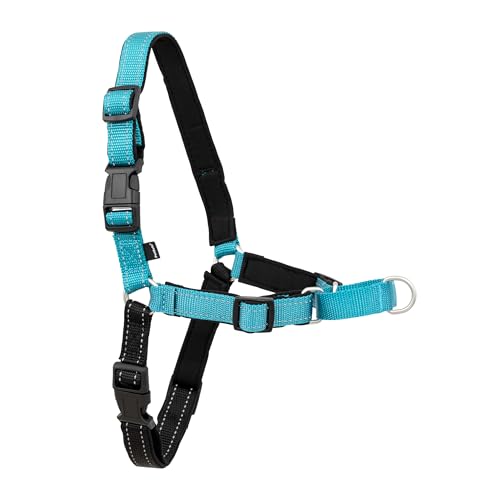
Walk Easy Harness for Dogs: A Complete Buying & Training Guide
If walks with your dog feel like a tug-of-war, a front-clip walk easy harness can change everything. Learn how no-pull harnesses work, how to fit them correctly, and how to train your dog to walk calmly at your side.
A walk easy harness for dogs is one of the most practical investments a dog owner can make. Whether you have a strong adolescent Labrador, a flat-faced Frenchie who struggles on a collar, or a small dog prone to tracheal issues, a properly fitted no-pull harness makes walks safer, more comfortable, and far more enjoyable. Unlike traditional collars, which place pressure on the neck and throat, a harness spreads the load across the chest and shoulders — the strongest parts of a dog's body.
This guide explains exactly how walk easy harnesses work, what to look for when choosing one, and how to train your dog to walk politely while wearing one. We also cover how to transition from a collar, how to avoid the most common fitting mistakes, and which dogs benefit most. If you are still exploring general walking gear, our broader dog harnesses guide covers styles and materials in more detail.
What Is a Walk Easy Harness?
A walk easy harness is a front-clip, no-pull harness designed to give owners control over a dog that pulls. The leash attaches at the chest rather than the back, so when your dog surges forward, the harness gently turns their body toward you instead of allowing them to drag you down the street. The design is based on a simple principle: it is difficult for a dog to pull forward when the attachment point redirects their momentum sideways.
Walk easy harnesses are typically made from nylon webbing, padded mesh, or a combination of both. They usually feature adjustable straps at the chest, neck, and girth, and many include a secondary back-clip attachment for relaxed walking or for use with a long line. Some models offer a padded front plate to protect the chest, while others use a minimalist strap design for better airflow.
Key distinction: A "walk easy" harness is not the same as a standard back-clip harness. Back-clip harnesses are comfortable but can actually encourage pulling because the attachment point is behind the dog's center of gravity. A front-clip harness is the defining feature of a true no-pull walking harness.
How No-Pull Harnesses Work
To understand why a walk easy harness is effective, it helps to picture the physics of pulling. When a dog pulls against a collar or a back-clip harness, the pressure sits behind their shoulders or at their throat. Their natural reflex is to lean into that pressure and pull harder. This is called the opposition reflex, and it is the same reflex that sled dogs rely on.
A front-clip harness interrupts this cycle. When the dog pulls forward, the leash tension at the chest causes their front end to swing toward the handler. Instead of gaining momentum, the dog is gently turned. Over time, the dog learns that pulling forward does not get them closer to the interesting smell or the other dog — it simply turns them around. Combined with reward-based training, this makes loose-leash walking much easier to teach.
It is important to be realistic: a no-pull harness is a management tool, not a substitute for training. It reduces pulling immediately, which gives you the control you need to reward good behavior. The real change happens when you consistently reward your dog for walking beside you. For a full training framework, see our dog training section.
Key Benefits for Dogs and Owners
A walk easy harness delivers benefits on both ends of the leash. For the dog, the most important advantage is comfort and safety. For the owner, it is control and confidence. Here is a closer look:
- Protects the neck and throat: Collars concentrate force on the trachea, which is especially risky for small breeds, flat-faced breeds, and dogs with collapsing trachea. A harness moves pressure to the chest and shoulders.
- Reduces pulling without pain: A well-designed front-clip harness uses leverage, not pain or choking, to discourage pulling. That makes it a humane choice for training.
- More control in distracting environments: When a squirrel bolts across the path, a front-clip harness gives you a mechanical advantage that a collar cannot match.
- Safer for senior and injured dogs: Dogs recovering from neck injuries, IVDD, or surgery benefit from having the leash attached away from the spine and throat.
- Better for puppies learning manners: Puppies who start with a harness avoid developing the habit of pulling against their throat, which makes later training easier.
- Comfortable for long walks: Padded harnesses prevent chafing on longer outings, and the even weight distribution reduces fatigue.
- Extra attachment points: Many walk easy harnesses include a back D-ring, which is useful for hiking, long lines, or car safety (when paired with a crash-tested setup).
For dogs with sensitive skin or those who react to certain materials, a padded or mesh-lined harness is worth considering. You can also explore our paw protection guide if you walk on hot pavement or rough terrain, since paw care and harness comfort go hand in hand on longer walks.
Types of Walk Easy Harnesses
Not all no-pull harnesses are built the same. The right choice depends on your dog's body shape, strength, and temperament. The products below are grouped by quality tier so you can compare like with like — from budget-friendly entry-level options to premium, top-tier designs.
Entry-Level Front-Clip Harnesses
Affordable, lightweight nylon harnesses with a single front attachment and basic adjustability. These are a good starting point for puppies and small dogs, or for owners who want to test whether a front-clip design suits their dog before investing in a more durable model.
Budget-FriendlyMid-Range Padded Harnesses
The most popular category for active dogs. These models typically offer padded chest plates, reflective stitching, multiple adjustment points, and both front and back leash attachments. They balance durability, comfort, and control for everyday walks.
Mid-TierPremium & Performance Harnesses
High-end harnesses built with reinforced stitching, breathable mesh, ergonomic Y-shaped chest straps, and hardware rated for strong pullers. Ideal for large, powerful breeds and owners who walk daily in challenging terrain.
PremiumSpecialty & Adaptive Harnesses
Designed for specific needs, such as step-in harnesses for dogs who dislike overhead straps, harnesses with lifting handles for senior or disabled dogs, and harnesses with extended chest coverage for breeds prone to chafing.
SpecialtyHow to Measure and Fit a Walk Easy Harness
A walk easy harness only works if it fits correctly. A loose harness can slip or allow a determined dog to back out; a tight harness causes chafing and restricts movement. Follow these steps for a reliable fit:
- Measure the chest girth: Use a soft tape measure around the widest part of the ribcage, just behind the front legs. Keep the tape snug but not tight. Write down the measurement in inches or centimeters and compare it to the manufacturer's size chart.
- Measure the neck: Some harnesses require a neck measurement as well. Measure the base of the neck where a collar would naturally sit. For step-in harnesses, neck measurement is often less critical.
- Try it on with treats: Introduce the harness at home with treats and praise. Slide it on gently and buckle it. The chest strap should sit across the breastbone, not on the throat.
- Check the two-finger rule: You should be able to slide two fingers under every strap. If you can fit more, the harness is too loose; if you cannot fit two, it is too tight.
- Adjust the front attachment point: The front D-ring should sit at the center of the chest, roughly at the height of the dog's breastbone. If it sits too low, it can rub the underside of the chest; if it sits too high, it can press on the throat.
- Test movement: Ask your dog to walk, sit, and lie down while wearing the harness. Check for chafing behind the elbows and under the front legs. A good harness should not restrict the shoulder blades.
Fit tip: Recheck the fit every month for puppies and every few months for adult dogs. Weight changes, coat growth, and seasonal shedding can all affect how a harness sits. A harness that fit perfectly in winter may be too loose in summer after a trim.
Training Your Dog to Walk Calmly in a Harness
The harness reduces pulling, but the real transformation comes from training. The goal is not simply to stop your dog from dragging you — it is to teach them that walking beside you is rewarding. Here is a practical training sequence that works for most dogs:
Step 1: Build Positive Associations
Before you go on a walk, let your dog wear the harness indoors for a few minutes at a time. Pair it with high-value treats and praise. Put it on, feed a treat, take it off. Repeat several times a day for a few days. This prevents the harness from becoming a scary object that predicts an uncomfortable experience.
Step 2: Start in a Low-Distraction Environment
Begin training in your yard, hallway, or a quiet street. Clip the leash to the front ring and stand still. When your dog pulls, simply wait. The moment they turn toward you or step back, reward with a treat and start walking. The timing of the reward is critical: reward within one to two seconds of the behavior you want.
Step 3: Reward the Position, Not Just the Walk
Many owners reward their dog for walking, but a better approach is to reward the position of walking beside you. Keep treats in the hand closest to your dog and reward when their head is near your leg. If your dog surges ahead, stop, wait for them to return to position, then reward and continue. This is the foundation of loose-leash walking.
Step 4: Gradually Add Distractions
Once your dog can walk calmly on a quiet street, move to a busier area with mild distractions. If they pull, stop and wait. Never yank or jerk the leash. The harness will do the turning work; your job is to reward the dog for choosing to stay near you. Increase difficulty slowly, and do not expect perfection on the first try.
Step 5: Be Consistent Across the Household
Everyone who walks the dog must follow the same rules. If one family member allows pulling and another does not, your dog will learn that the rules depend on the person holding the leash. Consistency is more important than any specific training technique.
If your dog's pulling is driven by reactivity, fear, or aggression rather than enthusiasm, the harness is only part of the solution. Our behavior modification techniques guide explains how to address the underlying emotional response, and our when to see a behaviorist article can help you decide if professional support is needed.
Harness vs. Collar vs. Head Halter
Each walking tool has a place, but they are not interchangeable. The table below compares the three most common options so you can make an informed choice for your dog.
| Tool | Best For | Control Level | Comfort | Training Support |
|---|---|---|---|---|
| Front-clip harness | Pullers, puppies, flat-faced breeds, seniors | Moderate to high (redirects pulling) | High (distributes pressure) | Excellent — pairs well with reward training |
| Back-clip harness | Calm walkers, hiking, long lines | Low (can encourage pulling) | High | Neutral — does not reduce pulling by itself |
| Flat collar | Calm dogs, ID tags, short potty breaks | Low to moderate (pressure on throat) | Low for pullers | Poor for pullers; risk of tracheal injury |
| Head halter | Strong pullers, dogs in training | Very high (controls head direction) | Moderate — requires acclimation | Good with professional guidance |
For most owners, a front-clip walk easy harness strikes the best balance between control, comfort, and ease of use. A head halter can be very effective for severe pulling, but it requires careful conditioning so the dog does not feel restrained or stressed. A collar alone is generally not recommended for any dog that pulls consistently.
Common Mistakes to Avoid
Even with a high-quality harness, these mistakes can undermine your progress:
- Using a back-clip and expecting no-pull results: If the leash is attached at the back, the harness cannot redirect pulling. Use the front ring for training walks.
- Leaving the harness on all day: Harnesses are walking gear, not everyday clothing. Continuous wear can cause chafing and give your dog opportunities to chew or snag the straps.
- Skipping the treat-based introduction: Forcing a harness over a fearful dog's head can create a lifelong aversion. Introduce it slowly with positive reinforcement.
- Pulling back on the leash: When your dog pulls, do not yank them backward. Stop, wait, and reward them for returning to you. Jerking can cause injury and erodes trust.
- Choosing a harness by brand reputation alone: Fit matters more than branding. A premium harness that is the wrong shape for your dog will chafe and slip.
- Ignoring wear and tear: Inspect straps, buckles, and stitching every month. Replace any harness with frayed webbing or cracked plastic hardware before it fails on a walk.
Safety note: A front-clip harness is not a substitute for a car safety harness. For travel, use a crash-tested car harness or a secured crate. See our dog car harness guide for safe travel options.
Frequently Asked Questions
Final word: A walk easy harness for dogs is a practical, humane tool that can transform your daily walks from a struggle into a pleasure. Choose a front-clip design that fits your dog's measurements, introduce it gradually with treats and patience, and pair it with consistent reward-based training. If you are still deciding between styles, our dog harnesses category has more detailed comparisons, and our dog leashes guide will help you match the right leash to your new harness.