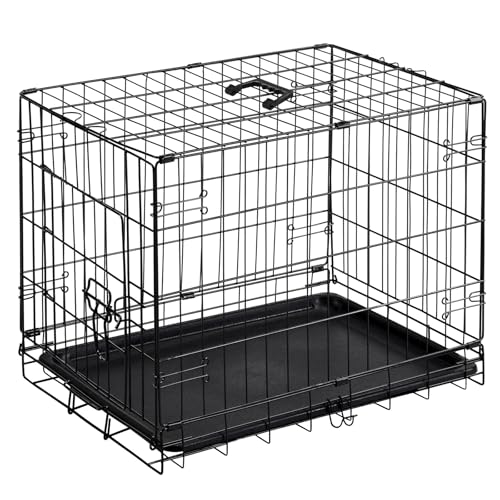
Best Dog Crates for Puppies: The Complete Buying Guide
Everything you need to choose the right crate for your puppy — sizes, types, materials, safety features, and proven crate training tips for a happy, secure puppy.
Bringing home a new puppy is exciting, but it also comes with a long list of decisions — food, toys, vet visits, and of course, where your puppy will sleep and stay safe when you cannot supervise them. A crate is one of the most important purchases you will make, and choosing the wrong one can create stress for both you and your puppy.
The right dog crate for puppies does more than contain your puppy. It becomes a safe den, supports crate training, accelerates potty training, protects your home from destructive chewing, and gives your puppy a place to retreat when the world feels overwhelming. This guide walks you through every factor that matters so you can make a confident, informed purchase.
Whether you are raising a tiny Toy breed or a future giant, the principles below apply. By the end, you will understand exactly what to look for, which features are worth prioritizing, and how to set your puppy up for crate training success from night one.
Why Every Puppy Needs a Crate
Crates are not cages — they are tools for safety, training, and comfort. Dogs are naturally den animals, and many puppies actively seek out small, enclosed spaces when they feel tired or overwhelmed. A properly introduced crate becomes a positive refuge rather than a place of confinement.
- Potty training acceleration: Puppies naturally avoid soiling their sleeping area. A correctly sized crate teaches bladder control and helps establish a predictable potty schedule.
- Safety when unsupervised: Puppies chew everything. A crate prevents ingestion of dangerous items like electrical cords, toxic plants, and small objects that can cause intestinal blockages.
- Protection of your home: Destructive chewing, scratched doors, and ruined furniture are common puppy behaviors. A crate protects your belongings while you are away.
- Travel and vet visits: A crate-trained puppy travels more calmly in cars and is easier to manage at the veterinarian or groomer.
- Recovery and rest: After surgery or illness, a crate provides a safe, restricted space for healing. Puppies also need enforced rest, and a crate helps them settle.
- Prevention of separation anxiety: When introduced correctly, a crate teaches puppies to be comfortable alone, reducing the risk of separation anxiety later.
Important Principle: A crate should never be used as punishment. If your puppy associates the crate with negative experiences, they will resist it and crate training will fail. Always pair the crate with treats, toys, and calm praise.
Types of Puppy Crates Compared
There is no single "best" crate type — the right choice depends on your puppy's breed, temperament, chewing habits, and your lifestyle. Here is how the main categories compare.
Wire Crates
The most popular choice for puppies. Excellent ventilation and visibility, fold flat for storage, and many include divider panels to adjust space as your puppy grows. Best for puppies who are not determined escape artists.
Mid-range · VersatilePlastic Crates
Enclosed design offers more privacy and a den-like feel. Excellent for travel and airline-compliant models. Easier to clean and often warmer. Less ventilation than wire, and puppies cannot see their surroundings as easily.
Entry-level to Mid-rangeSoft-Sided Crates
Lightweight, portable, and ideal for travel or temporary use. Not suitable for puppies who chew or dig, as the fabric can be torn. Best for calm, already crate-trained puppies.
Budget-friendly · Travel-focusedHeavy-Duty / Escape-Proof Crates
Reinforced metal or aluminum construction for puppies who break out of standard crates. Considerably heavier and more expensive, but essential for determined escape artists and high-anxiety dogs.
Premium · High-securityFurniture / Decorative Crates
Wooden or designer crates that double as end tables or side tables. Blend into home decor but are often not suitable for serious chewers. Best for calm puppies in visible living areas.
High-end · AestheticPlaypens and Exercise Pens
Not technically crates, but excellent supplements. A playpen attached to a crate gives puppies more room during the day while keeping them contained. Ideal for growing puppies who need more space.
Mid-range · FlexibleQuick Comparison Table
| Crate Type | Best For | Ventilation | Durability | Portability | Divider Option |
|---|---|---|---|---|---|
| Wire | Most puppies, home use, training | Excellent | Good | Good (folds flat) | Often included |
| Plastic | Travel, airline, privacy-seeking puppies | Moderate | Very Good | Excellent | Rarely |
| Soft-sided | Calm, crate-trained puppies, travel | Good | Poor for chewers | Excellent | No |
| Heavy-duty | Escape artists, anxious chewers | Good | Excellent | Poor (heavy) | Sometimes |
| Furniture | Calm puppies, home decor | Moderate | Varies | Poor | Rarely |
If you are unsure where to start, a wire crate with a divider is the safest default for most puppies. It balances ventilation, visibility, adjustability, and cost. Once you understand your puppy's chewing habits and temperament, you can add a travel crate or playpen as a supplement.
How to Choose the Right Size Crate
Crate sizing is the most common mistake puppy owners make. A crate that is too large defeats potty training and feels unsafe; a crate that is too small restricts movement and causes distress. The goal is a crate where your puppy can stand up without crouching, turn around comfortably, and lie down fully stretched out.
How to Measure Your Puppy
- Height: Measure from the floor to the top of your puppy's head (or ears, if they stand erect). Add 2-4 inches of clearance.
- Length: Measure from the tip of the nose to the base of the tail while your puppy stands naturally. Add 2-4 inches.
- Weight: Estimate your puppy's adult weight using breed standards or a puppy growth chart. This determines the crate's weight capacity.
- Growth allowance: Puppies grow fast. Either buy a crate sized for their adult dimensions and use a divider to shrink the space, or plan to upgrade within 6-12 months.
Pro Tip: The divider panel is your best friend. By adjusting the divider as your puppy grows, you maintain the correct "just right" space — large enough to be comfortable, small enough to discourage soiling. This single feature often saves owners from buying two or three crates.
Size Categories at a Glance
| Size Category | Typical Adult Weight | Example Breeds | Growth Notes |
|---|---|---|---|
| Extra Small | Under 10 lbs | Chihuahua, Toy Poodle, Yorkie | Often full-grown by 8-10 months |
| Small | 10-25 lbs | Shih Tzu, Pug, French Bulldog | Full-grown by 10-12 months |
| Medium | 25-50 lbs | Beagle, Cocker Spaniel, Border Collie | Full-grown by 12-14 months |
| Large | 50-90 lbs | Labrador, German Shepherd, Golden Retriever | Full-grown by 14-18 months |
| Extra Large | Over 90 lbs | Great Dane, Mastiff, Newfoundland | Full-grown by 18-24 months |
Large and giant breed puppies grow for much longer than small breeds, so buying for adult size with a divider is especially important. For more on large breeds, see our guide to the biggest breeds of dogs.
Materials and Build Quality
The material of your crate determines its durability, safety, and longevity. Puppies chew, scratch, and occasionally have accidents — the crate needs to withstand all of it.
- Powder-coated steel wire: The standard for wire crates. Durable, rust-resistant, and easy to clean. Look for thicker gauge wire on the door and latches.
- Reinforced aluminum: Used in heavy-duty crates. Lighter than steel but strong, and resistant to bending. Often the choice for escape-proof models.
- High-impact plastic: Used in travel crates. Should be thick and flexible rather than brittle. Check for rounded edges and secure metal hardware.
- Ripstop fabric and mesh: Used in soft-sided crates. Look for reinforced seams, heavy-duty zippers, and chew-resistant panels if your puppy is mouthy.
- Wood and MDF: Used in furniture crates. Attractive but vulnerable to chewing. Best for puppies past the destructive chewing phase.
Quality Check: Before buying, inspect the latches, hinges, and door mechanism. A puppy should not be able to pop the latch with their nose or paws. Look for dual-latch doors and rounded corners that will not injure a curious puppy.
Key Features to Look For
Not all crates are created equal. These features make a real difference in daily use and training success.
- Divider panel: Adjustable space as your puppy grows. Essential for large and giant breeds.
- Dual-door design: Front and side doors offer flexibility in tight spaces and make it easier to reach your puppy.
- Secure latches: Look for heavy-duty, dual-point latches that a clever puppy cannot open.
- Removable, washable tray: Accidents happen. A slide-out tray makes cleanup quick and hygienic.
- Rubber feet or floor protection: Prevents scratching your floors and reduces noise when your puppy moves around.
- Fold-flat design: Important for storage and travel. Most wire crates fold flat in seconds.
- Carrying handle: Useful for travel crates and moving the crate between rooms.
- Compatibility with crate covers: A cover can create a den-like environment and reduce anxiety in stimulating environments.
Worth the Upgrade: A crate with a divider and dual doors costs a little more than a basic single-door model, but it pays for itself by adapting to your puppy's growth and fitting better into your home layout.
Crate Training Fundamentals
Even the best crate is useless if your puppy fears it. Crate training is a gradual process that builds positive associations. Patience in the first week saves months of struggle later.
Step-by-Step Crate Introduction
- Set up the crate in a social area: Place it in the living room or kitchen where the family spends time. Puppies should not be isolated in a back room during training.
- Make it inviting: Add a comfy crate pad, a couple of safe chew toys, and a piece of your clothing. Leave the door open so your puppy can explore at will.
- Feed meals near and in the crate: Start by placing the food bowl just outside the crate, then just inside, then fully inside with the door open. This creates a strong positive association.
- Use high-value treats and praise: Toss a treat into the crate and praise calmly when your puppy goes in. Do not force or shove your puppy inside.
- Close the door for short periods: Begin with 5-10 seconds, then open the door before your puppy whines. Gradually increase duration as your puppy stays calm.
- Practice departures: Leave the room for a few seconds, then return. Build up to longer absences. This prevents separation anxiety around the crate.
- Use the crate at night and during naps: Overnight crating helps establish routine and reinforces potty training. Place the crate near your bed initially if your puppy is anxious.
Nighttime Tip: Puppies under 4 months often need one or two potty breaks overnight. Set an alarm and take your puppy out calmly — no play, no talking. Return them directly to the crate. This teaches that nighttime is for sleeping.
How Long Can a Puppy Stay in a Crate?
The general rule is one hour per month of age, plus one hour, up to a maximum of 4-5 hours during the day. A 3-month-old puppy can typically manage 4 hours; a 6-month-old can handle 5-6 hours. Overnight crating can be longer because puppies sleep. Never leave a puppy crated all day, and always provide exercise and potty breaks before and after crate time.
If your puppy cries in the crate, see our guide on how to stop your puppy from crying in the crate.
Crate Safety Essentials
A crate is only safe if it is used correctly. Follow these guidelines to prevent injury and distress.
- Remove collars and tags: A collar can snag on crate bars and cause strangulation. Always remove before crating.
- Avoid loose blankets: Puppies can chew and ingest fabric, causing blockages. Use a fitted crate pad instead.
- No food or water bowls inside: Except during travel, bowls tip and create messes. Provide water before and after crate time.
- Check for sharp edges or protruding wires: Inspect new crates carefully, especially where the wire is cut or welded.
- Secure the crate: Ensure the crate is stable and cannot tip if your puppy jumps against it.
- Never use a crate as punishment: This destroys the positive association and makes training much harder.
- Supervise chewers: Soft-sided crates are not suitable for puppies who chew. Even wire crates can be damaged by determined chewers — check for bent bars regularly.
Travel Safety: For car travel, a crash-tested crate or a dog car harness is essential. A loose crate can become a projectile in an accident. Look for crates that are specifically tested for crash safety.
Common Crate Mistakes to Avoid
- Buying the wrong size: Too large defeats potty training; too small is uncomfortable and distressing. Always measure and use a divider.
- Rushing the introduction: Forcing a puppy into a crate creates fear. Gradual, positive introduction is essential.
- Using the crate only when leaving: If the crate is only associated with being alone, your puppy will dread it. Use it for naps, feeding, and calm time too.
- Leaving a puppy crated too long: Exceeding your puppy's bladder capacity causes accidents and distress. Follow the age-based rule.
- Ignoring crying at night: A young puppy may genuinely need a potty break. Distinguish between distress and manipulation — very young puppies are not manipulative.
- Skipping the bed or pad: A bare crate floor is uncomfortable and cold. Provide a soft, washable surface.
- Not locking the crate properly: A clever puppy can learn to open weak latches. Check that the door is secure every time.
Frequently Asked Questions
Bottom Line
For most puppies, a wire crate with a divider panel, dual doors, and a secure latch is the best investment. Size it for your puppy's adult dimensions and adjust the divider as they grow. Pair the crate with a washable pad, a couple of safe chew toys, and a consistent positive training routine. When introduced correctly, the crate becomes a place your puppy chooses to rest — and a tool that makes house training, travel, and daily life easier for both of you.