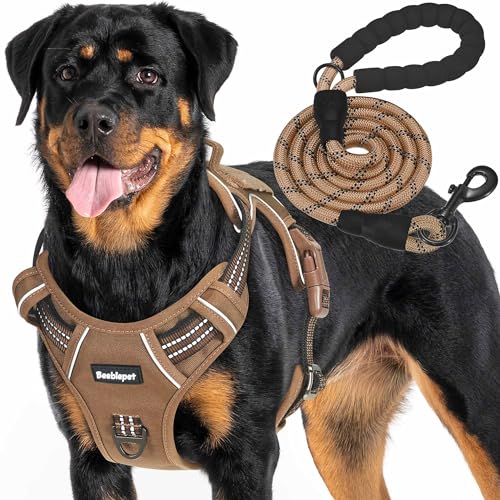
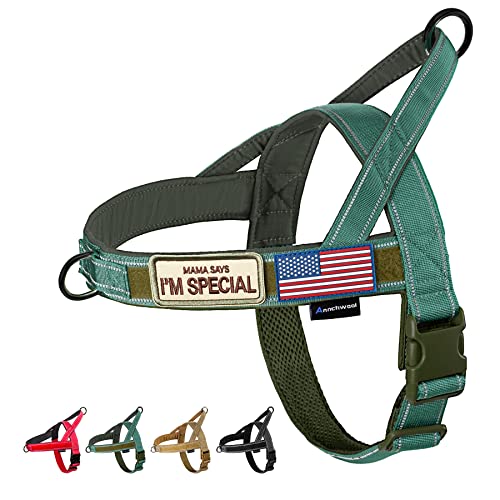
Dog Harness for Dogs That Pull: The Complete Buyer's Guide
If walks have turned into a tug-of-war, the right harness can change everything. Learn how no-pull harnesses work, which features matter most, and how to choose the best fit for your dog.
Few things ruin a walk faster than a dog who drags you down the street. Beyond the frustration, a dog that pulls hard can cause shoulder strain, wrist injuries, and falls — especially for children, seniors, or anyone walking a large breed. A dog harness for dogs that pull is one of the most effective tools available to make walks safer and more enjoyable for both of you.
But not all harnesses are created equal. Some are designed purely for comfort, others for safety in the car, and only a specific category is engineered to reduce pulling. This guide explains exactly what to look for, so you can choose with confidence rather than guesswork.
Why Dogs Pull on the Leash
Before choosing a harness, it helps to understand the behavior you are trying to change. Pulling is rarely a sign of stubbornness or dominance — it is usually a natural response to reinforcement.
- Reinforcement through movement: Every time your dog pulls and you move forward, the pulling is rewarded. The walk itself becomes the reward, which is why this habit is so deeply ingrained.
- Opposition reflex: When pressure is applied to a dog's neck or chest, their instinct is often to push against it rather than yield. A traditional collar can actually encourage a dog to lean into the leash.
- Breed and drive: Sledding, herding, and hunting breeds were developed to move forward with purpose. Their natural forward drive is stronger than average.
- Faster than humans: Most dogs naturally walk at a quicker pace than people. Without training, they simply default to their preferred speed.
- Excitement and under-stimulation: A dog who has been cooped up all day may pull out of sheer enthusiasm, especially toward parks, other dogs, or interesting smells.
Understanding the root cause matters because a harness changes the mechanics of pulling, while training changes the motivation. Used together, they produce the fastest and most durable results. If your dog's pulling is accompanied by anxiety or reactivity, tools like calming products for dogs can help reduce the underlying arousal that fuels lunging.
How No-Pull Harnesses Work
A standard back-clip harness attaches the leash between the shoulder blades. This is comfortable, but it essentially gives your dog a pulling point similar to a sled dog harness — the more they lean in, the more efficiently they can drag you forward.
A no-pull harness changes the physics of the walk in one or more ways:
- Front-clip redirection: The leash attaches to a ring on the dog's chest. When your dog surges ahead, the leash gently turns their body sideways. Because they can no longer pull in a straight line, the forward momentum is interrupted without pain or choking.
- Pressure distribution: Instead of concentrating force on the throat, a harness spreads it across the chest and torso. This is safer for the trachea, esophagus, and neck vertebrae.
- Lifting effect (in some designs): Certain harnesses apply a slight upward lift at the chest, which naturally reduces the dog's ability to lean forward and dig in.
- Dual attachment: Many modern harnesses offer both a front and back ring, letting you switch between training mode and casual walking, or use a double-ended leash for maximum control.
Important to understand: A no-pull harness is a management tool, not a training shortcut. It reduces the physical advantage your dog has, which makes training possible. The behavior itself is changed through consistent reinforcement of loose-leash walking.
Types of No-Pull Harnesses
No-pull harnesses fall into a few broad categories. Each has trade-offs in control, comfort, and ease of use. Descriptors below reflect relative market positioning rather than any specific number.
Front-Clip Harness
The most popular design for pullers. The chest ring redirects forward motion sideways. Highly effective for medium to strong pullers. Entry-level to mid-range models are widely available, and premium versions add padded panels and multiple adjustment points. Slight learning curve for owners new to front-clip walking.
Entry-level to premiumDual-Clip Harness
Offers both front and back attachment points. The front clip manages pulling during training, while the back clip works for relaxed walks or long-line sessions. The most versatile option and a strong choice if you want one harness for every situation. Generally mid-range to high-end.
Mid-range to high-endPadded / Comfort Harness
Designed for dogs with sensitive skin, short coats, or pressure points. Features fleece lining, neoprene padding, and wider straps. Often available with front-clip functionality. Ideal for senior dogs, dogs with skin conditions, or those prone to chafing. Mid-tier to luxury.
Mid-tier to luxuryStep-In Harness
Your dog steps into the harness rather than having it pulled over the head. Excellent for dogs who dislike having things placed over their head or ears. Some step-in designs include front-clip rings. Convenient for quick on-and-off. Budget-friendly to mid-range.
Budget-friendly to mid-rangeOver-the-Head Harness
Slips over the head and fastens at the chest. Simple to put on once your dog is comfortable with the motion. Offers a secure, stable fit for most body types. Best for dogs who tolerate handling around the head and neck. Entry-level to mid-range.
Entry-level to mid-rangeTraining / Working Harness
Built with reinforced stitching, metal hardware, and heavy-duty webbing. Designed for large breeds, strong pullers, and dogs in training programs. Often includes a handle for extra control in emergencies. Top-tier pricing reflects durability rather than luxury features.
Top-tierKey Features to Compare
When evaluating a harness for a dog that pulls, these are the details that separate an effective tool from a frustrating purchase.
Attachment Points
- Front chest ring: Essential for pull management. Should sit on the breastbone, not the throat.
- Back ring: Useful for casual walks, long lines, and car restraint compatibility. Check our guide to the best dog car harness if you also want crash-tested safety.
- Dual rings: The most flexible configuration, allowing you to adapt the harness as your dog's skills improve.
Fit and Adjustment
- Number of adjustment points: Four or more points allow a customized fit for deep-chested, narrow, or barrel-bodied dogs. Fewer points often means a compromise that causes rubbing.
- Shoulder freedom: The harness should not restrict the dog's natural gait. Watch your dog trot — if their stride shortens or elbows wing out, the harness is interfering.
- Padding: Important for short-haired breeds, seniors, and dogs prone to skin irritation.
Hardware and Materials
- Metal vs plastic buckles: Metal is stronger and more durable; high-quality plastic is lighter and easier to handle. Both work well if manufactured to a high standard.
- Reinforced stitching: Critical for strong pullers. Look for box stitching at stress points.
- Reflective elements: A meaningful safety feature for early morning or evening walks.
- Handle: A traffic handle gives you immediate control in tight situations, such as crossing a road or passing another dog.
Weather and Lifestyle Considerations
If you walk in hot climates, a breathable, minimal-coverage harness is more comfortable than a heavily padded one. In cold or wet conditions, quick-drying materials prevent chafing and odor. For dogs who also need paw protection on hot pavement or ice, see our guide to dog paw protection.
How to Measure & Fit a Harness
A harness only works as well as it fits. A loose harness shifts during a pull, which reduces control and can cause chafing. A tight harness restricts movement and creates pressure sores.
Measuring Your Dog
- Girth measurement: Wrap a soft tape measure around the widest part of your dog's ribcage, just behind the front legs. This is the most important measurement for sizing.
- Chest measurement: Measure from the front of the chest to just behind the front legs. This determines whether the chest strap will sit correctly on the breastbone.
- Neck measurement: Measure around the base of the neck where a collar would sit. Relevant for over-the-head designs.
- Weight and breed: Useful as a cross-check, but never rely on weight alone. A deep-chested breed may need a larger girth size than a heavier but narrower dog.
The Two-Finger Rule
Once the harness is on, you should be able to slide two fingers comfortably under every strap. If you can fit a whole hand, it is too loose. If you struggle to fit two fingers, it is too tight.
Fit Checks After the First Walk
- Check for red marks, bald spots, or irritation behind the front legs and under the chest.
- Watch for twisting or rotation — a sign the harness is too loose or the wrong shape for your dog.
- Confirm the front ring sits on the chest, not off to one side.
- Re-check the fit after your dog has been walking for 10-15 minutes, since movement can shift straps.
Pro Tip: If your dog is between sizes, size up rather than down, then use the adjustment points to tighten. A harness that is slightly too large can be adjusted; one that is too small cannot be made bigger.
Harness + Training: The Winning Combo
The harness reduces your dog's mechanical advantage, but the behavior change comes from training. Here is a practical framework that works alongside any no-pull harness.
- Introduce the harness positively: Let your dog sniff it, then reward calm interaction. Put it on for a few seconds, reward, and take it off. Repeat over several short sessions before the first walk.
- Reward the position you want: A loose leash means treats, praise, or continued forward movement. Choose one reward type and use it consistently.
- Stop when the leash goes tight: The moment tension appears, stop walking. Wait for your dog to turn back or step toward you, then reward and continue. This teaches that pulling never produces forward motion.
- Change direction frequently: Random turns keep your dog focused on you rather than on whatever is ahead. Reward generously when they follow your lead.
- Practice in low-distraction areas first: Start in your yard or a quiet street, then gradually introduce busier environments.
- Keep sessions short: Five to ten minutes of focused training is more effective than an hour of unfocused walking.
- Be consistent across the household: Every person who walks the dog must follow the same rules. Inconsistency is the fastest way to undo progress.
If your dog's pulling is driven by anxiety, reactivity, or over-arousal, addressing that underlying state is essential. Techniques like behavior modification techniques or anxiety wraps for dogs can complement harness training. In more serious cases, it may be worth learning when to see a behaviorist.
Common Mistakes to Avoid
- Buying a harness without measuring. Guessing the size leads to a poor fit, which undermines the harness's effectiveness and can cause skin irritation.
- Using only the back clip on a strong puller. This gives your dog the same leverage as a sled harness. Use the front clip for training until pulling is resolved.
- Expecting instant results. The harness provides immediate mechanical benefit, but behavioral change takes weeks of consistent training.
- Leaving the harness on all day. Harnesses are walking equipment. Continuous wear can cause chafing and matting, and a dog left unsupervised could get caught on something.
- Ignoring signs of discomfort. If your dog avoids the harness, freezes when it appears, or tries to back out of it, the fit or the introduction process needs adjustment.
- Skipping the break-in period. Even a well-fitted harness feels unfamiliar at first. Gradual introduction prevents negative associations.
- Using a harness as a substitute for exercise. A tired dog pulls less. Combine harness training with adequate physical and mental activity.
- Neglecting ID and safety gear. Even with a harness, your dog should wear a collar with ID tags. If you walk in unfamiliar areas, a dog GPS tracker adds a valuable safety layer.
Frequently Asked Questions
Ready to Make Walks Enjoyable Again?
Choosing the right no-pull harness comes down to three things: correct attachment point for your dog's pulling strength, an accurate fit, and consistent training. Start with a front-clip or dual-clip design, measure your dog properly, and pair the harness with short reward-based sessions. Most owners notice meaningful improvement within the first week. Browse the recommended harnesses below to find a model that matches your dog's size, coat, and walking style.

](https://m.media-amazon.com/images/I/41ji4lsxEIL._SL500_.jpg)