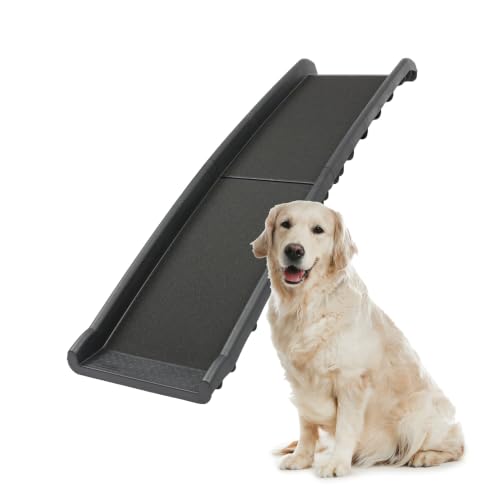
Dog Ramps: The Complete Guide to Choosing the Best Ramp for Your Dog
Everything you need to know about dog ramps — from understanding your dog's mobility needs to choosing the right ramp for beds, cars, sofas, and more. Make an informed decision that keeps your dog safe and comfortable.
If your dog struggles to jump onto the bed, sofa, or into the car, a dog ramp can be a game-changer. Ramps are not just for senior dogs or those with injuries — they are a proactive tool that protects your dog's joints and preserves their independence. Whether you have a tiny Chihuahua or a large Labrador, a well-chosen ramp can make daily life safer and more comfortable for both of you.
This guide will walk you through everything you need to know about dog ramps. You will learn about the different types available, how to choose the right one for your dog's size and mobility level, and how to train your dog to use it confidently. By the end, you will have the knowledge to make a smart purchase that improves your dog's quality of life.
Why Dog Ramps Matter
Jumping on and off furniture or in and out of vehicles puts significant stress on a dog's joints. Over time, this repetitive impact can lead to arthritis, joint degeneration, and soft tissue injuries. For senior dogs, small breeds with delicate frames, or dogs recovering from surgery, jumping can be painful or even dangerous.
Dog ramps provide a gradual incline that eliminates the need for jumping. This reduces stress on the mobility of your dog's hips, knees, and spine. Ramps also help prevent injuries like cruciate ligament tears, which are common in dogs who jump frequently. For dogs with conditions like hip dysplasia or arthritis, a ramp can be the difference between independence and relying on you for every move.
Who Benefits Most from Dog Ramps?
• Senior dogs: Aging dogs often develop arthritis and lose muscle mass, making jumping difficult and painful.
• Small breeds: Dogs with short legs may struggle to jump onto high surfaces, even when young.
• Dogs with joint issues: Conditions like hip dysplasia, arthritis, or luxating patella make jumping risky.
• Post-surgery dogs: Recovery often requires restricted movement, and ramps prevent re-injury.
• Large breeds: Heavy dogs put more stress on their joints with every jump, increasing injury risk.
Beyond physical health, ramps also protect your furniture and car. Dogs who struggle to jump may scratch upholstery or damage car doors in their attempts. A ramp provides a clean, controlled path that protects your belongings while keeping your dog safe.
Types of Dog Ramps
Not all dog ramps are the same. They come in various designs, materials, and sizes, each suited to different needs and environments. Understanding the differences will help you choose the right one for your situation.
Bed Ramps
Designed for the home, these ramps typically have a gentle incline and are often longer to accommodate the height of a bed. They may be freestanding or attach to the bed frame. Bed ramps are usually wider for stability and may have a non-slip surface. Ideal for dogs who sleep in the bed with their owners.
mid-range to premiumCar Ramps
These ramps are designed to fold or telescope for easy storage in the trunk or back seat. They need to support the height of your vehicle and often have a higher weight capacity. Car ramps are essential for dogs who struggle to jump into SUVs, trucks, or even sedans. Look for models with side rails for added safety.
mid-range to high-endSofa Ramps
Smaller and shorter than bed ramps, sofa ramps are designed for living room furniture. They often have a more compact footprint and may be made of foam or lightweight materials. These are ideal for small dogs who want to join you on the couch but cannot jump up safely.
entry-level to mid-rangeFree-Standing vs. Attachable
Free-standing ramps can be moved from room to room and used with different surfaces. Attachable ramps are secured to a specific piece of furniture or vehicle, providing a more stable and permanent solution. Attachable models are often safer but less versatile.
varies by modelFolding & Telescoping Ramps
These are designed for portability. Folding ramps collapse in half or thirds, while telescoping ramps slide into themselves to become more compact. They are perfect for travel and for owners who need a ramp that can be stored easily when not in use.
mid-range to premiumFoam Ramps
Foam ramps are lightweight and often used for small dogs and low furniture like sofas or ottomans. They are typically covered in a removable, washable fabric. Foam ramps are gentle on joints and easy to move but may not provide the same stability as wooden or metal ramps for larger dogs.
budget-friendly to mid-rangeWhen considering which type is best for you, think about where the ramp will be used most often. If your dog needs help getting into the car, a folding car ramp is the practical choice. If they need help getting on the bed every night, a sturdy bed ramp with a gentle angle is ideal. Many owners find that a versatile folding ramp works well for multiple purposes.
How to Choose the Right Ramp for Your Dog
Choosing the right dog ramp involves more than picking the first one you see. You need to consider your dog's size, mobility, and the environment where the ramp will be used. Here are the key factors to evaluate:
1. Your Dog's Size and Weight
The ramp must be sturdy enough to support your dog's weight safely. Check the weight capacity and choose a ramp that exceeds your dog's weight by at least 20-30%. A heavier dog needs a wider, more stable ramp with stronger materials. Small dogs can use lighter, narrower ramps, but they still need a non-slip surface.
2. Your Dog's Mobility Level
If your dog has arthritis, hip dysplasia, or is recovering from surgery, you need a ramp with a very gentle incline. The steeper the ramp, the harder it is for a dog with limited mobility to use. Look for longer ramps that reduce the angle. Dogs with balance issues may benefit from ramps with side rails or raised edges.
3. The Height of the Surface
The height of your bed, sofa, or car determines the length of the ramp you need. A ramp that is too short for the height will be too steep. As a general rule, for every inch of height, you need about 3-4 inches of ramp length to maintain a safe angle. Measure the height of the surface and choose a ramp that provides a gentle slope.
4. Surface and Traction
The walking surface of the ramp must provide good traction. Look for rubberized coatings, carpet, or textured surfaces. Smooth surfaces like bare wood or plastic can be slippery, especially if your dog's paws are wet. A non-slip surface is critical for safety.
5. Portability and Storage
If you plan to use the ramp in different locations or take it with you when traveling, choose a folding or telescoping model. If the ramp will stay in one place, a heavier, more stable model is fine. Consider where you will store the ramp when not in use.
6. Ease of Cleaning
Dogs can be messy. Choose a ramp with a surface that is easy to wipe down or a cover that can be removed and washed. This is especially important if your dog has accidents or if you live in a muddy area.
Pro Tip: Before buying, measure the height of the surface you want to use the ramp with. Then, check the ramp's dimensions and angle. If possible, look for customer reviews from owners with similar-sized dogs to get real-world feedback on stability and ease of use.
Safety Features to Look For
Safety should be your top priority when choosing a dog ramp. A poorly designed ramp can be dangerous, causing slips, falls, or injuries. Here are the safety features to look for:
- Non-slip surface: The most important feature. Look for rubberized grips, carpet, or textured plastic. Avoid smooth surfaces.
- Side rails or raised edges: These prevent your dog from accidentally stepping off the side of the ramp. They are especially important for dogs with balance issues or vision problems.
- Sturdy construction: The ramp should not flex or wobble when your dog walks on it. Look for solid materials like wood, aluminum, or high-density plastic.
- Secure attachment: If the ramp attaches to furniture or a vehicle, ensure the attachment mechanism is secure and easy to use. Straps, hooks, or non-slip feet can help.
- Weight capacity: As mentioned, choose a ramp that exceeds your dog's weight by a safe margin.
- Gentle angle: A ramp that is too steep is a safety hazard. Aim for an angle of 25 degrees or less, and ideally under 20 degrees for dogs with mobility issues.
- Reflective strips: For car ramps used at night, reflective strips improve visibility and safety.
Always test the ramp yourself before letting your dog use it. Apply weight to it, check for wobbles, and ensure it stays in place. If it feels unstable to you, it is not safe for your dog.
Training Your Dog to Use a Ramp
Some dogs take to ramps immediately, while others need time and encouragement. The key is to make the experience positive and stress-free. Here is a step-by-step approach to training your dog to use a ramp:
- Introduce the ramp on flat ground: Start with the ramp lying flat or at a very low angle. Let your dog sniff and investigate it without any pressure. Reward any interaction with treats and praise.
- Lure with treats: Place a treat on the ramp and encourage your dog to step onto it. Start with just one paw, then gradually encourage them to walk further. Use a happy, encouraging voice.
- Use a leash for guidance: If your dog is hesitant, attach a leash and gently guide them onto the ramp. Never pull or force them. Let them move at their own pace.
- Practice with low heights: Once your dog is comfortable walking on the flat ramp, raise it slightly. Practice with a low angle before increasing the height.
- Reward heavily: Every time your dog uses the ramp, reward them with treats, praise, or a favorite toy. Make it a positive experience.
- Be patient: Some dogs may take days or even weeks to become comfortable. Never rush or scold your dog. If they seem scared, go back to an easier step.
- Supervise always: Until your dog is completely confident, supervise them every time they use the ramp. This prevents accidents and ensures they are using it safely.
Common Training Mistakes to Avoid:
• Forcing your dog onto the ramp — this creates fear and distrust.
• Using a ramp that is too steep or unstable — your dog will sense the danger and refuse to use it.
• Rushing the process — give your dog time to adjust.
• Not rewarding — positive reinforcement is essential for building confidence.
• Ignoring signs of fear — if your dog is trembling or trying to escape, stop and try again later.
If your dog has a history of fear or anxiety, consider consulting a professional dog trainer who uses positive reinforcement methods. They can help you build your dog's confidence step by step.
Ramps vs. Stairs vs. Steps
Dog ramps are not the only option for helping your dog access elevated surfaces. Stairs and steps are also available. Here is how they compare:
| Feature | Dog Ramps | Dog Stairs | Dog Steps |
|---|---|---|---|
| Joint Stress | Lowest — gradual incline | Moderate — requires lifting legs | Moderate to high — step impact |
| Best For | Senior dogs, joint issues, small breeds | Dogs with good mobility, larger dogs | Small dogs, low furniture |
| Space Required | More — needs length for gentle angle | Less — vertical footprint | Least — very compact |
| Learning Curve | Moderate — some dogs need training | Easy — natural movement | Easy — natural movement |
| Portability | Folding/telescoping models available | Often bulky, some fold | Usually lightweight and portable |
| Stability | Very stable when properly placed | Can wobble if not sturdy | Less stable at higher heights |
In general, ramps are the safest option for dogs with mobility issues because they require the least amount of joint movement. Stairs and steps are better for dogs with good mobility who need a more compact solution. Some dogs may prefer one over the other, so it is worth trying both if possible.
For dogs recovering from surgery or with severe arthritis, a ramp is almost always the better choice. However, if your dog has balance issues, a ramp with side rails is essential. And if your dog is afraid of ramps, stairs might be a temporary alternative while you work on training.
Ramp Maintenance & Care
To keep your dog's ramp safe and functional, regular maintenance is important. Here are some tips:
- Clean the surface regularly: Dirt, mud, and debris can reduce traction. Wipe down the ramp with a damp cloth or mild soap and water. Avoid harsh chemicals that could irritate your dog's paws.
- Check for wear and tear: Inspect the ramp for loose screws, worn non-slip surfaces, or cracked materials. Repair or replace any damaged parts immediately.
- Tighten hardware: Over time, screws and bolts can loosen. Check them periodically and tighten as needed.
- Store properly: If you have a folding ramp, store it in a dry place when not in use to prevent rust or mold. Avoid leaving it in extreme temperatures.
- Replace worn covers: If your ramp has a fabric cover, replace it if it becomes torn or excessively dirty. A clean cover ensures good traction and hygiene.
Proper maintenance not only extends the life of your ramp but also ensures your dog's safety. A worn or damaged ramp can be dangerous, so never ignore signs of wear.
Frequently Asked Questions
Ready to Choose the Perfect Ramp for Your Dog?
A dog ramp is an investment in your dog's comfort and long-term health. By understanding your dog's needs and choosing a ramp with the right features, you can make a purchase that improves their quality of life for years to come. Remember to prioritize safety, stability, and a gentle angle. And if you are unsure, consult your veterinarian for personalized advice. Your dog will thank you for it.