Electric Barrier for Dogs: The Complete Guide
Everything you need to know about electric dog fences — how they work, which type suits your yard, training essentials, safety considerations, and how to choose the right system for your dog.
An electric barrier for dogs — also known as an electric dog fence or containment system — is a popular solution for pet owners who want to give their dog freedom in the yard without a physical fence. These systems use a transmitter and a receiver collar to create an invisible boundary. When your dog approaches the boundary, they hear a warning tone. If they continue, they receive a mild static correction. With proper training, most dogs quickly learn to respect the boundary.
But are electric barriers right for every dog and every situation? This guide explores how they work, the different types available, training protocols, safety considerations, and how to choose the best system for your needs. Whether you are dealing with a dog fence dilemma or simply want to understand your options, this guide will help you make an informed decision.
How Electric Barriers Work
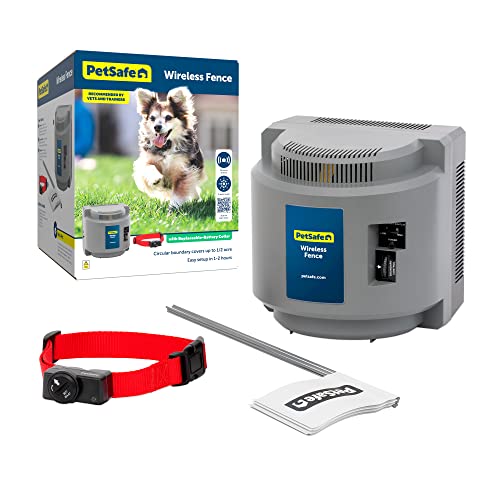
Every electric barrier system consists of three core components: a transmitter, a boundary wire or signal field, and a receiver collar. The transmitter plugs into a power source and sends a radio signal through the boundary wire or wirelessly creates a containment area. The receiver collar, worn by your dog, picks up this signal.
As your dog approaches the boundary, the collar emits a warning tone. This tone is your dog's cue to turn back. If they continue forward, the collar delivers a static correction — a mild electric stimulation similar to a static shock. The intensity is adjustable, and most systems allow you to set different levels for different dogs.
Important: The static correction is not designed to punish your dog. It is a deterrent that, combined with consistent training, teaches your dog to stay within the safe zone. Modern systems offer tone-only modes and vibration warnings before any static correction is delivered.
Training is the critical component that makes electric barriers humane and effective. Without proper training, a dog may become confused, fearful, or simply run through the boundary when highly motivated. With proper training, most dogs learn the boundary within 2-4 weeks and rarely test it again.
Types of Electric Barriers for Dogs
There are three main types of electric containment systems, each with distinct advantages and trade-offs. Understanding these differences is essential for choosing the right system for your yard, your dog, and your budget.
In-Ground Fence
A physical wire is buried around the perimeter of your yard. The transmitter sends a signal through the wire, creating a precise boundary. Ideal for irregularly shaped yards and properties with complex layouts. Installation requires digging or trenching, which is labor-intensive but provides the most reliable containment.
Mid-range to premiumWireless Fence
The transmitter creates a circular or adjustable signal field without any buried wire. Setup is as simple as plugging in the transmitter and adjusting the range. Best for smaller, open yards with few obstacles. Signal interference from metal buildings, trees, or terrain can affect reliability.
Entry-level to mid-rangeGPS-Based Fence
Uses GPS technology to create virtual boundaries that can be customized via a smartphone app. No physical installation is required, and you can adjust boundaries instantly. Best for large properties, renters, or owners who travel. Requires a clear view of the sky and reliable GPS signal.
Premium to luxuryHybrid Systems
Some systems combine in-ground and wireless technology, or offer both static and vibration corrections. These systems provide flexibility and are often the best choice for owners who want the reliability of a wired boundary with the convenience of wireless adjustments.
Mid-range to premiumKey Benefits & Limitations
Electric barriers offer several advantages over traditional physical fences, but they are not without limitations. Understanding both sides helps you set realistic expectations.
Benefits
- Cost-effective: Generally less expensive than installing a physical fence, especially for large properties.
- Aesthetically pleasing: No visible fence to obstruct views or clash with landscaping.
- Flexible boundaries: You can customize the containment area, exclude gardens or pools, and adjust as needed.
- Easy to install (wireless): Wireless systems require minimal setup — just plug in and adjust.
- Effective for most dogs: With proper training, the vast majority of dogs respect the boundary.
- Expandable: Most systems support multiple dogs with additional collars.
Limitations
- Requires training: Without proper training, the system will not work and can cause fear or anxiety.
- Not a physical barrier: Determined dogs, especially those with high prey drive, may run through the boundary.
- Does not keep other animals out: An electric barrier keeps your dog in, but does not prevent other dogs or wildlife from entering your yard.
- Signal interference: Wireless systems can be affected by metal structures, terrain, and electronic devices.
- Not suitable for all dogs: Dogs with anxiety, aggression, or certain medical conditions may not be good candidates.
- Battery maintenance: Receiver collars require regular battery changes or charging.
Pro Tip: If your dog has a history of escaping or has a high prey drive, consider combining an electric barrier with a physical fence for maximum reliability. For dogs that are anxious or reactive, consult a veterinarian or behaviorist before using any electric containment system.
How to Choose the Right System
Selecting the right electric barrier depends on several factors: your yard size and layout, your dog's size, temperament, and age, your budget, and your installation preferences. Here is a step-by-step approach to making the right choice.
- Assess your yard: Measure the area you need to contain. Irregular shapes favor in-ground systems; simple, open yards work well with wireless. Large properties may require GPS-based systems.
- Consider your dog: Small dogs need collars designed for their neck size and lower correction levels. Large, stubborn dogs may need a system with higher correction ranges. Puppies under 6 months should not use electric collars.
- Evaluate your budget: Entry-level wireless systems are the most affordable. In-ground systems cost more due to wire and installation. GPS systems are premium-tier but offer the most flexibility.
- Check for interference: If your yard has metal buildings, dense trees, or hilly terrain, a wireless system may struggle. In-ground systems are more reliable in these conditions.
- Look for training resources: Choose a brand that provides clear training guides, flags, and customer support. Proper training is more important than the brand you choose.
- Read reviews and compare: Look for systems with adjustable correction levels, tone-only mode, and reliable customer service. Avoid ultra-cheap systems that may deliver inconsistent corrections.
| Feature | In-Ground | Wireless | GPS-Based |
|---|---|---|---|
| Installation | Requires digging/trenching | Plug and play | No installation |
| Boundary Shape | Fully customizable | Circular or adjustable | Fully customizable via app |
| Reliability | High | Moderate | High (with clear sky) |
| Best For | Irregular yards, large properties | Small, open yards | Renters, travelers, large properties |
| Tier | Mid-range to premium | Entry-level to mid-range | Premium to luxury |
Installation & Setup
Proper installation is critical for reliable performance. While wireless systems are simple to set up, in-ground systems require more planning and effort. Here is what to expect for each type.
Wireless System Setup
- Place the transmitter in a central location, ideally elevated and away from metal objects.
- Plug in the transmitter and set the boundary radius using the control dial.
- Walk the perimeter with the receiver collar to test the signal range.
- Adjust the boundary as needed and mark it with training flags.
- Ensure the transmitter is protected from weather and has a backup battery if available.
In-Ground System Setup
- Plan your boundary layout, leaving space for your dog to play and excluding gardens, pools, and driveways.
- Lay the boundary wire along the planned path, either by trenching or using a lawn edger to create a narrow slit.
- Connect the wire to the transmitter and test the signal with the receiver collar.
- Bury the wire at least 2-3 inches deep. Use wire nuts and waterproof connectors for any splices.
- Mark the boundary with training flags every 6-10 feet.
- Test the entire boundary and adjust the transmitter settings as needed.
Installation Tip: If you have a complex yard or are unsure about installation, consider hiring a professional. Many pet fence companies offer installation services, and a professional install ensures the system works reliably from day one.
Training Your Dog to the Electric Barrier
Training is the most important part of using an electric barrier. Without it, the system is ineffective and potentially harmful. With it, your dog learns to respect the boundary quickly and with minimal stress. The training process typically takes 2-4 weeks.
Golden Rule: Never punish your dog for crossing the boundary. The collar delivers the correction automatically. Your job is to reward your dog for staying in the safe zone and to make the training process positive and gradual.
Step-by-Step Training Protocol
- Phase 1: Boundary Awareness (Days 1-3): Put the collar on your dog but keep it turned off or in tone-only mode. Walk your dog on a leash around the boundary. When they approach the flags, say "no" calmly and guide them back. Reward them for staying inside. Do this for 10-15 minutes, 2-3 times daily.
- Phase 2: Tone Warning (Days 4-7): Turn on the collar in tone-only mode. Let your dog approach the boundary on a long leash. When they hear the tone, guide them back and reward them. Repeat until your dog consistently turns back when they hear the tone.
- Phase 3: Static Correction Introduction (Days 8-14): Set the collar to the lowest static level. Let your dog approach the boundary. When they hear the tone and continue, they will feel a mild correction. Immediately guide them back and reward them. Keep sessions short and positive.
- Phase 4: Distraction Training (Days 15-21): Practice with distractions — other dogs, people, toys — outside the boundary. Use a long leash to prevent your dog from running through. Reward them for choosing to stay inside.
- Phase 5: Off-Leash Supervision (Days 22-28): Gradually allow more freedom. Supervise your dog closely and continue to reward good behavior. Never leave your dog unsupervised in the containment area until they have reliably respected the boundary for at least 2 weeks.
Every dog learns at a different pace. Some dogs understand the system in a few days; others need several weeks. Patience and consistency are key. If your dog shows signs of fear, anxiety, or aggression during training, stop immediately and consult a professional trainer or behaviorist. For dogs with anxiety, consider alternative containment options and explore calming products or behavior modification techniques.
Safety & Ethical Considerations
Electric barriers are a tool, and like any tool, they can be used well or poorly. When used correctly, they are safe and humane. When used incorrectly, they can cause fear, anxiety, and behavioral problems. Here are the key safety considerations.
- Use the lowest effective correction level: Start at the lowest level and only increase if your dog does not respond. Most dogs respond to the lowest levels.
- Never use on puppies under 6 months: Puppies are still developing and may be traumatized by the correction. Wait until they are old enough and have basic obedience training.
- Avoid use on dogs with anxiety or aggression: Electric collars can worsen these conditions. Consult a behaviorist before using any aversive tool on a reactive dog.
- Check the collar fit regularly: The collar should be snug but not tight. Check for skin irritation daily, especially during the first few weeks.
- Remove the collar during indoor time: The collar should only be worn when your dog is in the containment area. Prolonged wear can cause pressure sores.
- Never leave your dog unsupervised initially: Until your dog reliably respects the boundary, supervise them at all times.
- Provide plenty of exercise and mental stimulation: A bored or under-exercised dog is more likely to test the boundary. Ensure your dog gets adequate exercise and mental stimulation.
Ethical Note: Some trainers and veterinarians oppose the use of electric collars entirely. If you are uncomfortable with the idea of using static correction, explore alternatives such as a physical fence, a trolley system, or a professional training program. The best containment system is one that you are comfortable using consistently and humanely.
Maintenance & Troubleshooting
Electric barrier systems are generally low-maintenance, but regular checks ensure they continue to work reliably. Here is a maintenance checklist and common troubleshooting tips.
Monthly Maintenance Checklist
- Test the boundary with the receiver collar to ensure the signal is working.
- Check the transmitter and power supply for damage or loose connections.
- Inspect the boundary wire for breaks or damage (in-ground systems).
- Check the receiver collar battery level and replace or recharge as needed.
- Clean the receiver collar and check for wear on the strap.
- Verify the correction level is appropriate for your dog.
Common Issues & Solutions
| Issue | Possible Cause | Solution |
|---|---|---|
| Dog ignores the boundary | Collar not fitting properly, battery dead, correction level too low | Adjust collar fit, replace battery, increase correction level slightly |
| Signal inconsistent | Wire break, interference, transmitter placement | Check wire continuity, relocate transmitter, test with receiver collar |
| Dog runs through boundary | High prey drive, insufficient training, distraction | More training, increase correction level, consider physical fence |
| Skin irritation | Collar too tight, worn too long | Loosen collar, remove during indoor time, check for allergies |
| False corrections | Signal interference, transmitter malfunction | Check for nearby electronics, contact manufacturer |
Frequently Asked Questions
Final Thoughts: An electric barrier for dogs can be an effective, humane containment solution when paired with proper training and responsible use. It is not a substitute for supervision, exercise, and a loving home environment. If you are unsure whether an electric barrier is right for your dog, consult your veterinarian or a professional dog trainer. Your dog's safety and well-being should always come first.