Miniature Schnauzer Dog Food: The Complete Feeding Guide
Choosing the right food for your Miniature Schnauzer is one of the most important decisions you will make for their health. This breed has unique nutritional needs—particularly around fat management, urinary health, and weight control—that set them apart from other small dogs.
The Miniature Schnauzer is a spirited, intelligent little dog with a wiry coat and a personality far larger than their 11 to 20-pound frame. But beneath that charming exterior lies a breed with specific metabolic quirks that make their dietary needs anything but generic. Miniature Schnauzers are genetically predisposed to hyperlipidemia (elevated blood fats) and pancreatitis, and they have a significantly higher risk of developing urinary stones than the average dog [citation:4][citation:5].
This means the food you choose matters more for a Miniature Schnauzer than it might for a breed with fewer metabolic sensitivities. A diet that works perfectly for a Labrador or a Beagle could be problematic for a Schnauzer. This guide will walk you through exactly what to look for, what to avoid, and how to feed your Miniature Schnauzer for a long, healthy life.
Understanding the Miniature Schnauzer's Nutritional Needs
Miniature Schnauzers are small dogs with moderate energy levels, but their metabolism has some important quirks. The breed originates from Germany, where they were developed as rat catchers and farm dogs. Today they are primarily companions, but their genetic makeup still influences how they process food.
The most critical factor in a Miniature Schnauzer diet is fat content. This breed has a well-documented tendency toward elevated blood triglycerides, a condition called hyperlipidemia [citation:8][citation:13]. When fat intake is too high, the pancreas comes under stress, which is why Miniature Schnauzers are overrepresented in pancreatitis cases at veterinary clinics [citation:9]. For many healthy adults, a diet with fat content in the moderate range—roughly 10 to 15 percent—is a sensible starting point [citation:16].
Protein quality is equally important. Miniature Schnauzers do well on highly digestible proteins from named animal sources like chicken, turkey, or lamb. Poor-quality protein from rendered meals or by-products is harder to process and more likely to cause digestive upset. If your Schnauzer has skin issues or a sensitive stomach, a limited-ingredient or single-protein diet can make it easier to identify trigger ingredients.
For new owners bringing home a puppy, understanding the breed's early nutritional needs is essential. Our guide to Miniature Schnauzer puppies covers everything from choosing a breeder to the first few weeks at home.
Pancreatitis & Fat Management: The Most Critical Factor
If there is one dietary rule that every Miniature Schnauzer owner should know, it is this: keep fat under control. Pancreatitis—inflammation of the pancreas—is significantly more common in this breed than in most others, and high-fat meals are a well-known trigger [citation:9][citation:14].
Pancreatitis can be acute (sudden and severe) or chronic (recurring). Symptoms include vomiting, lethargy, abdominal pain, and loss of appetite. In severe cases, it can be life-threatening and require hospitalization. Even a single fatty treat or a few bites of greasy table scraps can trigger an episode in a susceptible dog.
Signs Your Schnauzer May Have a Fat Sensitivity:
• Vomiting or diarrhea after eating rich food
• Greasy or pale-colored stools
• Abdominal discomfort or a hunched posture
• Lethargy or reluctance to eat after a fatty meal
• Previous diagnosis of elevated triglycerides or pancreatitis
If you notice these signs, consult your veterinarian. A low-fat diet is often recommended for dogs with a history of pancreatitis, and some may need a veterinary prescription diet [citation:14].
If your Miniature Schnauzer has been diagnosed with pancreatitis or has elevated blood lipids, your veterinarian will likely recommend a therapeutic low-fat diet. These prescription formulas are designed to minimize pancreatic stress while providing complete nutrition. For dogs without a history of pancreatitis, choosing a high-quality maintenance diet with controlled fat content is a reasonable preventive measure.
Urinary Health & Bladder Stones
Another breed-specific concern is urinary stone formation. Miniature Schnauzers are among the breeds most commonly affected by bladder stones, particularly calcium oxalate and struvite stones [citation:5][citation:19]. The breed's anatomy and urine composition—including lower urine volume and less frequent urination compared to larger dogs—contribute to this risk.
Dietary strategies for urinary health focus on dilution. The more water your dog drinks and the more dilute their urine, the lower the concentration of minerals that can crystallize into stones. Practical steps include:
- Encourage water intake: Always provide fresh water. Consider a pet fountain to make drinking more appealing.
- Add moisture to meals: Mixing water or wet food into kibble increases fluid intake significantly.
- Feed a urinary-support formula: Some breed-specific diets are formulated to promote dilute urine and support urinary tract health.
- Avoid excessive minerals: Diets with controlled calcium and oxalate precursors may help reduce stone risk.
If your dog has a history of stones, your veterinarian may prescribe a specific urinary diet. These therapeutic formulas must be fed exclusively—no treats or other foods—to be effective [citation:5].
Types of Food: Kibble, Wet, Fresh & Raw
Miniature Schnauzers can thrive on several types of food, provided the nutritional profile is appropriate. Here is how the main options compare for this breed:
Dry Kibble
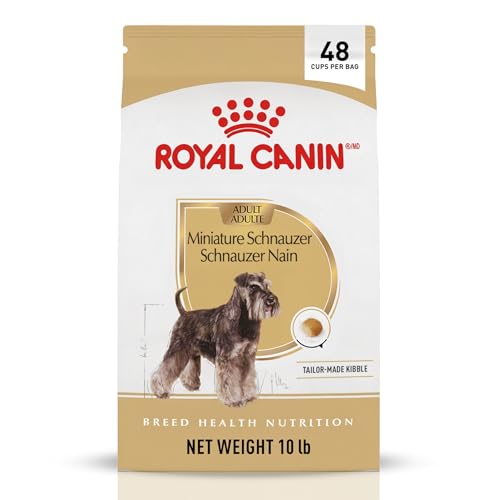
The most common and convenient option. Kibble helps with dental health through mechanical abrasion and is easy to portion. For Schnauzers, choose a small-breed formula with controlled fat content. Breed-specific kibbles are designed with the Schnauzer's blunt muzzle and scissor bite in mind, making it easier for them to pick up [citation:7].
Mid-range to premiumWet/Canned Food
Higher moisture content supports urinary health—a significant benefit for this stone-prone breed. Wet food is also easier for senior Schnauzers with dental issues to eat. However, it is less convenient to portion and more expensive per calorie. Many owners mix wet with dry for a balance of hydration and dental benefits.
Mid-range to premiumFresh/Refrigerated
Fresh food offers high moisture content (typically 65-75%) and human-grade ingredients. For Schnauzers prone to urinary issues, the extra hydration is a genuine advantage. However, fresh diets must be carefully formulated to ensure nutritional completeness, and some are not low-fat enough for pancreatitis-prone dogs [citation:20].
Premium to luxuryRaw Diet
Raw feeding is popular among some Schnauzer owners, but it requires careful planning to ensure balanced nutrition and appropriate fat levels. Raw diets carry a higher risk of bacterial contamination and are not recommended for dogs with compromised immune systems. Always consult a veterinary nutritionist before starting a raw diet.
Premium to luxuryHow to Choose the Best Food for Your Miniature Schnauzer
With so many options on the market, selecting the right food can feel overwhelming. Here is a practical framework for making the decision:
- Check the nutritional adequacy statement. The food should state that it meets AAFCO (Association of American Feed Control Officials) standards for your dog's life stage—either "growth" (puppy), "adult maintenance," or "all life stages." Avoid foods without this statement.
- Look at the fat content. For healthy adult Miniature Schnauzers without a history of pancreatitis, a fat content in the moderate range (roughly 10-15%) is a sensible target. If your dog has had pancreatitis or elevated triglycerides, your vet may recommend a lower-fat therapeutic diet.
- Identify the protein source. Named animal proteins like "chicken," "turkey," or "salmon" are preferable to generic terms like "meat meal" or "poultry by-product." Highly digestible protein is easier on the Schnauzer's sensitive digestive system.
- Consider the kibble size. Miniature Schnauzers have a moderately blunt muzzle and a scissor bite. Small-breed kibble is easier for them to pick up and chew than large-breed kibble [citation:7].
- Evaluate carbohydrate sources. Easily digestible carbohydrates like rice, sweet potato, or barley are generally well-tolerated. Avoid foods with excessive fillers if your dog has a sensitive stomach.
- Check for omega fatty acids. Omega-3 and omega-6 fatty acids support skin and coat health—an important consideration since Schnauzers can be prone to dry, flaky skin and dull coats [citation:8].
Transitioning Foods: When switching your Miniature Schnauzer to a new food, do it gradually over 7 to 10 days. Start with 25% new food mixed with 75% old food, then increase the proportion every few days. A sudden switch can cause digestive upset, especially in a breed already prone to sensitive stomachs [citation:13].
Portion Control & Feeding Schedule
Miniature Schnauzers gain weight easily, and obesity exacerbates nearly every health issue this breed is prone to—from joint stress to pancreatitis risk. Measured meals are strongly preferred over free-feeding.
Most adult Miniature Schnauzers do well with two meals per day, morning and evening. The exact amount depends on your dog's weight, activity level, and the calorie density of the food. As a general reference, a typical adult Miniature Schnauzer weighing around 5 to 7 kilograms might need roughly ¾ to 1¼ cups of a standard kibble daily, split into two meals [citation:11]. Puppies need 3 to 4 smaller meals daily until about 6 months of age, then can transition to 2 to 3 meals.
| Life Stage | Meals Per Day | Key Consideration |
|---|---|---|
| Puppy (8 weeks – 6 months) | 3–4 | Small, frequent meals support steady growth and blood sugar |
| Puppy (6 – 12 months) | 2–3 | Transition to adult food around 10–12 months |
| Adult (1 – 7 years) | 2 | Measured meals; adjust based on body condition |
| Senior (7+ years) | 2 | Lower calorie, easily digestible, joint support |
Body condition is the most reliable guide. You should be able to feel your dog's ribs under light pressure but not see them prominently. From above, there should be a visible waist behind the rib cage. If the waist is difficult to discern, your dog may be carrying excess weight—a common issue in this breed.
Feeding Your Miniature Schnauzer Puppy
Puppy nutrition sets the foundation for a lifetime of health. Miniature Schnauzer puppies need a diet formulated for small-breed growth, with appropriate levels of protein, calcium, and phosphorus for healthy bone development.
Breed-specific puppy formulas are available and are designed to meet the needs of growing Miniature Schnauzers, typically from 8 weeks to 10 months of age [citation:6]. These formulas account for the breed's small adult size and moderate growth rate. If a breed-specific option is not available, a high-quality small-breed puppy food is a suitable alternative.
Feed 3 to 4 small meals daily until about 6 months of age. This frequent feeding helps maintain stable blood sugar and supports steady growth without overloading the digestive system. Avoid free-feeding—Schnauzer puppies can easily overeat and develop unhealthy weight gain habits early.
Around 10 to 12 months of age, transition gradually to adult food. Large-breed puppy formulas are not appropriate for Miniature Schnauzers, as they have different calcium and calorie profiles.
Senior Miniature Schnauzer Nutrition
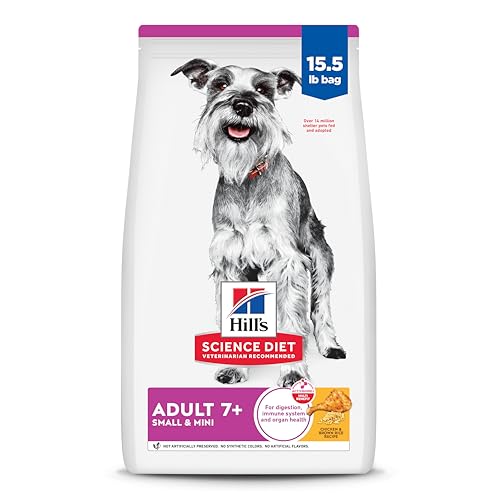
Miniature Schnauzers are considered seniors around 7 to 8 years of age. At this stage, nutritional needs shift. Metabolism slows, activity levels often decrease, and the risk of age-related conditions like arthritis, dental disease, and cognitive decline increases.
A senior formula typically offers:
- Lower calorie density: to prevent weight gain as activity decreases.
- Higher quality protein: to maintain muscle mass, which naturally declines with age.
- Joint support: glucosamine and chondroitin are common additions.
- Easily digestible ingredients: to accommodate a slowing digestive system.
- Antioxidants: to support cognitive function and immune health.
Dental disease is extremely common in senior Schnauzers. If your dog has difficulty chewing hard kibble, consider softening it with warm water or mixing in wet food. For dogs with significant dental issues, a wet or soft-food diet may be more comfortable. Our guide to best dog food for older small dogs with few teeth covers this topic in more detail.
Treats & Foods to Avoid
Treats should make up no more than 10 percent of your Miniature Schnauzer's daily calorie intake—and for dogs prone to pancreatitis, even less is better. A treat that represents a small percentage of a Labrador's daily calories could be a much larger proportion of a Miniature Schnauzer's, so portion awareness matters [citation:20].
Safe, low-fat treat options include:
- Small pieces of cooked chicken breast (skinless, unseasoned)
- Carrot sticks or slices
- Apple slices (without seeds)
- Green beans (plain, no salt)
- Small pieces of cooked sweet potato
- Commercial low-fat dog treats formulated for weight management
Foods to avoid entirely include:
- High-fat table scraps: Bacon, sausage, gravy, fat trimmings, and buttery foods are a direct trigger for pancreatitis [citation:3][citation:9].
- Toxic foods: Chocolate, grapes, raisins, onions, garlic, xylitol (artificial sweetener), macadamia nuts, and alcohol. These are dangerous for all dogs, but Schnauzer owners should be especially vigilant given the breed's sensitive system.
- Rich chews: Some commercial chews and dental sticks are surprisingly high in fat. Check the guaranteed analysis or choose low-fat alternatives.
- Excessive cheese: A small piece of cheese now and then is unlikely to cause harm, but it is high in fat and should not become a regular treat.
Frequently Asked Questions
The Bottom Line for Feeding Your Miniature Schnauzer
Focus on three priorities: controlled fat, high-quality protein, and adequate hydration. Choose a food that suits your dog's life stage and health history, measure portions carefully, keep treats lean and limited, and avoid fatty table scraps entirely. If your Schnauzer has a history of pancreatitis or bladder stones, work closely with your veterinarian to select an appropriate therapeutic diet. With the right nutrition, your Miniature Schnauzer can enjoy a long, active, and comfortable life.