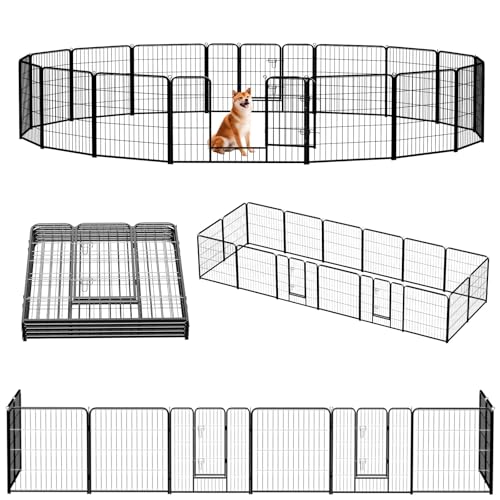
Portable Dog Fence for Camping with Large Dogs
How to choose, set up, and use a portable dog fence that actually contains a big, strong dog at the campsite — without the escapes, tangles, or wasted space.
Camping with a large dog is one of the best ways to spend a weekend — until your 90-pound Labrador decides the campsite boundary is a suggestion. A portable dog fence for camping for large dogs solves a very specific problem: keeping a powerful, curious dog safe in an unfamiliar outdoor space without permanently altering the site or relying on a single leash and stake.
But not every product marketed as a "portable dog fence" can handle a large dog. Lightweight mesh playpens designed for toy breeds will collapse, tear, or simply be jumped in under a minute. This guide focuses specifically on what large-dog owners need to evaluate before buying: panel strength, height, staking, layout, and the safety habits that make a fence actually work in the field.
If you are also refreshing your general outdoor containment plan at home, our guide to dog fence options covers permanent and semi-permanent setups, while this page stays focused on travel and campsite use.
Why Large Dogs Need a Different Portable Fence
A portable fence that works beautifully for a Poodle or a Corgi can fail completely with a German Shepherd, a Rottweiler, or a Husky. The difference is not just size — it is force, speed, and determination. Large dogs push panels sideways, lean on joints, and can generate enough momentum to knock over an unstaked enclosure.
Large dogs also tend to be more athletic than their size suggests. Many can clear a three-foot fence from a standstill and can climb if the panel design gives them a foothold. That is why height and structure matter more than the total square footage advertised on the box.
- Force on joints and stakes: A large dog leaning against a panel can pop shallow stakes out of soft campsite soil. Look for long, angled ground stakes and reinforced corner joints.
- Jumping and climbing: Athletic breeds can clear low panels. A 48-inch height is the practical minimum for strong jumpers, and the panel interior should be free of horizontal bars that act as climbing rungs.
- Chewing and pawing: Bored large dogs test fences with their teeth and paws. Thicker wire gauge and rust-resistant coatings hold up far better than thin mesh or plastic connectors.
- Space needs: A large dog needs enough room to stand, turn, and lie down comfortably, which means fewer but larger panels are often better than a tiny pen packed with decorative panels.
Quick reality check:
A portable fence is a containment aid, not a babysitter. Even the strongest large-dog pen should only be used while you are present and supervising. No portable enclosure is escape-proof against a determined dog left alone in a new environment.
Types of Portable Camping Fences for Large Dogs
There are four main styles sold for camping and travel. Each has a different strength profile, and only some are genuinely suitable for large dogs.
Heavy-Duty Metal Exercise Pens
Welded steel wire panels connected with secure hinges or clips. The most reliable choice for large dogs because the panels resist pushing, chewing, and jumping. Slightly heavier to carry but built to last many camping seasons.
Premium durabilityReinforced Fabric Playpens
Fabric stretched over a metal or fiberglass frame. Lighter and easier to pack, but only suitable for calm large dogs. Thin fabric and plastic zippers are common failure points for chewers and jumpers.
Mid-range, calm dogs onlySoft-Sided Pop-Up Enclosures
Quick to set up and very packable, but generally too flimsy for large dogs. Best treated as a shade or rest area, not a containment solution. Avoid for dogs that paw, lean, or chew.
Entry-level, not for strong dogsModular Panel Systems
Individual panels that connect into any shape or size. Excellent for large dogs because you can build a bigger footprint and buy extra panels for height or reinforcement. Higher upfront investment and more pieces to pack.
Premium, most flexibleIf your dog is a strong puller or has a history of escaping fences at home, a modular metal system is usually the safer investment. If your large dog is older, calm, and simply needs a shaded rest area, a reinforced fabric pen can work — but only with supervision and only on flat ground.
For dogs that also need containment at home or in a vehicle, it helps to compare across categories. Our overview of dog gates covers indoor and doorway options, while pet crates for large dogs is the better reference for travel and crate-based containment.
Materials and Build Quality That Survive Large Dogs
Marketing photos rarely show what happens when a large dog leans on a fence for ten minutes. When you compare products, look at these specific build details rather than the overall product description.
| Feature | What to Look For | Why It Matters for Large Dogs |
|---|---|---|
| Wire gauge | Thicker welded wire rather than thin mesh | Resists bending, chewing, and pawing without deforming |
| Joint construction | Welded joints or reinforced hinges, not plastic clips | Prevents panels from separating when a dog pushes against them |
| Coating | Rust-resistant powder coating or galvanized finish | Survives damp campsites, morning dew, and repeated outdoor use |
| Ground stakes | Long, angled stakes with a wide head | Holds the fence in soft soil when a large dog leans or jumps |
| Door latch | Locking latch or double clip, not a simple hook | Prevents clever dogs from nosing the door open |
| Panel height | 40 to 48 inches or taller | Discourages jumping and climbing in athletic large breeds |
A good rule of thumb: if the fence looks like it could be folded up and carried in one hand with no effort, it is probably not strong enough for a large dog. Weight is not automatically a sign of quality, but meaningful metal construction usually is.
Height, Panel Size, and Layout
Height is the single most important number for large dogs, but panel size and layout determine whether the fence is actually usable at a campsite.
Choosing the Right Height
- 40 inches: The practical minimum for large but calm dogs that are not known jumpers. Works for older dogs and relaxed breeds.
- 48 inches: The recommended height for most large dogs, including athletic breeds. This is the sweet spot for camping containment.
- 60 inches and above: For known jumpers and climbers, or dogs that have escaped lower fences before. Consider a modular system with extra height panels.
Panel Size and Footprint
Large dogs need room to move, stretch, and lie down. A cramped pen increases stress, pacing, and escape attempts. As a general guideline, plan for at least 4 by 4 feet of floor space per large dog, and more if your dog is very active or will spend longer periods inside.
Larger panels create a bigger enclosure with fewer joints, which is generally stronger. Smaller panels are easier to carry but require more connectors and more assembly time. At a campsite, setup speed matters, especially in bad weather or fading light.
Shapes That Work at Campsites
- Square or rectangular: The most stable shape and the easiest to stake evenly on flat ground.
- Hexagonal or octagonal: Distributes force across more panels, which helps with dogs that push or lean.
- Attached to a vehicle or tree: Can add stability but introduces hazards like hot exhaust, sharp edges, or tethering risks. Only use safe, solid anchor points.
Ground Conditions to Expect
- Hard-packed soil: Stakes may need to be hammered in. Bring a small mallet.
- Soft or sandy ground: Stakes pull out easily. Use longer stakes or a weighted base.
- Sloped terrain: Avoid it for enclosures. A sloped pen is easier to push over and harder to stake securely.
Campsite tip: Set up the fence before you set up your own tent. It gives your dog a familiar, safe space to settle in while you work, and it lets you notice ground problems like rocks, roots, or a slope before the dog is inside.
Campsite Setup Step by Step
A fence that is set up poorly will fail even if it is well made. Follow this sequence to make a portable fence stable on real campsite ground.
- Scout the spot first: Choose flat, clear ground away from roads, water, cliffs, fire pits, and wildlife trails. Look for hazards inside the footprint — sharp rocks, exposed roots, broken glass, or toxic plants.
- Unfold and connect the panels: Assemble the enclosure shape before staking anything. Check that every joint and latch is fully engaged and that the door opens and closes smoothly.
- Drive the stakes fully in: Push or hammer each ground stake all the way into the soil at an angle. Do not leave stake heads exposed above the ground where a dog could catch a paw or chew on them.
- Test the stability: Gently push on the panels from the inside and outside. If the fence shifts or leans noticeably, add more stakes or move to firmer ground.
- Add shade and water inside: Place a water bowl and a shaded resting spot inside the enclosure. A dog with nothing to do is more likely to test the fence.
- Introduce your dog calmly: Let your dog sniff the fence and walk in on a loose leash before you close the door. Reward them for settling inside so the pen becomes a positive place.
- Supervise the whole time: Stay nearby, especially for the first session. Watch for pacing, pawing, chewing, or leaning against the panels and intervene early.
If your dog is anxious about new environments, read our guides on calming products for dogs and anxiety wraps for dogs before the trip. A stressed dog is far more likely to try to escape a portable fence.
Safety Rules at the Campsite
Containment is only one part of campsite safety. These rules apply regardless of how strong your fence is.
- Never leave your dog unattended in a portable fence. This is the most important rule. Portable enclosures are not escape-proof, and campsites have unpredictable distractions like wildlife, other campers, and vehicles.
- Keep the fence away from water. Rivers, lakes, and streams are hazards. A large dog can push a panel into the water or use it as a launch point.
- Do not tether inside the fence. A tethered dog inside an enclosure can wrap the leash around a panel and injure itself or pull the fence over.
- Watch for heat and shade. Metal panels can get hot in direct sun. Provide shade inside the enclosure and check the ground temperature before your dog lies down.
- Bring identification and a backup leash. Even with a fence, keep a collar with ID tags on your dog and a leash within reach at all times.
- Check the fence every morning. Stakes can loosen overnight, and wildlife can disturb the setup. Do a quick stability check before letting your dog in.
- Respect campsite rules. Some campgrounds have leash-only policies or prohibit fences and pens. Confirm the rules before you book.
Escape behavior warning signs:
Pacing along the fence line, pawing at the base, chewing the panels, climbing with the front paws, and repeated jumping against the side all indicate that your dog is testing the containment. Interrupt the behavior, redirect to a toy or training session, and consider adding height or moving to a stronger enclosure.
Common Buying Mistakes
Most bad portable fence purchases come down to a handful of avoidable mistakes.
- Buying by price alone. Entry-level fabric pens can look similar to heavy-duty metal pens in photos, but they fail quickly with large dogs. Compare materials and joint construction instead.
- Ignoring the height. A 30-inch pen is fine for a small dog and useless for a large jumper. Choose height based on your dog's athletic ability, not just their shoulder height.
- Skipping the stake check. Many fences include stakes, but the included stakes are often short. Buy longer, angled stakes separately for soft campsite soil.
- Forgetting packability. Heavy-duty metal pens take up real space in the car. Measure your trunk or cargo area before buying a modular system.
- Expecting a fence to fix behavior problems. If your dog has separation anxiety or a history of fence escaping, address the behavior first. A portable fence is containment, not training.
- Not testing at home first. Set the fence up in your yard before the trip. It reveals weak points, assembly problems, and your dog's likely reaction — with a safe fallback nearby.
If your dog is still a puppy or a young adolescent, our puppy exercise pen guide covers smaller enclosures and indoor use. Portable camping fences are a different product category, and the two are not interchangeable for a large-breed puppy.
Frequently Asked Questions
Bottom line:
For a large dog, prioritize height, steel construction, secure joints, and long ground stakes over packability and price. Set the fence up before your own camp setup, test it at home first, and treat it as a supervised containment aid rather than a permanent enclosure. A portable fence works best when it is matched to your dog's strength and behavior — not just the size of your car trunk.