Puppy Gate for Doorway: The Complete Buyer's Guide
A doorway gate is one of the simplest ways to keep a young puppy safe while giving them room to explore. Here is how to choose, install, and use the right gate for your home and your dog.
Bringing a puppy home means puppy-proofing every part of the house they can reach. A puppy gate for doorway use is one of the most practical tools in that effort. It lets you block off stairs, kitchens, and rooms with hazards while still keeping your puppy in the same part of the home as the family. Unlike closing a door, a gate keeps sight and sound connected, which reduces isolation and helps with preparing your home for a puppy.
But not every gate is safe for a puppy. Bar spacing, latch strength, height, and mounting method all matter more than most buyers realize. A gate that works for a toddler can let a small puppy slip through or get a paw stuck. This guide walks you through the exact criteria to evaluate before you buy, so you end up with a gate that is secure, easy to use, and safe for your dog's size and temperament.
Quick summary: For most doorways, a pressure-mounted gate with a walk-through door, bar spacing of 2.5 inches or less, and a minimum height of 24 to 30 inches is the best starting point. Use hardware-mounted gates for stairs. Match the gate height to your puppy's breed size and jumping ability.
Why a Doorway Gate Matters for Puppies
Puppies explore with their mouths. Everything within reach becomes a chew toy, including electrical cords, furniture legs, shoes, and toxic houseplants. A gate creates a boundary without isolation, which is exactly what you need during the puppy stage. The benefits go beyond physical safety.
- Hazard containment: Keeps your puppy away from stairs, kitchens with hot surfaces, cleaning supplies, and rooms that are not puppy-proofed. This pairs naturally with our puppy-proofing guide.
- Supports potty training: Confining your puppy to a smaller area makes it easier to supervise them and catch signs they need to go out. Gates work alongside a consistent puppy feeding schedule to build reliable potty habits.
- Reduces destructive chewing: A gate limits access to furniture and household items, giving your puppy a smaller, safer zone with their own puppy chew toys.
- Protects other pets and people: A gate gives an older dog or a cat a place to retreat from an energetic puppy, which reduces household stress.
- Supports alone-time training: Short, positive periods behind a gate help your puppy learn to settle independently, which reduces separation problems later.
If you also want an open, temporary enclosure rather than a fixed barrier, a puppy exercise pen can complement doorway gates. Many owners use a gate at the doorway and a pen inside the room for a layered safety setup.
Types of Puppy Gates for Doorways
There are two main mounting categories, plus several specialty designs. Understanding the difference is the most important decision you will make.
| Gate Type | Best For | Installation | Portability | Stairs Safe? |
|---|---|---|---|---|
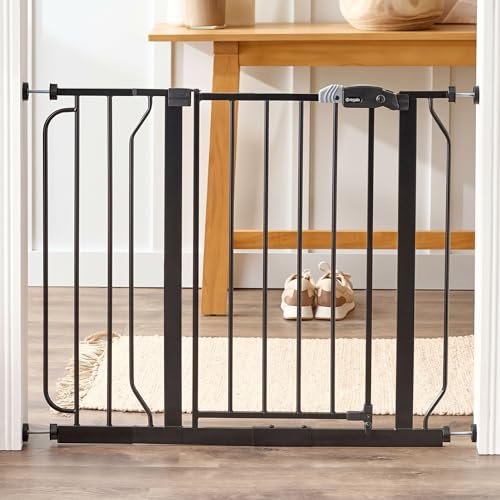
| Pressure-mounted | Doorways, hallways, room dividers | No tools, wedged between walls | High — easy to move | No |
| Hardware-mounted | Stairs, permanent doorways, strong dogs | Screwed into wall or banister | Low — semi-permanent | Yes |
| Retractable mesh | Wide openings, travel, small puppies | Pressure or hardware brackets | High — rolls away | No |
| Free-standing | Open floor plans, temporary zones | None — folds out | Very high | No |
| Configurable play yard | Large rooms, multi-panel setups | Panels connect with pins | Medium | No |
Pressure-Mounted Gates
These are the most popular choice for doorways because they require no drilling. Rubber pads press against both sides of the frame. Entry-level models use a simple tension knob, while mid-range and premium models add a walk-through door, one-hand latch, and wider extension kits. They are ideal for renters and for doorways you may want to open again later.
The trade-off is strength. A determined large puppy can push a pressure gate loose, so check the manufacturer's weight and size recommendations. Avoid using pressure gates at the top of stairs, and avoid placing them where a puppy can brace against a wall to push.
Hardware-Mounted Gates
These screw into the wall or a banister and are the only safe option for stairways. They swing open like a door, often with a self-closing or auto-latch feature. Installation takes more effort and leaves small holes, but the security is far higher. Choose this type if you have a large-breed puppy, a puppy that pushes hard against barriers, or any stairway.
Retractable Mesh Gates
A mesh panel pulls across the opening and locks into a bracket, then rolls away when not in use. They are excellent for narrow doorways and travel, and they take up almost no visual space. However, mesh is easier to chew through, and most models are best suited to small and toy breed puppies. Check the mesh strength and the locking mechanism carefully.
Free-Standing and Configurable Gates
These fold out like an accordion and rely on their own weight and geometry rather than wall pressure. They work well in open floor plans where there is no doorway to mount against. They are less secure against a jumping or pushing puppy, but they are useful as a temporary zone while you set up a permanent solution. Some models can also be used as a dog gate configuration for larger areas.
Gate Materials Compared
The material affects durability, chew resistance, weight, and how the gate looks in your home.
- Steel and metal: The most durable option and the best choice for chewers and large puppies. Powder-coated steel resists rust and scratches. Heavier gates feel more secure but are harder to move between rooms.
- Wood: Attractive and blends with home decor, but softer than metal and more vulnerable to chewing. Best for calm puppies and adult dogs. Choose hardwood over composite materials.
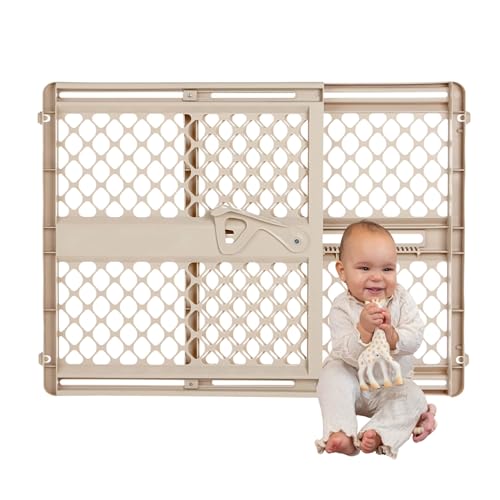
- Plastic and molded polymer: Lightweight, budget-friendly, and easy to clean. Good for toy breeds and short-term use. Less resistant to determined chewers and can crack in very cold conditions.
- Mesh fabric: Lightest and most portable. Best for travel and small puppies. Not suitable for chewers or strong dogs.
If your puppy is already a serious chewer, invest in a metal gate and pair it with appropriate outlets such as chew toys for dogs. A gate should never be the only enrichment your puppy has access to.
How to Size a Puppy Gate Correctly
Sizing mistakes are the most common reason buyers end up disappointed. There are three measurements that matter: width, height, and bar spacing.
Width
Measure the doorway opening at its narrowest point, then add the thickness of any baseboards or trim. Most gates fit openings of roughly 28 to 38 inches, and extension kits cover wider doorways. Never force a pressure gate beyond its rated maximum, because the tension will be unreliable.
Height
Height should match your puppy's expected adult size, not just their current size. Puppies grow fast, and buying a gate they will outgrow in a few months is wasteful.
- Toy and small breeds: a gate at least 24 inches tall is usually enough for a doorway.
- Medium breeds: choose at least 30 inches tall.
- Large and giant breeds, or jumpers: choose 36 inches or taller, and prefer a gate without horizontal footholds.
Bar Spacing
This is the detail most owners overlook. A puppy can squeeze through gaps that look far too small. Choose a gate with bar spacing of 2.5 inches or less for toy and small breed puppies. Mesh and solid-panel gates avoid the problem entirely because there are no gaps to slip through or trap a paw.
Measuring tip: Measure your puppy's widest point, usually the chest or hips, and add a margin. If the gap between bars is anywhere near that measurement, the gate is not safe. A wriggling puppy can compress their body more than you would expect.
Installation and Setup
Correct installation is what makes a gate secure. A well-built gate installed badly is less safe than a simple gate installed properly.
- Clear the frame: Remove loose trim or hardware that could stop the gate from seating flat against the wall. Wipe the contact points so the rubber pads grip.
- Check the wall strength: Pressure gates need solid framing on both sides. Drywall alone can crack or compress under tension. Hardware gates need studs or a proper banister mount.
- Set the tension evenly: Tighten both sides gradually and check that the gate is level. An uneven gate can pop loose under pressure.
- Test the latch: Close and open the gate several times. The latch should engage firmly and require a deliberate action, not a nudge, to release.
- Test the gate with pressure: Gently push on the gate the way a puppy might. It should not shift, tilt, or open.
- Recheck regularly: Puppies push harder as they grow. Check tension and hardware every few weeks, especially in the first months.
For stairways, always use a hardware-mounted gate and install it according to the manufacturer's instructions. A gate at the top of stairs must open away from the stairs and must never rely on pressure alone. Pair the gate with other safety measures from our home safety checklist.
Using the Gate for Training
A gate is a management tool, but it can also support training if you introduce it correctly. Puppies who are simply locked behind a barrier without preparation often whine, chew, or try to climb.
- Start with short sessions: Begin with a few minutes at a time while you are visible in the next room. Gradually extend the time as your puppy settles.
- Feed and reward near the gate: Give meals or a stuffed chew toy just on the other side of the gate so the barrier predicts good things.
- Never use the gate as punishment: The gate should mean calm time, not banishment. Pair it with positive behavior modification techniques.
- Practice the walk-through: Open and close the gate calmly so your puppy learns that the door opening is not an invitation to bolt.
- Address whining early: If your puppy cries behind the gate, check that their needs are met first. For crate-specific whining, see our guide on stopping puppy crying in the crate.
Once your puppy is reliably settled behind the gate, you can begin phasing it out for short periods. Keep the gate in place for the first year, since adolescence often brings a second wave of boundary testing.
Safety Checklist
Run through this checklist before you trust any gate with your puppy:
- Bar spacing is 2.5 inches or less for small puppies.
- Height is appropriate for the puppy's expected adult size.
- The latch requires a deliberate action and cannot be nosed open.
- There are no sharp edges, exposed screws, or pinch points.
- The gate is stable under firm pressure and does not tilt.
- Stairs use a hardware-mounted gate only.
- No furniture, boxes, or ledges near the gate can serve as a step.
- The gate has no horizontal bars that act like a ladder for climbers.
- Your puppy cannot reach cords, plants, or bins through the bars.
If your puppy has a history of injury or a joint condition, check with your vet before using gates that require jumping or squeezing. For general health questions, our dog health section is a useful starting point.
Common Buying Mistakes to Avoid
- Buying for current size only: Puppies grow quickly. Choose a gate rated for the expected adult size so you do not need to replace it within months.
- Ignoring bar spacing: A gate that looks secure can still let a small puppy slip through. Always check the gap measurement.
- Using a pressure gate on stairs: This is a serious safety risk. Stairs require hardware mounting.
- Choosing a gate with horizontal bars: These give climbers a foothold. Choose vertical bars, mesh, or solid panels instead.
- Skipping the walk-through door: A gate without a door becomes annoying to use and often gets left open. A walk-through design is worth the upgrade.
- Overlooking the latch: A clever puppy can learn to nose or paw at simple latches. Choose a latch that needs two motions or a firm squeeze.
- Not testing stability: Install the gate and push against it as your puppy would. If it moves, tighten or replace the mounting.
If you need to secure a larger area or an open floor plan, consider combining a doorway gate with other barriers such as a dog fence or an exercise pen.
Before you buy: Confirm three numbers — doorway width, puppy's expected adult height, and the gate's bar spacing. If all three align, you have found a gate that will stay useful for years rather than months.
Frequently Asked Questions
The bottom line: The best puppy gate for a doorway is the one that fits your opening precisely, matches your puppy's expected adult size, and uses a mounting method suited to the location. Measure first, check bar spacing second, and choose a walk-through design you will actually use every day. Combined with a consistent routine and the rest of your puppy care plan, a doorway gate keeps your home safer and your puppy calmer during the most curious months of their life.