Best Puppy Toys: The Complete Buying & Safety Guide
Toys are not just entertainment — they are essential tools for your puppy's teething relief, mental development, and training success. Here is how to choose the right ones.
Every puppy owner quickly learns one truth: a bored puppy is a destructive puppy. Chewed shoes, shredded cushions, and bitten hands are rarely signs of a "bad dog" — they are signs of a puppy whose natural instincts for chewing, exploring, and playing have no appropriate outlet. The right toys solve this problem directly by redirecting those instincts onto safe, satisfying objects.
But not all toys are created equal. A toy that is perfect for a calm eight-week-old Maltese can be dangerous for a determined Labrador puppy. This guide breaks down every category of puppy toy, explains what to look for and what to avoid, and gives you a practical framework for building a toy collection that supports your puppy's health and development from their first weeks home through their first birthday.
The Core Principle: The best puppy toy is one that matches your puppy's size, chewing style, and developmental stage — and that you can supervise safely. No toy is indestructible, and no toy replaces supervision.
Why Puppy Toys Matter More Than You Think
Toys serve four critical functions during a puppy's first year, each of which influences behavior and health long after puppyhood ends.
1. Teething Relief
Puppies begin teething around three to four weeks of age and continue through roughly six to seven months, when their adult teeth fully erupt. During this window, their gums are sore, swollen, and itchy. Chewing provides genuine relief by applying counter-pressure to the gums. Puppies who lack appropriate chew toys will find relief elsewhere — furniture legs, baseboards, electrical cords, and human hands are common targets. Providing a variety of textures satisfies this need safely.
2. Mental Development & Boredom Prevention
A puppy's brain is developing rapidly, and boredom is the root of most problem behaviors. Puzzle toys and enrichment items give puppies a constructive job to do, which tires them out mentally in a way physical exercise alone cannot. Fifteen minutes of focused problem-solving can be as exhausting as a long walk — and far more calming.
3. Redirecting Undesirable Behavior
Puppies explore the world with their mouths. When your puppy nips at your hands or chews on your shoe, the effective response is not punishment but redirection: offer an appropriate alternative immediately. Having a toy within arm's reach at all times makes this instinct-training consistent. Over time, your puppy learns what is acceptable to chew and what is not.
4. Building the Human-Animal Bond
Play is one of the primary ways you and your puppy communicate affection and trust. Games of fetch, tug, and hide-and-seek strengthen your relationship, teach cooperative behavior, and give your puppy a positive outlet for excitement. Toys also make puppy training more engaging — a toy reward is often more motivating than a treat for a playful puppy.
Practical Takeaway: Think of toys as developmental tools, not luxuries. A puppy with the right toys is calmer, easier to train, and far less likely to develop destructive habits that are difficult to undo later.
Types of Puppy Toys: A Complete Overview
Puppy toys fall into several functional categories. A well-rounded toy collection includes at least one from each major group, though the balance shifts as your puppy grows.
Chew Toys
The backbone of any puppy toy collection. Durable rubber, nylon, and rope toys satisfy the chewing instinct and provide teething relief. Choose textures appropriate to your puppy's chewing intensity — soft rubber for gentle chewers, firmer rubber for determined ones. Avoid hard materials like antlers and bones that can fracture puppy teeth.
EssentialPuzzle & Enrichment Toys
Toys that require problem-solving to release food or treats. These include treat-dispensing balls, sliding-panel puzzles, snuffle mats, and lick mats. They provide mental stimulation, slow down fast eaters, and reduce boredom-related behavior. Especially valuable for high-energy or intelligent breeds.
High-valueFetch & Active Play Toys
Balls, frisbees, and flying discs designed for retrieving games. These provide cardiovascular exercise and strengthen the bond through cooperative play. Choose sizes large enough to prevent swallowing and materials that bounce predictably. Avoid tennis balls for heavy chewers — the fuzz wears down enamel.
EssentialTug Toys
Rope toys and sturdy fabric toys designed for tug-of-war. Tugging is a natural cooperative game that builds impulse control when taught with rules (release on cue). Rope toys also double as dental floss, gently cleaning between teeth. Choose tightly braided ropes that resist unraveling.
Mid-rangeComfort & Cuddle Toys
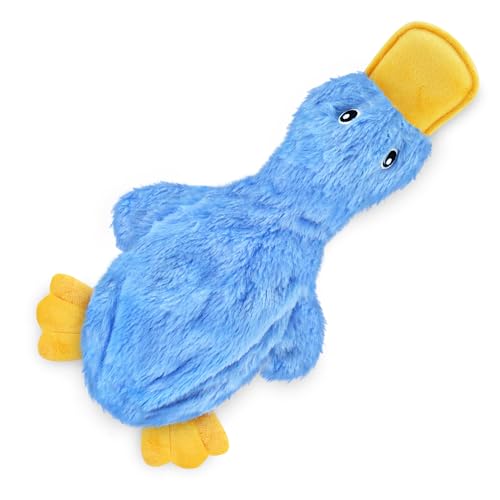
Soft plush toys, often with a heartbeat or warming element, that provide comfort during crate training and alone time. These are especially helpful for puppies adjusting to a new home. They are not chew toys — supervise closely and remove once your puppy starts shredding.
SituationalInteractive & Electronic Toys
Battery-operated toys that move, make sounds, or respond to touch. These can engage puppies who need extra stimulation, though they are not a substitute for human interaction. Use sparingly — over-reliance on electronic toys can reduce your puppy's interest in quieter, more independent play.
OptionalQuick Comparison by Puppy Profile
| Puppy Profile | Priority Toy Type | Secondary Toy | What to Avoid |
|---|---|---|---|
| Aggressive chewer | Firm rubber chew toys | Tightly braided rope | Plush toys, thin rubber |
| Gentle chewer | Soft rubber & plush | Treat-dispensing ball | Very firm nylon |
| High-energy breed | Fetch balls & frisbees | Puzzle feeders | Small indoor toys only |
| Anxious / shy puppy | Comfort plush toy | Lick mat | Loud electronic toys |
| Smart, easily bored | Multi-step puzzle toys | Snuffle mat | Single-function toys |
| Small breed puppy | Small rubber chew | Mini fetch ball | Toys larger than mouth |
Best Teething Toys for Sore Gums
Teething is the single most urgent reason puppies need toys. Between three and seven months, your puppy's mouth is a source of constant discomfort, and chewing is the primary way they manage it. The right teething toys soothe gums, promote healthy tooth eruption, and protect your belongings.
What Makes a Good Teething Toy
- Appropriate firmness: Soft enough to give under pressure but firm enough to resist shredding. The toy should flex slightly when you press it with your thumb.
- Textured surfaces: Bumps, ridges, and nubs provide gentle gum massage and help dislodge debris around emerging teeth.
- Freezable design: Many rubber teething toys can be filled with water or broth and frozen. Cold numbs sore gums — a proven relief method.
- Right size: Large enough to prevent swallowing but small enough for your puppy to hold comfortably. A toy slightly larger than your puppy's mouth is ideal.
- Non-toxic material: Food-grade silicone or natural rubber. Avoid toys with strong chemical odors, which often indicate low-quality materials.
Teething Toy Categories
- Rubber teething rings: The classic choice. Flexible, textured, and often freezable. Look for solid rubber construction without hollow chambers that can trap moisture and grow mold.
- Freezable chew toys: Fill with water, low-sodium broth, or plain yogurt and freeze. The cold provides immediate relief during the most painful teething weeks.
- Rope toys: Natural cotton rope provides a satisfying resistance that massages gums and helps clean teeth. Choose tightly braided ropes and monitor for fraying.
- Textured silicone toys: Softer than rubber, ideal for very young puppies (eight to twelve weeks) whose teeth are still emerging. Not suitable for determined chewers.
- Puppy-specific chew sticks: Soft, digestible chews designed specifically for puppy teeth. Always supervise and remove once softened.
What to Avoid During Teething:
• Hard nylon bones and antlers — these can fracture puppy teeth and damage gums
• Ice cubes — too hard for young teeth, can cause fractures
• Real bones — splinter risk and bacterial contamination
• Hooves and horns — extremely hard and prone to splintering
• Toys small enough to swallow — choking hazard
• Toys with small parts that can detach — intestinal blockage risk
How Many Teething Toys Does a Puppy Need?
Two to three teething toys in rotation is usually sufficient. Keep one in the freezer at all times so a cold option is always available. Rotate the others every few days to maintain novelty. If your puppy seems uninterested in toys, try different textures — some puppies prefer soft silicone, others prefer firm rubber.
Puzzle & Enrichment Toys for Mental Growth
Physical exercise tires the body, but mental exercise tires the brain — and a mentally tired puppy is a calm puppy. Enrichment toys are the most underused tool in puppy care, yet they address the root cause of most destructive behavior: boredom.
Enrichment toys are also useful for slowing down fast eaters, which reduces the risk of bloat and digestive upset. If your puppy inhales meals in under a minute, a puzzle feeder converts mealtime into a ten-to-fifteen-minute mental workout.
Types of Puzzle and Enrichment Toys
- Treat-dispensing balls: The entry point into puzzle play. Your puppy rolls the ball to release kibble or treats. Adjustable difficulty settings let you increase the challenge as your puppy learns.
- Sliding-panel puzzles: Multi-step puzzles where your puppy must slide, lift, or turn compartments to access food. These build problem-solving skills and are excellent for intelligent breeds.
- Snuffle mats: Fabric mats with hidden pockets where you scatter kibble. Your puppy uses their natural foraging instinct to sniff out food. Calming and mentally tiring.
- Lick mats: Textured rubber mats smeared with soft food (peanut butter, yogurt, wet food). Licking is a self-soothing behavior that calms anxious puppies. Especially valuable during crate training and grooming.
- Frozen enrichment toys: Stuff a durable rubber toy with wet food and freeze it. This combines chewing, licking, and problem-solving into one long-lasting activity.
Enrichment Rule of Thumb: Start easy and increase difficulty gradually. A puzzle that is too hard frustrates your puppy and teaches them to give up. A puzzle that is too easy becomes boring. Aim for a success rate around 70-80% on first attempts, then slowly increase the challenge.
When to Use Enrichment Toys
Enrichment toys are especially valuable in specific situations:
- Crate training: A frozen stuffed toy gives your puppy something to do in the crate, reducing anxiety and crying. Learn more in our guide on stopping crate crying.
- Alone time: A puzzle toy provides a healthy outlet when you leave the house. Pair with a lick mat for calming benefits.
- Preventing destructive chewing: A bored puppy chews furniture. A mentally engaged puppy does not.
- Mealtime: Replace the food bowl with a puzzle feeder to slow eating and add mental work to every meal.
- Rainy days: When outdoor exercise is limited, enrichment toys provide indoor activity.
Fetch & Active Play Toys
Active play toys — balls, frisbees, and flying discs — provide cardiovascular exercise, build coordination, and strengthen your bond through cooperative games. They are also among the most versatile tools for training and behavior management.
Choosing the Right Fetch Toy
- Size matters: The ball must be too large to swallow but small enough to carry comfortably. A ball slightly larger than your puppy's mouth is ideal.
- Material safety: Solid rubber or thermoplastic rubber balls are safest. Avoid tennis balls for heavy chewers — the fuzzy coating abrades tooth enamel and can be ingested. Avoid balls with holes that can trap a puppy's tongue or jaw.
- Bounce predictability: Consistent bounce makes the game easier to learn and more rewarding for your puppy. Irregular-bouncing balls can be frustrating for beginners.
- Visibility: Bright colors are easier to track. For evening play, consider high-visibility or light-up balls.
Fetch Toy Options
Rubber Balls
The most versatile fetch toy. Durable, easy to clean, and available in sizes to match any puppy. Look for solid construction without hollow chambers. Ideal for both indoor and outdoor play.
Entry-levelFrisbees & Flying Discs
Great for high-energy puppies and larger yards. Soft fabric or flexible rubber discs are safer for puppy mouths than hard plastic. Teach the game gradually to avoid overextension injuries in growing joints.
Mid-rangeFetch Sticks & Launchers
Ball launchers allow you to throw farther with less effort — useful for high-energy breeds. Choose launchers with a ball that fits securely. Avoid hard plastic fetch sticks, which can injure your puppy's mouth during enthusiastic retrieval.
Mid-tierWater Fetch Toys
Floating balls and discs for puppies who enjoy swimming. These provide low-impact exercise, ideal for puppies with joint concerns or during hot weather. Ensure your puppy is supervised near water at all times.
SpecialtyImportant Puppy Joint Warning: Avoid excessive jumping and sharp turns on hard surfaces for puppies under twelve months, especially large-breed puppies whose growth plates are still open. Fetch games should be controlled — roll the ball along the ground rather than throwing it high in the air, and keep sessions short.
Puppy Toy Safety: Rules Every Owner Must Know
Toy-related injuries are tragically common and almost entirely preventable. Most incidents stem from four causes: toys that are too small, toys that break apart, toys that are too hard, and unsupervised play.
The Four Golden Safety Rules
- Supervise all toy play. No toy is indestructible. Even the toughest rubber can develop cracks, and plush toys can be disemboweled in seconds. Check toys daily for damage and remove any toy with tears, cracks, or loose parts.
- Size appropriately. The toy must be too large to swallow but small enough to carry. If the entire toy can fit inside your puppy's mouth, it is a choking hazard. As a general rule, choose toys slightly larger than your puppy's mouth.
- Avoid hard materials. Puppy teeth are softer than adult teeth. Hard nylon bones, antlers, hooves, and real bones can fracture puppy teeth or cause gum damage. If you cannot dent the toy with your thumbnail, it is too hard.
- Remove damaged toys immediately. Torn fabric, exposed squeakers, cracked rubber, and frayed rope are all hazards. When in doubt, throw it out. The cost of replacement is trivial compared to the cost of emergency surgery.
Common Toy Hazards
- Squeaker ingestion: Squeakers are the most common toy part removed during emergency surgery. Remove squeaky toys once your puppy learns to target the squeaker.
- String and rope ingestion: Long strings from frayed toys can cause linear intestinal blockages, which are life-threatening. Trim frayed rope ends and discard heavily frayed toys.
- Plastic and foam pieces: Stuffed toy filling and plastic eyes are choking hazards. Choose plush toys with embroidered eyes and minimal filling.
- Balls that are too small: A ball that fits entirely in the mouth can be swallowed and cause airway obstruction. Size up.
- Rawhide hazards: Rawhide chews soften into large, glue-like masses that can cause blockages. Many veterinarians recommend avoiding rawhide entirely, especially for puppies.
Emergency Preparedness: Keep your veterinarian's number and the nearest emergency clinic's number saved in your phone. If your puppy swallows a toy part, do not wait for symptoms — call your vet immediately. Symptoms of intestinal blockage include vomiting, lethargy, loss of appetite, and abdominal pain. Read our guide on dog first aid kits for what to keep on hand.
The Toy Rotation Strategy
Puppies become bored with toys that are always available. The solution is not to buy more toys but to rotate the ones you have. A toy that disappears for a week feels brand new when it reappears.
How to Set Up a Toy Rotation
- Sort toys into three or four groups. Each group should contain a mix of chew toys, puzzle toys, and active toys. Ensure each group includes at least one high-value item.
- Offer one group at a time. Keep the current group available for three to five days, then swap it for the next group.
- Clean toys between rotations. Wash rubber and plastic toys with warm soapy water. Machine wash fabric toys on a gentle cycle. This prevents bacterial buildup and extends toy lifespan.
- Retire toys that are no longer useful. As your puppy grows, remove toys that are too small or too soft. Replace them with appropriately sized options.
Recommended Toy Collection Size
A practical toy collection for a puppy includes:
- 2–3 chew toys of varying textures and firmness
- 1–2 puzzle or enrichment toys of adjustable difficulty
- 1 fetch toy appropriate for your puppy's size
- 1 tug toy for cooperative play
- 1 comfort toy for crate time and settling
This is roughly six to eight toys in total — enough variety without overwhelming your puppy or cluttering your home. Store toys in a basket or bin when not in use, and use a toy storage solution to keep them organized.
Using Toys in Puppy Training
Toys are powerful training tools, especially for puppies who are more motivated by play than by food. Here is how to integrate toys into your training routine.
Toys as Rewards
For high-drive puppies — especially retrievers, herding breeds, and terriers — a game of fetch or tug is a far more powerful reward than a treat. Use a brief game of tug as a reward for a correct recall, or throw a ball after a successful "stay." This builds enthusiasm and makes training sessions more engaging.
Teaching Impulse Control with Tug
Tug-of-war is often misunderstood. When played with rules, it teaches your puppy to control their excitement and respond to cues. The rules are simple:
- Your puppy only gets to tug when you invite them with a cue like "take it"
- When you say "drop it" or "release," your puppy must let go — reward by resuming the game
- If your puppy's teeth touch your hand, the game pauses immediately
- You control when the game starts and ends
This structure builds impulse control and reinforces the "drop it" cue, which is essential for safety. Learn more about teaching basic commands and the most common training mistakes to avoid.
Toys for Crate Training
A frozen stuffed toy or a treat-dispensing puzzle in the crate gives your puppy something to do during alone time, reduces anxiety, and creates a positive association with the crate. This is one of the most effective strategies for preventing crate crying.
Common Puppy Toy Buying Mistakes
These mistakes are made by well-meaning owners every day. Avoiding them saves money and prevents injuries.
- Buying toys sized for adult dogs. A toy that is safe for a fully grown Labrador can be a choking hazard for an eight-week-old puppy. Always buy for the puppy's current size and upgrade as they grow.
- Trusting "indestructible" claims. No toy is truly indestructible. "Indestructible" toys are often the most dangerous because owners stop supervising. Always supervise, regardless of marketing claims.
- Buying too many toys at once. A puppy with twenty toys is overstimulated and bored with all of them. A smaller, rotated collection is more effective.
- Ignoring your puppy's chewing style. A gentle chewer and a power chewer need completely different toys. Observe your puppy's chewing intensity and choose materials accordingly.
- Leaving plush toys with unsupervised chewers. Plush toys are for comfort and gentle play, not for chewing. Remove them once your puppy starts shredding.
- Using human items as toys. Old shoes, socks, and towels teach your puppy that human belongings are fair game. The result is a puppy who chews your new shoes because they cannot distinguish old from new.
- Neglecting to clean toys. Toys accumulate bacteria and saliva. Wash rubber and plastic toys weekly, and fabric toys as needed. This prevents skin and gastrointestinal issues.
- Skipping puzzle toys. Many owners buy only chew and fetch toys, missing the enormous benefits of mental enrichment. Puzzle toys reduce destructive behavior and tire your puppy out more effectively than physical exercise alone.
Frequently Asked Questions
Building Your Puppy's Toy Collection
Start with a small, focused collection: a few chew toys of varying firmness, one puzzle toy, a fetch ball, and a comfort toy. Rotate them regularly and replace damaged items promptly. As your puppy grows, reassess their needs — a toy that worked at eight weeks may be unsafe or boring at eight months. The most important investment is not the toy itself but the time you spend playing with your puppy, supervising their play, and using toys to build a calm, confident, and well-behaved companion.