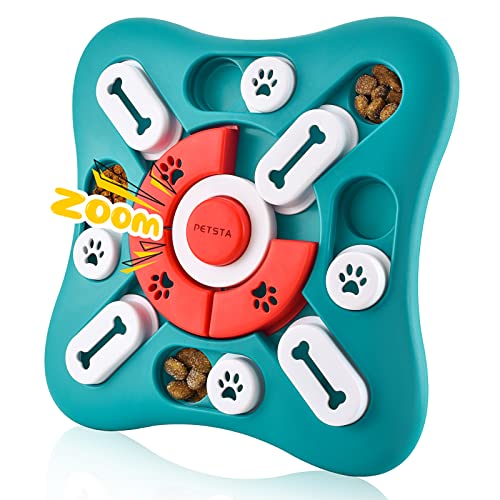
Best Dog Puzzle Toys: Engaging Brain Games for Dogs
Discover how interactive puzzle toys transform your dog's mental health — reducing boredom, preventing destructive behavior, and providing the cognitive challenge every dog craves.
Dogs are intelligent, problem-solving animals. In the wild, they spend hours searching for food, navigating terrain, and responding to environmental challenges. Modern dogs, however, often live lives of predictable routine — the same bowl, the same walk, the same couch. This lack of cognitive challenge is a major cause of boredom, anxiety, and destructive behavior.
Dog puzzle toys bridge that gap. They transform feeding time and playtime into a mental workout, tapping into your dog's natural instincts to sniff, problem-solve, and earn rewards. This guide explains why puzzle toys belong in every dog's routine and how to choose the right ones for your dog's age, size, and experience level.
Why Puzzle Toys Matter for Your Dog
Veterinarians and certified behaviorists consistently recommend environmental enrichment as a core part of responsible dog ownership. Puzzle toys are one of the most efficient forms of enrichment available. They don't replace walks, training, or affection — but they fill a gap that physical exercise alone cannot address.
The key insight is that mental fatigue is real. Fifteen minutes of focused problem-solving can tire a dog out as much as thirty minutes of running. For high-energy breeds that seem to have endless stamina — working dogs, herding breeds, and terriers — puzzle toys offer a way to expend that energy constructively indoors, regardless of weather or schedule.
Did You Know? The American Kennel Club recognizes canine enrichment as an essential component of a dog's overall well-being. Mental stimulation has been linked to reduced anxiety, better weight management, and even slower cognitive decline in senior dogs.
Key Benefits of Mental Stimulation
Reduces Boredom-Related Behaviors
Most "behavior problems" are actually boredom problems. Destructive chewing, excessive barking, digging, pacing, and attention-seeking are all symptoms of a dog with too little to do. Puzzle toys give your dog an appropriate outlet for that energy. If your dog is chewing furniture, a durable chew toy plus a daily puzzle routine can be transformative.
Supports Weight Management
Puzzle feeders slow down fast eaters, reduce the risk of bloat, and make mealtime engaging. Instead of inhaling a bowl of kibble in seconds, your dog works for every piece — a naturally healthier eating pattern that supports weight control.
Builds Confidence in Shy Dogs
For anxious or timid dogs, puzzle toys provide a safe, predictable challenge. Success builds confidence. A dog that learns it can solve a puzzle and earn a reward is a dog that approaches new situations with more curiosity and less fear. This pairs well with techniques from our behavior modification guide.
Slows Cognitive Decline in Senior Dogs
Research consistently shows that mentally active dogs maintain better cognitive function as they age. Puzzle toys are an easy, low-impact way to keep a senior dog's brain sharp — no jumping, no running, just thoughtful problem-solving.
Supports Calm Behavior
A mentally fulfilled dog settles more easily. If your dog struggles with hyperactivity or an inability to relax, daily puzzle sessions can help reduce that "always on" energy. Combined with calming strategies from our calming products guide, puzzle play is a powerful tool.
Strengthens the Human-Dog Bond
Puzzle play is interactive. Watching your dog figure something out, celebrating their success, and helping when they're stuck builds trust and communication — the foundation of any good relationship.
Types of Dog Puzzle Toys
Puzzle toys come in several categories. Understanding the differences helps you pick the right one for your dog's experience level and chewing style.
Treat-Dispensing Balls
The entry point to puzzle toys. Your dog rolls the ball to release kibble or treats. Simple, durable, and satisfying. Ideal for beginners, puppies, and dogs who need to learn the basic "work for food" concept.
Entry-levelSlider & Flip Puzzles
Dogs use their nose or paw to slide, flip, or lift compartments to reveal treats. These are among the most popular designs because they're easy to understand but scalable in difficulty. Look for interactive dog toys with adjustable difficulty levels.
Mid-rangeMulti-Step Logic Puzzles
These require a sequence of actions — for example, lifting a peg, then sliding a cover, then opening a drawer. Designed for experienced puzzle solvers. Multi-step puzzles provide the deepest cognitive challenge and are excellent for intelligent breeds.
PremiumSnuffle Mats & Foraging Toys
These tap into your dog's natural foraging instinct. Kibble is hidden in fabric strands or compartments, and the dog sniffs it out. Excellent for senior dogs, anxious dogs, and anyone wanting a low-intensity, calming enrichment activity.
Budget-friendlyLick Mats & Slow Feeders
Spread wet food, peanut butter, or yogurt onto textured mats to promote licking. Licking is a self-soothing behavior that reduces stress. Pair with a puzzle feeder for a complete enrichment routine. Great for dogs with separation anxiety.
AffordableElectronic & Interactive Puzzles
Battery-operated toys with lights, sounds, or moving parts that respond to your dog's actions. These add a dynamic element that keeps some dogs engaged longer. Best suited to tech-savvy dogs and owners who don't mind replacing batteries.
Top-tierIf your dog is a strong chewer, standard puzzle toys may not survive. Consider treat-dispensing dog toys for aggressive chewers — designed with reinforced materials while still providing puzzle-style engagement.
How to Choose the Right Puzzle
Match Difficulty to Experience
Start easy. A frustrated dog will walk away — or chew the toy out of frustration. Beginners should start with single-action puzzles (roll, lift, or slide). Once your dog solves a puzzle quickly and confidently, move up to two-step or three-step designs. Most quality puzzle ranges offer multiple difficulty levels.
Consider Your Dog's Size and Strength
Small dogs need smaller compartments and lighter materials. Large dogs need durable construction with appropriately sized treat openings. A puzzle that's too small becomes a choking hazard; one that's too large becomes unmanageable for a toy breed.
Think About Chewing Style
Destructive chewers will destroy plastic puzzles within minutes. For these dogs, choose rubber or nylon-based treat dispensers, or puzzle toys explicitly rated for heavy chewers. Always check for a "vet-recommended" or heavy-duty designation.
Assess Your Dog's Motivation
Food-motivated dogs adapt easily to treat puzzles. Toy-motivated dogs may prefer puzzle toys that dispense a ball or squeaker. Dogs who are neither may need you to start with very high-value treats to build the behavior.
Prioritize Safety and Materials
Look for non-toxic, BPA-free materials with no small parts that can be swallowed. Removable pieces should be too large to fit in your dog's mouth. Avoid puzzles with loose squeakers or fragile mechanisms that can be chewed off.
Introducing Puzzles to Your Dog
- Start simple and hungry. Introduce the puzzle before a meal when your dog is food-motivated. Use high-value treats at first, then switch to regular kibble once they understand the concept.
- Let them watch you load it. Place treats in the puzzle in front of your dog so they see the reward going in. This creates immediate interest.
- Let them investigate. Place the puzzle on the floor and let your dog sniff and paw at it. Don't intervene immediately. Give them a few minutes to figure it out.
- Help only when necessary. If your dog is truly stuck, guide their nose or partially open a compartment — but don't solve it for them. The satisfaction of solving is what builds confidence.
- Celebrate success. Praise enthusiastically when your dog succeeds. This reinforces the behavior and makes the puzzle a positive experience.
- Progress gradually. Once a puzzle is solved in under a minute, it's time for a harder one. Keep the challenge just at the edge of your dog's ability.
Safety & Supervision Guidelines
- Supervise new puzzles. Always watch your dog closely when introducing a new puzzle. Some dogs try to chew the puzzle itself when frustrated.
- Inspect regularly. Check puzzles for cracks, loose pieces, or damage before each use. Replace any toy with broken or chewed components immediately.
- Size-appropriate treats. Treats must be small enough to fit the compartments but large enough not to become a choking hazard. Never use treats smaller than a pea for large dogs.
- Remove after play. Put puzzles away when playtime is over. This preserves their novelty and prevents unsupervised chewing.
- Watch for frustration. If your dog whines, barks, or paws frantically at a puzzle without success, step in and simplify. Frustration destroys the benefits of puzzle play.
Pro Tip: Rotate your puzzle collection. Keeping only 2-3 puzzles available at any time and rotating them weekly prevents boredom and makes each puzzle feel new again. This is the same principle used in professional dog training programs.
Common Mistakes to Avoid
- Starting with a puzzle that's too hard. This is the number one mistake. A frustrated dog gives up and never learns the value of puzzle play. Always start easy.
- Leaving puzzles out all the time. Puzzle toys lose their novelty when they're always available. Rotate and store them away between sessions.
- Using low-value treats. If your dog isn't motivated by what's inside, the puzzle won't hold their attention. Start with high-value treats and only downgrade once the behavior is solid.
- Ignoring chewing damage. A puzzle that's being chewed on is either too hard or the wrong material. Replace it with something more appropriate rather than letting your dog destroy it.
- Forgetting physical exercise. Puzzles complement exercise — they don't replace it. Your dog still needs walks, runs, and outdoor activity.
- Not rotating puzzles. Using the same puzzle daily leads to boredom. A rotation system keeps engagement high.
For more foundational training guidance, see our article on common dog training mistakes to ensure your enrichment routine supports the rest of your training efforts.
Frequently Asked Questions
Ready to Give Your Dog a Brain Workout?
Start with one or two quality puzzle toys for dogs suited to your dog's experience level. Keep sessions short, celebrate every success, and rotate toys to maintain engagement. Within a week, you'll notice a calmer, more fulfilled dog — and a healthier bond between you. For a complete enrichment routine, explore our full range of interactive dog toys and pair puzzle play with fetch toys for a balanced physical and mental exercise plan.