Treat Dispensing Dog Toys for Aggressive Chewers
Discover durable, puzzle-style toys that keep powerful chewers mentally engaged, physically satisfied, and safely occupied — without turning your furniture into a chew toy.
If your dog has ever destroyed a "heavy-duty" toy in under ten minutes, you already know the frustration of shopping for chew toys that actually survive. Aggressive chewers are not bad dogs — they are dogs with strong jaws, high energy, and a natural drive to chew. The problem is that most toys on the market are simply not built for them.
Treat dispensing toys solve two problems at once. They give powerful chewers a safe outlet for their chewing instinct, and they provide mental stimulation that tires a dog out far more effectively than physical exercise alone. A dog who has spent twenty minutes working treats out of a durable puzzle toy is often calmer and more content than one who has simply been walked around the block.
This guide explains what makes a treat dispensing toy suitable for aggressive chewers, how the different materials compare, and how to choose, use, and maintain these toys safely. By the end, you will know exactly what to look for — and what to avoid — when shopping for your strong-jawed companion.
Understanding Aggressive Chewers
Before choosing a toy, it helps to understand why some dogs chew so intensely. Chewing is a natural canine behavior. It relieves stress, cleans teeth, satisfies curiosity, and provides an outlet for pent-up energy. For some dogs, it also becomes a self-reinforcing habit when they are bored or under-stimulated.
Why Some Dogs Chew Harder Than Others
- Breed and jaw structure: Breeds like German Shepherds, Rottweilers, Pit Bulls, and other working or guarding breeds often have powerful jaws and a strong drive to chew.
- Age: Puppies chew to relieve teething discomfort, while adolescent dogs chew out of excess energy. Even adult dogs chew when bored or anxious.
- Energy and drive: High-drive dogs need both physical and mental outlets. When those needs are not met, chewing becomes a coping mechanism.
- Stress and anxiety: Dogs who are left alone for long periods or experience changes in their environment may chew to self-soothe.
- Learned behavior: Once a dog discovers that chewing feels good, the behavior reinforces itself. This is why redirection and enrichment matter so much.
Important: Destructive chewing can also signal a medical issue. Dental pain, gastrointestinal discomfort, and some neurological conditions can cause excessive chewing. If your dog suddenly begins chewing obsessively or targets unusual objects, consult your veterinarian. You can also review our guide on teething chew toys for puppies if your chewer is still young.
For dogs with severe anxiety or compulsive chewing, enrichment toys are only one part of the solution. Pair them with professional guidance — our article on when to see a behaviorist explains when it is time to seek expert help, and our guide to behavior modification techniques covers the training side of the equation.
Best Materials for Tough Chewers
The material of a treat dispensing toy determines whether it will survive a powerful chewer — and whether it is safe. Here is how the most common materials compare for aggressive chewers.
Heavy-Duty Natural Rubber
The gold standard for aggressive chewers. Thick, dense rubber resists punctures, flexes under pressure instead of cracking, and is gentle on teeth and gums. Look for toys described as "power chewer" or "aggressive chewer" rated, with thick walls and no thin seams.
mid-range to premiumReinforced Nylon
Extremely tough and long-lasting, nylon handles the most determined chewers. It is harder than rubber, so it offers less give and is not ideal for dogs with sensitive teeth. Choose nylon toys with rounded edges and a size large enough that your dog cannot swallow them.
mid-rangeHard Plastic
Often used for puzzle toys with adjustable difficulty. Hard plastic works for moderate chewers but can crack under sustained pressure from a strong jaw. Only choose plastic toys specifically rated for aggressive chewers, and inspect them frequently for sharp edges.
entry-level to mid-rangeSilicone and Soft Rubber
Soft, flexible, and gentle — but generally not suitable for aggressive chewers. These materials tear and shred relatively easily, creating ingestion risks. They work well for gentle chewers and seniors but should be avoided for dogs that destroy toys quickly.
entry-levelRegardless of material, the toy must be sized correctly. A toy that is too small can be a choking hazard for a large, powerful dog. When in doubt, size up. If you are also shopping for other durable chew options, our guide to vet-recommended dog bones for aggressive chewers covers complementary products that pair well with dispensing toys.
Types of Treat Dispensing Toys
Treat dispensing toys come in several designs, each suited to different chewing styles and difficulty levels. Understanding these categories makes it easier to pick the right one for your dog.
1. Classic Kibble Dispensers
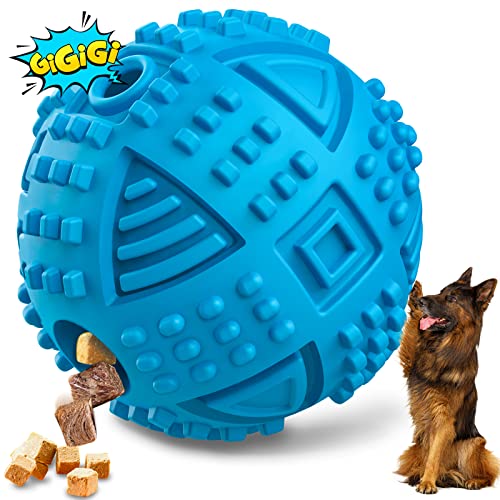
These are hollow, usually barrel- or egg-shaped toys with one or two openings. As the dog rolls, bounces, or chews the toy, kibble falls out. They are ideal for beginners and for dogs who need to burn energy during meals. Most are made from durable rubber and work best with dry food or small treats.
2. Adjustable Puzzle Dispensers
These toys let you change the difficulty level, usually by adjusting an opening or inserting a slider. They are excellent for dogs who master toys quickly, and they allow you to gradually increase the challenge as your dog learns. Many are made from hard plastic or reinforced rubber.
3. Treat-Stuffed Chew Toys
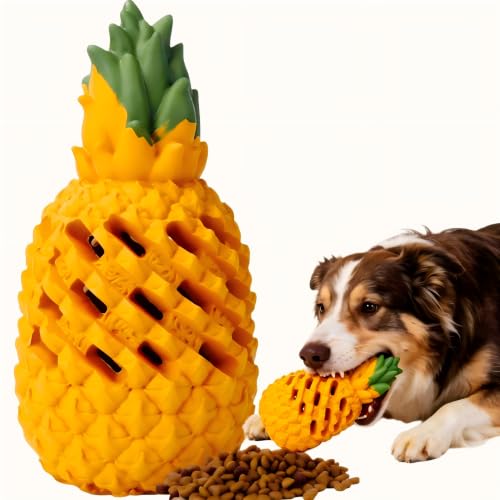
These combine a durable chew toy with a hollow cavity you fill with peanut butter, wet food, or paste. The dog licks and chews to reach the filling. They are especially useful for aggressive chewers because the chewing action itself is the reward. Freezing them makes the challenge last longer.
4. Interactive Maze and Puzzle Toys
These require the dog to manipulate sliders, flip lids, or push compartments to reveal treats. They are less about chewing and more about problem-solving, which makes them a great complement to chew toys. Our guide to interactive dog toys covers this category in more depth.
5. Enrichment Mats and Lick Mats
Not chewing toys in the strict sense, but valuable for calming and enrichment. Spread soft food across the textured surface and let your dog lick. These are best for dogs who need help settling down, and they pair well with chew toys in a daily enrichment routine. See our overview of dog lick mats for options.
Comparison: Which Toy Type Suits Which Chewer?
Use this table as a quick reference when matching a toy type to your dog's chewing intensity and enrichment needs.
| Toy Type | Chew Resistance | Mental Challenge | Best For |
|---|---|---|---|
| Classic Kibble Dispenser | High (dense rubber) | Moderate | Daily meals, moderate to strong chewers |
| Adjustable Puzzle Dispenser | Moderate to high | High | Dogs who master toys quickly |
| Treat-Stuffed Chew Toy | Very high | Low to moderate | Aggressive chewers who need a chewing outlet |
| Interactive Maze Puzzle | Low to moderate | Very high | Calm problem-solvers, supervised play |
| Enrichment / Lick Mat | Low | Low to moderate | Calming, post-exercise settling, seniors |
Many owners find that a rotation of two or three different toy types works better than a single toy. Rotating toys keeps novelty high and prevents boredom, which is often the root cause of destructive chewing in the first place.
How to Choose the Right Toy
Shopping for an aggressive chewer requires more care than picking up any toy from the pet store shelf. Use these criteria to make a confident choice.
- Check the chew rating. Look for explicit labels such as "aggressive chewer," "power chewer," or "tough." If a product does not state a chew rating, assume it is not built for strong jaws.
- Match the size to your dog. Choose a toy large enough that your dog cannot fit it entirely into their mouth. Manufacturers usually list recommended weight ranges — follow them, and size up for extreme chewers.
- Inspect the construction. Look for thick walls, seamless molding, and no small detachable parts. Avoid toys with thin openings, glued joints, or squeakers that can be pulled out.
- Consider the difficulty level. Beginners need larger openings and easier access to treats. Experienced puzzle dogs need adjustable or multi-step designs to stay engaged.
- Think about cleaning. Toys with wide openings and smooth interiors are much easier to wash. Narrow-necked toys can trap food residue and bacteria.
- Read reviews from owners of strong chewers. Reviews from owners of similarly sized, powerful dogs are far more informative than generic ratings.
Pro Tip: Buy two toys of the same type if your dog loves it. One can be in use while the other is being cleaned or frozen. This also lets you rotate them so the toy stays exciting.
If your dog is a moderate chewer rather than an extreme one, a wider range of options opens up. Our broader guide to dog puzzle toys and our collection of chew toys for dogs are good places to compare designs. For dogs who also enjoy chasing and retrieving, a few fetch toys can round out the toy rotation.
Safety Rules and Supervision
No toy is truly indestructible. Even the toughest treat dispensing toy can eventually wear down, and a damaged toy becomes a hazard. Safety depends as much on how you manage the toy as on the toy itself.
- Supervise initial sessions. Watch how your dog interacts with a new toy. Some dogs chew aggressively at the openings, which can cause wear faster than rolling or licking.
- Inspect before and after every use. Check for cracks, tears, missing pieces, and sharp edges. Discard the toy at the first sign of significant damage.
- Remove the toy when it is empty. A bored dog may chew on an empty toy harder than necessary. Take it away once the treats are gone and offer it again later.
- Never leave a chewer unattended with a new toy. Until you know how your dog treats a specific toy, keep sessions supervised. This is especially important for very strong chewers.
- Avoid toys that are too small. A choking hazard is the single biggest risk with aggressive chewers. If the toy can fit fully inside your dog's mouth, it is too small.
- Watch for ingestion. If your dog swallows pieces of any toy, contact your veterinarian immediately. Signs of obstruction include vomiting, lethargy, and loss of appetite.
Keep a first aid kit ready. Minor cuts and scrapes can happen during enthusiastic play. A well-stocked dog first aid kit helps you respond quickly, and knowing basic pet first aid gives you confidence in an emergency.
Creative Ways to Fill the Toys
The filling you choose affects both the challenge level and the safety of the toy. Here are practical options that work well for aggressive chewers.
Simple, Low-Mess Fillings
- Dry kibble: The classic choice. Works best in dispensers with adjustable openings, and it is easy to clean out afterward.
- Small training treats: Great for high-value rewards and for dogs who need extra motivation to engage with the toy.
- Freeze-dried meat pieces: Lightweight, aromatic, and highly motivating. Use sparingly as a special-occasion filling.
Longer-Lasting Fillings
- Peanut butter (xylitol-free): A favorite for stuffed chew toys. Always check the label — xylitol is extremely toxic to dogs.
- Canned or wet dog food: Easy to stuff and highly palatable. Freeze the toy afterward to extend the challenge.
- Plain cooked chicken or fish: A high-value filling for dogs who need extra encouragement. Mash it into the toy and freeze.
- Dog-safe broth: Pour a small amount into the toy and freeze. A refreshing option in warm weather.
Whatever you use, keep portions small. Treat dispensing toys are meant to supplement meals, not replace them, and overfilling can lead to weight gain. If your dog has dietary restrictions, our guide to dog diet fundamentals can help you keep treats balanced. For general treat options, see our collection of dog treats.
Cleaning and Maintenance
Treat dispensing toys get dirty quickly. Food residue left inside a toy can grow bacteria and cause digestive upset. A simple cleaning routine keeps toys hygienic and extends their lifespan.
- Rinse after each use. Warm water flushes out loose crumbs and prevents food from hardening inside the toy.
- Wash thoroughly at least weekly. Use warm water and mild dish soap. A bottle brush helps reach inside narrow toys.
- Check dishwasher safety. Some rubber and nylon toys are top-rack dishwasher safe. Always confirm with the manufacturer's instructions before dishwashing.
- Air-dry completely. Moisture trapped inside a toy can encourage mold. Shake out excess water and leave the toy to dry fully before the next use.
- Inspect while cleaning. Cleaning is the perfect time to check for damage. Remove any toy that is cracked, torn, or missing pieces.
Keeping toys clean is part of general hygiene, alongside other routine care. If you are building out a full care kit, our dog grooming kit guide and our list of dog grooming tools cover the essentials.
Common Mistakes to Avoid
Even experienced owners make these mistakes when shopping for aggressive chewers. Avoiding them saves money — and protects your dog.
- Assuming "indestructible" means forever. No toy lasts indefinitely under a powerful jaw. Regular inspection and replacement are part of responsible ownership.
- Buying a toy that is too small. Size is the most common safety error. Always size up for strong chewers.
- Using food fillings that are toxic. Peanut butter containing xylitol, chocolate, grapes, and onions are all dangerous. Read labels carefully.
- Leaving a chewer alone with a damaged toy. Once a toy shows cracks or tears, it becomes an ingestion hazard. Discard it immediately.
- Relying on a single toy. One toy quickly becomes boring. Rotation keeps enrichment fresh and reduces destructive behavior.
- Ignoring underlying behavior issues. A treat dispensing toy is an enrichment tool, not a cure for anxiety or severe behavior problems. Pair it with proper training and professional guidance when needed.
Building a routine: Use a treat dispensing toy during times your dog is most likely to chew — after meals, before walks, or when you leave the house. A predictable enrichment schedule reduces boredom-based chewing more effectively than sporadic toy use. If your dog struggles with being alone, our guide on things to help with separation anxiety in dogs is a useful companion read.
Frequently Asked Questions
Ready to Choose?
The right treat dispensing toy can transform your aggressive chewer's daily routine. Focus on three things: a chew rating that matches your dog's strength, a size large enough to prevent choking, and a material that suits your dog's chewing style. Rotate a small collection of toys, clean them regularly, and always supervise new introductions. With those habits in place, your dog gets a safe, satisfying outlet for their natural instincts — and your furniture gets a break.