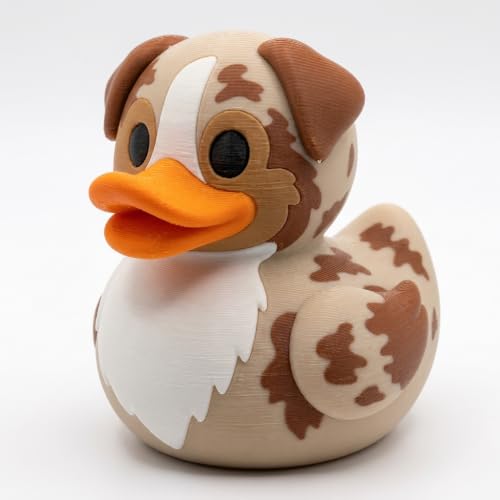
Red Merle Australian Shepherd
A complete guide to the striking red merle coat, the loyal and intelligent temperament behind it, and what every owner must know about health, exercise, and care for this remarkable herding breed.
The Red Merle Australian Shepherd is one of the most visually striking dogs in the herding group—a living mosaic of rust, copper, cream, and white that makes every individual look like a one-of-a-kind work of art. But beneath that eye-catching coat is a working dog with serious needs: a sharp mind, boundless energy, and a deep desire to be part of a family.
If you are researching this breed, you likely already know you want an Aussie. What you need now is clarity on whether a red merle specifically fits your life, what health risks are real versus exaggerated, and how to avoid the common pitfalls that lead so many of these brilliant dogs into rescue. This guide answers those questions directly, without the fluff.
What Is a Red Merle Australian Shepherd?
A Red Merle Australian Shepherd is not a separate breed—it is an Australian Shepherd with a specific coat color pattern. The "red" refers to a liver or chocolate base pigment, and "merle" describes the marbled, patchwork dilution of that pigment. The result is a coat with irregular swirls of diluted red and cream alongside fully saturated liver-colored patches [citation:1][citation:16].
Red merle is one of four standard colors recognized by the American Kennel Club for Australian Shepherds, alongside black, red, and blue merle. The breed itself is a medium-sized herding dog developed in the American West, known for its intelligence, work ethic, and intense loyalty [citation:2]. Despite the name, the breed's ancestors came largely from Europe, with the "Australian" label tied to Basque shepherds who arrived via Australia in the 19th century [citation:1][citation:6].
Key Distinction: A red merle is a liver-colored dog with the merle pattern. A blue merle is a black dog with the merle pattern. A solid red Aussie has the liver base color but no merle dilution. All three can appear in the same litter depending on the parents' genetics [citation:9][citation:13].
Appearance & Coat Genetics
The red merle coat is produced by the merle gene, an incompletely dominant variant that creates random patches of diluted pigment. A dog needs only one copy of the merle gene to display the pattern. The red or liver base color is recessive to black, which is why red merles are less common than blue merles in the general Aussie population [citation:1][citation:20].
Red merles typically have liver-colored noses, eye rims, and lips—matching their base pigment rather than the black pigment seen on blue merles [citation:12][citation:17]. White markings on the chest, muzzle, paws, and sometimes a blaze on the face are common and accepted in the breed standard, though excessive white around the eyes and ears is undesirable [citation:17].
Eye color is another distinctive feature. Australian Shepherds are famous for heterochromia—two differently colored eyes—and red merles frequently display combinations of blue, amber, hazel, and brown [citation:1][citation:5]. A blue eye in a red merle is purely cosmetic; it does not indicate a vision problem on its own.
Red Merle vs. Blue Merle: A Quick Comparison
| Feature | Red Merle | Blue Merle |
|---|---|---|
| Base pigment | Liver / red / chocolate | Black |
| Pattern | Marbled rust, cream, copper patches | Marbled gray, slate, black patches |
| Nose & eye rims | Liver-colored (brownish) | Black |
| Relative frequency | Less common | More common |
| Temperament | Identical — coat color does not affect personality | |
Temperament & Personality
Coat color has zero influence on temperament. A Red Merle Australian Shepherd is, first and foremost, an Australian Shepherd—and that means a dog with a powerful work drive, high intelligence, and a tendency to bond intensely with its people [citation:1][citation:2].
These are not casual companion dogs. Aussies were bred to think independently while herding livestock, which means they are problem-solvers who will find their own entertainment if you do not provide structure. A bored red merle may redecorate your furniture, patrol your backyard obsessively, or herd your children with enthusiastic (and sometimes nippy) circles [citation:2][citation:18].
With proper training and exercise, they are affectionate, playful, and deeply loyal. They tend to be reserved with strangers and protective of their territory, making them excellent watchdogs without being overtly aggressive [citation:6][citation:14]. Early socialization is essential to prevent suspicion from turning into fear or reactivity.
- Intelligence: Among the smartest of all breeds—they learn quickly but also learn unwanted behaviors just as fast.
- Loyalty: Form strong attachments and want to be with their family constantly; not suited to being left alone for long hours.
- Herding instinct: Strong and instinctive—expect attempts to herd children, other pets, and even cars if not managed.
- Energy level: High. A tired Aussie is a good Aussie; an under-exercised one is a challenge.
- Reserved with strangers: Natural watchdog tendency, not aggression—but requires socialization to stay balanced.
Reality Check: If you work long hours away from home, live in a small apartment without access to off-leash exercise, or want a dog that is content to sleep all day, an Australian Shepherd—of any color—is likely not the right match. This breed needs a job, or at minimum a dedicated owner who provides daily physical and mental work.
Exercise & Mental Stimulation
The single most common reason Australian Shepherds end up in rescue is unmet exercise and stimulation needs [citation:2]. A Red Merle Aussie needs a minimum of one to two hours of vigorous daily activity, and that is a baseline—not a maximum.
Physical exercise alone is not enough. This is a thinking breed that needs to solve problems. A one-hour walk on a predictable route satisfies the body but leaves the mind restless. Combine physical activity with training, puzzle toys, scent games, or dog sports to truly tire your dog out [citation:2][citation:18].
- Daily walks and hikes: At least 60 minutes of vigorous walking, ideally with varied terrain and sniffing opportunities. Once fully grown, many Aussies make excellent running partners [citation:2].
- Off-leash running: A securely fenced yard or safe open space where your dog can sprint and change direction at full speed. Fetch and Frisbee are ideal.
- Mental work: Short training sessions, puzzle toys, snuffle mats, or frozen food toys. Ten minutes of focused thinking can be as tiring as thirty minutes of running.
- Dog sports: Agility, herding trials, rally obedience, and dock diving are natural outlets for the Aussie's drive and intelligence. These dogs excel when given a structured "job."
- Herding games: If you do not have livestock, structured games that mimic herding—like chasing a ball with direction changes—can satisfy the instinct in a controlled way.
Training & Socialization
Australian Shepherds are exceptionally trainable—and exceptionally good at training their owners. Their intelligence means they notice every inconsistency, every loophole, and every moment you are not paying attention. Consistency is not optional with this breed.
Start training the day your puppy comes home. Basic commands like sit, stay, come, and leave it are safety essentials, but the real work is teaching your dog to look to you for direction in distracting environments. Aussies who are not taught to check in with their handler can become overly independent and difficult to recall.
- Positive reinforcement: Reward-based training works best for this sensitive, eager-to-please breed. Harsh corrections can damage trust and create anxiety.
- Early socialization: Expose your puppy to varied people, dogs, sounds, and environments during the critical window (roughly 3–16 weeks). This prevents the suspicion and reactivity that under-socialized Aussies often develop.
- Impulse control: Teach waiting at doors, leaving food, and ignoring distractions. Herding dogs need to learn when not to act on instinct.
- Bite inhibition: The herding instinct often manifests as nipping at heels and fast-moving objects. Redirect to toys and teach that teeth on skin are never acceptable.
- Ongoing enrichment: Training never stops. Even a well-trained adult benefits from new tricks, advanced commands, or competitive sports.
If you are struggling with reactivity, resource guarding, or aggression, do not wait—consult a qualified behavior professional. Early intervention prevents small problems from becoming dangerous ones. Our guide on when to see a behaviorist can help you decide if professional support is needed.
Health Risks & Genetic Testing
Here is where the red merle conversation gets serious. The merle gene itself is not a health problem—a dog with one copy of the merle gene is a normal, healthy dog with a patterned coat. The danger comes from breeding two merle dogs together.
When two merles are bred, each puppy has a 25% chance of inheriting two copies of the merle gene—a "double merle." Double merles are often predominantly white and have a dramatically increased risk of deafness, blindness, and severe eye malformations including microphthalmia (abnormally small eyes), colobomas, and detached retinas [citation:7][citation:9][citation:19].
Critical Breeding Rule: A merle dog should only ever be bred to a non-merle dog (solid black, solid red, or a dog with no merle gene). Responsible breeders DNA-test breeding stock and never pair merle to merle. If a breeder tells you they bred two merles "for the color," walk away [citation:8][citation:12].
Beyond merle genetics, Australian Shepherds are generally healthy but have several inherited conditions that responsible breeders screen for [citation:2][citation:4]:
- Hip and elbow dysplasia: Screened via X-rays; breeding dogs should have passing scores.
- Hereditary eye conditions: Including progressive retinal atrophy (PRA), cataracts, and collie eye anomaly (CEA). Annual ophthalmologist exams are recommended.
- MDR1 gene mutation: Causes sensitivity to certain medications including ivermectin and some chemotherapy drugs. A simple DNA test identifies carriers and affected dogs so medication can be adjusted safely.
- Epilepsy: Idiopathic epilepsy occurs in the breed; ask about seizure history in the pedigree.
- Deafness: Congenital deafness can occur in merle dogs; BAER testing is recommended for all puppies from merle parents.
If you are buying a puppy, ask to see original health certificates for both parents—not just claims of testing. Our questions to ask a dog breeder guide covers exactly what documentation to request.
Grooming & Coat Care
The Australian Shepherd's double coat is weather-resistant and moderately long, with a dense undercoat that sheds heavily—especially during seasonal coat blows in spring and fall. The red merle pattern does not require different grooming than any other Aussie coat, but the lighter patches can show dirt more readily [citation:2][citation:14].
- Weekly brushing: Use a slicker brush and undercoat rake to prevent mats and remove loose hair. During shedding season, brush every two to three days.
- Bathing: Every 6–8 weeks unless your dog gets into something messy. Over-bathing strips natural oils; use a dog-specific shampoo.
- Nail trimming: Every 2–4 weeks. Long nails affect gait and joint health, especially in an active breed.
- Ear cleaning: Weekly, especially if your dog swims or has floppy ears that trap moisture.
- Dental care: Brush teeth several times weekly to prevent periodontal disease, which is common in the breed.
Never shave an Australian Shepherd's coat unless medically necessary. The double coat insulates against both heat and cold, and shaving can permanently damage regrowth and impair temperature regulation.
Choosing a Red Merle Puppy
Because red merle is less common than blue merle or black, you may encounter breeders charging a "rare color" premium. This is a red flag. Color is not quality, and a responsible breeder prices based on health testing, temperament, and pedigree—not coat pattern [citation:8].
When evaluating a litter, ask these questions:
- Were the parents DNA-tested for the merle gene? At least one parent must be a proven non-merle. A visual check is not enough—cryptic merles can carry the gene without showing it.
- Have both parents had BAER hearing tests and current eye exams? Certificates should be available for review.
- Were hip and elbow scores completed? Ask for the actual scores, not just a verbal assurance.
- What is the MDR1 status of the parents? This affects medication safety for the puppy throughout its life.
- Can you meet the puppy's mother and see the rearing environment? Puppies raised in a home with household sounds and handling are better prepared for life.
- Is there a written contract with a health guarantee and take-back clause? Reputable breeders will always take their dogs back rather than see them end up in a shelter.
For a more detailed breakdown, see our puppy visit checklist and guide to finding a reputable dog breeder. Avoid anyone who pressures you to buy immediately, refuses to show health documents, or has multiple litters of different breeds available at all times—these are common signs of backyard breeding operations.
Frequently Asked Questions
The Bottom Line on Red Merle Australian Shepherds:
The coat is stunning, but it should never be the reason you choose this breed. A red merle Aussie is a serious working dog in a beautiful package—intelligent, energetic, and deeply loyal to owners who earn that loyalty through consistent training and daily investment. If you can meet those needs, you will have one of the most rewarding canine partners available. If you cannot, this breed will quickly become a source of frustration for both of you. Choose with your head, not just your eyes.