
Wireless Pet Containment System for Small Dogs
A complete guide to keeping your tiny companion safe and free to roam — without a buried fence. Learn how wireless containment works, what features matter for small breeds, and how to train your dog safely.
Small dogs bring immense joy into our lives — but their size also makes them vulnerable. A tiny Chihuahua or a nimble Yorkie can slip through gaps, dart out an open door, or wander off in seconds. For owners who want to give their small dog freedom to play outdoors without the expense and hassle of a physical fence, a wireless pet containment system for small dogs can be an excellent solution.
But small dogs have unique needs. Their lighter body weight, thinner skin, and sensitive temperament mean that a system designed for a 90-pound Labrador may not be appropriate for a 6-pound companion. This guide explains exactly how wireless containment works, what to prioritize when shopping, and how to introduce the system so your small dog stays safe, confident, and stress-free.
What Is a Wireless Pet Containment System?
A wireless pet containment system — sometimes called a wireless dog fence — creates an invisible boundary around your home without any buried wires. A central transmitter broadcasts a radio signal in a circular or adjustable pattern. Your dog wears a lightweight receiver collar that detects the signal strength. As your dog approaches the boundary, the collar emits a warning tone or vibration. If they continue forward, a mild static correction reminds them to turn back.
Unlike traditional in-ground fences, a wireless system installs in minutes. You simply plug in the transmitter, set the boundary radius, fit the collar on your dog, and begin training. The boundary can be adjusted to suit your yard size and your dog's exercise needs. Many systems allow you to create a safe zone as small as a few feet or as large as several acres, depending on the model.
For small dogs, the appeal is clear: no digging, no wire breaks, no professional installation. You can set up a containment area in a weekend and give your small dog supervised outdoor freedom. If you are also considering a traditional option, our guide to dog fences covers the broader landscape of containment choices.
Why Small Dogs Need a Different Approach
Not all containment systems are created equal — and what works for a German Shepherd may be inappropriate for a Miniature Pinscher. Here is why small dogs require special consideration:
- Lower body weight: Static correction levels that are mild for a large dog can feel intense for a 5-pound dog. Small dogs need collars with very low correction settings or vibration-only modes.
- Thinner skin and shorter necks: Contact points must be short and properly fitted. Long or poorly fitted prongs can cause skin irritation or pressure sores.
- Higher sensitivity: Small breeds are often more sensitive to environmental stimuli and training pressure. A harsh correction can create fear or anxiety that undermines training.
- Escape artistry: Small dogs can squeeze through gaps that larger dogs cannot. They also tend to be faster and more agile, so the boundary must be reliable.
- Predator risk: Hawks, owls, and larger dogs pose a real threat to small dogs. A containment system keeps your dog in, but it does not keep predators out. Supervision remains essential.
Important: A wireless containment system is a training tool, not a substitute for supervision. Small dogs should never be left outdoors alone for extended periods, regardless of the containment system used.
If your small dog is prone to anxiety or has a sensitive temperament, you may also want to explore small dog breeds that don't have separation anxiety to better understand your dog's emotional needs before introducing a containment system.
How Wireless Systems Work
Understanding the mechanics helps you choose the right system and train your dog effectively. Here is the basic flow:
- The transmitter: A base unit plugs into a standard outlet and broadcasts a radio signal. The signal strength determines the boundary radius. Most systems allow you to adjust the radius from a small indoor zone to a large outdoor area.
- The receiver collar: Your dog wears a collar with a receiver that detects the signal. The collar is battery-powered (rechargeable or replaceable) and waterproof on most modern models.
- Warning zone: As your dog enters the outer edge of the boundary, the collar emits a warning tone or vibration. This is the dog's cue to turn back.
- Correction zone: If your dog continues past the warning zone, the collar delivers a static correction. The intensity is adjustable and should be set to the lowest effective level for your dog.
- Return to safety: When your dog moves back inside the boundary, the correction stops. Consistent training teaches your dog that turning back is the right choice.
Some advanced systems use GPS instead of radio signals, allowing you to draw custom boundaries on a smartphone app. These are often more flexible but may have a slight lag in correction timing. For small dogs, radio-frequency systems with precise, adjustable boundaries are usually the most reliable choice.
If you want to understand the receiver component in more detail, our guide to the wireless pet containment system receiver collar breaks down collar features, battery life, and fit considerations.
Key Features for Small Dogs
When shopping for a wireless containment system for a small dog, prioritize these features:
Collar Fit & Weight
- Lightweight receiver: Look for a collar under 3 ounces. Heavy collars can be uncomfortable and may cause neck strain in tiny breeds.
- Adjustable strap: The collar should fit snugly but not tightly — you should be able to fit two fingers between the strap and your dog's neck.
- Short contact points: Small dogs need shorter prongs to reach the skin without pressing too hard. Some systems offer interchangeable contact points.
- Waterproof design: Essential if your dog will be outdoors in rain or near water.
Correction & Warning Modes
- Vibration-only mode: Ideal for very small or sensitive dogs. The vibration serves as a warning without any static correction.
- Adjustable static levels: Choose a system with multiple low-level settings. Start at the lowest level and increase only if necessary.
- Tone warning: A clear audible warning gives your dog a chance to turn back before any correction.
- Safety time-out: Some systems stop correcting after a set period if your dog does not return, preventing prolonged correction.
- Adjustable boundary radius: A system with a wide range of radius settings lets you create a small, safe zone for a tiny dog and expand it as training progresses.
- Multi-dog support: If you have more than one dog, choose a system that supports multiple receiver collars.
- Rechargeable batteries: Rechargeable collars save money over time and are more convenient than replacing batteries frequently.
- Clear training guide: A good system includes a step-by-step training manual and boundary flags. Training is the most important part of successful containment.
- Customer support: Look for a manufacturer with responsive support in case you have questions about setup or training.
For a broader look at containment options, including in-ground systems, see our guide to the wireless underground fence.
Wireless vs. In-Ground Fences
Both wireless and in-ground systems use a receiver collar and correction-based training, but they differ in installation, flexibility, and reliability. Here is a comparison:
| Feature | Wireless System | In-Ground Fence |
|---|---|---|
| Installation | Plug in transmitter; no digging | Requires burying wire around perimeter |
| Boundary Shape | Circular or adjustable (depending on model) | Custom shape following the wire |
| Setup Time | Minutes to hours | A full day or professional installation |
| Portability | Easy to move to a new location | Difficult to relocate |
| Signal Interference | Can be affected by metal buildings or dense terrain | Wire can break or be damaged by digging |
| Best For | Renters, small yards, temporary setups, indoor use | Large properties, complex boundary shapes, permanent setups |
| Small Dog Suitability | Excellent if collar fits well and correction levels are low | Excellent with proper collar fit and training |
For most small dog owners with a typical suburban yard, a wireless system offers the best balance of convenience, affordability, and flexibility. In-ground systems are better suited to large properties where a custom boundary shape is necessary.
Training Your Small Dog Safely
The success of any containment system depends far more on training than on the technology. A dog who does not understand the boundary will test it — and a small dog who panics at a correction may bolt. Follow these steps carefully:
- Start with the collar off: Let your dog wear the receiver collar (turned off) for several days before training begins. Pair it with treats and praise so the collar becomes a positive object.
- Introduce the warning tone: With the transmitter on but the correction level at zero, walk your dog toward the boundary on a leash. When the warning tone sounds, turn and walk back inside, rewarding your dog. Repeat until your dog anticipates the turn.
- Add the vibration or lowest correction: Once your dog reliably turns at the tone, set the collar to vibration or the lowest static level. Repeat the same leash training. Your dog should show a mild reaction (ear flick, pause) but not fear.
- Practice with distractions: Gradually add distractions — toys, treats on the ground, other people — while keeping your dog on a long leash. This builds reliability in real-world conditions.
- Supervised off-leash time: Only after weeks of consistent success should you allow supervised off-leash time in the containment area. Stay outside with your dog and reward them for staying inside.
- Never rush: Every dog learns at their own pace. Small dogs may need extra time because they are often more sensitive to correction. If your dog shows fear or stress, go back to an earlier step.
Training Tip: Use high-value treats and keep sessions short — 10 to 15 minutes, two to three times per day. End every session on a positive note. If your dog seems overwhelmed, stop and try again later.
For general training guidance, our dog training section covers positive reinforcement techniques that work well alongside containment training.
If your small dog struggles with training or shows signs of anxiety, consider consulting a professional. Our guide on when to hire a trainer can help you decide if professional help is right for your situation.
Safety Concerns & Precautions
Wireless containment systems are safe when used responsibly. However, small dogs require extra caution. Keep these points in mind:
- Consult your vet first: Dogs with heart conditions, epilepsy, pregnancy, or very young puppies should not wear a static correction collar without veterinary approval.
- Check the fit daily: A loose collar can rotate, causing the contact points to press into the throat. A tight collar can cause discomfort. Check for redness or irritation at the contact points.
- Remove the collar indoors: Unless you are using the system indoors, remove the receiver collar when your dog is inside. This prevents unnecessary wear and reduces the risk of skin irritation.
- Never use as the sole restraint: A containment system does not physically prevent your dog from leaving. A determined or panicked dog may run through the boundary. Always supervise, especially during the first months.
- Battery failure: If the receiver battery dies, the collar may stop working. Check the battery regularly and keep a spare on hand.
- Signal interference: Metal buildings, dense trees, and certain electronics can distort the signal. Test the boundary regularly by walking the perimeter with the receiver collar in hand.
Emergency Preparedness: Keep your dog's ID tags and microchip information up to date. If your dog does escape, a visible ID and a registered microchip are the fastest ways to get them back. Consider a GPS tracker as a backup safety measure for escape-prone small dogs.
What to Look For When Buying
With so many systems on the market, it helps to categorize them by tier. Here is a general framework for comparing options:
- Entry-level systems: Basic functionality with a fixed or limited number of boundary settings. Often include a single receiver collar with tone and static correction. Suitable for calm, easy-to-train small dogs in a simple yard layout.
- Mid-range systems: More adjustable boundary radius, multiple correction levels, vibration-only mode, and often support for multiple dogs. These systems usually offer better collar fit options for small breeds and more reliable signal stability.
- Premium systems: Advanced features such as custom boundary shapes, smartphone app control, GPS tracking, and detailed training support. These are ideal for owners who want maximum flexibility and are willing to invest in a more sophisticated setup.
Regardless of tier, prioritize a lightweight receiver collar with short contact points, adjustable low correction levels, and a clear training guide. The best system is the one your small dog can wear comfortably and learn to respect without fear.
For a closer look at how wireless systems compare to underground options, revisit our wireless underground fence guide. And if you are also considering a physical dog door to give your small dog indoor-outdoor access, our article on dog doors covers options that work well with containment systems.
Top Wireless Pet Containment Systems for Small Dogs
⚠️ AFFILIATE DISCLOSURE: This website contains affiliate links. As an Amazon Associate, we earn from qualifying purchases. If you make a purchase through these links, we may receive a small commission at no additional cost to you. Read our full affiliate policy.

PetSafe Wireless Dog Fence System, Up To 1/2 Acre | Wireless Fence, Tone & Static Correction, Proprietary Circular Boundary with No Wire, Static-Free Re-Entry, Dogs 8 lb+
Check price on Amazon
PetSafe Wireless Pet Containment System Collar | Collar Only, Replacement, Extra, Add-A-Dog to PetSafe Wireless Fence, Waterproof, Tone & Static, Pets 8 lb+, Neck 6-28 in
Check price on Amazon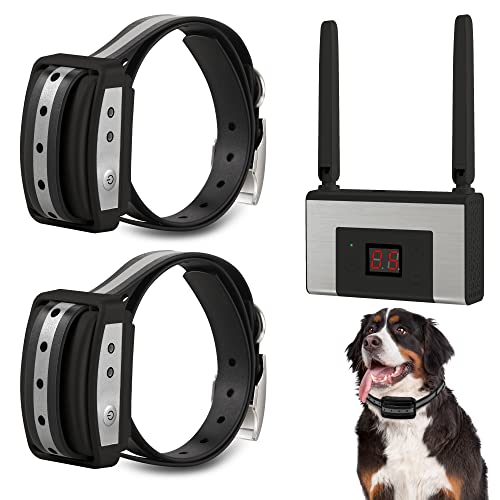
FOCUSER Electric Wireless Dog Fence System, Pet Containment System for 2 Dogs and Pets with Waterproof and Rechargeable Collar Receiver for 2 Dog Container Boundary System (Black)
Check price on Amazon
PetSafe Stay & Play Compact Wireless Dog Fence, Up to 3/4 Acre | No-Dig, Portable Boundary Fence for Dogs 5 Lb and up, LCD Display Shows Play Area Range
Check price on Amazon
Htcuto Wireless Dog Fence for 2 Dogs - Multi-Mode Electric Dog Fence | 2-in-1 Long Range Wireless Pet Containment System & Remote Dog Training Collar, Adjustable Range for Large & Medium Dogs
Check price on Amazon
2 In1 Wireless Dog Collar Fence System & Training Collar | Electric Fence for Dogs Remote Range 25-3500ft, 4 Training Modes Waterproof Pet Containment for Dogs
Check price on Amazon
GPS Wireless Dog Fence System, Custom & Circular Boundary, No Subscription | Dual Mode GPS Collar Fence, Outdoor Use Pet Containment System, 6561FT Radius Range, Rechargeable, IPX7 for Medium Large Dogs
Check price on Amazon
MIMOFPET Wireless Dog Fence for Small Dogs- Up to 3500ft Adjustable Electric Fence,Waterproof Training Collar Rechargeable,Pet Containment System for Small Breed
Check price on AmazonFrequently Asked Questions
Final Thoughts: A wireless pet containment system can give your small dog the freedom to explore safely while giving you peace of mind. The key is choosing a system designed for small breeds, fitting the collar correctly, and investing time in patient training. With the right approach, your tiny companion can enjoy the outdoors without the risk of wandering off.