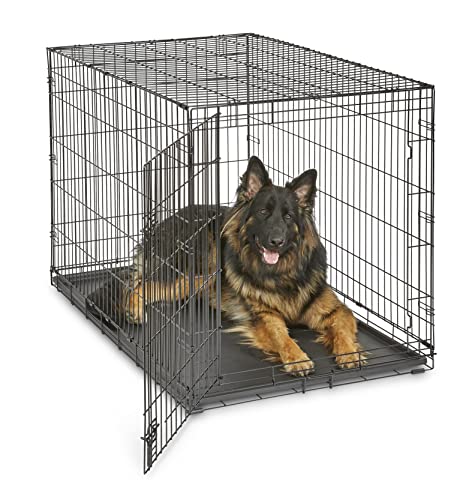
X-Large Dog Crates: The Complete Buying Guide
Everything you need to choose a safe, comfortable, and durable crate for your large or giant breed dog — from sizing and materials to escape-proof features and training tips.
If you share your home with a large or giant breed dog, you already know that standard crates simply do not cut it. A crate that is too small restricts movement, causes stress, and can even lead to injury. An x-large dog crate gives your big dog room to stand, turn, and stretch out — which is essential for their physical and mental well-being.
But choosing the right x-large crate is not as simple as grabbing the biggest box on the shelf. Size, material, ventilation, security, and portability all matter. This guide breaks down everything you need to know so you can make a confident, informed purchase. Whether you are crate training a new puppy that will grow into a giant, or upgrading an adult dog's setup, the principles here apply.
Why Large Dogs Need X-Large Crates
Crates serve several important purposes for dogs of all sizes: they provide a safe den-like space, aid in house training, prevent destructive behavior when unsupervised, and offer a secure spot during travel or emergencies. For large and giant breeds, however, the stakes are higher.
- Physical comfort: A dog must be able to stand upright, turn around without crouching, and lie down fully stretched out. Anything less causes chronic discomfort and can lead to joint problems over time.
- Behavioral health: Cramped crates cause anxiety, which manifests as whining, chewing, digging, and escape attempts. An appropriately sized crate reduces stress and makes crate time a positive experience.
- Safety and containment: Large dogs are strong. A flimsy crate will not hold a determined Great Dane or German Shepherd. X-large crates built for big breeds are reinforced to withstand pressure and prevent injury.
- Travel and vet visits: Many airlines and veterinary clinics require crates sized appropriately for the dog. An x-large crate ensures your dog travels safely and legally.
- Recovery and rest: After surgery or injury, restricted movement in a properly sized crate aids healing. A crate that is too small prevents proper rest and recovery.
Important: The crate should never be used as punishment. It must always be associated with positive experiences — treats, meals, toys, and calm praise. A dog who loves their crate is a dog who feels safe.
How to Measure & Size Your Crate
Getting the size right is the single most important decision when buying an x-large crate. Too small and your dog suffers; too large and the crate loses its den-like security (and may not fit in your home or vehicle).
Step-by-Step Measurement
- Measure height: Have your dog stand naturally. Measure from the floor to the top of their head (or the highest point of their ears). Add 2-4 inches for clearance.
- Measure length: Measure from the tip of your dog's nose to the base of their tail while standing. Add 2-4 inches so they can lie down stretched out.
- Measure width: Measure the widest part of your dog's body (usually the shoulders or hips). Add 2-3 inches so they can turn around comfortably.
- Check weight rating: Most x-large crates are rated for dogs 70-90 lbs. If your dog is over 90 lbs, look for XX-large or giant breed crates rated for 90-150 lbs.
Standard Crate Size Chart
| Crate Size | Typical Dimensions (L x W x H) | Dog Weight Range | Example Breeds |
|---|---|---|---|
| Large (L) | 36" x 24" x 27" | 50-70 lbs | Border Collie, Boxer, Labrador (female) |
| X-Large (XL) | 42" x 28" x 30" | 70-90 lbs | German Shepherd, Golden Retriever, Rottweiler |
| X-Large (XL) Long | 48" x 30" x 33" | 80-110 lbs | Labrador (male), Bernese Mountain Dog, Malamute |
| XX-Large / Giant | 54" x 35" x 37" | 110-150+ lbs | Great Dane, Mastiff, Saint Bernard, Irish Wolfhound |
Keep in mind that these are guidelines. A tall, lanky dog like a Greyhound may need a taller crate than a heavier but shorter breed. Always measure your individual dog rather than relying solely on weight.
Puppy Growth Tip: If you are buying a crate for a puppy that will grow into a large breed, buy the adult size now and use a divider panel to section off the extra space. This gives the puppy a snug area while saving you from buying multiple crates as they grow.
Types of X-Large Dog Crates
X-large crates come in several styles, each with distinct advantages and trade-offs. Understanding these differences will help you match the crate to your lifestyle and your dog's needs.
Wire Metal Crates
The most common and versatile option. Excellent ventilation and visibility let your dog see and feel part of the family. Most fold flat for storage and transport. Look for thick-gauge wire and dual latches on x-large models, as large dogs can bend flimsier cages. Best for home use and crate training.
mid-tier to premiumPlastic Airline Crates
Enclosed, den-like design appeals to many dogs and reduces anxiety. Required for air travel. Easy to clean and wipe down. However, they offer less visibility, can feel hot in warm weather, and some large breeds can crack cheaper plastic shells. Choose heavy-duty models with metal hardware for big dogs.
mid-rangeSoft-Sided Crates
Lightweight, portable, and easy to carry — ideal for travel and camping. But soft crates are generally not escape-proof and are unsuitable for strong chewers or dogs prone to anxiety. For most large dogs, soft crates are best used as temporary travel beds, not primary containment.
entry-level to mid-tierHeavy-Duty / Escape-Proof Crates
Built with reinforced steel bars, welded frames, and secure locking mechanisms. Designed for determined escape artists and very powerful breeds. Usually the heaviest and least portable option, but the safest for dogs who have broken out of standard crates. A top-tier investment for peace of mind.
premium to luxuryFurniture-Style Crates
Wood or wood-look crates that double as end tables or TV stands. Great for blending into your home decor, especially in living rooms. Internally they use standard metal crate construction. Heavier and harder to move, and wood can be chewed by determined dogs. Best for calm, crate-trained adults.
premiumHybrid / Canvas-and-Frame Crates
Combine a metal frame with canvas or fabric walls. Lighter than all-metal crates but more structured than soft-sided options. Good for travel and indoor use with dogs who are not heavy chewers. Check that zippers and seams are reinforced for large-dog strength.
mid-rangeMaterials & Build Quality
For large and giant dogs, build quality is not a luxury — it is a safety requirement. A cheap crate can bend, break, or collapse under the weight and strength of a big dog, leading to injury or escape.
What to Look For
- Wire gauge: The lower the gauge number, the thicker the wire. X-large crates for big dogs should use 8- to 10-gauge wire, especially on the door and latches. Thin 12-gauge wire may be fine for a Chihuahua but not a Rottweiler.
- Welds and joints: Look for smooth, fully welded joints rather than spot welds. Rough welds can snag fur or skin, and weak welds are the first point of failure.
- Floor pan: A sturdy floor pan or tray that locks into place prevents the dog from pushing it out and escaping through the bottom. Some heavy-duty crates use metal-reinforced floors.
- Door latches: Single slide-bolt latches are common, but dual latches or locking carabiner-style latches are far more secure for large dogs.
- Coating: Powder-coated finishes resist rust and chewing better than painted finishes. Check that the coating is non-toxic and free of lead or zinc.
- Corner protection: Reinforced corners prevent the crate from being bent or pried apart during escape attempts or transport.
Red Flag: Avoid any x-large crate with plastic latches, thin wire, or sharp exposed edges. These are unsuitable for large breeds and can pose a serious safety risk. If the crate flexes noticeably when you press on the sides, it is not strong enough.
Safety & Escape-Proof Features
Large dogs are powerful and determined. A dog who wants out of a crate will push, paw, chew, and body-slam until something gives. Selecting a crate with proper safety features prevents escapes, injuries, and property damage.
Escape-Proof Checklist
- Dual slide-bolt latches on the door, or a single latch with a locking clip
- Reinforced door frame that cannot be bent outward
- Thick-gauge wire (8-10 gauge) on all sides
- Welded, not spot-welded, joints
- Secure floor pan that locks into place
- No gaps larger than 1.5 inches where a paw or jaw could get stuck
- Heavy-duty hinges that cannot be pried apart
Safety Hazards to Avoid
- Collars or tags that can catch on wire bars — remove them before crating
- Loose blankets or bedding that can be chewed and ingested
- Crates placed near heat sources, drafts, or direct sunlight
- Using a crate that is too large, allowing the dog to eliminate in one corner and sleep in another
- Leaving a dog crated with a choke chain or prong collar on
For Extreme Escape Artists: If your dog has broken out of multiple standard crates, consider a heavy-duty escape-proof crate made from reinforced steel. These are expensive but are the only reliable solution for dogs with severe confinement anxiety. Pair the crate with behavior modification and, if needed, consult a professional trainer via our guide on when to hire a trainer.
Crate Training Large Breeds
Crate training is especially important for large dogs because an untrained big dog is difficult to manage. The goal is to make the crate a place your dog chooses to go for rest and security — not a place they are forced into.
Step-by-Step Crate Training
- Introduce the crate positively: Leave the crate open with the door removed or tied back. Toss treats inside and let your dog explore at their own pace. Never force them in.
- Feed meals in the crate: Place your dog's food bowl just inside the crate, then gradually move it further in. This builds a strong positive association.
- Close the door for short periods: Start with 5-10 seconds while your dog is eating, then open the door. Gradually increase duration as your dog stays calm.
- Practice leaving the room: Once your dog is comfortable with the door closed for a minute, step out of sight briefly and return. Build up to longer absences.
- Use the crate for naps and nighttime: Once your dog willingly enters the crate, have them sleep there at night. Place the crate near your bed initially if your dog is anxious.
- Never punish or force: If your dog whines or panics, do not let them out immediately — wait for a pause in whining, then open the door calmly. If your dog is genuinely distressed, slow down the training and consult our guide on what to do if your puppy whines in the crate.
For large breed puppies, crate training should begin the day they come home. Consistent, positive training prevents destructive behavior and makes vet visits and travel far less stressful. If you are bringing home a new large breed puppy, our puppy guide covers the essentials of early training and socialization.
Placement & Setup Tips
Where you put your x-large crate matters almost as much as the crate itself. A poorly placed crate can make training harder and cause anxiety in your dog.
- Choose a quiet corner: Place the crate in a low-traffic area where your dog can rest undisturbed, but not isolated from the family. A living room corner or bedroom works well for most dogs.
- Avoid heat, cold, and drafts: Keep the crate away from radiators, heating vents, exterior doors that slam, and drafty windows. Dogs cannot regulate temperature as efficiently as humans.
- Elevate on a mat or rug: Place a non-slip mat under the crate to protect your floors and prevent the crate from sliding. Avoid placing the crate directly on cold tile or concrete.
- Provide bedding — carefully: Use a washable crate pad or thin blanket. Avoid thick fluffy bedding for dogs who chew, as ingested fabric can cause dangerous blockages.
- Keep the crate accessible: Your dog should be able to enter and exit the crate freely when the door is open. Do not block the entrance with furniture.
Multiple dogs? Each dog should have their own crate, even if they get along. Sharing a crate can lead to resource guarding and stress. If space is tight, consider a furniture-style crate that doubles as a table in a common area.
Common Mistakes to Avoid
Even experienced owners make mistakes when choosing and using an x-large crate. Avoiding these common errors will save you money, time, and stress.
- Buying based on weight alone: A tall, lean dog may need a larger crate than a shorter, heavier dog. Always measure height and length, not just weight.
- Skimping on build quality: The cheapest x-large crate is rarely the best value. A crate that bends or breaks within months costs more in the long run — and may endanger your dog.
- Leaving the crate too big for puppies: A puppy with too much space may eliminate in one corner and sleep in another, defeating the purpose of crate training. Use a divider panel.
- Using the crate as punishment: If the crate becomes a place of punishment, your dog will resist entering it. Always associate the crate with positive experiences.
- Keeping a large dog crated too long: Adult dogs should not be crated more than 4-6 hours during the day. X-large crates are for rest and safety, not all-day confinement.
- Ignoring escape attempts: If your dog is injuring themselves trying to escape, stop using the crate immediately and address the underlying anxiety with a professional trainer or behaviorist.
Frequently Asked Questions
Ready to Choose?
Start by measuring your dog accurately, then decide whether you need a standard x-large crate (70-90 lbs) or a giant breed crate (90+ lbs). Prioritize build quality and secure latches over fancy features, and always choose a crate your dog can stand and turn in comfortably. With the right crate and positive training, you will give your large dog a safe, comfortable space they genuinely enjoy. Browse our recommended x-large dog crates below to find the perfect match for your companion.