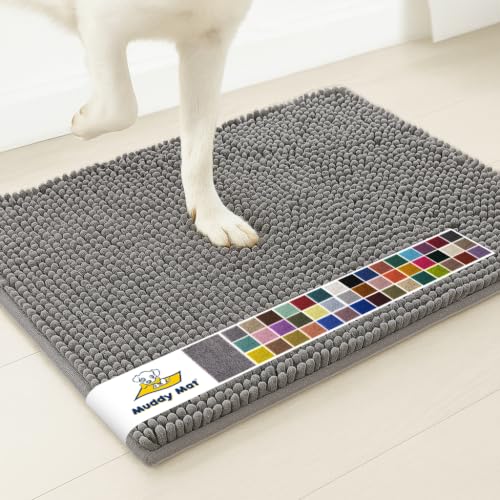
Dog Mats: A Complete Buying and Care Guide
Everything you need to know about choosing the right dog mat for comfort, durability, and easy cleaning — whether you need one for the crate, the car, the living room, or outdoor adventures.
A dog mat is one of the simplest and most versatile purchases you can make for your pet. It gives your dog a predictable, comfortable place to rest, protects your floors and furniture, and makes travel and crate time far easier. Yet the market is flooded with options — from thin, budget-friendly mats to thick orthopedic pads — and choosing the wrong one often means a chewed-up mat, a soggy mess, or a dog that simply refuses to use it.
This guide breaks down dog mats by type, material, and use case so you can make a confident decision. If you're also upgrading your dog's sleeping setup, our guide to dog beds explains when a bed is the better choice and how the two work together.
What Is a Dog Mat?
A dog mat is a flat, portable resting surface designed for dogs. Unlike a traditional bed, which typically has raised edges, thick cushioning, or a structured frame, a mat is usually low-profile and easy to roll, fold, or carry. That portability is exactly what makes mats so useful: they work in crates, cars, training classes, vet visits, and on the living room floor.
Mats serve several practical purposes beyond comfort. They protect hard floors from scratches and drool, contain shedding and dirt in one washable spot, and give dogs a clear "place" cue during training. Many owners use a mat alongside a crate mat or a full dog bed depending on the room and the time of day.
Mat vs. bed in one sentence: A bed is where your dog sleeps at night; a mat is what you move around with your dog all day.
Types of Dog Mats
Dog mats differ mostly in padding, structure, and intended environment. Matching the type to your dog's habits prevents most buyer's remorse.
Flat Quilted Mats
The most common entry-level option. Thin, lightweight, and machine washable, with a simple quilted or padded top and a non-slip base. Best for crate liners, training, and dogs that chew less aggressively.
entry-levelBolstered Mats
A flat center with a raised edge that gives dogs something to rest their head or chin on. Ideal for dogs that like to curl up against a boundary. Slightly bulkier to store and clean than flat mats.
mid-rangeOrthopedic Memory Foam Mats
Dense foam cores that distribute weight and reduce pressure on joints. The best choice for senior dogs, large breeds, and dogs with arthritis. Heavier and typically not fully machine washable.
premiumWaterproof & Outdoor Mats
Coated or rubber-backed mats that resist moisture, mud, and odor. Useful for cars, porches, and dogs that drool or have accidents. Easy to wipe down, though less plush than fabric mats.
mid-rangeCooling Mats
Gel or water-filled mats that draw heat away from the body. Helpful in hot climates and for double-coated breeds. Effectiveness fades if the mat is left in direct sun, and some dogs chew gel inserts.
mid-rangeTravel & Roll-Up Mats
Thin, flexible mats that roll into a compact bundle with a carry strap. Designed for hikes, hotel stays, and visits. Minimal padding is the trade-off for portability.
budget-friendlyLick Mats & Enrichment Mats
Textured mats designed to be spread with soft food or peanut butter to slow eating and provide mental stimulation. Not sleeping surfaces — these are enrichment tools. See our guide to dog lick mats for feeding uses.
budget-friendlyAnti-Fatigue & Kitchen Mats
Thicker standing mats placed near food bowls or in kitchens. They cushion joints for dogs that stand while eating or spend time on hard tile. Often waterproof and easy to wipe.
mid-rangeMaterials & Construction
The cover fabric and the filling determine how a mat feels, how long it lasts, and how easy it is to clean. Most quality mats combine a soft top layer with a non-slip bottom layer.
Common Cover Materials
- Plush fleece or faux fur: Softest option and a favorite of dogs that like to nest. Traps hair and dirt quickly and requires frequent washing.
- Canvas or heavy cotton: Durable and breathable. Holds up well to moderate chewing and repeated washing, but absorbs moisture and stains more than synthetics.
- Oxford nylon or polyester: Water-resistant, fast-drying, and easy to wipe clean. The standard choice for travel and outdoor mats.
- Rubber or TPR backing: Provides grip on hardwood, tile, and laminate. A non-slip base is essential for senior dogs and for mats placed near doorways.
- Memory foam core: Best pressure relief, but heavy and usually spot-clean only. Look for removable, washable covers on premium orthopedic mats.
Quick Comparison
| Mat Type | Best For | Cleaning | Durability | Portability |
|---|---|---|---|---|
| Flat quilted | Crates, training, everyday rest | Machine washable | Moderate | High |
| Bolstered | Dogs that like head support | Cover washable | Moderate to high | Medium |
| Orthopedic memory foam | Seniors, large breeds, joint pain | Spot clean / removable cover | High | Low |
| Waterproof / outdoor | Cars, porches, messy dogs | Wipe clean | High | Medium to high |
| Cooling | Hot climates, heavy coats | Wipe clean | Moderate | Medium |
| Travel roll-up | Hikes, hotels, visits | Machine washable | Moderate | Very high |
| Lick / enrichment | Slow feeding, boredom relief | Dishwasher safe (most) | High | High |
Common Uses & Placement
Most dogs do best with two or three mats placed in different areas of the home. Each location demands different features, so buying one mat for every situation rarely works.
Crate and Sleep Area
A crate mat should fit snugly with no gaps at the edges, where paws or teeth can get caught. Flat, quilted mats are the safest choice for dogs that chew, while a low-profile orthopedic mat suits older dogs that spend long hours in the crate. Avoid thick foam if your dog is a determined chewer — the filling becomes a choking hazard. For crate setup basics, see our dog crates guide.
Living Room and Bedroom
This is where comfort matters most. A plush or bolstered mat near the sofa gives your dog a place to settle while the family is together. If your dog has joint stiffness, an orthopedic mat in the main living space is often worth the upgrade. Pair it with a dog bed if your dog prefers a structured sleeping spot at night.
Car and Travel
Waterproof, rubber-backed mats protect car seats from mud, drool, and hair, and give your dog a familiar surface during travel. For longer trips, a dedicated dog car seat or dog carrier offers more restraint and safety than a mat alone.
Outdoors and Patio
Outdoor mats should resist moisture and UV fading. Place them on covered porches or in shaded areas. In summer, a cooling mattress for dogs can be more effective than a fabric mat for heat-sensitive breeds.
Training and Enrichment
A mat is a powerful training tool. Teaching a dog to go to their mat on cue builds impulse control and gives them a calm default behavior when guests arrive. Lick mats are a separate category used for slow feeding and enrichment — see our guide to dog lick mats for how to use them safely.
How to Choose the Right Mat
Work through these factors in order. Size and chew behavior eliminate most bad options quickly.
- Measure the space first. For crate mats, measure the interior floor of the crate, not the crate's exterior dimensions. The mat should lie flat with no bunching. For floor mats, your dog should be able to stretch out fully in their preferred sleeping position.
- Match the mat to your dog's chewing habits. Power chewers need heavy canvas or rubber-backed mats with no loose filling. Destructive chewers should never be left unsupervised with foam-filled mats. If your dog destroys fabric beds, a durable crate mat or a chew-resistant mat is a safer starting point.
- Consider your dog's age and joints. Puppies need washable, thin mats that are easy to replace. Senior dogs and large breeds benefit from orthopedic support. Dogs with arthritis do best with memory foam plus a non-slip base.
- Prioritize washability. If the mat cannot be machine washed or wiped clean easily, it will stay dirty and smelly. Removable covers are a strong plus for orthopedic mats.
- Check the non-slip base. On hardwood and tile, a mat without grip slides when your dog steps on it, which is a fall risk for older dogs. Rubber or TPR backing is the minimum requirement.
- Think about where it will live. A mat that stays in one spot can be thicker and plusher. A mat that moves between the car, the crate, and the park should be thin, light, and quick-drying.
- Choose a neutral, washable color if you care about appearances. Light colors show dirt and hair quickly. Dark colors hide stains but show light-colored shedding. Mid-tone greys and browns are the most forgiving.
Buying tip: If you're unsure between two sizes, choose the larger one for floor use and the exact-fit one for crates. A mat that is too small for the crate creates gaps where paws can slip through.
Mats for Senior & Special-Needs Dogs
Why Seniors Need a Different Mat
As dogs age, muscle mass decreases and joint cartilage wears down. Lying on a hard floor becomes painful, and getting up from a flat surface takes effort. An orthopedic mat with memory foam or egg-crate support distributes weight and reduces pressure on hips, elbows, and shoulders.
- Low entry height: Seniors with arthritis struggle to step onto thick beds. A mat with a low profile is easier to walk onto than a raised bed.
- Non-slip base: Essential for dogs with weak hind legs or balance issues. A sliding mat can cause a fall.
- Washable cover: Senior dogs are more prone to incontinence. A removable, machine-washable cover saves the foam core.
- Warmth without heat traps: Older dogs feel the cold. Fleece-topped mats add warmth, but avoid heated mats unless your vet recommends one.
Signs your dog needs an orthopedic mat:
• Hesitates before lying down or takes several attempts
• Stiffness after resting, especially in the morning
• Reluctance to climb stairs or jump onto furniture
• Shifting positions frequently while resting
If you notice these signs, talk to your vet. A mat helps with comfort, but it does not replace a proper diagnosis for arthritis or joint disease.
Special-Needs Considerations
Dogs recovering from surgery or managing incontinence need waterproof mats that can be wiped down and disinfected. Dogs with anxiety often settle better on a mat that smells familiar and stays in the same spot — consistency matters more than padding. For dogs with separation stress, combine a familiar mat with the strategies in our guide to things that help with separation anxiety in dogs.
Cleaning & Maintenance
A dirty mat is more than an odor problem — it can harbor bacteria, yeast, and parasites that cause skin irritation. A simple routine keeps mats fresh and extends their lifespan.
Washing Routine by Mat Type
- Flat quilted and fleece mats: Machine wash every one to two weeks on a gentle cycle with pet-safe detergent. Tumble dry low or air dry.
- Orthopedic foam mats: Remove the cover and wash it weekly if possible. Spot clean the foam core with a damp cloth and mild soap; never submerge memory foam.
- Waterproof and outdoor mats: Wipe down weekly with a damp cloth or hose off outdoors. Use a pet-safe disinfectant if your dog has been ill.
- Cooling mats: Wipe the surface clean and dry thoroughly before storage. Check gel inserts for punctures.
- Lick mats: Most are dishwasher safe on the top rack. If hand washing, use hot water and a bottle brush to reach the grooves.
Odor tip: Sprinkle baking soda on a dry fabric mat, let it sit for 30 minutes, then vacuum before washing. This lifts hair and neutralizes odor without harsh chemicals.
When to Replace a Mat
Replace a mat when the filling clumps or flattens permanently, the waterproof layer peels, the non-slip backing cracks and sheds, or your dog has chewed through the cover. A mat with exposed filling is a choking and obstruction risk — remove it immediately.
Common Buying Mistakes
- Buying a mat that is too small for the crate. Gaps at the edges are where paws, collars, and teeth get caught. Measure the interior floor.
- Ignoring chew behavior. A foam-filled mat left with a power chewer is destroyed within minutes and can cause an intestinal blockage. Match durability to the dog, not the decor.
- Skipping the non-slip base. Mats without grip slide on hard floors. This is a minor annoyance for young dogs and a serious fall risk for seniors.
- Choosing a mat that can't be washed. Every dog mat gets dirty. If cleaning is difficult, the mat ends up in the trash.
- Buying only one mat. Most dogs need a crate mat and a floor mat. Moving one mat between locations confuses the routine and defeats the purpose of a consistent resting spot.
- Assuming all "orthopedic" mats are equal. Some budget mats use thin egg-crate foam and market it as orthopedic. Look for dense memory foam and a stated foam thickness.
- Forgetting the car. A waterproof mat in the car protects the seats and reduces anxiety during travel because the surface smells familiar.
Frequently Asked Questions
The Bottom Line
Buy one mat for the crate, one for the living area, and one for the car if you travel often. Match the mat to your dog's chewing habits and joint needs, insist on a non-slip base, and choose something you can actually wash. That combination covers almost every situation a dog owner faces. If you're still setting up your dog's space, our guides to dog beds, dog crates, and dog products will help you fill in the rest.