Dog Carriers for Dogs: The Complete Buying Guide
Everything you need to know about choosing the right carrier for your dog — from sizing and safety features to travel tips and top recommendations for every lifestyle.
A dog carrier is one of those purchases that many owners put off until they desperately need one — a sudden vet emergency, a move, or an upcoming flight. But a quality carrier is an essential piece of equipment that every dog owner should have on hand, regardless of breed size or lifestyle.
The right carrier keeps your dog safe, reduces stress during travel, and makes everyday adventures logistically possible. The wrong carrier — or one that doesn't fit properly — can cause injury, anxiety, and even dangerous escapes. This guide walks you through everything you need to know to choose confidently.
Whether you are looking for a dog car seat alternative for short errands, an airline-approved carrier for long flights, or a comfortable backpack for hiking, the principles of good carrier selection remain the same. And if your dog suffers from travel anxiety, our guide to helping with separation anxiety and calming products can complement your carrier training efforts.
Why Every Dog Needs a Carrier
Some owners assume carriers are only necessary for small dogs or frequent travelers. In reality, every dog benefits from being comfortable in a carrier. Here is why:
- Veterinary emergencies: When your dog is injured or ill, you need a safe way to transport them immediately. A panicked or painful dog may bite or struggle, and a carrier protects both of you.
- Travel safety: An unrestrained dog in a moving vehicle is a serious hazard. In a sudden stop, an unsecured dog becomes a projectile. A properly secured carrier or car harness keeps your dog safe and prevents driver distraction.
- Air travel requirements: Most airlines require dogs to travel in an approved carrier, whether in-cabin or in cargo. Without one, your dog simply cannot fly.
- Stress reduction: Dogs are den animals by nature. A carrier that your dog is trained to view as a safe space can actually reduce anxiety during stressful situations like vet visits, moving, or unfamiliar environments.
- Public access: Many public spaces, including some transit systems and pet-friendly establishments, require dogs to be contained in a carrier.
- Emergency evacuations: If you need to evacuate your home quickly, a carrier allows you to transport your dog safely and keep them contained in unfamiliar situations.
Important: A carrier is not a substitute for proper restraint in a vehicle. Look for carriers that can be secured with seat belts or that are crash-tested. For car travel specifically, a dedicated dog car seat or dog car harness may provide better protection in a collision.
Types of Dog Carriers
Carriers come in several distinct designs, each with trade-offs between portability, protection, comfort, and convenience. Understanding the differences helps you choose the right tool for your situation.
Soft-Sided Carriers
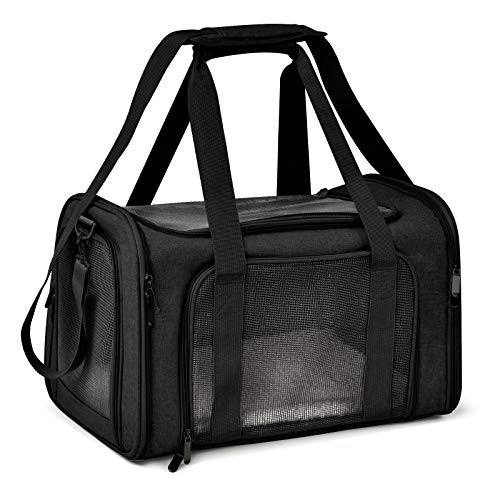
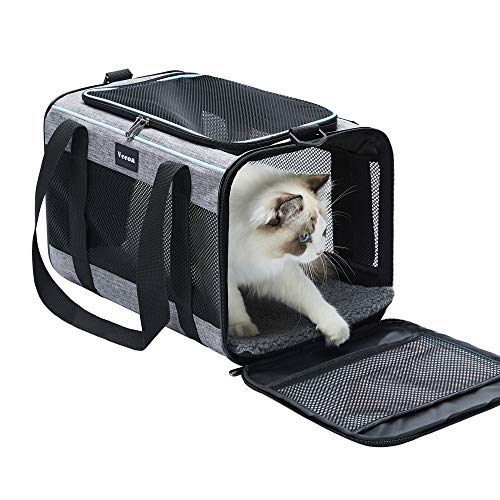
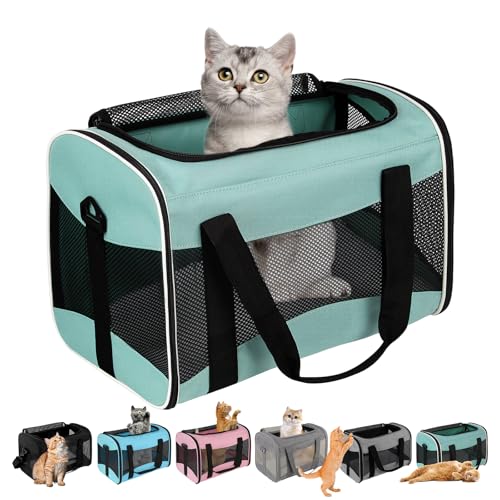
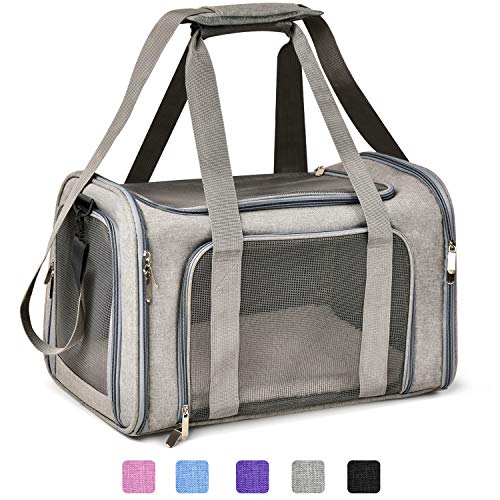
Lightweight, flexible, and often compressible to fit under airline seats. Made from fabric with mesh ventilation panels. Ideal for calm dogs, short trips, and cabin travel. Look for reinforced frames and locking zippers for security.
Mid-range to premiumHard-Sided Carriers
Rigid plastic or fiberglass shells that offer superior impact protection and structural integrity. Easier to clean and disinfect. Better for anxious dogs who may try to escape. Often required for cargo travel. Less portable due to bulk and weight.
Entry-level to premiumBackpack Carriers
Worn on your back with your dog inside a structured pod. Great for hiking, public transit, and navigating busy areas. Look for padded shoulder straps, ventilation on multiple sides, and a secure internal tether. Best for small to medium dogs.
Mid-range to high-endSling Carriers
Worn across your chest like a baby sling. Ideal for very small dogs and puppies who want to be close to you. Not suitable for longer trips or larger breeds. Look for wide, padded straps to distribute weight comfortably.
Budget-friendly to mid-tierRolling Carriers
Feature wheels and a telescoping handle like a suitcase. Useful for owners who cannot carry weight or for long airport walks. The rigid frame provides good protection. Wheels can be noisy, which may frighten nervous dogs.
Mid-range to premiumExpanding Carriers
Soft-sided carriers with panels that unzip to create extra interior space when not in transit. Excellent for giving larger dogs more room during rest stops or at your destination. The expansion feature adds weight and complexity.
High-endHow to Measure Your Dog for a Carrier
Buying a carrier that is too small is not just uncomfortable — it can be dangerous. Your dog must be able to stand up, turn around, and lie down naturally inside the carrier. Here is how to measure correctly:
- Length: Measure from the base of your dog's tail to the tip of their nose while they are standing. Add 2-3 inches to allow for movement and turning.
- Height: Measure from the floor to the top of your dog's head (or the tips of their ears if they stand alert). Add 2-3 inches so your dog can stand comfortably without crouching.
- Width: Measure your dog at their widest point, usually the shoulders or hips. Add 2-3 inches to allow your dog to turn around inside the carrier.
- Weight: Weigh your dog accurately. Weight limits on carriers are not suggestions — exceeding them risks structural failure and injury.
Pro Tip: Do not guess based on breed or "small/medium/large" labels. Carrier sizing varies significantly between brands. Always measure your individual dog and compare against the specific carrier's internal dimensions, not external dimensions. If your dog is between sizes, size up.
Quick Sizing Reference by Dog Size
| Dog Size | Typical Weight | Carrier Type | Typical Use |
|---|---|---|---|
| Toy / Teacup | Under 10 lbs | Sling or small soft-sided | Errands, vet visits |
| Small | 10-25 lbs | Soft-sided or backpack | Cabin travel, hiking |
| Medium | 25-50 lbs | Large soft-sided or hard-sided | Car travel, cargo flights |
| Large | 50-90 lbs | Extra-large hard-sided | Cargo flights, car travel |
| Giant | Over 90 lbs | Specialty hard-sided only | Cargo flights, emergency transport |
Key Features to Look For
Not all carriers are created equal. These are the features that separate a safe, durable carrier from one that will fail when you need it most:
- Locking zippers: Dogs can learn to open standard zippers. Look for zippers with locking sliders or add small clips to prevent escapes.
- Multiple ventilation panels: Mesh on at least two sides (and ideally the top) ensures airflow. Poor ventilation is a serious health risk, especially on warm days.
- Padded, removable bottom: A washable, padded base provides comfort and makes cleanup after accidents easy. Look for removable liners that can go in the washing machine.
- Internal safety tether: A short leash inside the carrier attaches to your dog's collar or harness, preventing them from bolting out when the door is opened.
- Reinforced stitching: Stress points at handles, straps, and seams must be reinforced. Weak stitching is the most common failure point in cheap carriers.
- Waterproof or water-resistant base: Accidents happen. A waterproof bottom protects the carrier and what is beneath it.
- Padded carry handles and straps: You may need to carry your dog for extended periods. Padded straps make this comfortable for you and your dog.
- Airline compliance: If you plan to fly, verify the carrier meets your specific airline's dimensions. "Airline-approved" labels are not universal — check the actual dimensions against your airline's policy.
Soft-Sided vs. Hard-Sided: Which Is Better?
| Feature | Soft-Sided | Hard-Sided |
|---|---|---|
| Weight | Lightweight | Heavier, bulkier |
| Protection | Moderate | Superior impact protection |
| Airline compatibility | Often cabin-friendly | Usually cargo only |
| Cleaning | Machine-washable liners | Wipe-down surfaces |
| Storage | Folds flat | Takes up space |
| Escape resistance | Moderate | High |
| Best for | Calm dogs, cabin travel | Anxious dogs, car/cargo travel |
Related Equipment: If you travel frequently by car, consider pairing your carrier with a dog seat belt or a dog car seat for added safety. For trips that involve walking to your destination, a dog stroller can be useful for senior dogs or those recovering from injury.
Airline & Car Travel Tips
Traveling with your dog requires planning beyond just buying a carrier. These tips will help ensure a smooth journey:
Air Travel
- Check airline policies early: Each airline has specific size, weight, and documentation requirements. Policies can change, so verify with your airline directly before booking.
- Book early: Most airlines limit the number of pets allowed in the cabin per flight. Book your pet's spot as soon as you book your own ticket.
- Know the difference between cabin and cargo: Cabin travel is generally safer and less stressful for small dogs. Cargo is necessary for larger dogs but carries more risk. Never sedate your dog for air travel without veterinary guidance.
- Acclimate your dog to the carrier: Start carrier training weeks before your flight. Your dog should be comfortable entering the carrier and spending time inside it without distress.
- Exercise before the flight: A tired dog is a calmer traveler. Give your dog a good walk before heading to the airport.
- Bring documentation: Health certificates, vaccination records, and any required permits must be readily accessible.
Car Travel
- Secure the carrier: An unsecured carrier can slide or tip during sudden stops. Use seat belts or cargo anchors to secure the carrier in place.
- Never leave your dog in a parked car: Temperatures can rise to dangerous levels within minutes, even on mild days. Heat stroke can be fatal.
- Plan rest stops: On long trips, stop every 2-3 hours to let your dog out for water, bathroom breaks, and a short walk. Use a leash at all times during stops.
- Bring familiar items: A favorite blanket or toy inside the carrier provides comfort and reduces anxiety.
- Avoid feeding right before travel: Feed a light meal a few hours before departure to reduce motion sickness. Bring water but offer it in small amounts to prevent bloat.
Comfort Tip: If your dog experiences travel anxiety, a ThunderShirt or anxiety wrap can provide calming pressure during travel. Pheromone sprays on the carrier liner can also help. For severe anxiety, consult your veterinarian about calming products before your trip.
Carrier Training Basics
A carrier is only useful if your dog willingly enters it. Carrier training is straightforward but requires patience. The goal is to make the carrier a positive, familiar space — not a place associated with fear or confinement.
- Leave the carrier open: Place it in a common area of your home with the door open. Put treats, toys, or a familiar blanket inside. Let your dog investigate at their own pace.
- Feed near and inside the carrier: Move your dog's food bowl progressively closer to the carrier, then just inside the entrance. Eventually, feed meals fully inside with the door open.
- Reward voluntary entry: Every time your dog enters the carrier on their own, mark it with a treat or praise. Do not force them in.
- Close the door briefly: Once your dog is comfortable eating inside, close the door for a few seconds while they eat. Gradually increase the time as they remain relaxed.
- Practice short trips: Take the carrier to another room, then on short car rides. Build duration and distance slowly.
- Never use the carrier for punishment: The carrier must always be associated with positive experiences. Using it as a "time out" zone destroys its value as a safe space.
For Anxious Dogs: Some dogs need extra support to feel comfortable in a carrier. If your dog shows signs of panic, consult a positive-reinforcement trainer. Our guide on when to see a behaviorist can help you determine whether professional intervention is appropriate. For dogs with crate anxiety, our article on stopping crate crying offers additional strategies that apply to carrier training.
Common Dog Carrier Mistakes
- Buying a carrier that is too small. Your dog must be able to stand, turn, and lie down. If they are cramped, the carrier is unsafe and uncomfortable.
- Not securing the carrier in the car. An unsecured carrier offers no protection in a collision and may become a projectile itself.
- Skipping carrier training. Expecting your dog to immediately accept a carrier is unrealistic. Training prevents panic and escape attempts.
- Using a carrier as punishment. This creates negative associations and makes future travel exponentially harder.
- Ignoring ventilation. Some cheap carriers have inadequate mesh. Insufficient airflow can cause overheating and respiratory distress.
- Assuming "airline-approved" means universally accepted. Airline policies vary. Always verify dimensions and requirements directly with your airline.
- Leaving your dog unattended in a carrier. A carrier is not a crate. Never leave your dog in a carrier unattended for extended periods, especially in warm environments.
- Neglecting to clean the carrier. Carriers accumulate dirt, dander, and bacteria. Regular cleaning keeps your dog healthy and extends the carrier's lifespan.
Safety Reminder: A carrier is not a replacement for a dog crate for long-term confinement at home. Crates are designed for extended use; carriers are for transport. Choose the right tool for each situation.
Frequently Asked Questions
Ready to Choose?
Start by measuring your dog carefully and deciding on your primary use case — air travel, car trips, or everyday adventures. Prioritize safety features like locking zippers, internal tethers, and adequate ventilation over cosmetic details. Train your dog to use the carrier before you need it, and always secure the carrier properly in your vehicle. With the right carrier and a little preparation, traveling with your dog becomes a safe, stress-free experience for both of you.