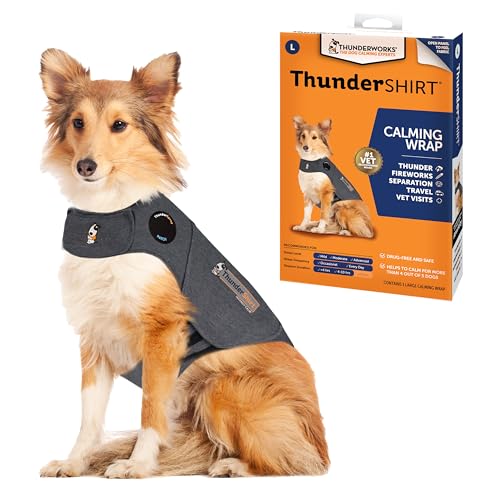
Dog Thundershirt: The Complete Anxiety Relief Guide
Discover how a dog Thundershirt uses gentle pressure to calm anxiety from thunderstorms, fireworks, travel, and separation — plus sizing tips, proper usage, and what science says about anxiety wraps.
If your dog trembles during thunderstorms, paces before fireworks, drools in the car, or struggles with everyday anxiety, you have likely heard about the dog Thundershirt — a snug-fitting anxiety wrap that has become one of the most popular calming tools for dogs worldwide. But does it actually work, and is it the right solution for your dog?
This guide explains exactly what a Thundershirt is, how it applies pressure to calm the nervous system, when it works best, how to size it correctly, and how to combine it with other strategies such as calming products for dogs, behavior modification techniques, and professional guidance. By the end, you will know whether an anxiety wrap belongs in your dog's care routine.
What Is a Dog Thundershirt?
A dog Thundershirt is a specially designed vest that fits snugly around your dog's torso. It applies gentle, constant pressure — similar to swaddling a baby or giving a comforting hug. The concept is simple: consistent pressure on the body can produce a calming effect that reduces the physiological stress response.
Thundershirts are made from lightweight, breathable fabric with adjustable hook-and-loop closures. They are easy to put on and take off, and most models cover the chest and back without restricting movement. Unlike a dog harness designed for walking, a Thundershirt is not meant for leash attachment — it is a calming garment, not walking gear.
- Purpose-built for anxiety: Designed specifically to calm dogs during stressful events, not as a fashion item.
- Adjustable fit: Hook-and-loop straps let you customize the snugness for your dog's body shape.
- Lightweight and breathable: Most models use soft, machine-washable fabric that is safe for extended wear.
- Drug-free: No medication, sedation, or side effects — a natural, non-invasive option.
- Compatible with training: Can be worn during desensitization sessions and behavior modification work.
Thundershirt vs. Ordinary Dog Clothes: A regular dog shirt or jacket does not provide the calibrated pressure that defines an anxiety wrap. Thundershirts are engineered with specific stretch and closure systems to deliver consistent, gentle compression across the torso.
How Anxiety Wraps Work
The mechanism behind a Thundershirt is based on the principle of pressure therapy. Gentle, sustained pressure on the body stimulates mechanoreceptors in the skin, which send signals to the brain that can reduce arousal and promote a sense of security. This is the same principle used in weighted blankets for humans and swaddling for infants.
When a dog experiences anxiety — from thunder, fireworks, strangers, or travel — the sympathetic nervous system activates: heart rate rises, muscles tense, and stress hormones like cortisol increase. A Thundershirt aims to counteract this by triggering the parasympathetic ("rest and digest") response through constant, gentle pressure.
What a Thundershirt Can and Cannot Do
- Can help with: Noise anxiety (thunder, fireworks), travel anxiety, vet visit stress, mild separation anxiety, and general nervousness.
- Cannot cure: Severe phobias, aggression, or complex behavioral disorders. These require professional behavior modification and possibly veterinary intervention.
- Works best when: Combined with counter-conditioning, a safe environment, and consistent training.
- Not a substitute for: Veterinary care when anxiety is severe or accompanied by medical issues.
If your dog's anxiety is intense or has underlying medical causes, consult a veterinarian or a certified behaviorist. Our guide on when to see a behaviorist explains the signs that professional help is needed.
When to Use a Thundershirt
A Thundershirt is most effective when used proactively — before anxiety escalates. Here are the most common situations where an anxiety wrap helps:
Everyday Anxiety Triggers
- Thunderstorms: Put the shirt on at the first sign of a storm, ideally before your dog reacts. Pair with a safe space and white noise.
- Fireworks: Put it on well before the noise begins. Combine with calming strategies for anxious dogs and a quiet room.
- Travel and car rides: Use during car trips, especially for dogs with motion-related anxiety or fear of the vet.
- Vet visits and grooming: Helps reduce stress during unfamiliar handling and clinical environments.
- Separation: Provides comfort for dogs with mild separation anxiety when you leave.
- New environments: Moving homes, boarding, or introducing a new family member.
Timing Matters: The best time to put on a Thundershirt is before the stressor begins. Once a dog is in full panic mode, the calming effect is harder to achieve. Track triggers (storm forecasts, fireworks schedules, travel plans) and prepare in advance.
Pro Tip: Pair the Thundershirt with a lick mat or puzzle toy during stressful events. Licking and problem-solving are naturally calming behaviors that amplify the wrap's effect.
Sizing & Fit Guide
Correct sizing is the single most important factor in whether a Thundershirt works. A shirt that is too loose provides no pressure benefit; one that is too tight restricts movement and causes discomfort. Follow these steps:
- Measure the chest girth: Use a soft measuring tape around the widest part of your dog's chest, just behind the front legs. Note the measurement in inches or centimeters.
- Consult the manufacturer's size chart: Sizes vary between brands. Match your dog's girth to the correct size range — do not guess based on breed or weight alone.
- Consider body shape: Dogs with deep chests (Greyhounds, Boxers) or barrel chests (Bulldogs) may need a size adjustment. Check the sizing chart for breed-specific notes.
- Test the fit: A properly fitted Thundershirt should be snug but allow you to slide two fingers under the fabric. Your dog should be able to walk, sit, lie down, and breathe normally.
- When between sizes: If your dog falls between two sizes, size up if your dog is on the upper edge of the range, or down if they are on the lower edge — always prioritize comfort and freedom of movement.
Fit Check Warning: If you notice skin irritation, hair loss, restricted breathing, or your dog refuses to move while wearing the shirt, the fit is wrong. Adjust or exchange it. Never force a dog to wear an ill-fitting garment.
How to Use It Correctly
Introducing a Thundershirt properly is essential. A negative first experience can make your dog fearful of the shirt itself, defeating the purpose. Follow this gradual approach:
Introduction Plan
- Let your dog sniff the shirt: Place it on the floor and reward calm interaction with treats. Do not force it on immediately.
- Practice putting it on during calm moments: Put it on for a few minutes while your dog is relaxed, then remove it and reward. Repeat several times.
- Build positive associations: Pair the shirt with treats, praise, and play. The goal is for your dog to see the shirt as a signal for comfort and rewards.
- Extend wearing time gradually: Increase from 5 minutes to 30 minutes, then to longer periods as your dog tolerates it.
- Use during actual stressors: Once your dog is comfortable with the shirt, use it proactively during storms, travel, or other triggers.
Duration and Safety Guidelines
- Short-term use: Wear during stressful events for 1-4 hours is typical.
- Extended use: Up to 8-12 hours is acceptable for dogs who tolerate it well, but always remove for potty breaks and monitor for discomfort.
- Never leave unattended: Remove the shirt when you cannot supervise, especially if your dog is a chewer.
- Avoid in hot weather: The extra layer can cause overheating. Use in climate-controlled environments and monitor for panting or distress.
- Wash regularly: Machine wash on gentle cycle with mild detergent. Air dry to maintain fabric elasticity.
Combination Strategy: For maximum effect, combine a Thundershirt with a pheromone diffuser, calming music, and a safe den-like space. The dog anxiety wraps guide explains how different calming tools work together.
What the Research and Owners Say
Owner surveys and clinical reports suggest that Thundershirts help a meaningful percentage of dogs, particularly for noise-related anxiety. However, results are individual: some dogs show dramatic improvement, others show mild benefit, and a small percentage show no change.
| Anxiety Type | Reported Effectiveness | Best Combined With |
|---|---|---|
| Thunderstorm anxiety | High for many dogs | Safe room, white noise, pheromones |
| Fireworks / noise phobia | Moderate to high | Behavior modification, sound desensitization |
| Travel anxiety | Moderate | Crate training, car harness, gradual exposure |
| Mild separation anxiety | Moderate | Desensitization, calming products |
| Severe separation anxiety | Low as standalone | Professional behavior modification, veterinary care |
| Vet visit stress | Moderate | Happy visits, treats, calm handling |
It is important to set realistic expectations. A Thundershirt is a management tool, not a cure. For lasting results, pair it with a structured plan that addresses the root causes of your dog's anxiety. If your dog's anxiety is severe or does not improve, consult your veterinarian or a behaviorist. Our guide on dog anxiety wraps covers additional options and how they compare.
Alternatives and Complementary Tools
A Thundershirt is one tool in a broader anxiety-management toolkit. Depending on your dog's needs, consider these complementary approaches:
- Pheromone diffusers and sprays: Synthetic dog-appeasing pheromones can create a calming environment. See pheromone diffusers for anxiety.
- Calming chews and supplements: L-theanine, tryptophan, and chamomile-based products can support relaxation. Learn about calming products for dogs.
- Behavior modification: Desensitization and counter-conditioning are the gold standard for long-term anxiety relief. See behavior modification techniques.
- Safe spaces: A crate, covered bed, or quiet room gives your dog a retreat during stressful events. A dog crate with a cover can be especially effective.
- Mental enrichment: Puzzle toys, lick mats, and interactive toys reduce boredom-related anxiety.
- Professional help: For severe cases, a veterinary behaviorist can prescribe medication alongside behavior therapy. See when to see a behaviorist.
Common Mistakes to Avoid
Even well-intentioned owners make mistakes with anxiety wraps. Avoid these pitfalls:
- Wrong size or fit: A loose shirt does nothing; an overly tight one causes distress. Always measure and check the fit.
- Putting it on too late: A Thundershirt works best before anxiety peaks. Prepare in advance for predictable triggers.
- Forcing an unwilling dog: If your dog panics when the shirt goes on, stop and consult a trainer. Gradual conditioning is essential.
- Using it as the only solution: For moderate to severe anxiety, the shirt should be part of a broader behavior plan.
- Leaving it on continuously: Remove it for potty breaks, rest, and hot weather. Monitor for skin irritation.
- Ignoring underlying medical issues: Anxiety can be caused by pain or illness. Rule out medical causes with your vet before relying solely on behavioral tools.
Remember: A Thundershirt is a comfort tool, not a punishment or restraint device. If your dog shows signs of distress while wearing it, remove it and consult a professional. The goal is calm, not compliance.
Frequently Asked Questions
Final Takeaway: A dog Thundershirt is a valuable, drug-free tool for managing mild to moderate anxiety — especially noise phobias, travel stress, and situational nervousness. It works best when sized correctly, introduced gradually, and combined with behavior modification, a safe environment, and professional guidance when needed. If your dog's anxiety is severe, do not rely on a wrap alone — consult your veterinarian or a certified behaviorist for a comprehensive plan.