Emotional Support Animal Recommendation Letter
Everything you need to know about getting a valid ESA letter — who can write it, what it must contain, how landlords and airlines treat it, and how to avoid scams.
If you rely on your dog for emotional stability and comfort, an emotional support animal (ESA) recommendation letter can be a life-changing document. It gives you the legal right to live with your dog in housing that otherwise has a "no pets" policy and protects you from being charged pet rent or pet deposits. But not all ESA letters are created equal — and a letter from the wrong source is essentially worthless.
This guide explains exactly what a legitimate ESA letter is, who can write one, what it must contain, and how to obtain one without falling victim to the many online scams that prey on people seeking help. Whether you are moving into a new apartment, facing a landlord who doesn't understand your needs, or simply want to understand your rights, this page gives you the clarity you need.
Important Distinction: An emotional support animal is not a service animal. ESAs do not have public access rights to stores, restaurants, or other public spaces. They are protected only under the Fair Housing Act and, in some cases, by airline policies. Service dogs, by contrast, are trained to perform specific tasks for a person with a disability and are protected under the ADA. Understanding this difference is critical before you pursue an ESA letter.
What Is an Emotional Support Animal Letter?
An ESA recommendation letter is a formal, signed document from a licensed mental health professional (LMHP) stating that you have a mental or emotional condition recognized by the Diagnostic and Statistical Manual of Mental Disorders (DSM-5) and that your animal provides therapeutic support that alleviates symptoms of that condition. It is not a "registration" or a "certificate" — those have no legal standing.
The letter serves as verification for landlords and, in some cases, airlines. It is a reasonable accommodation request under the Fair Housing Act. When you provide a valid ESA letter, your landlord must waive "no pet" policies and cannot charge you pet-related fees, though you remain responsible for any damage your animal causes.
The letter is a medical document, not a product you buy. Legitimate telehealth services connect you with a licensed professional who evaluates your condition and writes the letter only if it is clinically appropriate. This is why the process should involve a real conversation with a mental health professional — not an automated checkout page.
Who Can Legally Write an ESA Letter?
Only a licensed mental health professional can write a valid ESA recommendation letter. The specific licensure requirements vary by state, but generally the following professionals are authorized:
- Psychiatrists (MD or DO with psychiatric specialization)
- Psychologists (PhD or PsyD)
- Licensed Clinical Social Workers (LCSW)
- Licensed Professional Counselors (LPC)
- Licensed Marriage and Family Therapists (LMFT)
- Psychiatric Nurse Practitioners (PMHNP)
Importantly, the professional must be licensed in the state where you live (or where the letter will be used, depending on the situation). An online service that employs licensed professionals is perfectly legitimate — but you must actually be evaluated by that professional. A letter generated by a computer, signed by a "doctor" you never spoke to, or issued by a website that simply takes your payment and email address is not valid and will likely be rejected by landlords.
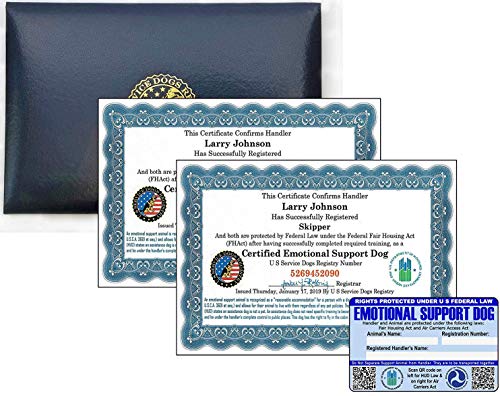
Red Flag: If a website sells an ESA "certificate," "ID card," or "registration" without connecting you to a licensed mental health professional for an actual assessment, it is not providing a legitimate ESA letter. These products have no legal standing and cannot be used to request housing accommodations.
What a Valid ESA Letter Must Include
A proper ESA letter contains specific information that demonstrates it is a genuine medical document. While formats vary, a valid letter typically includes:
- Professional letterhead: The letter should be on the letterhead of the mental health professional or practice, including their name, license number, business address, and phone number.
- Date of issuance: The date the letter was written. ESA letters typically have an expiration date — often one year from issuance — so a recent date matters.
- Your name: The letter must identify you as the patient, matching your government-issued ID.
- Your diagnosis: A statement that you have a mental or emotional condition recognized in the DSM-5. The specific diagnosis may or may not be disclosed to the landlord (the letter can state it confidentially), but the professional must have made a clinical diagnosis.
- Statement of need: A clear statement that your animal provides emotional support that alleviates symptoms of your condition and is necessary for your mental health.
- Animal description: A description of your animal (species, sometimes breed or name) so the letter is tied to a specific companion. Some letters are "generic" and do not name the animal, which is generally acceptable for housing purposes.
- Professional's signature: A handwritten or electronic signature of the licensed professional, along with their credentials and license number.
Some landlords may request additional verification, especially if the letter is from an online-only provider. A legitimate letter should be verifiable — the landlord can call the professional's office to confirm the letter's authenticity, or the service can provide verification upon request.
How to Get a Valid ESA Letter
The process is straightforward, but it requires a real assessment. Here is the legitimate path:
- Choose a reputable provider. You can work with a local mental health professional or a telehealth service that connects you with licensed professionals. Look for transparency about licensure, pricing (fees for the evaluation and letter are standard), and verification policies. Avoid any service that promises an "instant" letter without a consultation.
- Complete an assessment. You will typically speak with a licensed professional via video or phone for 30–60 minutes. They will ask about your mental health history, symptoms, and how your animal supports you. This is a clinical evaluation, not a sales call.
- Receive your letter if appropriate. If the professional determines that you qualify, they will write and sign the letter, usually within 24–48 hours. You should receive a digital copy and, in some cases, a physical copy for your records.
- Verify the letter. Before submitting it to a landlord, confirm that it includes all the required elements listed above. If you are using an online service, ask how the landlord can verify the letter's authenticity.
If you already have an established relationship with a therapist or psychiatrist, you can simply ask them directly. They may be able to write the letter as part of your ongoing care, often at no additional cost.
ESA Letters and Housing Rights
The Fair Housing Act (FHA) requires landlords to provide reasonable accommodations for people with disabilities, including those who use emotional support animals. This means:
- No-pet policies do not apply. A landlord cannot refuse to rent to you or evict you because of your ESA, even in a building that prohibits pets.
- No pet rent or pet deposits. Landlords cannot charge you additional fees for having an ESA. You are still responsible for any damage caused by the animal.
- Breed and weight restrictions may not apply. Some landlords impose breed or size restrictions on pets. For assistance animals, these restrictions are generally not enforceable, though the landlord can still require that the animal does not pose a direct threat to others.
- You must provide a valid letter. The landlord is entitled to request documentation that supports your need for an accommodation. A letter from a licensed mental health professional is the standard documentation.
If a landlord refuses to accept a valid ESA letter, you may have grounds for a discrimination complaint with the U.S. Department of Housing and Urban Development (HUD) or your state's fair housing agency. It is wise to communicate in writing and keep copies of all correspondence.
ESA Letters and Air Travel
Airline policies for emotional support animals have changed significantly. As of 2021, the U.S. Department of Transportation no longer requires airlines to treat ESAs as service animals. Each airline sets its own policy, and many now only accept trained service dogs in the cabin.
Some airlines may still allow ESAs with advance notice, specific documentation, and fees. However, policies vary widely and change frequently. If you plan to fly with your ESA, contact the airline directly before booking and ask for their current policy in writing. Do not assume that an ESA letter guarantees cabin access — it does not.
Key Takeaway: An ESA letter is primarily a housing document. It does not grant public access rights, and it does not automatically allow your dog on airplanes. Always verify policies with the specific airline, landlord, or other entity before relying on your letter.
ESA vs. Service Dog: What's the Difference?
Understanding the distinction between an emotional support animal and a service dog is essential, both for your own expectations and for interacting with businesses and landlords.
| Feature | Emotional Support Animal (ESA) | Service Dog |
|---|---|---|
| Definition | Provides comfort by its presence; not trained for specific tasks | Trained to perform specific tasks for a person with a disability |
| Legal protection | Fair Housing Act (housing only) | Americans with Disabilities Act (public access), FHA, Air Carrier Access Act |
| Required documentation | ESA letter from a licensed mental health professional | No documentation required for public access; handlers may be asked two questions |
| Public access | No | Yes, in most public spaces |
| Air travel | Airline-specific; many airlines no longer accept ESAs | Allowed in cabin under ACAA |
| Training requirement | No specific training required | Must be trained to perform tasks and behave appropriately in public |
If your dog is trained to perform a specific task that mitigates your disability — such as guiding you during a panic attack, alerting to a medical episode, or providing physical stability — they may qualify as a service dog rather than an ESA. This distinction is significant because service dogs have broader legal protections.
Common ESA Letter Scams to Avoid
The demand for ESA letters has created a market for fraudulent services. Protect yourself by knowing the warning signs:
- "Instant" letters with no consultation. A legitimate professional must evaluate you before writing a letter. If a website sells you a letter immediately after payment, with no assessment, it is not valid.
- "Registration" and "certificate" packages. These are not legal documents. No government agency registers emotional support animals. A certificate or ID card has no legal weight.
- Unverifiable credentials. If the letter does not include a license number and a way to verify the professional, it may be fake. Legitimate providers make verification easy.
- Pressure to buy. High-pressure sales tactics, countdown timers, and "limited-time" offers are red flags. A real medical assessment is not a flash sale.
- Letters from non-mental-health professionals. A general practitioner, chiropractor, or veterinarian cannot write an ESA letter. Only licensed mental health professionals can.
If you encounter a service that seems too good to be true, trust your instincts. The consequences of a fake letter can include eviction, loss of housing rights, and legal trouble. It is worth the time to find a legitimate provider.
Renewing Your ESA Letter
ESA letters are typically valid for one year from the date of issuance. Some landlords may accept letters that are slightly older, but it is best to renew annually to avoid any issues. The renewal process is usually simpler than the initial assessment, especially if you continue working with the same professional.
When renewing, you will typically have a shorter consultation to confirm that your need for the animal continues. The professional will then issue a new letter with an updated date. Keep a digital and physical copy of your current letter in a safe place, and provide a copy to your landlord when requested.
Frequently Asked Questions
Bottom Line: A valid ESA recommendation letter is a powerful tool for protecting your housing rights and ensuring you can live with the animal that supports your mental health. Get your letter from a licensed mental health professional who actually evaluates you. Avoid "instant" certificates and registration schemes. And remember that an ESA is a companion, not a service animal — understanding the difference will help you navigate housing, travel, and public spaces with confidence.
If you are also considering how to document your dog's role more broadly, you may find our article on emotional support service animal registration helpful for understanding the landscape of ESA documentation.