How to Get Your Dog Registered as an Emotional Support Animal
Understand the real process behind ESA registration, the single document that actually matters, and how to avoid costly scams while protecting your housing rights.
If you are researching how to get your dog registered as an emotional support animal, you have likely encountered a confusing mix of websites selling certificates, ID cards, and "official" registries. The truth is simpler and more straightforward than the industry wants you to believe: there is no government registry for emotional support animals. What exists—and what actually carries legal weight—is a letter from a licensed mental health professional.
This guide cuts through the noise. You will learn exactly what qualifies a dog as an ESA, why registration websites are misleading, how to obtain a legitimate ESA letter, and what rights that letter actually provides. Whether you are navigating a no-pet housing policy or simply want to understand the process, this page gives you the facts you need to make informed decisions.
What an Emotional Support Animal Really Is
An emotional support animal is a pet that provides therapeutic benefit to a person with a diagnosed mental health condition. Unlike service dogs, ESAs are not trained to perform specific tasks related to a disability. Their role is companionship and comfort—a role that can be genuinely life-changing for people managing anxiety, depression, PTSD, or other conditions.
The legal distinction matters. Service dogs are protected under the Americans with Disabilities Act and have broad access to public spaces. ESAs are primarily covered under the Fair Housing Act, which means their protections are focused on housing rather than public access. An ESA is not allowed in restaurants, stores, or other public accommodations simply by virtue of being an ESA.
Key Distinction: An ESA provides comfort through presence alone. A service dog performs specific tasks—like guiding a person with visual impairment, alerting to seizures, or interrupting a panic attack. If your dog is not trained to perform disability-related tasks, it is an ESA, not a service dog. For those interested in the service dog path, our guide on how to get your dog to be a service dog covers that process separately.
The Registry Myth: What "Registration" Actually Means
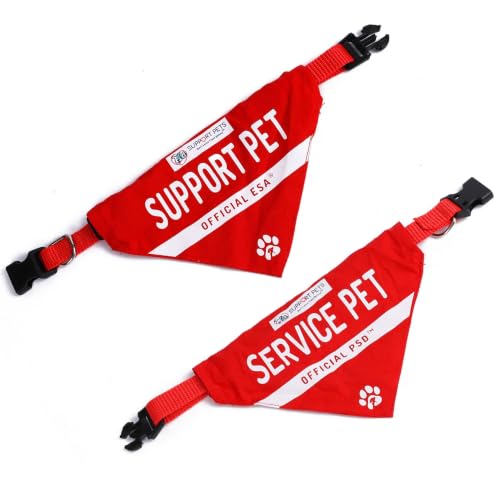
Search for "ESA registration" and you will find dozens of websites offering certificates, vests, ID cards, and placement in a "national database" for a fee. None of these have any legal standing. No federal agency recognizes or maintains an ESA registry. A landlord who knows the law will not accept a certificate from an online registry as proof that your dog is an ESA.
The confusion stems from the word "registration." People naturally assume that getting an ESA is like registering a car or a business—a government process that creates official status. It is not. The only thing that creates ESA status is a clinical determination by a licensed mental health professional that your dog is part of your treatment plan.
Websites selling registry certificates are not illegal in most places, but they are selling convenience items, not legal documentation [citation:1]. Some even include disclaimers buried in their terms of service stating that their certificates do not confer legal rights. Save your money and focus on obtaining a legitimate ESA letter instead.
Do You Qualify for an Emotional Support Animal?
To qualify for an ESA, you must have a mental health condition that substantially limits one or more major life activities. This is the definition of disability under the Fair Housing Act. Common qualifying conditions include:
- Anxiety disorders — generalized anxiety, social anxiety, panic disorder
- Depression — major depressive disorder or persistent depressive disorder
- Post-traumatic stress disorder (PTSD) — including symptoms experienced by veterans and trauma survivors
- Mood disorders — bipolar disorder, cyclothymia
- Specific phobias that significantly impact daily functioning
- Autism spectrum conditions where an animal provides calming support
You do not need to have a diagnosis already on record. A licensed mental health professional can evaluate you and determine whether you meet the criteria. What matters is that your condition genuinely affects your ability to function in daily life and that the presence of a dog provides meaningful support.
Honest Self-Assessment: An ESA letter is not a workaround for pet-friendly housing. It is a clinical recommendation for a treatment tool. If your primary motivation is avoiding a pet deposit or circumventing a breed restriction, a legitimate professional may decline to write a letter. The system exists for people who genuinely benefit from animal companionship as part of managing a mental health condition.
The ESA Letter: Your Only Document
A valid ESA letter is a document from a licensed mental health professional stating that you have a qualifying condition and that an emotional support animal is recommended as part of your treatment. It is typically valid for one year, after which it should be renewed if the need persists.
What a Legitimate ESA Letter Contains
- Professional letterhead with the provider's name, practice name, address, and phone number
- Provider credentials including license type, license number, and state of licensure
- Date of issue — letters older than one year are often rejected
- Your name as the patient or client
- A statement of disability confirming that you have a condition that substantially limits a major life activity (the specific diagnosis is not required)
- An explanation of how the animal supports your treatment and daily functioning
- The provider's signature
The letter should not include a registry number, a certificate ID, or any claim that the animal is a service dog. It also should not specify a particular breed or name a specific dog unless the provider has a clinical reason to do so [citation:13]. The recommendation is for an ESA, not for a specific animal.
If you already work with a therapist or psychiatrist, ask them directly. Many providers are willing to write ESA letters for existing clients. If you do not have an established relationship with a mental health professional, you can seek an evaluation through a reputable telehealth service or a local provider. Expect the process to involve an actual assessment, not just a payment and a form.
Step-by-Step: Getting Your Dog Recognized as an ESA
- Assess your needs honestly. Consider whether your dog genuinely helps you manage symptoms of a mental health condition. Note specific ways the dog supports you—whether that is providing structure, reducing anxiety during panic attacks, or easing feelings of isolation.
- Find a licensed mental health professional. This can be a psychologist, psychiatrist, licensed clinical social worker, licensed professional counselor, or a licensed physician. The provider must be licensed in the state where you will use the letter. If you already have a therapist, start there.
- Complete an evaluation. The professional will assess your mental health history, current symptoms, and how an ESA would fit into your treatment plan. This may take one session or several, depending on your situation and the provider's approach.
- Obtain the letter. If the provider determines that an ESA is appropriate, they will issue a letter on their letterhead with the elements listed above. Review it carefully to ensure it contains all required information.
- Provide the letter to your housing provider. If you are requesting a reasonable accommodation, submit the letter to your landlord or property manager along with a written request. Keep a copy for your records.
- Renew annually. Most housing providers require ESA letters to be dated within the past year. Mark your calendar and schedule a renewal with your provider before the letter expires.
Housing Rights and Recent Changes
The Fair Housing Act requires housing providers to make reasonable accommodations for people with disabilities, including allowing emotional support animals in no-pet housing and waiving pet fees. This has been the standard for years, and many people have successfully used ESA letters to secure housing.
However, the legal landscape has shifted. In May 2026, the Department of Housing and Urban Development issued new guidance stating that its enforcement office would no longer pursue complaints involving untrained emotional support animals. Instead, HUD's enforcement focus would be limited to trained service animals. This does not change the law itself—the Fair Housing Act still exists—but it changes how HUD processes complaints [citation:4][citation:9].
What This Means for You: HUD's guidance does not make ESA letters meaningless. Many states have their own fair housing laws that explicitly protect ESA owners, and those state laws remain in effect regardless of federal enforcement priorities. Additionally, individuals retain the right to file private lawsuits if they believe their rights have been violated. If you are facing housing discrimination related to an ESA, consult a local fair housing attorney or tenant rights organization to understand your options under state and local law.
The practical takeaway is this: a legitimate ESA letter is still valuable for requesting a reasonable accommodation, especially in states with strong tenant protections. But it is not a magic key that guarantees acceptance everywhere. Landlords may ask for documentation, and some may push back. Knowing your state's laws and having a valid letter from a licensed professional puts you in the strongest possible position.
Travel Rules for Emotional Support Animals
Airline rules for ESAs have changed significantly. The Department of Transportation no longer requires airlines to treat emotional support animals as service animals. Most major carriers now treat ESAs as pets, which means they are subject to standard pet policies, including fees, carrier requirements, and breed or size restrictions.
If you plan to fly with your dog, contact the airline directly to understand their current pet policy. Do not assume that an ESA letter will grant your dog access to the cabin without following the airline's pet procedures. Some airlines may still allow small ESAs in the cabin as pets, while others require them to travel in cargo—a decision that requires careful consideration for your dog's safety and well-being.
Red Flags: How to Spot ESA Scams
The ESA industry attracts scammers because the demand is high and the rules are poorly understood. Protect yourself by watching for these warning signs:
- Instant approval without an evaluation. A legitimate provider needs to assess your mental health before recommending an ESA. If a website promises a letter after a five-minute questionnaire and a payment, it is not providing genuine clinical care.
- Claims of "official registration" or "government certification." No such thing exists. Any website claiming to register your dog with a government agency or national database is misleading you.
- Pressure to buy add-ons. Vests, ID cards, certificates, and "ESA kits" are not required by law and have no legal weight. A legitimate provider will not push you to purchase these items.
- No license information. A valid ESA letter must include the provider's license number and state of licensure. If the letter lacks this information, it is likely invalid.
- Letters from providers licensed in another state. Some online services connect you with providers licensed elsewhere. While this is not always disqualifying, housing providers may scrutinize out-of-state letters. The safest approach is to work with a provider licensed in your state.
Legitimate telehealth platforms exist, and they can be a convenient option for people who cannot easily access in-person care. The key is that they conduct a real evaluation and connect you with a licensed professional who takes responsibility for the recommendation. If the process feels too easy or too transactional, proceed with caution.
For those who are also exploring the service dog path, our guide on getting your dog certified as a service animal explains the separate—and more demanding—training and documentation requirements.
Frequently Asked Questions
The Bottom Line
Getting your dog registered as an emotional support animal is not about buying a certificate or joining a database. It is about having an honest conversation with a licensed mental health professional about how your dog helps you manage a mental health condition. If that conversation leads to an ESA letter, you will have the only document that actually matters. Skip the registry websites, avoid the scams, and invest your time and money in legitimate clinical care. Your relationship with your dog—and your peace of mind—deserves nothing less.