How to Get Your Dog to Be a Service Dog
A complete step-by-step guide to training, legal rights, breed suitability, and certification for your service dog journey.
Service dogs are life-changing partners for people with disabilities. They are not pets — they are working animals trained to perform specific tasks that mitigate their handler's disability. The journey to getting your dog to be a service dog is both rewarding and demanding. Whether you plan to owner-train or work with a professional program, understanding the process is the first step.
Under the Americans with Disabilities Act (ADA), a service dog is defined as a dog that is individually trained to do work or perform tasks for a person with a disability. This broad definition allows many people to benefit from a service dog, including those with physical, sensory, psychiatric, intellectual, and mental disabilities.
Does Your Dog Have the Right Stuff?
Not every dog is cut out to be a service dog. The most successful service dogs possess a specific set of temperament traits. Before investing time and money, evaluate your dog honestly. The ideal candidate is calm, confident, and eager to please. They should be able to remain focused on you in distracting environments.
Key Temperament Traits
- Calm & Stable: Not easily startled or reactive to sudden noises or movements.
- Confident: Handles new situations and environments without fear.
- Motivated: Works for food, praise, or toys; eager to please.
- Focus & Attention: Can maintain eye contact and ignore distractions.
- Gently Manner: Safe around strangers and other animals.
- Resilient: Recovers quickly from minor setbacks or corrections.
Breed Considerations
While any breed can be a service dog, certain breeds are more commonly chosen for their temperament and trainability. Smartest dog breeds like Labradors, Golden Retrievers, and German Shepherds are popular choices. However, mixed breeds can also excel.
- Popular Service Dog Breeds: Labrador Retriever, Golden Retriever, German Shepherd, Standard Poodle.
- Consider: Size (should fit in public spaces), coat (grooming needs), and energy level.
- Hypoallergenic Options: Poodles and other hypoallergenic dog breeds are great for handlers with allergies.
Quick Self-Assessment: Does your dog pass the "public access test" in your mind? Would they remain calm in a busy grocery store, on a bus, or near other dogs? If the answer is no, you may need to work on basic obedience and confidence before starting task-specific training.
Training Your Service Dog: Step by Step
Training a service dog is a marathon, not a sprint. It typically takes 1-2 years of consistent, daily work. The process can be broken down into two main phases: foundational obedience and task-specific training.
Phase 1: Foundational Obedience
Before your dog can learn complex tasks, they must master basic commands. This phase builds the communication and control necessary for advanced work. We recommend using positive reinforcement methods to build trust and enthusiasm.
- Core Commands: Sit, Stay, Come, Down, and Heel.
- Impulse Control: Training "leave it" and "drop it" is crucial for safety in public.
- Loose-Leash Walking: Dogs must walk calmly on a leash without pulling.
- Public Access Skills: Practice in low-distraction environments and gradually increase difficulty.
Phase 2: Task-Specific Training
This is where your dog learns to mitigate your specific disability. The tasks should be directly related to your needs.
- Mobility Assistance: Retrieving items, opening doors, turning on lights, providing balance.
- Medical Alert: Alerting to changes in blood sugar, heart rate, or oncoming seizures.
- Psychiatric Support: Interrupting panic attacks, providing deep pressure therapy, or guiding to a safe place.
- Guide Work: For blind handlers, navigating obstacles and stopping at curbs.
Pro Tip: Work with a professional trainer, even if you're owner-training. A dog trainer or behaviorist can assess your dog's progress and help you overcome training plateaus.
Legal Rights & the ADA
Understanding your rights is just as important as training. The ADA (Americans with Disabilities Act) provides broad protections for service dog handlers.
- Public Access: You are allowed to bring your service dog to places where the public is normally allowed, including restaurants, stores, hotels, and hospitals.
- Housing: The Fair Housing Act requires landlords to make reasonable accommodations for service dogs and emotional support animals.
- Employment: Reasonable accommodations include allowing a service dog in the workplace under the ADA.
- Air Travel: The Air Carrier Access Act allows service dogs to fly with their handlers in the cabin.
- Identification: No certification, registration, vest, or special ID is required under the ADA.
- Questions: Staff may only ask: (1) Is the dog a service animal required because of a disability? and (2) What work or task has the dog been trained to perform?
Important: Emotional support animals (ESAs) do not have the same public access rights as service dogs. ESAs provide comfort but are not trained to perform specific tasks.
Certification, Registration & Vests
There is no official national certification for service dogs in the U.S. However, many organizations offer optional services.
- No Legal Requirement: Under the ADA, you are not required to register your dog or obtain a certificate. Online registries are not recognized by the government.
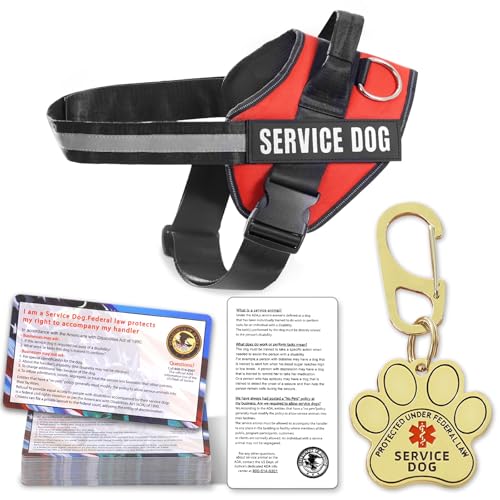
- Optional ID & Vests: Many handlers choose to use a vest or identification card to avoid unwanted questioning.
- Program Graduation: If you train with a program, you may receive a certificate of completion.
- Avoid Scams: Beware of websites that charge high fees for "official" registration — these are not legitimate.
Some organizations provide a vest or ID packet for convenience, but these are not legally required. A well-fitting harness or vest can help signal that your dog is working.
Cost of Training & Maintenance
The financial investment for a service dog is significant, but it varies widely based on your approach.
- Owner-Training: $1,000 – $5,000+ for training equipment, treats, professional consultations, and veterinary care. This is the most flexible option but requires significant time.
- Professional Program: $15,000 – $50,000+ depending on the organization and the dog's training level. Some programs offer financial assistance.
- Ongoing Costs: Yearly veterinary exams, vaccinations, parasite prevention, food, grooming, and equipment (leashes, collars, harnesses).
- Unexpected Costs: Emergency veterinary care, additional training, or replacing worn gear.
While the upfront cost can be high, many handlers find the independence and support a service dog provides to be invaluable.
Frequently Asked Questions
Your Service Dog Journey Starts Here
Becoming a service dog team is a profound commitment that can transform your life. Whether you choose to owner-train or go through a program, the resources you need are within reach. Start with a clear plan, invest in quality training, and always prioritize your dog's well-being. For more guidance, explore our training section and essential products to support your journey.