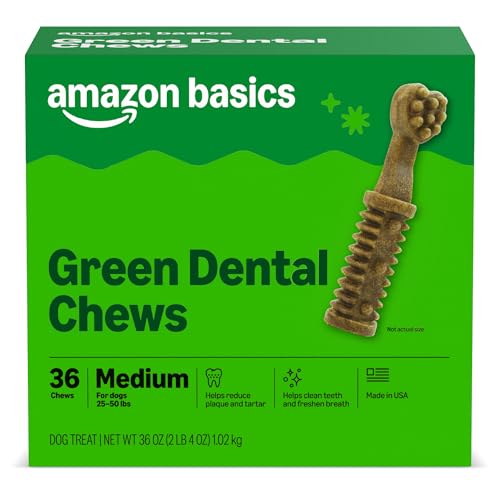
Green Dental Chews for Dogs: What Actually Works
Veterinarians agree that daily plaque control matters — but not every green chew on the shelf is worth your money. Here is how to tell the difference before you buy.
Dental disease is the most common health problem diagnosed in dogs. By age three, most dogs already show some signs of periodontal disease — gum inflammation that can progress to tooth loss and even affect the heart, liver, and kidneys. Brushing is the gold standard, but the reality is that most owners do not brush daily. That is where green dental chews enter the conversation.
This guide cuts through the marketing claims and explains what green dental chews actually do, which ones have independent proof of effectiveness, and how to use them safely as part of a realistic oral care routine. If you are researching before buying, you are already doing the right thing — the right chew, used correctly, can meaningfully reduce plaque and tartar between veterinary cleanings.
Why Dental Chews Matter for Your Dog
Plaque is a soft, sticky film of bacteria that forms on teeth within hours of eating. If it is not removed mechanically, it mineralizes into tartar within days — a hard deposit that cannot be brushed away and requires professional scaling. Tartar harbors bacteria that irritate gums, causing gingivitis, which can progress to periodontitis and bone loss around the tooth roots.
Dental chews work by providing mechanical friction as your dog chews. The texture and shape of the chew scrub against tooth surfaces, disrupting plaque before it hardens. This is why chew design matters as much as ingredients: a chew that is too soft provides no scrubbing action, while one that is too hard risks tooth fractures. The sweet spot is firm enough to resist immediate swallowing but flexible enough that teeth sink in rather than crack.
What the research shows: Dogs given a VOHC-accepted dental chew daily show significantly less plaque and tartar accumulation than dogs given no chew, with measurable differences appearing within four weeks in controlled studies. These chews are not a cure-all, but as a daily habit they deliver real, incremental benefit.
How Green Dental Chews Work
“Green” dental chews fall into two broad categories, and understanding the difference helps you evaluate what you are buying.
Mechanical Chews (Texture-Based)
Most green dental chews rely primarily on mechanical action. As your dog chews, the chew's ridges, nubs, or grooves press against the tooth surface and gumline, physically dislodging plaque. Ingredients like chlorophyll or parsley may be added for breath freshening, but the cleaning power comes from how the chew is shaped and how long it lasts.
Longer chewing time generally means more cleaning. A chew that your dog swallows in thirty seconds provides minimal benefit compared to one that takes several minutes of sustained gnawing. This is why size matching is critical: a chew that is too small for your dog gets gulped rather than chewed, which is both ineffective and a choking risk.
Functional Chews (Ingredient-Assisted)
A newer category combines mechanical cleaning with active ingredients designed to inhibit plaque formation or support a healthier oral microbiome. These may include postbiotics, enzymes, zinc gluconate, or sodium polyphosphates that help prevent minerals from binding to the tooth surface. Some also contain delmopinol, a compound that makes the tooth surface slippery so plaque adheres less easily.
These functional chews are not inherently better than purely mechanical ones — the evidence for each ingredient varies in strength. What matters is whether the specific product has been tested and accepted by the VOHC or backed by published clinical research. If you want to complement a dental chew with a broader oral care product, you might also look at a dog toothbrush designed for daily use, which remains the most reliable tool for plaque removal at the gumline.
The VOHC Seal Explained
The Veterinary Oral Health Council (VOHC) is an independent body overseen by the American Veterinary Dental College. When a product carries the VOHC seal, it means the manufacturer submitted scientific data demonstrating that the product reduces plaque and/or tartar by a statistically significant margin compared to a control group. The review is conducted by veterinary dentists and researchers, not by the company itself.
For a consumer, the VOHC seal is the single most useful shortcut in a crowded market. It does not mean the product is the “best” chew for every dog — it means the product has proof that it does what it claims. Some excellent chews may not carry the seal simply because the manufacturer has not applied for review, but all else being equal, a VOHC-accepted product is the safer bet.
| What to Look For | Why It Matters |
|---|---|
| VOHC seal on packaging | Independent verification of plaque and/or tartar reduction claims. |
| Size matched to dog’s weight | Correct size ensures adequate chewing time and reduces choking risk. |
| Chewy, flexible texture | Allows teeth to sink in and scrub without fracturing enamel. |
| Clear calorie information | Dental chews add calories; weight management matters for overall health. |
| Life-stage suitability | Puppies need different textures; seniors may need softer chews. |
Ingredients Worth Knowing
Not every ingredient on a dental chew label matters for dental health. Here are the ones that do, and what the evidence says.
- Sodium polyphosphates: Help prevent plaque from hardening into tartar by binding calcium in saliva. Found in several VOHC-accepted chews.
- Zinc gluconate: Has mild antibacterial properties and can help reduce breath odor. Often paired with other active ingredients.
- Chlorophyll: A common “green” ingredient that can temporarily reduce breath odor but does not remove plaque. Think of it as a breath freshener, not a cleaner.
- Postbiotics: Inactive compounds produced by beneficial bacteria. Some early research suggests they can help balance the oral microbiome and reduce odor-causing compounds, but independent long-term data is still limited.
- Delmopinol: A compound that creates a barrier on the tooth surface, making it harder for bacteria to attach. Found in some VOHC-accepted chews.
- Enzymes (e.g., lactoperoxidase): Naturally occurring antimicrobial compounds. Evidence for dental benefit in chew form is modest compared to mechanical action.
A note on “natural” labels: “Natural” is not a regulated term with a defined dental benefit. A chew can be natural and still provide zero measurable plaque reduction. The VOHC seal tells you far more about effectiveness than any front-of-package claim. If you want to understand what goes into your dog's mouth more broadly, our guide to dog treats covers how to read labels and avoid unnecessary fillers.
How to Choose the Right Chew for Your Dog
Choosing well comes down to four factors: size, texture, proof, and your dog’s individual mouth.
- Match the size to your dog’s weight, not their personality. A 15-pound terrier with a big attitude still needs a small chew. Oversized chews encourage gulping; undersized chews are a choking hazard. Follow the weight ranges on the package precisely.
- Prioritize a texture that flexes. A good dental chew bends slightly before it breaks. Hard chews like antlers, hooves, and some nylon bones are too hard and can fracture teeth — especially the large carnassial teeth at the back of the mouth.
- Look for the VOHC seal first, brand second. Several brands carry the seal on specific products but not others. Check the VOHC directory for the exact product and size you are considering.
- Consider your dog’s mouth condition. Senior dogs, dogs with missing teeth, and dogs with known periodontal disease may need a softer chew or a veterinary assessment before starting. Puppies should not get dental chews until their adult teeth are coming in, typically around six months.
If your dog has a sensitive stomach or food allergies, check the ingredient list carefully — some dental chews contain wheat, gelatin, or poultry by-products that may not suit every dog. A chew that causes digestive upset is not worth the dental benefit. For dogs prone to food sensitivities, you may find our guide on dog food for allergies and sensitive stomachs useful for understanding how to evaluate ingredient lists more broadly.
Safety and Supervision
Dental chews are edible products, and like any edible product, they carry some risk if used incorrectly. The most common problems are choking, gulping, and gastrointestinal upset from swallowing large pieces or eating too many.
- Supervise every chew session. Especially for the first few times your dog tries a new chew, watch to make sure they are chewing rather than swallowing whole.
- Never give more than the recommended daily amount. One appropriately sized chew per day is the standard. More than that adds calories without adding dental benefit.
- Provide fresh water. Chewing stimulates thirst. Always have water available.
- Skip chews if your dog has loose teeth or oral pain. A chew can worsen existing dental problems. Have your vet examine the mouth first.
- Adjust meals if weight becomes an issue. Dental chews are not calorie-free. If your dog gains weight, reduce their regular food slightly or choose a lower-calorie dental chew formula.
- Know the signs of trouble. Gagging, pawing at the mouth, drooling, or inability to swallow warrants immediate attention. If your dog swallows a chew whole and seems uncomfortable, contact your veterinarian.
A note for dogs with existing dental disease: If your dog has significant tartar buildup, red or bleeding gums, or persistent bad breath, a dental chew alone will not solve the problem. Book a veterinary dental exam first. A professional cleaning under anesthesia removes tartar above and below the gumline — something no chew can replicate. For more on what that involves, see our guide to dog dental cleaning.
Building a Realistic Dental Routine
The best dental routine is the one you will actually do consistently. Here is a practical framework that most owners can maintain:
- Daily: Give one appropriately sized dental chew. This is the easiest habit to build because it feels like a treat, not a chore.
- Several times per week (ideally daily): Brush your dog’s teeth with a dog-specific toothbrush and enzymatic toothpaste. Even two or three sessions per week adds meaningful benefit on top of chewing.
- Monthly: Check your dog’s mouth at home. Lift the lips and look at the gumline. Watch for redness, swelling, brown tartar buildup, or broken teeth. Early detection saves pain and money.
- Annually (or as recommended): Professional veterinary dental examination. Your vet may recommend a cleaning under anesthesia based on the degree of tartar and gum health.
This layered approach — chew plus brushing plus professional care — is how veterinary dentists recommend managing oral health. No single product does everything. For owners who want to explore more tools, our dog products section covers everything from toothbrushes to water additives, and our broader dog care guide puts dental care in the context of your dog’s overall health.
One more consideration: dental health does not exist in isolation. Dogs with healthy mouths tend to eat better, maintain weight more easily, and show fewer signs of systemic inflammation. Investing a few minutes a day in your dog’s mouth is one of the highest-return habits in pet care. If you are also working on weight management, our weight management guide pairs well with a dental routine, since lean dogs often live longer and have fewer health complications.
Frequently Asked Questions
The bottom line: Green dental chews are a practical, low-effort way to support your dog’s oral health between brushings and professional cleanings. Choose a VOHC-accepted product, match the size to your dog’s weight, supervise every chew, and give one per day. Pair that with brushing when you can and annual veterinary dental exams. Your dog’s teeth — and your nose — will thank you.