How to Get a Dog to Use a Puppy Pad
Puppy pads only work when the setup, timing, and rewards are right. This guide shows you exactly how to train your dog to use a pad reliably — and how to fix the most common pad-training failures.
Puppy pads are one of the most misunderstood training tools in dog care. Used correctly, they give young puppies, apartment dogs, senior dogs, and dogs recovering from illness a safe, consistent place to eliminate indoors. Used incorrectly, they create a dog who pees on rugs, beds, and bath mats because the pad never became a clear, rewarding target.
The good news is that pad training follows the same behavioral principles as any other potty training method. You control the environment, you time the potty breaks, and you reward the exact behavior you want. This guide walks you through every step — from choosing the right pad to troubleshooting a dog who keeps missing the target — so you can build a routine that actually sticks.
Quick Reality Check: Puppy pads are not a shortcut around potty training. They are a location for potty training. Your dog still needs supervision, a schedule, and consistent reinforcement — the pad simply defines where the behavior happens.
Why Puppy Pad Training Works
Dogs are naturally inclined to eliminate on absorbent, textured surfaces. Puppy pads take advantage of this instinct by giving your dog a consistent, clearly defined bathroom spot that is easy to recognize and easy to reward. When the pad is always in the same place, always clean, and always followed by a reward, your dog learns a simple rule: this surface means bathroom.
Pad training is especially useful in several situations:
- Young puppies: Puppies under 16 weeks cannot physically hold their bladder for long. Pads prevent accidents while their bladder control develops.
- Apartment living: If you live on a high floor or have limited outdoor access, pads give your dog a reliable indoor option, especially at night or during bad weather.
- Senior and ill dogs: Older dogs with arthritis, incontinence, or mobility issues often cannot wait for a walk. Pads preserve their dignity and keep your home clean.
- Post-surgery recovery: Dogs recovering from surgery may be restricted from outdoor walks. Pads keep their routine intact during recovery.
- Extreme weather: In heavy snow, ice, or heat waves, pads offer a safe alternative to forcing your dog outside.
The key is to treat pad training as a deliberate system, not a random mat on the floor. Every part of the setup — placement, size, timing, and reward — matters. If you are also working on general house training, our guide on how to teach a puppy not to poop in the house explains how pad training fits into the bigger picture.
Setting Up the Pad Correctly
Most pad training failures start with a setup problem, not a stubborn dog. If the pad shifts, slides, or feels unstable under your dog's paws, they will avoid it or step off it mid-squat. A proper setup removes every physical reason for your dog to miss.
Placement Rules
- Choose a quiet, low-traffic spot. Avoid doorways, kitchens, and places where people walk through constantly. A corner of a bathroom, laundry room, or a dedicated area near the door works well.
- Keep it away from food and water bowls. Dogs instinctively avoid eliminating near their food source.
- Place the pad against a wall or in a corner. A dog that approaches from one side is less likely to have their rear end hang off the edge.
- Keep the location consistent. Moving the pad every day confuses your dog. Pick one spot and keep it there for at least several weeks.
- Start close to the dog's resting area for very young puppies. A puppy who wakes up needing to go should not have to travel across the house to reach the pad.
Physical Setup
- Use a pad large enough for the dog. Small dogs need at least a standard pad; medium and large dogs need oversized pads or two pads placed side by side.
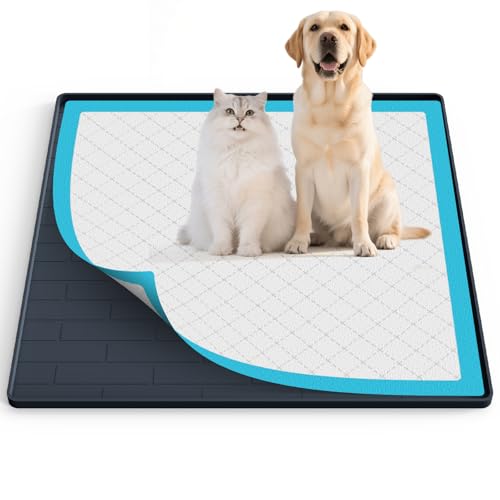
- Secure the pad so it does not slide. A pad holder, tray, or a few strips of tape underneath prevent shifting. An unstable pad is a common reason dogs refuse to use it.
- Keep the pad flat and wrinkle-free. Wrinkles create uneven footing and can cause the dog to step off.
- Keep the area well-lit. Dogs can be reluctant to eliminate in dark corners. A nightlight helps for overnight use.
- Have a backup pad ready. Clean up immediately after each use so the pad stays a consistent target.
Pro Tip: If your dog already has an accident spot in the house, place the pad near that spot first. You are not endorsing the accident location — you are making the pad the obvious new target for the same behavior pattern, then gradually moving it to your preferred location.
Building a Potty Schedule
Dogs thrive on routine, and potty training is no exception. A predictable schedule gives your dog regular opportunities to use the pad successfully, which is how the habit forms. Without a schedule, you are relying on luck — and luck produces accidents.
Potty Break Frequency by Age
| Dog Age | How Often to Offer the Pad | Key Times to Always Offer |
|---|---|---|
| 8–12 weeks | Every 1–2 hours while awake | On waking, after meals, after play, before sleep |
| 12–16 weeks | Every 2–3 hours while awake | On waking, after meals, after play, before sleep |
| 4–6 months | Every 3–4 hours while awake | On waking, after meals, after play, before sleep |
| 6+ months and adult dogs | 4–6 times per day | On waking, after meals, before bed, after long naps |
| Senior or ill dogs | As frequently as needed | On waking, after meals, before bed, and any time they show restlessness |
The most important moments are immediately after waking and within 15–20 minutes after eating. These are the times dogs are most likely to need to go, so they are your best opportunities to reward success on the pad.
How to Read Potty Signals
Learn your dog's pre-potty behavior so you can guide them to the pad before an accident happens. Common signals include:
- Sniffing the floor in circles
- Pacing or restlessness
- Sudden interest in a specific corner or area
- Whining or staring at the door
- Squatting or starting to lower the rear end
When you see a signal, calmly pick up or lead your dog to the pad. Do not scold or rush — a stressed dog is less likely to eliminate. Stay quiet, let them sniff the pad, and reward immediately after they finish. If you are also teaching your dog to signal you, our guide on how to train a puppy to ask to go outside pairs well with a pad routine.
Step-by-Step Training Method
This method works for puppies, adult dogs, and rescue dogs who have never used a pad. Follow the steps in order — skipping steps is the most common reason training stalls.
- Confine the dog when you cannot supervise. Use a crate, playpen, or a small gated area with the pad inside. Free-roaming a dog during training guarantees accidents and teaches the wrong surface. If you are crate training at the same time, review our guide on how to stop your puppy from crying in the crate.
- Take the dog to the pad on schedule. Lead them on a leash or carry them. Use a calm, neutral tone. Give them 2–3 minutes to sniff and circle. Do not play with them or talk excessively — this is a bathroom trip, not playtime.
- Reward every successful elimination immediately. The reward must happen within 1–2 seconds of the dog finishing. Use a high-value treat, praise, or a favorite toy. This is the single most important step in pad training.
- If nothing happens, return the dog to confinement. Do not let them roam. Try again in 10–15 minutes. This teaches the dog that leaving the pad without eliminating means going back to the pen, while using the pad earns freedom and rewards.
- Clean accidents with an enzymatic cleaner. Regular cleaners leave behind scent markers that tell the dog "this is a bathroom." An enzymatic cleaner breaks down the proteins that cause the scent. If your dog repeatedly returns to the same accident spot, the scent is likely the reason.
- Gradually expand freedom as reliability improves. Once your dog uses the pad consistently for a week or two, start allowing short supervised periods outside the pen. Expand gradually — one room at a time — and keep the pad in its original location.
- Watch for regression during developmental changes. Teething, growth spurts, and changes in routine can cause temporary setbacks. Return to the stricter confinement schedule for a few days until reliability returns.
Why the reward matters so much: Dogs repeat behaviors that are reinforced. If your dog uses the pad and gets nothing, the pad is just a mat. If your dog uses the pad and gets a treat and praise, the pad becomes a destination. Reward quality matters more than quantity — use something your dog genuinely loves, and reduce the treat size as the habit strengthens.
Fixing Common Pad Problems
When pad training goes wrong, the cause is almost always identifiable. Here are the most common problems and their fixes.
Dog pees next to the pad
The pad is too small, the dog approaches from the wrong angle, or the pad shifts under their paws. Use a larger pad, place it against a wall, secure it with a holder, and reward the dog for standing fully on the pad even before they finish.
Setup fixDog avoids the pad entirely
The pad may feel unstable, be in a noisy location, or smell like a previous accident. Replace it with a fresh pad, move it to a quieter spot, and try a holder with a grate for dogs who dislike the texture.
Environment fixDog shreds or eats the pad
This is usually boredom, teething, or attention-seeking. Use a pad holder with a grate, supervise every pad visit, redirect with a chew toy, and add more mental stimulation. Contact your vet if large pieces are ingested.
Behavior fixDog was pad trained, now refuses
Check for a physical cause first — a urinary tract infection, pain, or age-related incontinence can make a dog avoid the pad. If health is clear, return to the basic schedule and reward every success again for a week.
Health checkDog uses the pad but also pees elsewhere
Inconsistent supervision is the usual culprit. Confine the dog when you cannot watch them, clean other accident spots with enzymatic cleaner, and check whether the pad is being kept clean enough for the dog to want to use it.
Consistency fixDog only uses the pad at night
This often means daytime supervision is too loose or the dog is being rushed outdoors before they can use the pad. Increase daytime pad trips, reward during the day, and keep the nighttime routine identical.
Routine fixIf your dog is having frequent accidents, a veterinary check is always worth it. Urinary tract infections, diabetes, and incontinence are common medical causes of sudden potty training regression, and no amount of training will fix a medical problem. For dogs with chronic incontinence, products such as dog diapers can be used alongside pad training.
Choosing the Right Pad Supplies
The supplies you use directly affect how reliably your dog uses the pad. The market has three broad tiers of pad products, and the right choice depends on your dog's size, chewing habits, and how long the pad needs to last.
- Entry-level pads: Thin, lightweight, and best for very small puppies or short-term use. They need frequent replacement and can shift easily, so they work best inside a holder.
- Mid-range pads: Thicker absorbency, larger sizes, and adhesive strips or a leak-proof backing. This is the most practical tier for most households — reliable enough for everyday use without the premium cost.
- Premium pads: Super-absorbent cores, odor control, quick-dry topsheets, and larger sizes for medium and large dogs. These make sense for overnight use, multi-dog homes, or dogs who need a pad that stays dry underfoot.
Beyond the pad itself, a few accessories make training significantly easier:
- Pad holders and trays: Keep the pad flat, prevent sliding, and stop dogs from chewing the edges. A holder with a grate is especially useful for dogs who shred pads.
- Enzymatic cleaner: Essential for removing accident scent markers from carpets and floors.
- Waste bags: For quick cleanup and disposal of used pads.
- A dedicated potty area setup: If your dog is a heavy chewer, consider a dog gate to keep the pad area separate from the rest of the room until the habit is established.
If you are choosing between pad training and crate-based house training, our guide on how to train a puppy to tell you to go outside explains how to combine both approaches without confusing the dog.
Transitioning From Pads to Outdoor Potty
Many owners use pads temporarily and later want their dog to eliminate outdoors. The transition works best when you plan it before the dog becomes fully dependent on the pad.
- Move the pad closer to the door gradually. Shift it a few inches each day over a week or two until it is next to the exit. This builds a path toward the door without breaking the habit.
- Take the pad outside. Place a pad on a porch, balcony, or patio first, then gradually move it onto grass. The familiar texture helps the dog generalize the behavior to a new location.
- Pair the outdoor trip with a cue. Say a consistent phrase like "go potty" every time the dog eliminates, whether on the pad or outside. Once the dog associates the phrase with the action, you can use it to prompt outdoor elimination.
- Reward heavily outdoors. Outdoor potty should feel more rewarding than pad potty. Use a higher-value treat outside and praise enthusiastically.
- Remove the indoor pad only after outdoor success is reliable. If you remove the pad too early, the dog will simply pick a new indoor spot. Keep the pad available until the dog has had at least two weeks of consistent outdoor success.
Important: If your dog is a puppy under 16 weeks, do not remove the pad completely until they have completed their vaccination series and your veterinarian confirms it is safe for them to walk in public areas. For vaccination timing, see our guide on how old puppies are when they get parvo shots.
Mistakes That Sabotage Training
- Punishing accidents after the fact. Dogs cannot connect punishment to an action that happened minutes ago. Punishment creates fear and hiding behavior, which makes accidents harder to catch and fix.
- Letting the dog roam unsupervised too early. Freedom is earned. A dog who has not yet proven reliable on the pad should be confined or tethered when you cannot watch them.
- Using the wrong cleaner. Regular household cleaners do not remove the scent markers that tell a dog "this is a bathroom." Use an enzymatic cleaner every time.
- Moving the pad constantly. A moving target is not a target. Keep the pad in one place until the habit is solid.
- Not rewarding success. The pad only becomes meaningful if using it leads to something good. Reward every successful elimination, especially in the first few weeks.
- Ignoring medical causes. A sudden regression in a previously reliable dog is often a urinary tract infection or other medical issue. Rule out health problems before assuming it is a training failure.
- Switching methods too often. Alternating between pads, outdoor training, and pee-pad alternatives without a plan confuses the dog. Pick one method and follow it consistently for at least several weeks.
If your dog has developed anxiety around potty training — for example, eliminating only when alone or holding it until they are distressed — our guide on how to get a puppy to stop crying when left alone addresses the emotional side of training.
Frequently Asked Questions
The Bottom Line
Getting a dog to use a puppy pad comes down to four things: a stable, well-placed pad; a predictable schedule; immediate rewards for success; and consistent supervision when you cannot be there. If your dog is missing the pad, the setup usually needs adjusting. If your dog is avoiding the pad, the environment or the pad's condition is usually the problem. If your dog was successful and suddenly regressed, a veterinary check is the first step. Solve the cause, keep the routine consistent, and pad training becomes one of the most reliable house-training methods available.