How to Train My Dog to Use a Pee Pad
Follow this step-by-step system to teach your puppy or adult dog to use a pee pad reliably — with schedules, troubleshooting, and the mistakes that sabotage training.
Teaching your dog to use a pee pad is one of the most practical house-training skills you can build — especially if you live in an apartment, face harsh weather, or have a puppy who cannot yet go outside safely. The good news is that dogs naturally prefer to eliminate on absorbent surfaces, so with the right routine you are working with your dog's instincts rather than against them.
The bad news? Most pee pad training failures come down to inconsistency, poor setup, or reward timing that is too late. This guide walks you through the entire process — from choosing the right pad and location to handling accidents without destroying progress, and eventually transitioning outdoors if that is your long-term goal.
Quick Summary: Place the pad in a quiet, consistent spot. Take your dog there every 2–3 hours and after meals, naps, and play. Reward within 1–2 seconds of success. Clean accidents with enzymatic cleaner, never punishment. Expect 2–4 weeks to basic reliability and 2–3 months for full confidence.
Why Pee Pad Training Works
Dogs are naturally clean animals. In the wild, they avoid soiling their sleeping and eating areas. This instinct is the foundation of all house training — including pee pad training. When you provide a dedicated, consistent potty spot that is separate from their bed and food bowl, you are giving your dog a clear location where elimination is acceptable.
Pee pads also offer practical advantages that outdoor training cannot match in certain situations. If your puppy has not finished their parvovirus vaccination series, taking them outside where other dogs roam can be dangerous. Pads let you build good habits indoors while keeping them safe. For apartment dwellers or owners of high-energy breeds in apartments, pads remain a reliable backup option even after outdoor training is complete.
One important distinction: pee pad training and outdoor potty training are not enemies, but they should not be taught simultaneously to a beginner puppy without a clear plan. Mixing methods too early creates confusion about where elimination is acceptable. Decide on your primary method first, then layer in the second one later.
Setting Up the Right Potty Station
The physical setup of your potty area directly influences how fast your dog learns. A poorly placed, tiny, or unstable pad frustrates dogs and leads to missed targets — one of the top reasons owners give up on pad training prematurely.
Location Rules
- Away from food and water bowls: Dogs instinctively avoid soiling near their food source. If the pad is next to the bowl, many dogs will choose the carpet instead.
- Out of high-traffic paths: A pad placed in the middle of a hallway gets stepped on, moved, and becomes a nuisance. Choose a corner with low foot traffic.
- Quiet and private: Many dogs are distracted or reluctant to eliminate in noisy, open areas. A bathroom corner, laundry room, or enclosed playpen area works well.
- Consistent: Do not move the pad around during training. The location itself becomes a cue. Moving it resets your dog's understanding.
- Accessible during confinement: If your dog is in a crate or pen, the pad must be reachable. A puppy cannot hold their bladder long enough to wait for you to open the crate.
Pad Size and Setup
Use a pad large enough for your dog to stand fully on with room to turn around. For small puppies, a standard pad is fine. For medium or larger dogs, use two pads side by side or a larger commercial pad. A pad that is too small forces your dog to stand with front paws off the edge, and many dogs will simply go beside it instead.
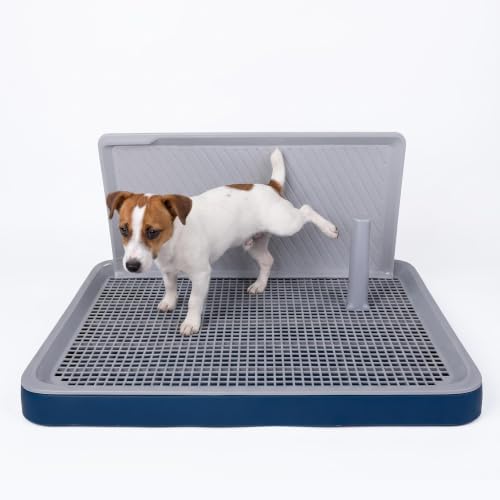
Secure the pad. Loose pads shift underfoot, bunch up, and can be shredded. A pad holder or a shallow tray keeps the pad flat and stationary. This single upgrade reduces missed targets dramatically. If you are worried about your dog chewing the pad, a tray with a grille or a washable pad system is worth the investment.
Pro Tip: During the first week, dab a tiny amount of your dog's urine onto the center of a fresh pad. The scent marker tells your dog "this is the bathroom" and speeds up the learning curve. Replace the pad once it is heavily soiled, but keep a faint scent cue during early training.
Step-by-Step Training Process
Pee pad training follows the same behavioral principles as any house training: create opportunities for success, reward immediately, and prevent mistakes. Here is the complete sequence.
Step 1: Confine and Supervise
Start with a small, safe area — a playpen, a puppy-proofed room, or a crate attached to an exercise pen. The smaller the space, the less opportunity your dog has to sneak off and eliminate in a corner. Supervise directly whenever your dog is loose. If you cannot watch them, confine them. This is not punishment; it is management that prevents rehearsal of bad habits. Our guide on how to puppy-proof your home covers safe confinement setups in detail.
Step 2: Take Your Dog to the Pad Frequently
Frequency is the engine of potty training. A young puppy needs to eliminate every 1–2 hours while awake. Adult dogs can go longer, but during the learning phase take them to the pad every 2–3 hours regardless. Always take them immediately after these trigger events:
- Waking up from a nap or overnight sleep
- Within 15–30 minutes of eating or drinking
- After active play or training sessions
- After being let out of the crate
- Before bedtime and first thing in the morning
Step 3: Use a Cue and Stay Calm
Pick a simple verbal cue like "go potty" or "potty pad." Say it once in a calm, neutral tone as your dog is on the pad. Do not repeat it endlessly or let it become background noise. Keep your body still and your voice quiet — excited energy distracts dogs and makes them want to play instead of eliminate.
Step 4: Reward Within 1–2 Seconds
This is the most common failure point. The reward must come while your dog is still on the pad, or immediately as they finish. If you wait until you walk to the kitchen for a treat, your dog has already moved on and the connection is lost. Keep treats in a jar right beside the potty station. Praise softly and deliver the treat the instant elimination ends. For dogs who are food-motivated, use a high-value treat that is reserved only for potty success.
Step 5: Handle Accidents Correctly
Accidents will happen. What you do next determines whether training moves forward or backward. Never scold, rub your dog's nose in it, or act angry. Dogs do not connect delayed punishment to the act, and punishment teaches them to hide elimination from you — which makes training harder. Instead:
- Interrupt gently if you catch them mid-accident by clapping or saying "oops" — not yelling — and move them to the pad.
- Clean the spot with an enzymatic cleaner that destroys the urine scent. Regular cleaners leave residual odor that attracts your dog back to the same spot.
- Review your management. An accident usually means the dog had too much freedom, was taken out too infrequently, or the pad location was not accessible.
Important: If your dog is having frequent accidents despite a solid routine, rule out medical causes. Urinary tract infections, skin irritation near the potty area, and digestive issues can all cause changes in elimination behavior. A vet check is warranted before assuming it is a training problem.
Daily Training Schedule
Consistency beats intensity. A predictable daily routine does more for pee pad training than any single technique. Below is a sample schedule for a young puppy. Adjust timing based on your dog's age and bladder capacity.
Sample Puppy Pee Pad Schedule
6:30 AM — Wake up, immediately to the pad. Reward success.
7:00 AM — Breakfast. Take to pad 15–20 minutes after eating.
8:00 AM – 12:00 PM — Supervised play, nap in crate, pad break every 1–2 hours.
12:00 PM — Lunch (if feeding three times daily). Pad break after.
1:00 PM – 5:00 PM — Nap, play, pad breaks every 1.5–2 hours.
5:30 PM — Dinner. Pad break after.
6:00 PM – 9:00 PM — Active play, training, pad break before bed.
10:00 PM — Last pad visit. Bedtime in crate.
For adult dogs, you can stretch intervals to every 3–4 hours during the day, but always include a pad visit first thing in the morning, after meals, and before bed. Overnight, most adult dogs can hold it 6–8 hours; puppies under four months usually need one middle-of-the-night pad break.
| Age | Bladder Capacity | Pad Break Frequency |
|---|---|---|
| 8–12 weeks | Very small | Every 1–2 hours while awake |
| 3–4 months | Growing | Every 2–3 hours |
| 4–6 months | Moderate | Every 3–4 hours |
| 6+ months / adult | Full | Every 4–6 hours, plus after meals |
Troubleshooting Common Problems
Almost every owner hits at least one of these roadblocks. The fix is usually about setup or timing rather than a stubborn dog.
Dog Pees Next to the Pad, Not On It
This is the number one complaint. Causes and fixes:
- Pad is too small: Your dog's stance extends beyond the pad. Use a larger pad or place two side by side.
- Pad moves: A shifting pad feels unstable. Use a holder or tray.
- Texture aversion: Some dogs dislike the plasticky feel. Try a washable cloth pad or a different brand with a softer top layer.
- Residual scent nearby: If the dog previously went beside the pad, that spot smells like a bathroom. Clean thoroughly with enzymatic cleaner and block access to the old spot.
Dog Refuses to Use the Pad at All
Some dogs are pad-averse. Try placing a small amount of their own urine or a piece of soiled paper on the pad. If that fails, try a different pad material — grass-style pads mimic outdoor surfaces and work well for dogs transitioning from outside. Also check that the pad area is not too close to the crate or food, and that it is not in a noisy location.
Dog Chews or Shreds the Pad
Shredding is usually boredom or teething. Solutions: supervise closely, use a pad tray with a grille that prevents edge-grabbing, redirect to appropriate chew toys, and provide more mental stimulation. If your dog ingests large pieces, contact your vet — pad material can cause a blockage.
Training Regresses After Initial Success
Regression is normal, especially during teething (4–6 months) or after a routine change. Do not panic and do not add punishment. Go back to basics: tighter supervision, more frequent pad visits, higher-value rewards, and re-clean all accident spots with enzymatic cleaner. Most regressions resolve within one to two weeks with consistent management.
Consistency Tip: Everyone in the household must follow the same routine. If one person rewards potty on the pad and another ignores it, your dog receives mixed signals. Print the schedule and post it where everyone can see it.
Transitioning From Pads to Outdoors
If your long-term goal is outdoor potty training, plan the transition once your puppy is fully vaccinated and your routine is stable. The cleanest method is to move the pad gradually toward the door, then outside.
- Shift the pad location: Move the pad one to two feet closer to the exit door every few days. Keep the same cue and reward.
- Place the pad just outside the door: Once the pad is at the door, move it to a balcony, patio, or just outside the entrance.
- Fade the pad: Reduce the pad size or replace it with a patch of grass in the outdoor spot. Grass-style pads help bridge the texture difference.
- Add outdoor cues: Take your dog out on the same schedule you used for pads. Use the same potty cue. Reward generously outdoors.
- Remove pads entirely: Once your dog reliably eliminates outside on schedule, remove indoor pads. Keep one backup pad available only for emergencies like illness or extreme weather.
If you are also teaching your dog to signal when they need to go out, our guides on how to train a puppy to ask to go outside and ringing a bell to go outside pair perfectly with this transition phase.
Choosing the Best Pee Pads
Not all pads are equal. The right choice depends on your dog's size, chewing habits, and whether you prefer disposable or washable options.
- Standard disposable pads: Entry-level option. Thin, affordable, widely available. Best for small puppies and short-term training. Change frequently.
- Super-absorbent disposable pads: Mid-range option with multiple layers and leak protection. Better for medium dogs and overnight use. Quick-dry topsheet reduces tracking.
- Adhesive or tray-secured pads: Mid-tier to premium. Stick to the floor or lock into a tray. Excellent for dogs who move the pad or miss the target.
- Washable cloth pads: Premium option over time. Reusable, softer on paws, and eco-friendly. Require laundering but hold up to repeated use. Good for adult dogs who do not shred.
- Grass-style pads: Premium option for dogs transitioning outdoors or dogs who refuse fabric pads. Mimics natural grass texture and helps bridge indoor-to-outdoor training.
Regardless of type, replace soiled pads promptly. A dirty pad is a training setback — many dogs will avoid a heavily soiled pad and eliminate nearby instead.
Frequently Asked Questions
The Bottom Line: Pee pad training succeeds through routine, supervision, and instant rewards — not through punishment or luck. Set up a dedicated, stable potty station, take your dog there on a predictable schedule, reward within seconds of success, and manage accidents with enzymatic cleaner instead of anger. Whether you are training a young puppy or retraining an adult dog, the same principles apply. And if you are also working on overnight whining or crate anxiety, our guides on stopping puppy whining at night and kennel training with separation anxiety will help you build a complete house-training plan.