Over the Counter Flea and Tick Prevention for Dogs
Everything you need to know about choosing safe, effective non-prescription flea and tick protection — active ingredients, product types, safety warnings, and how to build a reliable prevention routine.
Fleas and ticks are more than just a nuisance — they cause intense itching, trigger allergic skin reactions, and transmit serious diseases that affect both dogs and humans. For many dog owners, the first instinct is to reach for an over-the-counter product that promises quick, affordable protection. But with dozens of options lining pet store shelves and online marketplaces, choosing the right one can feel overwhelming.
This guide cuts through the marketing claims. It explains what actually works, what the active ingredients do, which products carry real safety risks, and how to decide whether an OTC option is sufficient for your dog's lifestyle — or whether a prescription flea and tick medicine is the safer investment.
Why Year-Round Prevention Matters
Many owners make the mistake of stopping flea and tick prevention during colder months. The reality is that modern homes and changing climates have extended parasite season well beyond summer. Fleas thrive indoors year-round, reproducing comfortably in carpets and bedding even when temperatures drop outside. Ticks remain active whenever temperatures rise above freezing — including during warm winter spells [citation:13][citation:19].
The math of a flea infestation is sobering: the fleas you see on your dog represent only about 5% of the total problem. The other 95% — eggs, larvae, and pupae — are scattered throughout your home environment. A single female flea can lay up to 50 eggs per day, and the full life cycle can complete in as little as three weeks indoors [citation:19].
This is why consistent, year-round prevention is not optional if you want to avoid the misery and expense of treating an established infestation. OTC products, when used correctly and without gaps, provide a practical and accessible layer of protection for many dog owners.
Key Insight: Prevention is dramatically easier and less expensive than eradication. A missed monthly dose creates a window for fleas to re-establish. Collars and long-acting products reduce the risk of human error, which is the most common cause of prevention failure.
Types of OTC Flea and Tick Products
Over-the-counter flea and tick prevention for dogs comes in several formats, each with distinct advantages and limitations. Understanding these differences is essential for matching the product to your dog's temperament, lifestyle, and your household routine.
Topical Spot-On Treatments
Spot-on products are liquid formulations applied directly to the skin, typically between the shoulder blades where the dog cannot easily lick them off. The active ingredients spread through the skin's oil layer to provide whole-body protection. Most are applied monthly.
- Pros: Widely available, relatively affordable, effective against fleas and multiple tick species, waterproof after drying.
- Cons: Can leave a greasy residue, requires correct application to skin (not fur), bathing frequency may reduce efficacy, some dogs experience application-site irritation.
- Best for: Dogs with sensitive stomachs who cannot take oral medications, owners comfortable with monthly application routines, multi-dog households where individual dosing is manageable.
Well-known OTC spot-on options include Frontline Plus (fipronil + S-methoprene), which kills adult fleas and ticks while also preventing flea eggs from developing, and products containing permethrin like Vectra 3D or K9 Advantix II, which add repellent action against ticks and mosquitoes [citation:6][citation:20].
Flea and Tick Collars
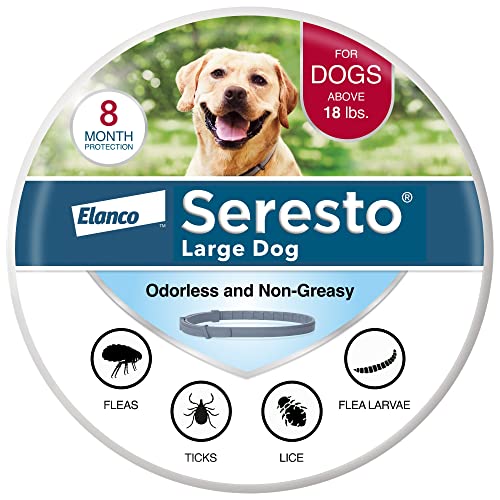
Collars represent a set-and-forget approach to prevention. The most established OTC option, Seresto, releases low concentrations of imidacloprid and flumethrin continuously for 7-8 months from a single application. It kills fleas and repels and kills ticks on contact, meaning ticks do not need to bite to be affected [citation:12][citation:20].
- Pros: Long duration eliminates monthly application errors, cost-effective over the protection period, no residue on the coat, water-resistant.
- Cons: Fit must be correct (too loose means poor contact), some dogs experience collar-site irritation, efficacy may decrease with frequent swimming or bathing, counterfeit products exist in online marketplaces.
- Best for: Owners who struggle to remember monthly doses, dogs with sensitive stomachs, households wanting a low-maintenance solution.
Flea and Tick Shampoos and Sprays
These products provide immediate knockdown of fleas and ticks present on the dog at the time of application. However, they offer little to no residual protection — often just days, or in the case of shampoos, only hours [citation:15].
- Pros: Fast relief for an itchy dog, useful as a supplement during an active infestation, easy to use.
- Cons: No lasting prevention, frequent reapplication required, can dry out skin with overuse.
- Best for: Immediate relief alongside a longer-acting preventive, not as a standalone prevention strategy.
Key Active Ingredients Explained
Understanding what is inside the product helps you evaluate claims and avoid dangerous combinations. Here are the most common active ingredients in OTC dog flea and tick products:
- Fipronil: A broad-spectrum insecticide that disrupts the nervous system of fleas and ticks. Found in Frontline Plus and generic equivalents. Kills adult parasites but does not repel ticks before they bite.
- S-Methoprene: An insect growth regulator (IGR) that prevents flea eggs and larvae from developing into adults. Often paired with fipronil to break the flea life cycle.
- Imidacloprid: A neonicotinoid insecticide that kills adult fleas. Found in Advantage II and Seresto collars. Does not control ticks on its own.
- Flumethrin: A pyrethroid that kills and repels ticks. Combined with imidacloprid in Seresto collars to provide both flea and tick control.
- Permethrin: A pyrethroid insecticide with repellent properties against ticks and mosquitoes. Found in K9 Advantix II and Vectra 3D. Highly toxic to cats.
- Pyriproxyfen: Another IGR that prevents flea development. Found in combination products like Advantage II and K9 Advantix II.
Critical Safety Warning: Permethrin-containing dog products are lethal to cats. If you share your home with cats, avoid these products entirely or keep treated dogs strictly separated from cats until the product has fully dried (typically 24-48 hours). Cats exposed to permethrin may develop tremors, seizures, and death. Always read labels carefully and consult your vet about multi-pet household safety [citation:5][citation:20].
OTC vs Prescription: What's the Difference
The most important distinction between OTC and prescription flea and tick prevention lies in the active ingredients and the level of veterinary oversight. Prescription products typically contain newer isoxazoline-class drugs (fluralaner, afoxolaner, sarolaner) that offer higher kill rates, faster speed of kill, and longer duration — often 1 to 3 months per dose [citation:3].
OTC products generally rely on older active ingredients like fipronil, imidacloprid, and permethrin. These have decades of safety data and are effective for many dogs, but they may be less reliable in areas with established flea resistance, or for dogs with heavy tick exposure [citation:20].
| Factor | OTC Products | Prescription Products |
|---|---|---|
| Accessibility | No vet visit required | Requires veterinary authorization |
| Active ingredients | Fipronil, imidacloprid, permethrin, IGRs | Isoxazolines (fluralaner, afoxolaner, sarolaner) |
| Speed of kill | Typically 12-48 hours | Often 2-6 hours |
| Duration | Monthly (topicals) or 7-8 months (collars) | 1-3 months per dose (orals) |
| Efficacy against heavy infestations | Moderate | High |
| Veterinary oversight | None | Dosing and monitoring by vet |
| Risk of counterfeit | Higher (especially online) | Lower when purchased through vet |
For dogs with low to moderate parasite exposure — living in areas with short tick seasons, not frequenting wooded areas, or spending most time in fenced yards — a well-chosen OTC product can provide adequate protection. For dogs with high exposure risk, a history of flea infestations, or sensitive health conditions, a vet-guided approach may be worth the additional cost and effort.
Safety Rules Every Owner Must Know
Flea and tick products are pesticides. They are designed to kill parasites, and they must be used with care. Following these safety rules protects your dog and everyone in your household:
- Never use dog products on cats. This is the most common and most dangerous mistake. Permethrin, found in many dog flea products, is highly toxic to cats. Even small exposures can be fatal. Use only species-specific products [citation:5].
- Dose by current weight. Weigh your dog before selecting a product. A growing puppy can outgrow its dose band in weeks. Using a product for a larger dog on a smaller dog increases the risk of adverse effects [citation:20].
- Read the age restrictions. Many products are not approved for puppies under 7-8 weeks old. Some are not safe for pregnant, breeding, or nursing dogs. Check the label every time [citation:5].
- Do not combine products without veterinary guidance. Using a topical and a collar, or two products with overlapping ingredients, can expose your dog to excessive pesticide levels. One product at a time unless your vet explicitly approves a combination.
- Buy from reputable sources. Counterfeit flea products are a real problem, particularly through third-party online sellers. Purchase from established retailers or directly from your vet. Counterfeits may contain incorrect ingredients or incorrect concentrations [citation:5][citation:20].
- Monitor for adverse reactions. Watch for application-site irritation, lethargy, vomiting, diarrhea, tremors, or behavioral changes after applying any new product. Contact your vet immediately if you notice concerning symptoms.
How to Choose the Right Product
There is no single "best" OTC flea and tick product — only the best product for your specific dog and situation. Use these questions to narrow your options:
- What is your dog's exposure risk? A dog who hikes in wooded areas every weekend has different needs than a senior dog who mostly relaxes in a fenced backyard. Higher exposure warrants stronger, more reliable protection.
- Do you have cats in the home? If yes, avoid permethrin-containing products entirely. Seresto collars (when the correct size for the dog) and fipronil-based topicals are safer choices for multi-pet households.
- Can you commit to a monthly schedule? If remembering monthly doses is unreliable, a long-acting collar like Seresto reduces the human-error factor. If you prefer the control of monthly application, a spot-on may suit you better.
- Does your dog swim or get bathed frequently? Frequent water exposure can reduce the efficacy of some topicals and collars. Check water-resistance claims and consider a product formulated for active, water-loving dogs.
- Does your dog have skin sensitivities? Dogs prone to skin irritation may do better with a collar (which avoids coat residue) or an oral product, though OTC oral options are limited. Topicals with fipronil are generally well-tolerated but can cause application-site reactions in sensitive dogs.
- What is your budget philosophy? Entry-level OTC products offer basic protection at the lowest upfront commitment. Mid-range options like Seresto provide better cost-per-month value over their lifespan. Premium prescription products cost more but deliver higher efficacy. Choose the tier that matches your priorities.
If your dog has a history of flea infestations, lives in a high-tick region, or has health conditions that affect product choice, start the conversation with your veterinarian. Even if you ultimately choose an OTC product, professional guidance ensures you are not missing a critical gap in protection.
Practical Tip: Whichever product you choose, pair it with a daily tick check. Run your fingers through your dog's coat after outdoor time, focusing on the ears, neck, armpits, groin, and between the toes. Removing a tick within 24-48 hours of attachment significantly reduces disease transmission risk. No product replaces the value of a hands-on check.
Common Prevention Mistakes
Even effective products fail when used incorrectly. These are the most common errors that leave dogs vulnerable:
- Gaps in protection. Applying a monthly product every 5-6 weeks instead of every 4 weeks creates windows of vulnerability. Set phone reminders or use a calendar to stay on schedule.
- Applying to fur instead of skin. Topical products must reach the skin to spread through the oil layer. Parting the fur and applying directly to skin is essential for efficacy. If the liquid sits on the coat, it will not work properly.
- Bathing too soon after application. Most topicals need 24-48 hours to fully distribute. Bathing before the product has spread can wash it away. Check the label for specific guidance.
- Treating only the dog. Fleas in the environment — carpets, bedding, furniture — will re-infest a treated dog. During an active infestation, daily vacuuming and hot-washing bedding are essential supplements to on-pet treatment.
- Assuming indoor dogs are safe. Fleas and ticks can hitchhike on clothing, shoes, or other pets. Indoor-only dogs still benefit from prevention, especially in multi-pet homes or households with outdoor cats or dogs.
- Ignoring the label. Every product has specific instructions for a reason. Age limits, weight bands, and application methods are not suggestions — they are safety requirements.
Frequently Asked Questions
The Bottom Line
Over-the-counter flea and tick prevention can be a practical, effective choice for many dog owners — especially those with moderate exposure risk who can commit to consistent application. The key is understanding what you are buying, reading labels carefully, respecting safety warnings (especially around cats), and maintaining year-round protection without gaps. If your dog has high exposure risk or you are unsure which product is appropriate, your veterinarian remains the best resource for personalized guidance.