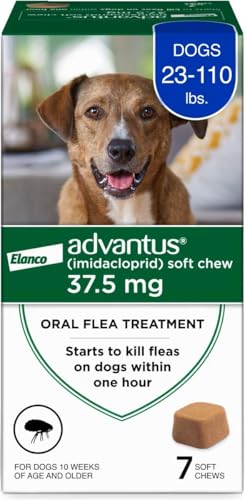
Prescription Flea and Tick Medicine for Dogs
Understand how vet-prescribed flea and tick protection works, compare oral chews versus topicals, and choose the right option for your dog’s health, lifestyle, and risk of parasite exposure.
If you are researching prescription flea and tick medicine for dogs, you are likely past the stage of wondering whether your dog needs protection. You already know parasites are a threat. What you need now is clarity: which product works best, whether the prescription premium is justified, and how to avoid wasting money on something that does not fit your dog’s specific situation.
Flea and tick protection is not a one-size-fits-all purchase. A product that works perfectly for a sedentary senior dog may be a poor fit for a young retriever who swims weekly. A chewable that lasts twelve weeks could be a nightmare for a dog with food sensitivities if the flavoring causes digestive upset. This guide cuts through the marketing and focuses on what actually matters when choosing a prescription flea and tick medicine.
Why Prescription Flea and Tick Medicine Is Different
Over-the-counter flea products have their place, especially for budget-conscious owners or dogs with mild exposure risk. But veterinarians generally prefer prescription options for a reason: they are more regulated, tend to be more effective, and carry a lower risk of side effects when used correctly [citation:6]. Prescription products often use newer active ingredients that target parasites more precisely, and they are backed by clinical data that over-the-counter products simply do not have to provide.
The difference is not just about strength. Prescription flea and tick medicines are selected with your dog’s full health picture in mind. Your vet considers weight, age, medical history, current medications, and lifestyle before recommending a product. That level of oversight is difficult to replicate when you grab a box off a store shelf. If you are currently using an over-the-counter option and wondering whether it is enough, our guide on over-the-counter flea and tick prevention for dogs can help you compare the basics.
Key distinction: Prescription flea and tick medicines are not automatically “stronger” in a dangerous sense. They are more precisely formulated and more thoroughly tested for specific parasite species and durations. The prescription requirement exists to ensure a veterinarian confirms the product is appropriate for your individual dog.
Oral Chews vs Topical Prescription Treatments
Prescription flea and tick medicines for dogs come in two main forms: oral chews and topical spot-on solutions. Each has genuine advantages and trade-offs. The right choice depends on your dog’s coat, swimming habits, household composition, and health history.
Oral Prescription Chews
Oral chews are flavored tablets that your dog swallows, usually once a month or once every twelve weeks depending on the active ingredient. The medication is absorbed into the bloodstream, and parasites are killed after they bite your dog [citation:16]. Popular prescription oral options include those containing afoxolaner, fluralaner, lotilaner, and sarolaner—all members of the isoxazoline class [citation:12][citation:16].
- Cannot be washed off: Swimming, bathing, and rain do not reduce effectiveness. This makes oral chews the preferred choice for water-loving dogs and dogs with thick double coats where topicals struggle to reach the skin [citation:16].
- No residue risk: There is no medication on your dog’s fur, which is safer for households with young children or cats that might groom the treated dog [citation:16].
- Easy to confirm dosing: You see your dog swallow the chew, so you know the dose was delivered. No worrying about whether the topical was applied correctly or licked off.
- Requires the parasite to bite: Oral products are systemic, meaning fleas and ticks must bite before they die. They do not repel parasites before attachment [citation:16].
- Neurological caution: The isoxazoline class has been associated with neurologic adverse reactions, including tremors and seizures, even in dogs with no prior history. Use with caution in dogs with seizure disorders [citation:9][citation:14].
Topical Prescription Treatments
Topical prescription products are applied to the skin, usually between the shoulder blades. Some contain ingredients like fipronil combined with other compounds, or permethrin-based formulas for dogs only. Topicals can offer repellent properties that oral products lack, and some kill parasites on contact before a bite occurs.
- Repellent action: Certain topical ingredients repel ticks and fleas before they attach, which can reduce the risk of disease transmission [citation:16].
- Application challenges: Topicals can be messy, and it is easy to apply them incorrectly on dense-coated dogs. The liquid may sit on the fur rather than reaching the skin [citation:16].
- Bathing restrictions: Many topicals require you to avoid bathing or swimming your dog for a certain period after application. This can be inconvenient for active dogs [citation:8].
- Household safety: Permethrin-based topicals are highly toxic to cats. If you have cats, an oral product or a cat-safe topical is essential [citation:13][citation:16].
| Feature | Oral Prescription Chew | Topical Prescription |
|---|---|---|
| Wash-off resistance | Excellent | Limited (bathing restrictions apply) |
| Repels before bite | No (kills after bite) | Some products yes |
| Household with cats | Safer (no residue) | Permethrin products dangerous |
| Dosing confirmation | Easy (watch swallow) | Moderate (application skill required) |
| Seizure history caution | Yes (isoxazoline class) | Varies by ingredient |
| Best for thick coats | Yes | May be difficult |
Active Ingredients in Prescription Flea and Tick Medicine
Understanding the active ingredient helps you compare products intelligently and ask better questions at the vet clinic. Most prescription flea and tick medicines for dogs fall into a few key categories.
Isoxazolines (Oral and Some Topicals)
This is the dominant class in modern prescription flea and tick protection. Isoxazolines work by blocking chloride channels in the parasite’s nervous system, causing paralysis and death. They are highly effective against fleas and several tick species, and they are not cross-resistant with older pesticide classes [citation:2][citation:17].
- Afoxolaner: Found in monthly chews. Kills fleas within hours and ticks within about 48 hours. Provides persistent protection for roughly one month [citation:2].
- Fluralaner: Available as a chew that lasts up to twelve weeks for fleas and varying durations for ticks depending on species. Also available as a topical solution [citation:3][citation:7].
- Lotilaner: Monthly chew with fast flea kill. Like other isoxazolines, it requires the parasite to bite before killing it [citation:17].
- Sarolaner: Another monthly oral option in the same class.
Important note on duration: A twelve-week product does not mean you can forget about ticks for three months. Tick coverage duration can vary by species and region. Some fluralaner products show strong tick efficacy for eight to twelve weeks, but the label specifics matter. Your vet can tell you which tick species are prevalent in your area and whether a longer-acting product is truly appropriate.
Other Prescription Ingredients
Not all prescription flea medicines use isoxazolines. Some topicals combine fipronil with insect growth regulators, and some prescription products target specific parasite combinations. For dogs with sensitivities to isoxazolines or specific health concerns, your vet may recommend an alternative. If your dog has sensitive skin and you are concerned about topical reactions, see our guide on the best flea and tick treatment for dogs with sensitive skin for additional considerations.
Safety, Side Effects, and When to Be Cautious
Prescription flea and tick medicines are generally safe when used as directed, but “prescription” does not mean “risk-free.” Understanding the common side effects and serious warning signs helps you monitor your dog responsibly.
Common Side Effects
Reported side effects vary by product but often include vomiting, diarrhea, lethargy, decreased appetite, and in the case of topicals, application-site irritation or hair loss [citation:9][citation:19]. Many dogs experience no side effects at all, and mild digestive upset often resolves on its own. If your dog vomits shortly after taking an oral chew, contact your vet—the dose may not have been absorbed, and a repeat dose might be needed depending on the product.
Serious Neurological Warning
The isoxazoline class carries a specific warning about neurologic adverse reactions, including tremors, ataxia (loss of coordination), and seizures. These reactions have been reported in dogs without a prior seizure history, though they are uncommon [citation:9][citation:14]. If your dog has epilepsy or any neurological disorder, discuss this openly with your vet. An alternative product may be safer, or your vet may recommend enhanced monitoring.
When to call your vet immediately: Persistent vomiting, complete loss of appetite, seizures, tremors, extreme weakness, difficulty walking, facial swelling, or any signs of an allergic reaction after giving flea or tick medication. Do not wait to see if it resolves on its own.
Age and Weight Restrictions
Most prescription flea and tick medicines have minimum age and weight requirements. Puppies under a certain age or weight may not be eligible for the same product as an adult dog. Your vet will select a product labeled for your puppy’s specific age and size. Never split adult-dog chews or guess at a dose for a growing puppy.
If you are also managing other aspects of your dog’s health, such as allergies or skin issues, our article on why your dog’s paws are red and itchy may help you distinguish between parasite bites and other causes of discomfort.
The Vet’s Role in Prescribing Flea and Tick Medicine
A prescription is not a formality. Your veterinarian’s involvement ensures that the product you use is appropriate for your dog’s health status and that any underlying issues are caught before they become serious. During a prescription consultation, your vet will typically:
- Weigh your dog accurately: Flea and tick medication doses are weight-based. An outdated weight from a previous visit can lead to under- or overdosing.
- Review health history: Seizure disorders, liver or kidney disease, pregnancy, and nursing status all influence product selection.
- Assess parasite risk: Your geographic location, dog’s lifestyle, and travel plans determine which parasites need coverage. A dog living in a tick-heavy region has different needs than an apartment dog in a low-risk area.
- Check for interactions: If your dog is on other medications, your vet will confirm there are no known interactions with the flea and tick product.
- Discuss household factors: Cats, young children, and other pets influence whether an oral or topical product is safer for your home.
Many online pharmacies and telemedicine services now offer prescription flea and tick medicines with a valid vet authorization. This can be convenient, but be careful about the source. Counterfeit or improperly stored products are a real problem, and buying from an unverified seller can put your dog at risk. If you are considering pet insurance to help manage routine prevention costs, our pet insurance guide explains what wellness add-ons may cover.
How to Choose the Right Prescription Product
There is no single “best” prescription flea and tick medicine for every dog. The right choice depends on several factors, and the best product for your situation may change as your dog ages or your lifestyle changes.
Start With Your Dog’s Health Profile
Age, weight, medical history, and current medications are the non-negotiable starting points. A puppy cannot use the same product as a senior dog with kidney disease. A dog with epilepsy may need to avoid isoxazolines entirely. Be honest and thorough with your vet about everything your dog takes, including supplements and herbal products.
Consider Your Dog’s Lifestyle
A dog who swims in lakes or gets bathed frequently is a poor candidate for a topical that washes off. A dog living with cats cannot safely use a permethrin-based topical. A dog with a thick double coat may not absorb topical liquids properly. Match the product form to your dog’s daily reality, not just the label claims.
Match the Parasite Coverage to Your Risk
Some products cover fleas only. Others cover fleas and ticks. A few combine flea and tick protection with heartworm prevention and intestinal worm coverage. If your dog is already on a separate heartworm preventive, you do not necessarily need a combination product, but a combination can simplify your routine. If you need all-in-one coverage, our guide on all-in-one flea, tick, and worm treatment for dogs explains the options.
Decide on Duration and Dosing Frequency
Monthly chews require more frequent dosing but allow for easier dose adjustments if your dog’s weight changes. Twelve-week chews reduce the number of doses per year but leave less flexibility if side effects occur or if your dog needs a different product mid-cycle. Neither approach is inherently better—choose the one you are more likely to administer consistently and correctly.
Practical tip: Set a recurring reminder on your phone for flea and tick medication. Consistency matters more than product choice. A premium product given late or skipped entirely is less effective than a mid-range product given on schedule.
Frequently Asked Questions
The bottom line: Prescription flea and tick medicine for dogs is not a marketing gimmick. It is a category of products that has been evaluated for safety and efficacy under veterinary supervision, with active ingredients that are more precisely targeted and longer-lasting than most over-the-counter alternatives. The right product for your dog depends on health status, lifestyle, household composition, and local parasite risk. Work with your vet to make that decision—and then stick to the schedule. Consistency is the difference between protection and a flea infestation that takes months to resolve.