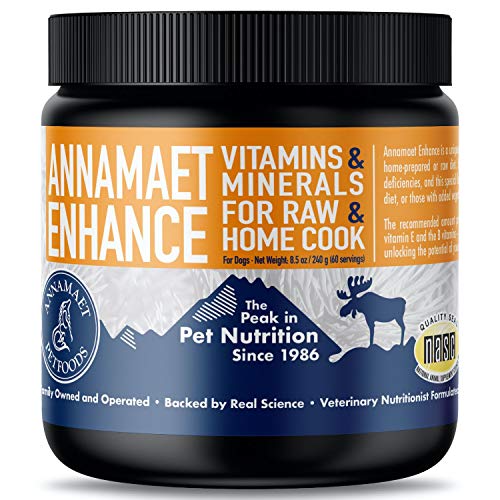
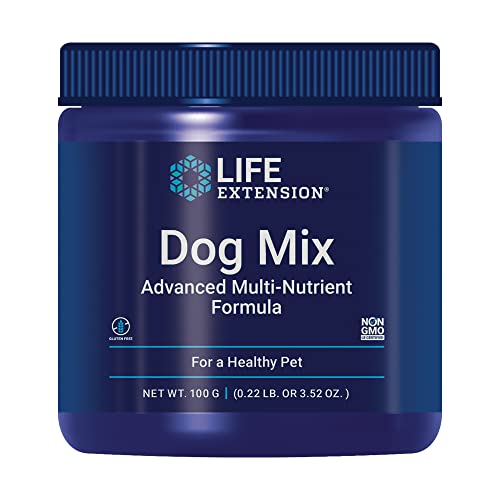
Vitamin and Mineral Supplement for Homemade Dog Food
Feeding your dog a homemade diet is a labor of love, but without the right fortification, it can lead to serious nutritional gaps. Learn how to choose a supplement that ensures every meal is complete and balanced.
Cooking for your dog gives you complete control over the ingredients — you know exactly what goes into every meal. It is an appealing option for owners of dogs with allergies, digestive issues, or simply a desire to provide fresher, whole-food nutrition. However, there is a critical catch that many well-meaning owners overlook: a homemade diet made from typical whole foods is almost never nutritionally complete on its own.
Even a recipe built around chicken, beef, rice, and vegetables can fall short in essential vitamins and minerals. The most common and dangerous gap is the calcium-to-phosphorus ratio. Meat is rich in phosphorus but poor in calcium, and without proper fortification, a dog's body will pull calcium from its own bones to maintain blood levels — a recipe for skeletal problems and long-term health issues. This is where a high-quality vitamin and mineral supplement for homemade dog food becomes non-negotiable.
This guide will walk you through exactly what nutrients are at risk, how to evaluate supplement products, what to look for on the label, and how to work with your vet to build a safe, balanced feeding plan. Whether you are just starting out with a homemade diet or refining an existing routine, the principles here will help you avoid the most common pitfalls.
Why Homemade Diets Need Supplements
The notion that a dog can thrive on a "balanced" diet of muscle meat, organs, and vegetables is one of the most persistent myths in canine nutrition. While those ingredients are wholesome, they do not naturally contain every nutrient in the right proportions. The Association of American Feed Control Officials (AAFCO) sets detailed nutrient profiles for dog foods, and meeting those profiles with whole foods alone is extremely difficult without a veterinary nutritionist's precise formulation.
The Calcium-Phosphorus Ratio Problem
This is the single most important reason homemade diets need supplementation. A dog's diet should have a calcium-to-phosphorus ratio of roughly 1:1 to 1.2:1. Meat is extremely high in phosphorus and very low in calcium. Without added calcium, the ratio can be dangerously skewed, leading to bone weakening, growth abnormalities in puppies, and a condition called nutritional secondary hyperparathyroidism.
Beyond calcium, homemade diets frequently lack adequate levels of:
- Zinc: Critical for skin health, immune function, and wound healing. Meat-heavy diets are often zinc-deficient.
- Iodine: Essential for thyroid function. Without iodized salt or a supplement, deficiency is common.
- Vitamin D: Regulates calcium absorption and immune health. Very few whole foods contain adequate amounts.
- Vitamin E: A powerful antioxidant that protects cells from damage. Levels in homemade diets can degrade quickly during storage.
- B vitamins: Thiamine, riboflavin, and others are water-soluble and can be lost during cooking or omitted entirely if organ meats are not included in sufficient quantities.
- Iron: While meat contains iron, the type and amount may not be sufficient for optimal health, especially in growing puppies.
This is not to say homemade diets are inherently bad — they can be excellent when properly formulated. The key is recognizing that a supplement is not an optional add-on but an essential component of the recipe. Skipping it is like building a house without a foundation.
Key Nutrients at Risk of Deficiency
Understanding which nutrients are most likely to be missing helps you evaluate supplement products more critically. Here are the nutrients that demand the most attention in a homemade diet:
Minerals
- Calcium: The most critical mineral to supplement. Needed for bone structure, muscle contraction, and nerve function. Almost always deficient in meat-based homemade diets.
- Phosphorus: Usually abundant in meat, but must be balanced with calcium. Excess phosphorus without adequate calcium is harmful.
- Zinc: Often deficient in homemade diets, especially those based on poultry. Supports skin, coat, and immune health.
- Copper: Essential for iron metabolism and connective tissue health. Can be low if organ meats are limited.
- Iodine: Required for thyroid hormone production. Deficiency leads to thyroid dysfunction.
- Iron: Needed for oxygen transport. While meat contains iron, the amount may be insufficient, particularly for puppies.
Vitamins
- Vitamin D: Critical for calcium absorption and immune function. Rarely present in adequate amounts in whole foods.
- Vitamin E: A key antioxidant. Degrades during cooking and storage, making supplementation important.
- B-complex vitamins: Thiamine, riboflavin, niacin, B6, and B12 are essential for energy metabolism and nervous system health. Water-soluble and easily lost during cooking.
- Vitamin A: Important for vision and skin health. Organ meats are rich sources, but excess can be toxic, so balance is key.
- Choline: Supports liver and brain function. Often overlooked but important.
Important Note: This list is not exhaustive and is not a substitute for a professional formulation. Every dog has unique needs based on age, breed, activity level, and health status. A veterinary nutritionist can calculate the exact amounts your dog needs and recommend a supplement that fills the gaps without creating dangerous excesses.
Types of Supplements Available
The market offers several categories of products, each with different strengths and limitations. Understanding the distinctions helps you make an informed choice.
Complete Multivitamin/Mineral Powders
These are formulated specifically to balance a homemade diet. They typically contain a broad spectrum of vitamins and minerals, including calcium, in proportions designed to complement whole-food recipes. This is the most common and safest choice for most owners.
Recommended for mostCalcium-Only Supplements
These provide calcium alone, often as calcium carbonate or calcium citrate. They are useful when a recipe is already well-balanced except for calcium, but they do not address other potential deficiencies. Best used under veterinary guidance.
Specialized useJoint & Specialty Supplements
Products focused on glucosamine, chondroitin, omega-3s, or other specific nutrients. These are not meal balancers — they are add-ons for specific health goals. They do not replace a complete vitamin/mineral supplement.
Targeted supportWhole-Food Toppers
Products like kelp meal, nutritional yeast, or organ blends. These add nutrients but are not standardized or complete. They can be part of a balanced plan but should not be relied upon as the sole source of fortification.
SupplementaryFor most homemade-diet feeders, a complete multivitamin/mineral powder formulated for homemade diets is the most practical and reliable choice. These products take the guesswork out of balancing and are designed to be added to a base recipe. Many reputable brands also provide recipes or formulation guidance on their websites.
How to Choose the Right Supplement
Not all supplements are created equal. The market is largely unregulated, and quality varies widely. Use the following criteria to evaluate products:
- Look for an AAFCO nutritional adequacy statement. This is the gold standard. It means the product has been formulated to meet the nutrient profiles for a specific life stage (growth, maintenance, or all life stages). If a product lacks this statement, it is not a complete supplement.
- Check the ingredient list for transparency. Reputable brands list every ingredient, including the specific forms of vitamins and minerals (e.g., "zinc sulfate" or "chelated zinc"). Avoid products with vague terms like "proprietary blend" or "natural flavorings" that hide the actual nutrient content.
- Verify third-party testing. Products tested by independent labs (e.g., NSF, USP) offer greater assurance of purity and potency. This is especially important for Chinese-manufactured ingredients.
- Match the supplement to your dog's life stage. Puppies have different needs than adults, and seniors may need adjustments. A supplement labeled "all life stages" is generally safe, but always consult your vet for growing dogs.
- Consider palatability and ease of use. Powders that mix easily into food and have a neutral taste are more likely to be accepted. Some dogs are sensitive to certain flavors or textures.
- Research the brand. Look for companies with a veterinary nutritionist on staff or that provide detailed formulation support. Avoid brands with a history of recalls or questionable marketing claims.
Red Flags to Watch For:
• Products that claim to "cure" diseases or make dramatic health claims.
• Supplements that do not list a guaranteed analysis or nutritional adequacy statement.
• Extremely low-priced products — quality ingredients and testing cost money.
• Products with human-grade claims but no verification or third-party testing.
• Supplements that list "meat meal" or "by-products" as a primary ingredient.
Reading Labels & AAFCO Statements
The AAFCO statement is the single most important piece of information on a supplement label. It tells you whether the product is complete and balanced for a specific life stage. Here is what to look for:
| Label Statement | What It Means | Best For |
|---|---|---|
| "Formulated to meet the AAFCO Dog Food Nutrient Profiles for All Life Stages" | The product meets the nutritional requirements for both growth and adult maintenance. It is complete and balanced for puppies and adults. | Most homemade diets, especially for multi-dog households or puppies. |
| "Formulated to meet the AAFCO Dog Food Nutrient Profiles for Maintenance" | The product meets the requirements for adult dogs only. It is not suitable for puppies or pregnant/nursing dogs. | Adult dogs with no special needs. |
| "Formulated to meet the AAFCO Dog Food Nutrient Profiles for Growth" | The product meets the requirements for puppies and growing dogs. It may contain higher levels of certain nutrients. | Puppies and growing dogs. |
| No AAFCO statement | The product has not been formulated to meet any nutritional standard. It is not a complete supplement and should not be used as the sole source of fortification. | Not recommended as a primary supplement. |
In addition to the AAFCO statement, look for a guaranteed analysis that lists the minimum and maximum percentages of key nutrients. This gives you a sense of the product's potency and helps you compare different brands. A reputable supplement will provide this information clearly on the label or on its website.
For dogs with specific health conditions, such as kidney disease, a standard supplement may not be appropriate. In those cases, a vet-approved homemade diet and supplement plan is essential. You can explore vet-approved homemade dog food for kidney disease to understand how specialized formulations differ.
Dosage and Administration
More is not better when it comes to vitamins and minerals. Over-supplementation can be just as harmful as deficiency — particularly with fat-soluble vitamins (A, D, E, K) and minerals like calcium and phosphorus. Always follow the dosage instructions on the product label, and adjust only under veterinary supervision.
General Dosing Guidelines
- Follow the label: Most complete supplements provide a dosage based on your dog's weight. Use a kitchen scale for accuracy, especially for small dogs.
- Mix thoroughly: Distribute the supplement evenly throughout the food to prevent your dog from eating concentrated amounts.
- Do not double up: If you are feeding multiple supplements, check for overlapping nutrients. Excess calcium from one product plus a complete supplement can create an imbalance.
- Monitor your dog: Watch for changes in appetite, stool quality, coat condition, and energy levels. These are the first indicators of a nutritional issue.
- Recheck with your vet: After starting a new supplement, schedule a follow-up visit to assess your dog's progress. Bloodwork may be recommended to check organ function and nutrient levels.
Pro Tip: If you are new to homemade diets, start with a supplement that includes a recipe guide. Many reputable brands provide detailed formulations that have been balanced by a veterinary nutritionist. This eliminates the need to calculate nutrient profiles yourself and reduces the risk of errors.
For dogs with sensitive stomachs or allergies, the choice of supplement can be tricky. Some products contain fillers or flavorings that may trigger reactions. If your dog has a history of food sensitivities, look for hypoallergenic formulas or consult your vet about a custom-compounded supplement. You can also read about best dog food for dogs with allergies and sensitive stomachs for broader dietary guidance.
Common Mistakes to Avoid
Even experienced homemade-diet feeders can fall into these traps. Avoiding them protects your dog's health and saves you from costly vet bills.
- Using a human multivitamin. Human supplements are not formulated for dogs and can contain toxic ingredients or incorrect dosages. Never give your dog a human vitamin without explicit veterinary approval.
- Skipping the supplement because the recipe "looks healthy." Whole foods are not the same as a balanced diet. Even a recipe with meat, organs, and vegetables can be deficient in critical nutrients.
- Relying on calcium alone. While calcium is important, it is not the only nutrient at risk. A complete supplement covers all bases and prevents hidden deficiencies.
- Over-supplementing. Adding extra vitamins or minerals "just in case" can cause toxicity, especially with fat-soluble vitamins. Stick to the recommended dosage.
- Not adjusting for life stage. Puppies, adults, and seniors have different nutritional needs. A supplement for adult dogs may not be appropriate for a growing puppy.
- Ignoring label warnings. Some supplements are not suitable for dogs with certain health conditions. Read the label carefully and consult your vet if you have any doubts.
- Assuming "natural" means "complete." Natural ingredients are not a guarantee of nutritional adequacy. Always look for the AAFCO statement.
Another common mistake is failing to account for treats and toppers. If you are feeding a significant amount of treats or adding extras to your dog's meals, the overall nutrient balance can shift. A supplement is designed to balance a specific base recipe — if you deviate from that recipe, you may need to adjust the supplement or consult a professional.
Frequently Asked Questions
Final Word
Feeding a homemade diet can be a rewarding way to take charge of your dog's nutrition, but it comes with responsibility. A vitamin and mineral supplement is not a shortcut or a nice-to-have — it is a critical component of a safe homemade diet. Choose a product with an AAFCO nutritional adequacy statement, follow the dosage instructions, and work with your veterinarian to monitor your dog's health. With the right approach, you can provide your dog with fresh, wholesome meals that are truly complete and balanced.
For more general guidance on dog nutrition, explore our dog vitamins resource, and if you are also considering other aspects of home-cooked meals, you may find our guides on vet-approved homemade senior dog food recipes and homemade dog food recipes for senior dogs with sensitive stomachs helpful.