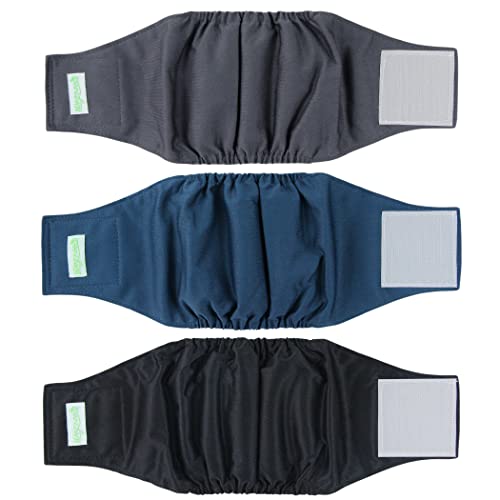
Dog Belly Bands: The Complete Guide for Male Dog Incontinence & Marking
Everything you need to know about belly bands for male dogs — how they work, sizing, absorbency levels, and which product is best for your canine companion.
If you have a male dog who struggles with incontinence, submissive urination, or marking behavior, a belly band can be a life-saving solution for your furniture, rugs, and carpets. Belly bands are designed to wrap around your dog's waist and cover the genital area. They act as a barrier to keep urine from reaching surfaces, helping you maintain a clean home while addressing the root cause of the behavior.
Unlike traditional dog diapers, belly bands are specifically contoured for male dogs. They are comfortable, easy to use, and can be worn indoors, outdoors, or even during travel. Whether you're dealing with a puppy who hasn't mastered house training yet or a senior dog with age-related incontinence, this guide covers everything from sizing to maintenance, ensuring you and your dog stay happy and dry.
What Are Dog Belly Bands?
A dog belly band is a wrap that fits around your male dog's waist, holding an absorbent pad against his belly and genitals. It's like a diaper for male dogs but specifically engineered for the male anatomy. The design keeps the band securely in place with hook-and-loop closures, making them easy to put on and remove.
Common Scenarios for Using Belly Bands
- House training puppies: Manage accidents while you teach proper elimination habits.
- Marking behavior: Stop your dog from lifting his leg on furniture or corners indoors.
- Senior dog incontinence: Manage age-related leaks that are not behavioral.
- Post-surgery or medical conditions: Aid in recovery when mobility is limited.
- Travel or car rides: Ensure cleanliness during long trips, preventing accidents in the car.
- Visiting other homes: Protect a friend's or hotel's floors and furniture from unexpected leaks.
Did You Know?
Neutered dogs are actually more likely to be affected by urinary incontinence than intact males. Spay or neuter can lower hormone levels, which can affect the muscles around the urethra. Belly bands offer an immediate and effective management solution.
Key Benefits & Use Cases
For Pet Parents
- Protects your home: Prevents damage to carpets, furniture, and floors.
- Ease of use: Simple to put on and remove. No dog "pants" to navigate.
- Cost-effective: Reusable options last for months, saving money over time.
- Eco-friendly: Reduces waste compared to disposable diapers.
- Travel ready: A reliable solution for staying in hotels or visiting friends.
For Your Dog
- Comfort & mobility: Freedom to move without bulky diapers.
- Less stress: Helps resolve marking behavior, reducing anxiety.
- Warmth: Provides an extra layer of warmth on cooler days.
- Dignity: Allows the dog to act normally without the stress of being scolded for accidents.
How to Choose the Right Size
Getting the right size for a belly band is critical. A band that is too loose won't catch the urine and will slip off. A band that is too tight can cause chafing and restriction. Follow these steps to ensure a perfect fit.
- Measure your dog's waist: Use a soft tape measure around the widest part of his belly, just in front of his back legs. This is the primary measurement.
- Check the manufacturer's size chart: Brands vary, but waist measurements are usually in inches. Belly bands generally range from 12–28 inches, with some designed for extra-large dogs.
- Consider the "one to two finger" rule: You should be able to slip one or two fingers between the band and your dog's skin. This ensures a snug fit without irritation.
- Check the closure type: Most belly bands use hook-and-loop (Velcro) fasteners. Ensure the band is adjustable enough to allow for comfort.
Pro Tip: If your dog is between sizes, always choose the larger size and adjust the Velcro for a tighter fit. This prevents the band from digging into the skin while still holding the absorbent pad in place.
Types of Belly Bands: Reusable vs. Disposable
When selecting a belly band, you'll encounter two primary options: reusable (washable) bands and disposable bands. Each type serves different needs and budgets. Here's how they compare.
| Feature | Reusable Belly Bands | Disposable Belly Bands |
|---|---|---|
| Cost | $12–$30 per band (one-time cost) | $0.50–$1.50 per band |
| Absorbency | Can be paired with washable or disposable pads | Built-in absorbent core |
| Environmental Impact | Low – wash and reuse | High – single-use plastic |
| Durability | High – lasts 6–12 months with proper care | Low – single use only |
| Fit Adjustability | Velcro or snap closures with some give | Fixed fit, usually based on dog weight |
| Best For | Daily, long-term use and multiple dogs | Occasional use, travel, or emergencies |
If you plan to use a belly band daily, we highly recommend investing in reusable belly bands. They are more cost-effective over time and provide a better fit. You'll also need to purchase washable or disposable pads that insert into the band for maximum absorbency.
How to Use and Clean Belly Bands
Proper use and maintenance of your dog's belly band ensures hygiene, comfort, and longevity. Here's a step-by-step guide:
- Insert absorbent pad: Place a pad in the designated pocket of the belly band. Ensure it's centered over the genital area.
- Wrap securely: Wrap the band around your dog's waist, pulling the Velcro straps to secure it. Follow the "one to two finger" rule.
- Check periodically: Belly bands should be checked regularly and changed when wet. Most dogs will wear a belly band for 3–5 hours before needing a change.
- Remove at night: Give your dog's skin a break. Remove the band at bedtime and encourage a final potty break.
- Cleaning reusable bands: Wash in cold water on a gentle cycle. Air dry completely to preserve the Velcro and prevent shrinkage. Do not use bleach or fabric softeners.
Skin Care Tip: Always ensure your dog's skin is completely dry before putting a new band on. Damp skin can cause chafing and hot spots. Use a soft towel to pat the area dry between changes.
Using Belly Bands for House Training
Belly bands can be a powerful tool in potty training male puppies. They work by interrupting the marking habit. When a puppy lifts his leg in a specific spot, the band catches the urine. Over time, the puppy's urge to mark is reduced because the behavior doesn't result in a successful "deposit."
Combine the belly band with a consistent dog feeding schedule and frequent potty breaks. Take your dog to his designated potty spot and praise him when he eliminates there. Using a belly band should never be a reason to skip regular bathroom breaks. Keep the routine consistent, and the band will help break the indoor marking habit.
Important Note: A belly band is a tool for managing accidents, not for holding urine for extended periods. Always provide opportunities for your dog to relieve himself naturally throughout the day.
Common Mistakes to Avoid
Even with the best intentions, pet parents can make mistakes when using belly bands. Here are the most common pitfalls and how to avoid them.
- Using the wrong size: A band that is too loose will leak. Too tight causes chafing. Always measure your dog's waist before purchasing.
- Not using an absorbent pad: The band alone is not enough. It needs a pad to hold the moisture.
- Wearing the band for too long: Belly bands should be changed every 3–5 hours. Extended wear can cause skin irritation and odor.
- Leaving the band on overnight: Unless using a highly absorbent overnight band, it's better to give your dog's skin a break at night.
- Not washing reusable bands properly: Over time, detergent and fabric softener can reduce absorbency. Use a gentle, unscented detergent and avoid softeners.
Frequently Asked Questions
Ready to find the perfect belly band for your dog?
If you're dealing with male dog incontinence, marking behavior, or just need a reliable solution for house training, the right belly band can make a world of difference. Browse our top picks below to find the best fit for your dog's size, activity level, and absorbency needs.